
Matcha sesame cookies need more than a bright dough and a scattering of seeds. In a bakery case, they must hold their shape, taste of both tea and sesame, cut or portion consistently, and remain appealing through the planned sales window. A home recipe can suggest a combination, but production requires measured dough, a repeatable bake, and a count of saleable pieces. Our matcha cake guide offers a related approach to testing matcha in baked products. Here, the cookie is the unit of work.
Contents
- 1. What should the finished cookie be?
- 2. Which matcha works in this dough?
- 3. How should sesame be added?
- 4. Why measure dough hydration?
- 5. How do you control cookie spread?
- 6. What bake test reveals the right finish?
- 7. How should cookies cool before packing?
- 8. Which package protects the saleable cookie?
- 9. What is the cost per saleable piece?
- 10. How should the formula be scaled?
1. What should the finished cookie be?
Define a product the bakery can judge
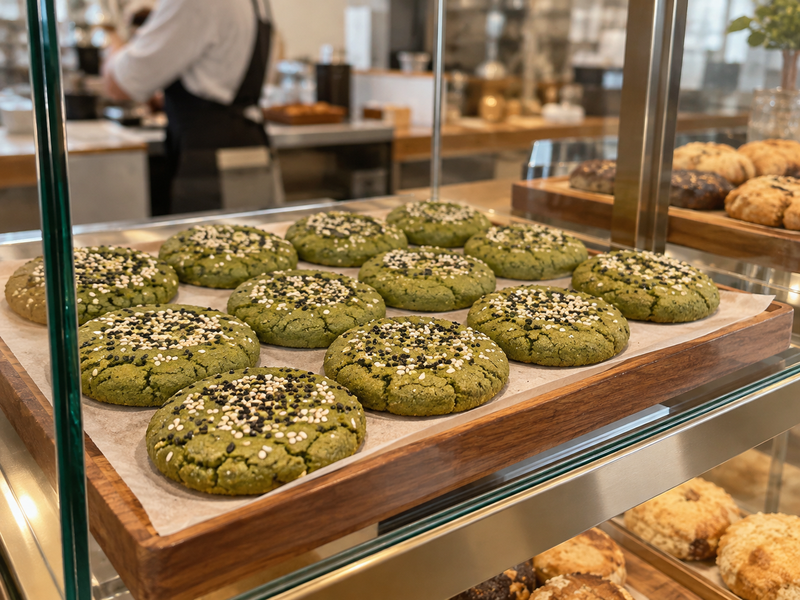
Choose a target diameter, portion weight, edge texture, center texture, and visible sesame coverage. A crisp tea biscuit and a soft drop cookie are both plausible products, but they need different dough and packaging decisions. Write the target in terms a second baker can observe: a clean bite at the edge, a center that is set after cooling, and a matcha flavor that remains distinct beneath the sesame. Photograph a passing cookie beside a ruler or portion guide.
Taste it when freshly cooled and again when a customer would buy it. Warm cookies can seem more fragrant and softer than those in a display case. If the product is packed, taste a cookie from the intended package after the planned hold. Ask whether the sesame is a first impression or a finishing note, and whether any added chocolate changes that balance. Decide these points before changing the formula; otherwise every attractive test bake can pull the team toward a different product.
2. Which matcha works in this dough?
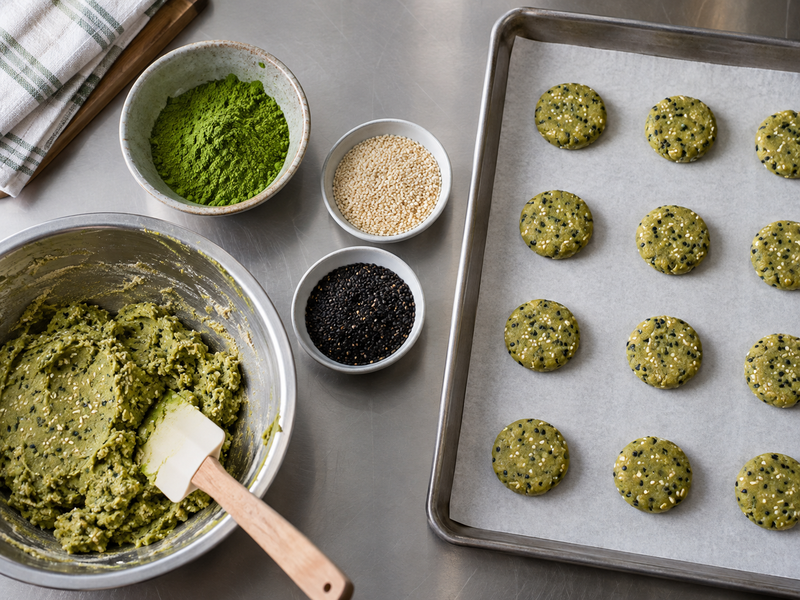
Bake candidate powders in one base formula
Matcha that tastes smooth in water may be faint in a sweet butter dough. Obtain representative samples of the products the supplier can actually deliver, then make small batches with the same matcha mass, dough weight, sesame, pan, and bake procedure. Compare the cooled cookies for tea aroma, flavor after swallowing, color, and cost per piece. A grade label alone cannot predict the result in your formula. Keep lot and product identifiers with the trial notes.
The selected powder must also be workable at production scale. Ask about pack format, product information, and handling guidance, and check whether an opened pack fits the bakery’s workflow. A sweetened matcha blend changes both flavor and sugar in the formula; do not substitute it by equal weight for pure matcha. King Arthur Baking’s matcha cookie recipe illustrates that different matcha choices can affect finished color. Your own bake should decide which product meets this cookie’s taste and yield target.
| Candidate check | Hold constant | Record after cooling |
|---|---|---|
| Tea flavor | Dough and bake | Recognizable matcha taste |
| Appearance | Portion and pan | Interior and surface color |
| Economics | Matcha dose | Cost per saleable cookie |
3. How should sesame be added?
Test the location, not only the amount
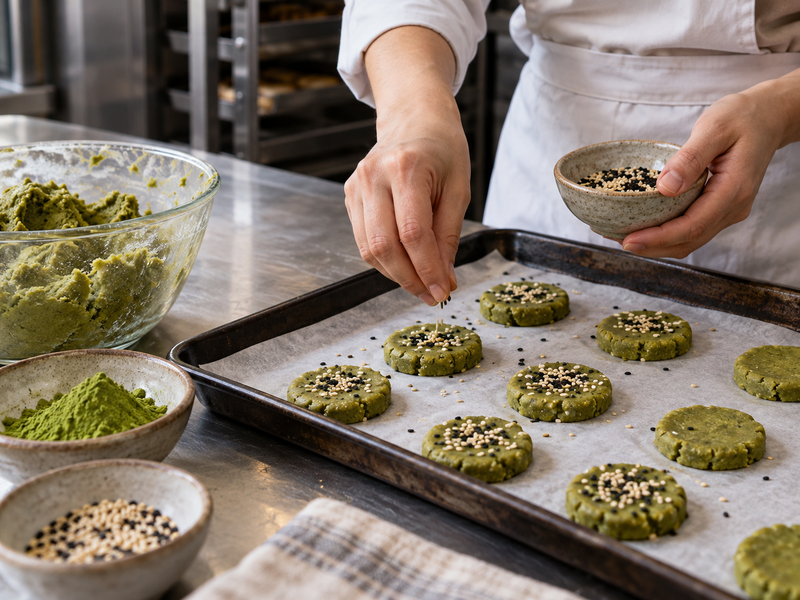
Sesame can be mixed into dough, pressed onto the surface, or used as a partial coating. Each route changes bite, appearance, and production loss. A surface coating announces sesame before the first bite but may shed into the package. Seeds inside the dough distribute flavor more evenly yet can disappear visually. Run a small comparison using the same total sesame mass per cookie. Count seeds left in the coating tray and on the cooling rack when estimating yield.
Choose the exact sesame ingredient and treatment for the formula. Raw and toasted seeds will not give identical flavor, and a different seed size can change coverage. If the bakery toasts seeds, document batch size and procedure rather than describing them only as “golden.” Sesame and any added nuts, milk, wheat, or egg belong in the site’s ingredient and allergen review for the destination market. A decorative coating is still a real ingredient, so purchasing and label copy must include it.
4. Why measure dough hydration?
Track the dough the scoop actually meets
Matcha is a dry powder added to a formula that already balances flour, fat, sugar, and liquid. Increasing matcha without checking the dough can change firmness, spread, and the perception of dryness. Weigh ingredients rather than relying on cups, then record the mixed dough’s temperature and handling: does it hold a scooped mound, crumble at the edge, or stick to the portioner? Those observations are useful only when the ingredient masses and mixing sequence are known.
Make one change at a time. If a higher matcha dose produces a dry cookie, do not simultaneously add liquid, shorten the bake, and change the fat. A small controlled trial can show which adjustment helps. Resting time also matters; the dough a baker scoops immediately after mixing may behave differently from dough held for later trays. Define the planned rest and storage under the bakery’s food-safety procedure, then test samples at both the start and end of that window.
| Dough observation | First check | Trial adjustment to test |
|---|---|---|
| Crumbly portions | Ingredient weights, mixing | Small controlled liquid change |
| Sticky or slumped portions | Dough temperature, rest | Controlled chill or rest |
| Uneven green streaks | Matcha distribution | Sift or dry-mix method |
5. How do you control cookie spread?
Hold portioning and pan conditions steady
Weigh several dough portions from the scoop intended for production. If they vary substantially, choose a better tool or add a scale check before diagnosing the oven. Place portions at a fixed spacing on the same pan and liner, then bake a test tray. Measure the diameter and height of cooled cookies from the middle and edge of the tray. A cookie that looks right while hot can settle or spread a little further before it firms.
Ingredient temperature, sugar and fat balance, pan surface, and oven conditions can all affect spread. King Arthur Baking’s cookie-spread guide describes several of these variables. Use it to frame a controlled diagnosis rather than applying one universal fix. If portions run into one another, check whether the dough was warmer, the pan was still hot, or the portion size drifted before rewriting the whole formula. A production target should specify an acceptable finished diameter and how to respond when a tray misses it.
6. What bake test reveals the right finish?
Compare cooled results from one controlled run
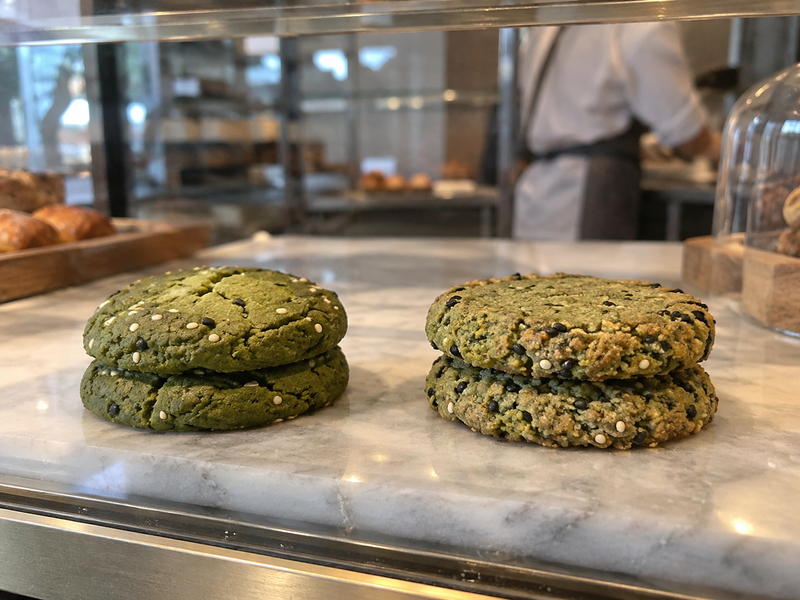
Record pan dimensions, liner, oven setting, rack position, load, and bake duration. Mark a few positions on the pan and compare cookies after they cool. Sesame on the surface can brown before the green dough has the desired texture, so color of the seeds alone is an incomplete doneness cue. Cut or break a cookie from each test condition to assess the center. The bakery should set a passing criterion from its formula and equipment rather than borrowing a home recipe’s time.
Test a short sequence of bake durations around the first acceptable result, holding everything else fixed. A minute that seems trivial on a single tray can matter to color and moisture, but do not infer the final sales window from warm cookies. If the oven bakes unevenly, confirm whether rotation improves the full tray and add it to the procedure only when it helps. Keep all sampled cookies labeled through cooling; anonymous samples make side-by-side tasting unreliable.
| Bake record | Why capture it | Passing evidence |
|---|---|---|
| Portion and pan | Controls spread | Similar diameter across tray |
| Oven load and position | Explains uneven bake | Comparable edge and center |
| Time and cooling | Changes final texture | Target bite after cooling |
7. How should cookies cool before packing?
Let texture settle before counting yield
Move cookies according to the approved bake procedure and watch for breakage. A soft cookie may need time on the pan before transfer; a crisp cookie may trap moisture if it is stacked too soon. Set a cooling point that another baker can recognize, using the actual rack, room, and batch size. Taste after the cookie has reached the temperature at which it will be packed or displayed. This is the product the customer receives.
Count saleable pieces after cooling, not when the portions first enter the oven. Broken edges, merged cookies, uneven coating, and pieces outside the portion range affect real yield. Decide whether imperfect cookies have a legitimate separate use or should be recorded as waste; do not quietly include them in a retail pack. If the operation packs several cookies together, test whether the lower pieces crack under weight. Cooling, handling, and yield are linked, so they belong on one production sheet.
8. Which package protects the saleable cookie?
Test the complete pack under normal handling
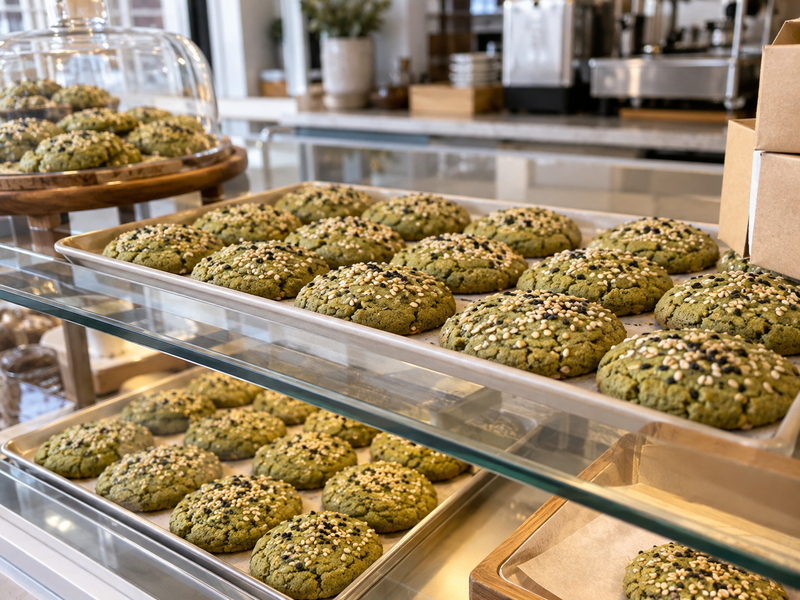
The package must preserve the chosen texture and keep seeds and crumbs from making the product look damaged. A crisp cookie may soften in an unsuitable environment; a soft cookie may dry out. Compare candidate packs using cookies from the same bake and inspect them at the intended sale times. Include ordinary movement from kitchen to shelf and, if relevant, a delivery trial. Packaging that looks elegant while empty may crush the cookie once stacked or transported.
Review ingredient and allergen labeling with the person responsible for the sales market. Sesame is not merely decoration, and white chocolate or other inclusions change the statement. Set handling, dating, and discard rules from the complete product and local requirements; a visual test does not establish food safety. Record whether the pack needs a tray, divider, or stronger seal. The bakery should choose the simplest pack that protects saleable quality and fits the price, rather than paying for a premium box that does not solve a measured problem.
| Pack trial | Inspect | Decision question |
|---|---|---|
| Single sleeve | Crumbs and seal | Does texture hold? |
| Multi-cookie pouch | Breakage and sticking | Can pieces travel together? |
| Rigid box | Movement and cost | Is protection worth the space? |
9. What is the cost per saleable piece?
Include seeds lost in production
Calculate ingredient cost from the actual formula, including matcha, sesame, inclusions, and any finish. Add packaging and a site-appropriate allowance for labor and routine loss. Divide the batch cost by the cookies that passed the saleable standard after cooling. A theoretical yield based on dough weight can hide merging, breakage, or off-size portions. Record those losses separately so a lower yield can be traced to the scoop, spacing, bake, or pack.
Compare the added matcha and sesame cost with the price the customer will accept for the finished cookie. A higher matcha dose may improve flavor but also raise cost; choose it based on blind tasting and margin together. If sesame coating spills, measure how much is actually used and how much becomes waste. Recheck cost when a supplier, pack, or portion size changes. The unit economics should describe the cookie on the shelf, not the ideal piece in a pilot photograph.
10. How should the formula be scaled?
Carry the checkpoints into a larger mix
Scale all ingredient masses from the approved pilot, then test how the larger mixer affects distribution and dough temperature. Matcha and sesame should appear evenly through the batch; inspect portions from the beginning and end of mixing. Scoop a full production tray and compare weights before baking. A larger dough batch may wait longer between first and last trays, so record rest time and handling conditions. If later trays spread differently, investigate that interval before changing the formula.
Put the matcha product, sesame specification, ingredient weights, mixing sequence, portion size, pan setup, bake, cooling, packing, and yield target on one controlled sheet. Name who can approve substitutions. Run a short comparison when a new lot or inclusion is introduced. The home-style matcha sesame cookie example is useful inspiration for the pairing, but a bakery’s approved product is the result of its own repeatable process and saleable-yield test.
| Scale check | Pilot record | Production confirmation |
|---|---|---|
| Dough mix | Ingredient mass and order | Even color and temperature |
| Portioning | Dough weight per piece | Range across the batch |
| Yield | Passing cooled cookies | Count by tray and shift |
FAQ
Q1. Should sesame go inside the dough or on top? Test both against the intended flavor and packaging. Surface seeds are visible but can shed; mixed seeds give a more even bite.
Q2. Does the bakery need ceremonial matcha? Choose from finished cookie trials, cost, and supplier information. A grade word does not guarantee the flavor or color in this dough.
Q3. Why did one tray spread more? Compare dough temperature, portion weight, pan and liner, oven load, and waiting time before altering the formula.
Q4. Can cookies be packed while warm? Test after the approved cooling step. Warm packing can change texture and create condensation in some packages.
Q5. How should yield be calculated? Count cookies that meet the saleable standard after cooling and handling, then divide actual batch cost by that count.
Approve the cookie after the pack test
A dependable matcha sesame cookie needs a defined bite, controlled dough and bake, and a package that protects the finished piece. Measure the ingredients, compare cooled samples, and cost only saleable yield. That gives the bakery a formula another shift can make with the same result.