
Genmaicha vs hojicha is a practical choice for a buyer deciding which roasted Japanese tea to put into a latte or bottled drink. They will not necessarily behave alike. Genmaicha combines green tea with roasted rice; hojicha is green tea roasted after initial processing. That difference changes flavor, formulation, sourcing, and the words a brand can put on its label. This comparison is written for cafés, beverage developers, food manufacturers, and importers choosing a repeatable ingredient.
1. Genmaicha vs hojicha: what is the basic difference?
One contains roasted rice; one is roasted tea
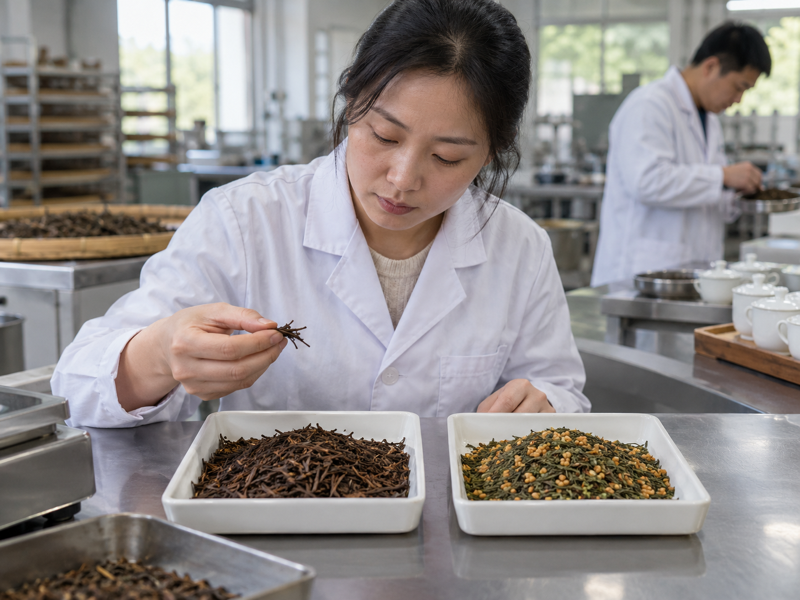
Genmaicha is a blend of green tea and roasted rice. Hojicha is green tea roasted during finishing. Japan’s Ministry of Agriculture, Forestry and Fisheries (MAFF) describes genmaicha as roasted rice mixed with a base such as sencha or bancha, while its hojicha definition centers on roasting tea. Both can smell toasted, which explains why a shopper or menu team might confuse them. Their ingredient lists and processing histories are different. A vendor can also sell each as loose material or powder, creating another choice beyond the tea name.
Read the specification. A genmaicha sample should state which base tea and rice are used and the intended blend range. A hojicha sample should identify the base material and roast style. Packaging photos cannot answer those questions reliably. In a B2B request, name the application before asking for a sample. A retail loose tea, a café milk drink, and a powdered bakery ingredient each require different performance checks. Start with a clear category definition, then compare the actual supplied products under a written method.
| Feature | Genmaicha | Hojicha |
|---|---|---|
| Defining material | Tea plus roasted rice | Roasted tea |
| Typical aroma direction | Toasted grain with tea | Roasted tea, nutty or woody |
| Key supplier question | Rice-to-tea composition | Base tea and roast profile |
2. How do genmaicha and hojicha taste different?
Grain toast and tea roast are distinct cues
Genmaicha often gives a toasted cereal or popcorn-like aroma because rice is part of the blend. Depending on the tea base and ratio, a greener tea note can remain visible. Hojicha’s roast acts directly on tea material, so its flavor can lean toward nuts, wood, caramel-like warmth, or a deeper roast finish. Those are tasting descriptions, not flavor additives. The actual range is wide. A light hojicha can taste gentler than a grain-heavy genmaicha; a strong genmaicha may overwhelm a delicate tea base. Evaluate candidate lots instead of relying on a category adjective.
Use separate scorecards. For genmaicha, score grain character, tea identity, and any stale rice note. For hojicha, score roasted tea aroma, body, and burnt or ash-like finish. Both need an astringency and aftertaste check. Taste plain infusions first, then repeat in the intended recipe. Milk and sweetener can make two samples seem closer than they are in water. If the menu depends on a clear distinction, ask tasters to identify each coded sample after preparation. A product that cannot be distinguished at service may not justify a second tea SKU.
3. Why does ingredient composition affect buying?
Category names are not full bills of material
Genmaicha composition can vary with base tea, rice type, rice proportion, and processing. Hojicha can vary with leaf or stem material, base grade, and roast. Two products with the same retail name may have different flavor strength and costs per serving. Ask for a complete ingredient statement, processing description, lot code, and representative production sample. For a blended powder, establish whether every constituent is ground together and how the manufacturer controls uniformity. A small pilot pouch that contains an unusually high share of flavorful tea may not represent a large production run.
Check what can change. Agree which substitutions require buyer notice: a new base tea, different rice specification, altered roast, or different particle size can shift the finished drink. A controlled ingredient list also supports accurate labels. Do not assume rice in genmaicha makes the final product gluten-free; the whole formula and possible cross-contact need review. Do not assume a tea powder has no added sweetener or flavor. Ingredient identity is an operational control, not a decorative catalog line, because it connects supplier approval to artwork, allergen review, and repeated production.
| Buying document | Genmaicha emphasis | Hojicha emphasis |
|---|---|---|
| Composition | Base tea and rice proportion | Leaf or stem material |
| Sensory reference | Grain and tea balance | Roast depth and finish |
| Physical spec | Rice and leaf cut or powder blend | Leaf cut or powder fineness |
| Change notice | Rice or tea substitution | Base tea or roast change |
4. Which tea has less caffeine?
Public tables describe methods, not every product
Japan’s MAFF caffeine table lists a defined genmaicha infusion at 10 mg per 100 mL and a defined hojicha infusion at 20 mg per 100 mL. Both use 15 g tea in 650 mL water at 90°C for 30 seconds in the cited composition data. Those numbers provide a controlled reference, not a promise for every lot or café recipe. Genmaicha’s rice share can affect the amount of tea in a given dry dose; hojicha’s material and roast also vary. Strength, serving volume, and the use of powder change the consumer’s intake.
Do not rank from names. If caffeine is relevant to a menu or package claim, obtain an analytical result for the supplied material and assess the finished drink. A powdered genmaicha dessert and a steeped hojicha tea cannot be compared by applying infusion data to both. Check other ingredients, especially coffee, cocoa, matcha, or added caffeine. The U.S. FDA advises consumers to consider all caffeine sources. An accurate claim names the product and serving. “Roasted tea” alone does not mean caffeine free, and “rice tea” still contains a green-tea component.
5. Should these teas be brewed in the same way?
Use a controlled starting method, then tune each
Both are often brewed hot to release toasted aroma, but a single house recipe may not maximize both. Hojicha’s leaf or stem cut and roast can change extraction. Genmaicha’s rice and tea proportion can shift the balance between grain aroma and green tea. Begin with supplier directions, then record leaf mass, water mass, temperature, time, straining, and final yield. MAFF’s Japanese tea overview specifically recommends high-temperature brewing for genmaicha to bring out its aroma. That is a starting point for a trial, not a universal service rule.
Test the held drink. A cup that smells strong over an open pot may taste flat under a takeaway lid. Compare both teas immediately and after the time a customer would realistically wait. If the brewed liquid becomes a latte concentrate, assess the diluted drink rather than the concentrate alone. Record the amount of tea actually filtered into each cup and the variation between staff. A reliable brew method protects flavor, cost, and customer description. When switching to powder, write a separate mixing procedure; grinding changes the preparation job.
| Preparation check | Why it matters | Record |
|---|---|---|
| Dry dose | Changes concentration and cost | Grams per batch |
| Water temperature | Affects extraction and aroma | Measured range |
| Steep and hold | Affects finished cup | Minutes |
| Filtered yield | Connects batch to servings | mL accepted |
6. How do genmaicha and hojicha powders behave in food?
Powder can carry texture into the product
Powder avoids leaf extraction and can fit ice cream, bakery, chocolate, or thick beverages. Hojicha powder contributes roasted tea material. Genmaicha powder contributes both tea and rice components when it is a ground blend. This difference may affect mouthfeel, sediment, and flavor after heat or freezing. Do not assume a product called “genmaicha powder” contains the same rice share as a loose-leaf blend. Request an ingredient statement, particle specification, and a physical sample. Use a real food base for evaluation, since fine particles can feel smooth in a hot liquid and gritty in a cold dessert.
Run the process. In a latte, assess dispersion, foam, sediment, and flavor after ten minutes. In a bakery filling, check whether toasted grain and roasted tea remain identifiable after processing. In a bottled drink, evaluate stability and safety under the chosen process and package. A powder may reduce filtration labor while increasing cleaning or settling control. Compare accepted units and process yield rather than list prices alone. If the product needs a clear appearance, leaf infusion may be the better starting form for either tea.
7. Which tea works better for a café menu?
Choose a role, not a winner
Genmaicha can make a menu item with a toasted-grain cue that still points toward green tea. Hojicha can deliver a deeper roasted-tea identity in hot or iced drinks. The right choice depends on the other menu items, the customer’s flavor expectations, and staff capacity. If a café already sells matcha, a hojicha latte may add a visibly different brown option. If the concept highlights rice desserts or savory snacks, genmaicha may create a closer pairing. These are menu hypotheses, so test them with actual sales and repeat orders.
Design a fair launch. Give each candidate a recipe, price, staff training card, and tasting note of similar quality. If one drink is promoted heavily and the other sits unseen, sales cannot isolate ingredient preference. Track ingredient dose, prep time, remake rate, and customer comments across comparable shifts. Include a plain tea version for customers who do not want milk. Listen for whether people identify the intended roasted character without prompting. A menu item that tastes distinct and can be made consistently earns its place; one that duplicates an existing SKU should be reconsidered.
| Menu goal | Candidate | Pilot measure |
|---|---|---|
| Roasted milk drink | Hojicha powder | Tea identity in milk |
| Toasted grain tea | Genmaicha loose tea | Rice and tea balance |
| Cold specialty drink | Either tested format | Flavor after ice dilution |
| Dual tea range | Both | Distinctness and repeat demand |
8. What should importers check on labels and specifications?
Describe the ingredients buyers receive
Names do not replace the ingredient list. If genmaicha contains tea and roasted rice, its label and technical sheet should reflect the actual product. If a hojicha blend adds sugar or flavor, it is no longer accurately described as only roasted green tea powder. Destination-market labeling rules vary, so regulatory staff should review ingredient declaration, nutrition, allergen, organic, and claim requirements before artwork approval. Ask for lot-level traceability and any test reports required for the market. A general factory certificate cannot establish compliance for every batch or destination.
Translate consistently. A buyer’s specification, carton label, retailer listing, and menu should all identify the same material and form. If powder is a ground tea-rice blend, avoid calling it a soluble extract unless that is technically true. If hojicha is made from leaves and stems, the specification can say so without promising a particular caffeine level. For private label, request a final artwork proof against the approved formula. Correct naming prevents preventable customer complaints and protects the reformulation process when a supplier changes a component.
9. How should a buyer compare total cost?
Price the saleable serving
Tea price per kilogram is only a starting number. A genmaicha blend may have a different tea-to-rice ratio, so equal dry weights do not deliver equal tea character. A hojicha leaf may need a different dose than a fine powder. Calculate cost from the grams and yield required for an accepted cup, cookie, or carton. Add filtration loss, labor, cleaning, rejects, packaging, storage, and lead time. Keep sensory targets fixed while testing alternatives. A cheap sample that needs twice the dose may be the costly option.
Include supply variance. Request quotes for the same pack size, delivery basis, and expected volume. Ask about lead time and minimum order, then test a routine production lot. If a genmaicha supplier changes rice or tea balance seasonally, the next batch may need reapproval. If a hojicha supplier changes roast, the menu flavor may shift. Put quality costs alongside commodity costs. The final decision should survive normal production, not only a perfect pilot brewed by the development team.
| Cost input | Calculation or check | Commercial effect |
|---|---|---|
| Ingredient | Grams per accepted unit | True tea cost |
| Process | Brewing, mixing, filtration | Labor and equipment |
| Loss | Sediment, rejects, spent leaves | Yield |
| Continuity | Lead time and lot changes | Reformulation risk |
10. How can a team make the final choice?
Use two recipes and one decision sheet
Write the intended product, customer, market, serving size, ingredient form, sensory target, and price range. Ask suppliers for documented samples that fit that brief. Brew or formulate each tea under a controlled method, then run a blind comparison with separate scores for flavor, process behavior, cost, documents, and supply. A tea should not win only because its bag smells stronger. Nor should a low quote outweigh grit, unstable flavor, or a missing product specification. Keep the best candidates for a small production pilot.
Make the result reproducible. Store the selected formula, approved sample, supplier lot, and change conditions together. Matcha Village lists hojicha and genmaicha powders among its B2B offerings; a buyer can send a format and application brief through its contact page. Ask each supplier for the exact grade and documentation suited to the destination market. If both teas pass but address different customer needs, sell them as two distinct products. If neither passes the intended recipe, revise the brief instead of forcing a category name onto a weak formulation.
FAQ
Q1: Is genmaicha the same as hojicha?
No. Genmaicha combines green tea with roasted rice; hojicha is roasted tea.
Q2: Which tastes more like popcorn?
Genmaicha commonly has a toasted-grain impression from its rice. Verify the supplied lot in your recipe.
Q3: Is either tea caffeine free?
No. Both contain tea and can contribute caffeine. Measure the finished serving for a claim.
Q4: Can both be sold as powders?
Yes, but composition and performance vary. Request the ingredient list and trial the powder in the final product.
Q5: Which should a café choose for milk?
Test both. Hojicha often offers deeper roasted-tea identity, while genmaicha offers grain toast; dose and base decide the outcome.
Choose by ingredient identity and finished-product performance. MAFF’s tea definitions provide the category baseline; your controlled trial should make the purchasing decision.