
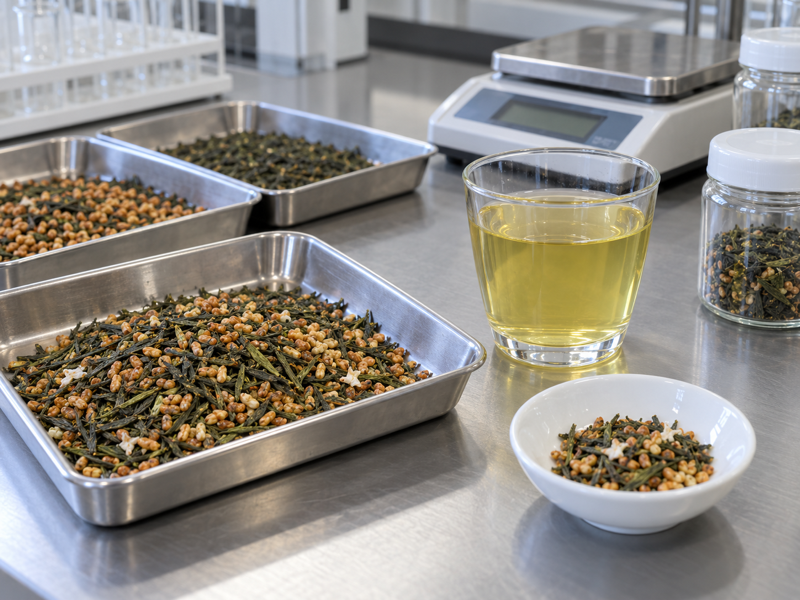
Genmaicha tea side effects are usually discussed too loosely for a product label or customer answer. Genmaicha is a blend of tea leaves and roasted rice, so the first practical issues are caffeine exposure, personal sensitivity, ingredient suitability, and how much a person drinks. A supplier cannot diagnose an individual's symptoms, and a single published caffeine value cannot describe every recipe. This guide helps tea brands, cafés, and food manufacturers write careful product information, ask suppliers the right questions, and refer health concerns to qualified professionals. It does not replace medical advice or a market-specific regulatory review.
Contents
- 1. What is in genmaicha tea?
- 2. Can genmaicha contain caffeine?
- 3. What discomfort might caffeine-sensitive consumers report?
- 4. Does the roasted rice create an allergen issue?
- 5. Can green-tea compounds or food interactions matter?
- 6. How do brewing and portions affect genmaicha tea side effects?
- 7. What should brands put on product pages and menus?
- 8. What should a buyer ask a genmaicha supplier?
- 9. How should incidents and consumer questions be handled?
- 10. How can a team communicate risk without overstating it?
1. What is in genmaicha tea?
Genmaicha combines tea leaves with roasted rice. The tea portion contains naturally occurring caffeine; the rice contributes a toasted-grain character. Japan's Ministry of Agriculture, Forestry and Fisheries describes blends using bancha, sencha, or gyokuro with roasted rice. Commercial recipes vary in proportions, leaf grade, roast, and added ingredients. A ready-to-drink product may also include sugar, milk, flavoring, or other components. Read the exact product specification before writing a consumer answer.
The genmaicha versus matcha comparison helps buyers distinguish a brewed blend from a powdered tea format before reviewing actual exposure. Different forms need separate treatment. A filtered infusion leaves most solids behind. A finely milled genmaicha powder places ground tea and rice in the drink or food. A concentrated extract has another composition and serving size. None of these should inherit a blanket claim from another form. Ask the supplier for the ingredient declaration, processing description, and current lot information. If your label says “genmaicha,” buyers and consumers should be able to tell whether they are purchasing a loose-leaf blend, a powder, a premix, or a prepared beverage.
| Product form | Main exposure question | Information to collect |
|---|---|---|
| Loose tea | How strong is the infusion? | Tea dose and brew method |
| Tea bag | How much is in each portion? | Bag mass and instructions |
| Powder | Are solids consumed? | Dose and ingredient list |
| RTD drink | What is the actual serving? | Finished-product analysis |
2. Can genmaicha contain caffeine?
Yes. Genmaicha contains tea leaves, and tea naturally contains caffeine. The amount in a cup depends on the tea material, blend ratio, leaf dose, extraction conditions, and serving size. Rice in the blend does not make the finished product caffeine-free. MAFF reports a caffeine value for genmaicha infusion made under a specified preparation method in its caffeine data table. That published value is useful context, but it cannot be copied onto a cold brew, powder, unusually strong café drink, or different commercial blend.
If a caffeine amount or “low caffeine” statement will appear on a label, menu, or sales sheet, ask a qualified laboratory to assess the actual product or use an appropriate validated calculation accepted in the destination market. Document the serving size and method. Consumers may combine tea with coffee, energy drinks, or other caffeine sources, so a cautious response should acknowledge overall intake. For someone with a health condition, taking medication, pregnant, or advised to limit caffeine, direct the question to a healthcare professional who knows that person's circumstances.
3. What discomfort might caffeine-sensitive consumers report?
People vary in their response to caffeine. Some report trouble sleeping, restlessness, a racing feeling, or digestive discomfort after caffeinated drinks, especially with large portions or late-day use. Those symptoms are not proof that genmaicha caused an individual's problem. The appropriate customer-service response is to stop making a broad promise, identify the product and serving used, and advise the person to seek medical guidance if symptoms concern them. Severe or persistent symptoms need professional attention.
For a brand, the useful action is clear product communication. State that the drink contains green tea, avoid calling it caffeine-free, and make serving size easy to find. A café can train staff to describe the beverage as a tea drink rather than a substitute for decaf. A manufacturer should understand whether a concentrated formula raises caffeine per bottle. If you offer several tea products, keep a current ingredient sheet for each one. A general statement about the category should never override a specific formula that contains extra matcha, tea extract, or another caffeinated ingredient.
| Consumer question | Safe factual answer | Avoid saying |
|---|---|---|
| “Is it caffeine-free?” | “It contains tea leaves and can contain caffeine.” | “Yes, because it has rice.” |
| “Can I drink it at night?” | “Sensitivity varies; check your own intake.” | “It never affects sleep.” |
| “How much caffeine?” | “Use a measured value for this product if available.” | A number from an unrelated brew |
4. Does the roasted rice create an allergen issue?
Plain rice is not automatically the same issue as a declared major allergen in every jurisdiction, but that does not make an unlabeled product universally suitable. Added ingredients and factory cross-contact vary by SKU and site. A matcha-added blend, a flavored premix, and a plain tea-and-rice blend may need different declarations. A food manufacturer must review the complete specification and the laws of each destination market. Ask the supplier for ingredient, allergen, and cross-contact information for the specific SKU and production site.
Do not convert “rice and tea” into a blanket gluten-free or allergen-free claim. A claim may require defined controls, documentation, or testing under local rules. The absence of an allergen in a short marketing description is not evidence of its absence in a finished recipe. For a café, store a current ingredient and allergen sheet behind the counter, including syrups and milk used in drinks. For a packaged product, have a qualified labeling reviewer check the final formula and production context. If a consumer reports an allergy or suspected reaction, direct them toward appropriate healthcare support and your established incident process.
5. Can green-tea compounds or food interactions matter?
Tea contains several naturally occurring compounds besides caffeine, but their amounts and effects depend on the material and preparation. A normal tea cup, a concentrated supplement, and a powder consumed in food are different exposure situations. Do not transfer a medical claim or warning from one category to another without evidence. If a consumer asks whether genmaicha affects medication, a medical condition, pregnancy, or nutrient absorption, a supplier or café should not give an individualized answer. A clinician or pharmacist can consider the person's history and total diet.
Food businesses can still provide useful facts: the complete ingredient list, serving size, tea base, whether powder or extract is used, and any verified caffeine data. Keep those facts separate from claims about prevention, treatment, detoxification, or weight management. For a food label, health and nutrition claims are governed by destination-market rules and require a proper basis. A sales team should never invent a benefit because the product contains green tea. The most trustworthy consumer page explains what the product is, how it is prepared, and where individualized questions should go.
| Information requested | Who can provide it | Boundary |
|---|---|---|
| Ingredients and tea form | Supplier or manufacturer | Product facts |
| Caffeine for finished SKU | Qualified test process | Product-specific result |
| Allergen declaration | Manufacturer and label reviewer | Market-specific review |
| Medication interaction | Clinician or pharmacist | Individual advice |
6. How do brewing and portions affect genmaicha tea side effects?
They can. A strong brew uses more material, a longer extraction, or both. Water temperature, leaf cut, and repeated infusions can change what enters each cup. A large café cup contains more liquid than a small tasting cup even when the infusion concentration is similar. Cold brew is also a separate recipe and should not be assigned a hot-brew figure. For powder, the consumer may ingest tea solids instead of drinking only a filtered infusion. These practical differences are why health-oriented copy needs the actual product format.
Standardize the menu recipe before evaluating claims. Define grams of blend per batch, water volume, brew conditions, final beverage volume, dilution, and serving size. For a packaged drink, measure the finished product when a quantitative statement is needed. If the formula changes, reassess the statement. A customer question about “one cup” has no precise answer until the cup and recipe are defined. State uncertainty plainly. It is better to say “we have not measured this blend” than to offer a confident number copied from a different tea website.
7. What should brands put on product pages and menus?
Start with accurate category language: genmaicha is a tea-and-roasted-rice blend. Give the ingredient list, serving or brewing instructions, and any added ingredients. Identify caffeine presence without describing the drink as a remedy or as suitable for everyone. If your business has a reliable measured caffeine range for a finished SKU, explain the serving that the number describes. Keep the supporting report and method accessible to the compliance team. If no data exist, omit the number rather than guessing.
Train support staff on a short response script. They can explain the product and direct individualized health questions to a clinician. They should log complaints with batch and purchase details under the company's normal quality procedure. A retail page can answer common practical questions, such as whether the product contains rice, whether it is loose leaf or powder, and what the recommended portion is. A clean product description reduces confusion without turning marketing copy into medical advice.
| Page element | Include | Check before publishing |
|---|---|---|
| Product identity | Tea and roasted-rice form | Matches specification |
| Ingredients | Full formula | Current revision |
| Brewing directions | Measured method | Tested cup quality |
| Caffeine wording | Presence or verified amount | Correct serving and evidence |
| Claims | Only permitted, substantiated wording | Market review |
8. What should a buyer ask a genmaicha supplier?
Request the current specification, ingredient list, production-site allergen statement, storage guidance, lot identification method, and any testing your market requires. Ask whether the supplier's sample and commercial lot use the same tea base and rice recipe. If buying powder, ask what was milled, whether additional ingredients are present, and how a serving is normally dosed. Obtain packaging details and shelf-life support. These questions are useful for ordinary quality control as well as careful consumer communication.
Confirm whether certificates and test reports apply to the exact SKU and lot. Do not assume a supplier-wide claim covers every product. Agree on notification when the tea base, rice source, processing, or packing changes. An altered ingredient could change flavor, allergen review, or claims. Keep purchase terms and specification aligned. A brand's medical disclaimer does not solve an inaccurate ingredient label, so buyer, QA, and marketing teams should sign off together before launch. Ask for evidence when a supplier presents a health claim, and have a qualified reviewer decide whether it belongs in the destination market.
9. How should incidents and consumer questions be handled?
Make it easy for a customer-service agent to capture the product name, batch code, amount consumed, preparation method, timing, and the customer's description in their own words. Preserve packaging or remaining product when available. Escalate suspected safety or allergy events through the company's established food-safety process. The team should not diagnose the person or speculate publicly about cause. If urgent symptoms are described, direct the customer to local emergency or medical care according to company policy.
For ordinary questions, answer with verified product facts and record what remains unknown. If several contacts concern the same lot, QA can review retain samples, production records, and supplier documents. A one-off report should still be logged respectfully. Never promise that tea cannot cause discomfort; personal responses vary and a finished beverage may include ingredients beyond tea and rice. Use the information gathered to improve labels, preparation instructions, or staff training when a pattern becomes clear. Good incident handling protects customers and gives the business evidence for a measured response.
| Step | Action | Record |
|---|---|---|
| Receive | Listen and capture exact wording | Date and contact route |
| Identify | Find SKU and batch | Pack photo or code |
| Escalate | Follow safety procedure | Responsible owner |
| Review | Check formula and lot evidence | Findings and next action |
10. How can a team communicate risk without overstating it?
Write short sentences that distinguish product facts from personal health advice. “Contains green tea and may contain caffeine” is clear. “Safe for everyone,” “detoxifies,” or “has no side effects” overreaches. If you offer a measured number, link it to the tested product and serving. Keep the ingredient declaration in sync with procurement changes. Where the law requires a specific warning or allergen wording, follow local counsel or a qualified regulatory specialist rather than a generic blog template.
Review the same wording across the retail pack, website, distributor sheet, and café menu. A buyer may see all four. Matcha Village can discuss genmaicha powder applications, but any product claim should follow the actual specification and destination-market review. The practical next step is a joint meeting among purchasing, QA, and marketing: identify what is known, what must be tested, and which questions belong with healthcare professionals. Consumers can make better choices when the business speaks accurately and leaves medical judgments to medical experts.
FAQ
Q1: Does genmaicha have no side effects because it contains rice? No. It contains tea leaves, and individual responses to caffeine or other ingredients can vary.
Q2: Is every genmaicha cup equal in caffeine? No. Tea composition, dose, brew method, and serving size differ. Use a product-specific result for quantitative claims.
Q3: Can a brand call genmaicha gluten-free? Only after checking the full formula, production controls, relevant evidence, and destination-market rules.
Q4: Can staff advise a customer taking medication? Staff can provide product facts; a clinician or pharmacist should answer individual interaction questions.
Q5: What should a consumer complaint include? Capture the SKU, batch, preparation, amount, timing, and the customer's own description, then follow the company's safety procedure.