
Watermelon matcha offers a seasonal cafe drink with a visible contrast between pink fruit juice and green tea. Its production challenge begins before the cup: whole melons vary, trimming creates waste, and blending can leave a texture that some customers enjoy while others find inconvenient.
A useful recipe therefore needs a fruit preparation specification as well as a tea dose. The following development guide connects purchasing, juice preparation, tasting and service. All suggested weights are unvalidated small trial quantities, intended to help a cafe establish its own repeatable drink rather than copy a household serving size.
Contents: 1. What should customers expect from watermelon matcha | 2. How do you accept and prepare whole watermelons | 3. Should you strain the watermelon juice | 4. What measured drink can you use as a starting trial | 5. How do you prevent tea clumps and confusing layers | 6. How can you handle changing watermelon sweetness | 7. Which ice and cup checks matter during service | 8. What should the cafe prepare in advance | 9. How do you calculate the true fruit cost per drink | 10. What evidence should support the launch decision
1. What should customers expect from watermelon matcha?
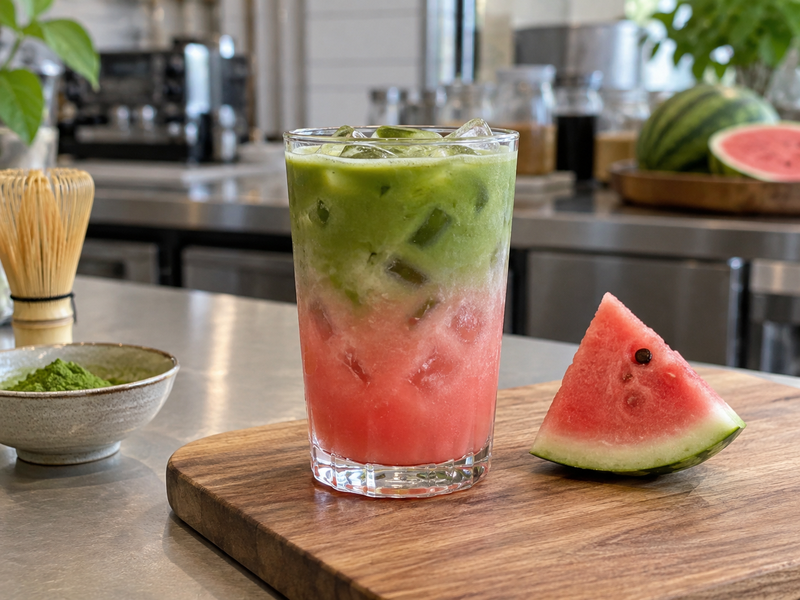
Describe the drink beyond its colors
Decide whether the product is a light juice and tea drink, a pulpy blended drink or a milk based variation. These formats have different textures and preparation demands. A photograph with a pink lower layer and green top does not tell the barista how much fruit, water or milk belongs in the cup.
Kalejunkie’s watermelon matcha recipe uses blended watermelon juice and separately prepared matcha. It demonstrates a fresh fruit route, with optional flavor additions. For a cafe, convert the idea into measured ingredients and a defined juice preparation rather than using a fraction of a melon as the portion measure.
| Menu direction | Fruit preparation | Main operational question |
|---|---|---|
| Light iced tea | Strained watermelon juice | Is tea present after dilution? |
| Pulpy fruit tea | Blended flesh | Does the texture suit the cup? |
| Watermelon latte | Selected juice and milk | Does the finished mixture perform well? |
| Blended frozen drink | Specified fruit and ice | Can the blender repeat the texture? |
Choose one direction for the first launch. A seasonal special does not need every possible variation. A single well specified drink is easier to cost and teach than several options that share a name but require different station routines.
2. How do you accept and prepare whole watermelons?
Keep the rind step in the procedure
Inspect incoming fruit according to the cafe’s produce acceptance procedure. Record the supplier and delivery date, then handle whole and cut fruit through the approved storage system. A large intact rind does not remove the need for clean preparation before the knife reaches the flesh.
The National Watermelon Promotion Board’s facts and FAQ page advises washing the whole melon in clean running water before cutting, with clean knives and cutting surfaces. Put that step on the preparation sheet so it is not omitted when staff are only thinking about the juice inside.
Separate the rind and remove material that does not meet the intended juice specification. Inspect for mature seeds even when the product is sold as seedless. Decide whether the lighter flesh near the rind is included, because changing that choice can alter both flavor and yield between employees.
Weigh the prepared flesh after trimming. Keep the purchase weight as a second figure. The difference belongs in the cost record, not hidden in an assumed number of cups per melon. Avoid promising a fixed yield before checking the fruit sizes and preparation practice actually used by the cafe.
3. Should you strain the watermelon juice?
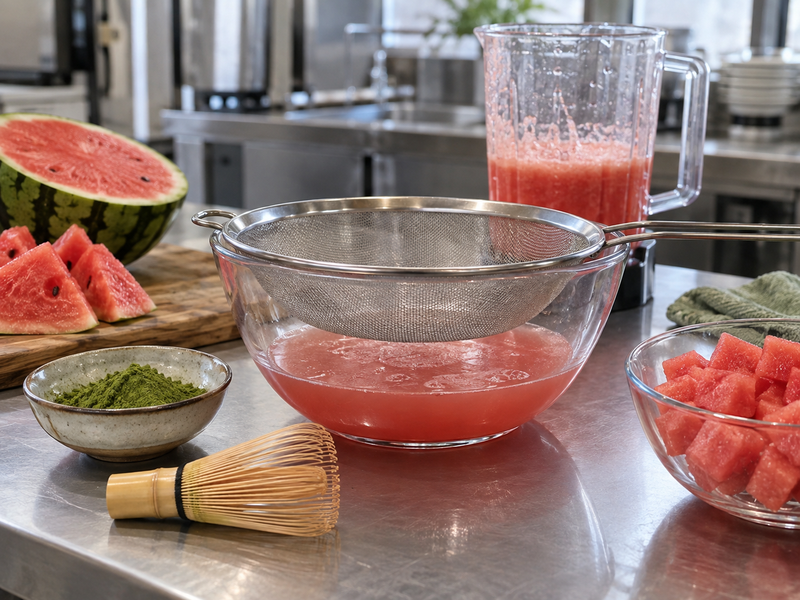
Compare texture before adding tea
Blend one prepared fruit batch with a recorded method. Divide the result and compare an unstrained portion with one passed through the intended sieve. Keep the mesh or straining equipment consistent. A fine filter and a coarse kitchen sieve can produce different textures and different usable yields.
| Preparation | What to observe | What to weigh |
|---|---|---|
| Unstrained blend | Pulp and foam | Total prepared juice |
| Coarsely strained | Remaining fine particles | Juice and retained pulp |
| More finely strained | Smoothness and flavor strength | Additional yield loss |
| Remixed before service | Uniformity between portions | Portion consistency |
Taste the fruit preparation alone. Check whether it feels watery, pulpy or gritty and whether the chosen serving utensil works. A problem already present in plain juice should not be attributed to matcha when the two are combined later.
Record how foam is handled before measuring portions. If one employee pours mostly foam while another waits for liquid to settle, equal looking volumes may deliver different amounts of juice. Weight based portions can help, but the preparation and remixing procedure still need to be defined for a consistent customer drink.
4. What measured drink can you use as a starting trial?
Build one modest sample first
For an unvalidated initial trial, prepare 1.5 g matcha with 40 g water, then combine it with 150 g of the selected watermelon juice and 30 g cold water. Add 80 g ice in a cup large enough to leave practical headspace. These amounts are a starting comparison, not an established formula or a promised cup yield.
Taste before adding sweetener. If the fruit is mild, compare a second sample with a measured small syrup addition while reducing an equal weight of the added cold water. Record the syrup concentration or product so the adjustment can be reproduced. A spoonful from an unidentified bottle is not a useful development record.
Keep the tea dose fixed while choosing the fruit balance. Once the juice proportion is acceptable, compare another tea dose in a separate round. This avoids choosing a winner without knowing whether more fruit, more tea or more sugar caused the preference.
Repeat the selected sample with fruit from another delivery before treating it as a seasonal standard. Fresh produce variation may require a documented adjustment rule or a narrower purchasing specification. It is better to discover that need during development than let every barista improvise a different correction.
5. How do you prevent tea clumps and confusing layers?
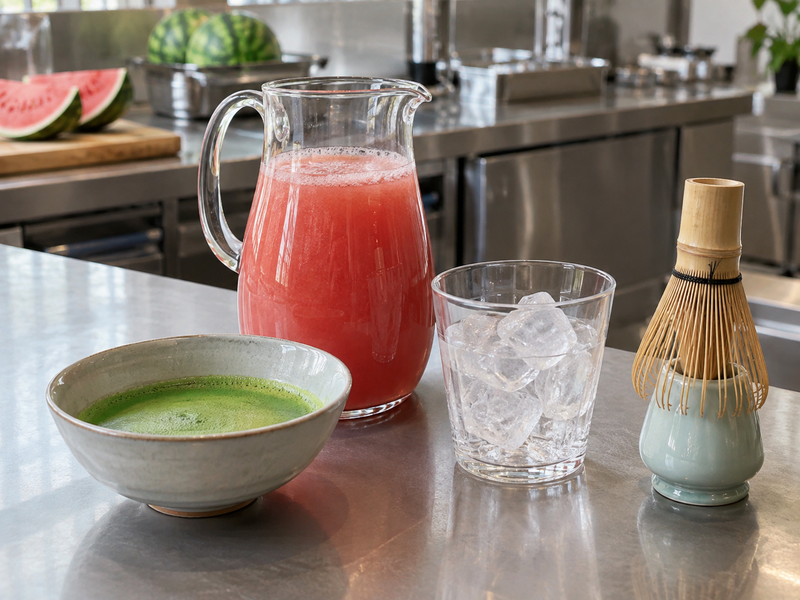
Whisk before the fruit is added
Prepare the tea separately with its measured water. Sift clumped powder, whisk thoroughly and inspect the preparation vessel for dry patches. Adding dry matcha straight to cold fruit juice can make it difficult to tell whether visible particles are tea clumps or watermelon pulp.
| Visual issue | Check first | Useful response |
|---|---|---|
| Dark green clumps | Tea preparation | Improve initial dispersion |
| Pale watery bottom | Juice remixing and dilution | Standardize the fruit portion |
| Uneven first sip | Layering and straw position | Compare a mixed presentation |
| Excess foam | Blender and pouring method | Set a consistent juice procedure |
Matcha is a suspension rather than a completely dissolved flavoring. The Matcha Village solubility guide explains that distinction. A small amount of settling does not by itself reveal why a drink tastes weak, so check the formula and assembly before increasing the tea.
Photograph the mixed drink as well as the layered version. Pink and green components will not necessarily remain visually distinct after normal stirring. Choose a presentation that still looks acceptable when consumed as intended, and give staff a reference based on that real appearance.
6. How can you handle changing watermelon sweetness?
Use a recorded acceptance check
Taste a small sample of each prepared juice batch under the cafe’s normal hygiene procedure. Compare it with the product brief: the fruit should have a recognizable watermelon character, an acceptable texture and no off notes. A bright pink color alone cannot confirm that the drink will taste the same as yesterday’s.
If the business uses a refractometer, train staff in its operation and record the measurement as one piece of information. A soluble solids reading can help describe variation but does not replace sensory assessment or establish food safety. Keep the instrument and sampling method consistent so records are comparable.
Write a limited adjustment rule only after trials have shown it works. That might allow a defined syrup change within an approved recipe range, with a supervisor checking batches outside it. Do not let staff conceal poor fruit quality by adding more sweetener until the drink reaches a familiar number.
Lemon, lime, mint or vanilla should each be treated as a deliberate flavor addition. They can alter how the fruit and tea are perceived, so introduce them one at a time. A watermelon drink that needs several strong flavors to be recognizable may need a better fruit specification rather than more additions.
7. Which ice and cup checks matter during service?
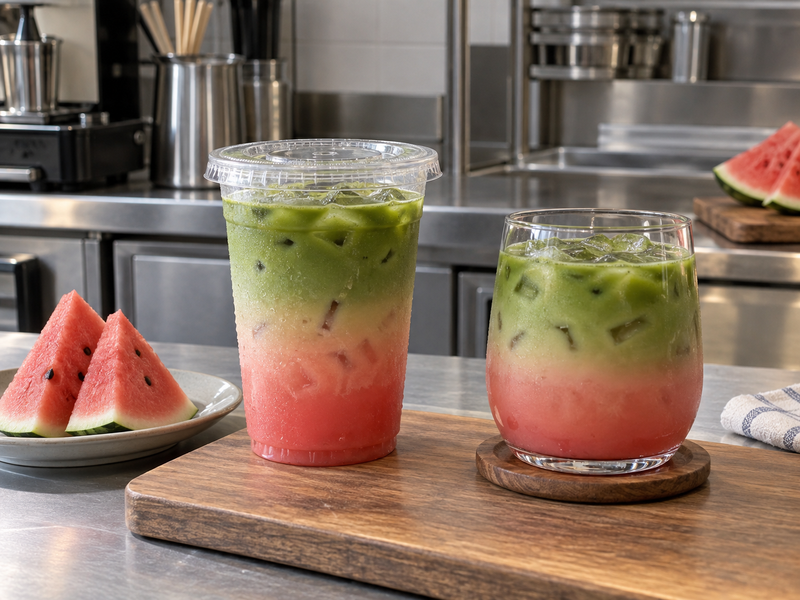
Measure displacement and dilution
Use the actual ice shape and cup from the cafe. Large cubes, small cubes and crushed ice do not occupy a cup in the same way, and their handling can change the liquid portion staff pour. Establish a weight and assembly method that leaves room for the lid and any garnish.
| Service check | Observation | Decision |
|---|---|---|
| Freshly assembled cup | Fill and headspace | Correct cup size |
| Normal carrying interval | Color and dilution | Acceptable serving window |
| Stirred drink | Flavor through the cup | Handoff instruction |
| Garnished cup | Ease of lid closure | Garnish size or omission |
Assess the drink after the usual delay between ordering and drinking, recording the actual interval used. Do not turn a tasting observation into an unsupported storage claim. This check concerns the customer’s experience during service, while holding and shelf life belong to the cafe’s formal food handling controls.
A watermelon wedge can look appealing but may interfere with a takeaway lid or add preparation time. Test a simple version without it before deciding the garnish is necessary. If used, record its size and preparation so the advertised portion does not depend on the employee making the cup.
8. What should the cafe prepare in advance?
Separate preparation from assembly
Decide which steps belong in the preparation area and which happen at the bar. Washing and cutting a whole melon during a busy drink order is impractical. A documented juice preparation step can leave the barista with measured components, provided the business has appropriate handling, labeling and holding procedures for them.
Keep prepared juice identifiable by batch and preparation record. Use the approved cold holding system and container practices. Do not infer a usable period from smell, bright color or a household recipe. The responsible manager should set the procedure based on the actual product and applicable food safety requirements.
Plan remixing if the chosen juice separates during the approved holding period. Specify a clean method that distributes the component before portioning without introducing excessive foam. A recipe can be correct on paper while the first and last cups from a container differ because this step is missing.
For a central kitchen supplying several cafes, evaluate transport and receiving as part of the process. A successful freshly blended sample at one location is not enough evidence for a distributed juice component. Give each receiving site the exact preparation identity and service instructions used in the approved trial.
9. How do you calculate the true fruit cost per drink?
Follow the weight from melon to cup
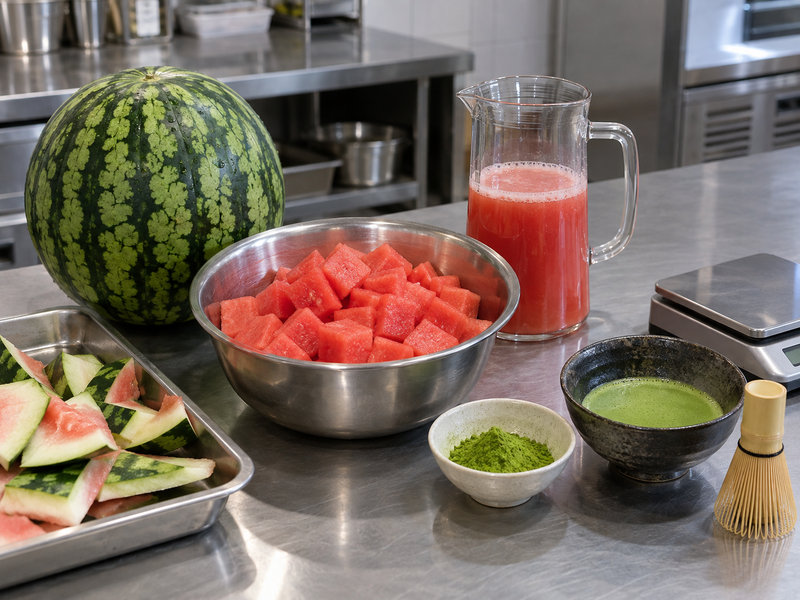
Create a simple yield record for each trial delivery. Weigh purchased fruit, prepared flesh and the juice after the chosen straining method. Then divide usable juice by the selected portion weight to estimate theoretical cups, with operational waste recorded separately. This is more informative than using the supermarket price of one melon.
| Weight or cost | What it reveals | Who needs it |
|---|---|---|
| Whole melon intake | Purchase basis | Buyer |
| Prepared flesh | Trimming yield | Prep supervisor |
| Strained juice | Processing yield | Recipe developer |
| Juice per cup | Portion cost | Bar manager |
| Tea and packaging | Remaining direct cost | Menu planner |
Include labor for washing, cutting, blending and cleaning equipment. A fruit drink with a low ingredient price can still occupy substantial preparation time. Compare that workload with the expected sales rather than assuming a seasonal special will automatically justify a large batch.
When evaluating matcha quotes, use the selected dose in this drink. Request samples from the intended supply lot and taste them with the chosen watermelon preparation. An ingredient approved only in a milk latte has not yet been assessed for this lighter fruit application.
10. What evidence should support the launch decision?
Complete a second delivery trial
Make the selected recipe from another fruit delivery and ask a different trained employee to prepare it. Compare the juice yield, required adjustment, drink appearance and service time with the first trial. This checks whether the recipe survives ordinary variation rather than only one particularly favorable melon.
Keep the accepted preparation method, cup, ice weight and tea dose together in the station instructions. Add photographs of the fruit preparation and the drink after stirring. Staff can then recognize both the correct input and the appearance customers will see while drinking it.
Decide what happens when fruit falls outside the approved range. The response might be a manager review, a different approved use or a temporary pause in that menu item. A clear decision prevents a poor batch being pushed into service simply because printed menus already exist.
Before buying the launch quantity, share the projected tea consumption and sample requirements with the supplier. Confirm the available pack format and prepare one final cup using the proposed tea lot, a normal fruit delivery and the actual takeaway materials.
Frequently asked questions
Q1: Must watermelon juice be strained?
No. Compare the texture and usable yield of strained and unstrained versions. Choose one method and document it so staff do not alternate between different products.
Q2: Can a fraction of a melon be the recipe measure?
It is too variable for consistent cafe portions. Weigh the prepared juice after trimming and processing, then use a defined amount per drink.
Q3: Does the rind need washing before cutting?
Yes. Follow appropriate produce handling, including washing the whole melon in clean running water and using clean cutting tools and surfaces.
Q4: Can I add milk to the proposed drink?
Treat it as a separate trial with the selected milk and juice. The water based starting formula does not establish the flavor or physical behavior of a latte.
Q5: Should the finished drink stay in two layers?
Only if that presentation also works during normal drinking. Assess it after stirring and carrying; attractive layers alone do not establish a balanced first sip.