
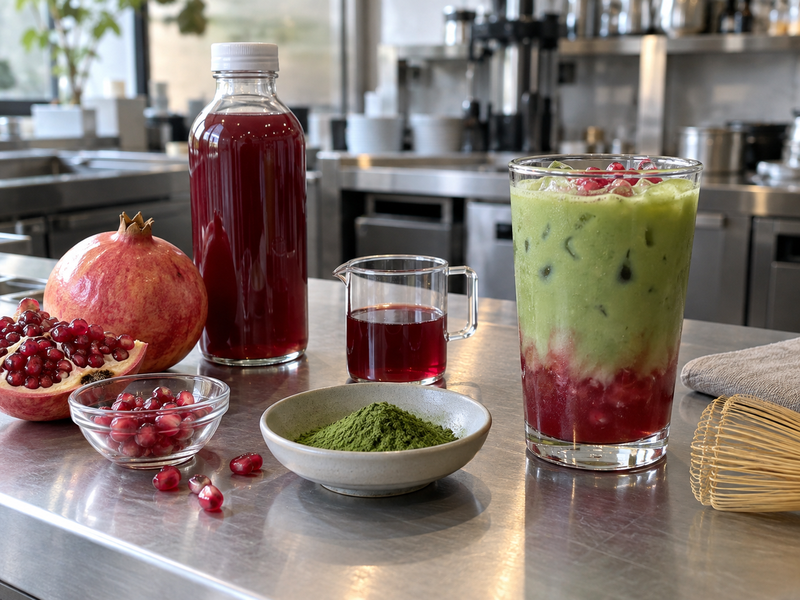
Pomegranate matcha gives a cafe a tart fruit and green tea option, but its strongest visual feature can also cause confusion. Red juice and green tea may look distinct when poured in layers, then form a muted mixed color during drinking. The recipe needs to work in both states.
For buyers and beverage developers, the important decisions are the exact juice, the amount of dilution and the tea dose that remains pleasant with it. This guide proposes measured trials and service checks. It does not present a validated bottled beverage formula, a shelf life or a health claim.
Contents: 1. What does pomegranate matcha mean on your menu | 2. How can buyers distinguish juice from blends and concentrates | 3. Which dilution trials reveal a useful starting balance | 4. How do you prepare matcha for a tart fruit drink | 5. What should you expect from the mixed color | 6. How can you adjust sweetness without obscuring the fruit | 7. How do garnish and ice affect the drinking experience | 8. What extra development does a bottled version require | 9. Which numbers make a supplier comparison useful | 10. What should the final station sheet show
1. What does pomegranate matcha mean on your menu?
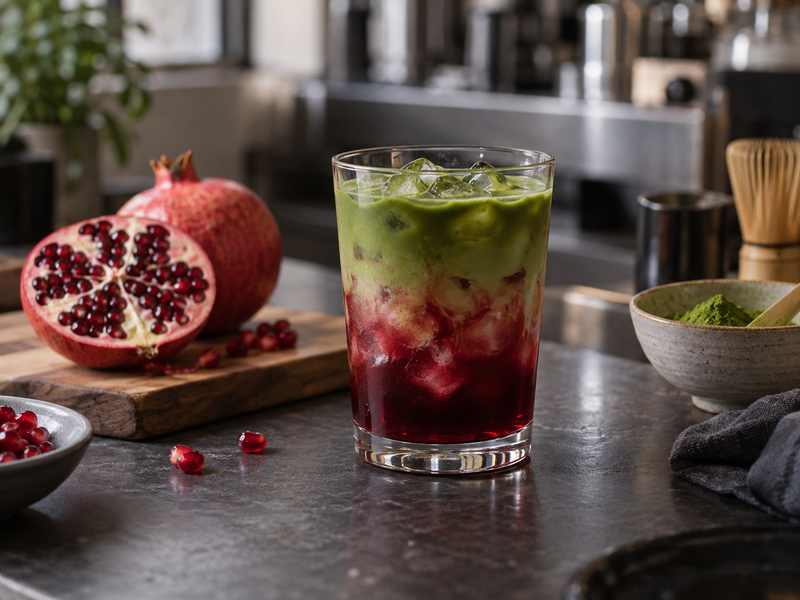
Specify the fruit ingredient in plain language
A juice and tea drink, a sweetened syrup drink and a latte can all carry the same short name. Decide which one the cafe will serve and make the recipe explicit. The description should help staff answer what is in the cup without relying on the color or a picture of a whole pomegranate.
Yay! For Food’s pomegranate matcha iced tea combines a prepared tea component with pomegranate juice. It provides a useful example of a water based drink. The cafe still needs to specify the juice product and weigh a portion that fits its own glass and service routine.
| Format | Ingredient to define | Customer expectation |
|---|---|---|
| Juice and tea | Pomegranate juice identity | Fruit flavor with tea |
| Sparkling version | Juice and carbonated water | Noticeable bubbles |
| Syrup based drink | Named flavored syrup | A sweetened flavor profile |
| Milk variation | Fruit preparation and milk | A separately tested latte |
Use the first development round to choose the water based balance. Additional milk, citrus or flavored syrups should enter later as distinct trials. Otherwise the team may approve a complicated drink without knowing which ingredient makes it work.
2. How can buyers distinguish juice from blends and concentrates?
Read beyond the front label
Ask for the ingredient statement and the product’s preparation instructions. A pomegranate flavored beverage, a blend containing other juices and a single fruit juice are different inputs. A concentrate may require dilution before it is comparable to a ready to drink product, even when both use the same fruit name prominently.
POM Wonderful’s 100% pomegranate juice page lists pomegranate juice from concentrate as its ingredient. That is a concrete example of why the words from concentrate do not by themselves mean a flavored syrup. Read the complete specification rather than inferring composition from one phrase.
Request pack size, opening instructions and available batch information. If a cafe cannot use a large container within its approved handling period, its apparent price advantage may disappear through waste. Choose a purchasing format that fits realistic sales, not just the lowest quoted price per liter.
Taste the juice alone before development. Record tartness, sweetness and the drying sensation it leaves. Keep that note with the supplier identity. When the finished tea tastes harsh, this reference helps separate the juice contribution from the matcha rather than assigning every unpleasant sensation to the tea powder.
3. Which dilution trials reveal a useful starting balance?
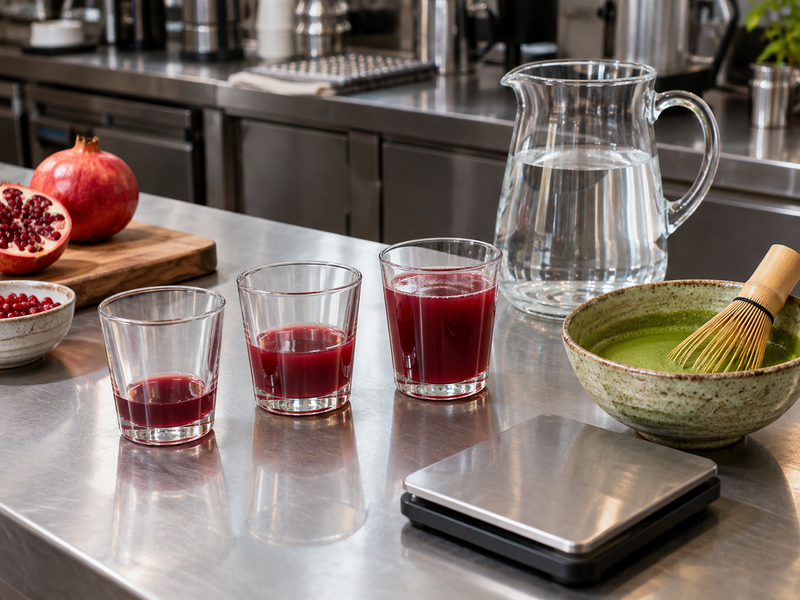
Fix tea while changing fruit strength
The table below proposes three unvalidated samples with the same tea and total liquid weight. Prepare 1.5 g matcha with 40 g water for each. Use a ready to drink pomegranate juice, not undiluted concentrate. Keep the juice brand and lot the same for all three comparisons.
| Trial | Pomegranate juice | Extra cold water | Prepared tea component |
|---|---|---|---|
| Light fruit | 40 g | 140 g | 1.5 g tea with 40 g water |
| Middle fruit | 70 g | 110 g | 1.5 g tea with 40 g water |
| Stronger fruit | 100 g | 80 g | 1.5 g tea with 40 g water |
Taste each before deciding whether sweetener is necessary. If you add a syrup, weigh it and reduce a corresponding amount of the extra water in the next trial. Identify its concentration or commercial product so the resulting sweetness can be reproduced.
Do not assume the strongest fruit sample is the most suitable premium option. A lower juice proportion may allow the tea to remain identifiable and make a full portion more comfortable to drink. Record the preferred balance and the reasons, then test tea strength separately instead of changing every ingredient at once.
4. How do you prepare matcha for a tart fruit drink?
Inspect the tea on its own
Weigh, sift and whisk the tea with the specified preparation water before it meets the juice. Inspect the vessel for dry powder on the sides or bottom. The dark color of a mixed pomegranate drink can hide clumps that would be obvious in a plain matcha preparation.
Taste a correctly prepared tea sample separately during development. Record its flavor at the selected dose, then compare it in the fruit drink. This gives the team a reference for deciding whether a harsh finish comes from a large tea addition, the juice itself or the combination.
Keep water quality and preparation method consistent across supplier samples. If one sample receives more water or a different whisking time, a flavor comparison becomes difficult to interpret. Include the preparation water in the final drink weight rather than treating it as an invisible processing aid.
The Matcha Village beverage formulation guide can help organize those records. For this drink, retain the juice identity alongside the tea lot because both shape the result. A powder selected for a sweet milk latte should be evaluated again in this tart, water based setting before purchase approval.
5. What should you expect from the mixed color?
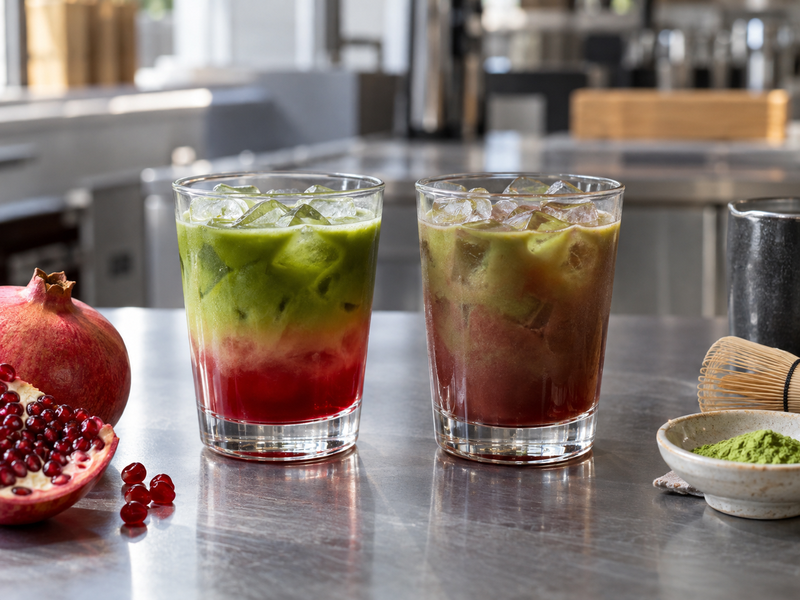
Photograph the drink customers actually consume
Prepare one layered sample and one fully mixed sample using identical quantities. View both under the cafe’s normal lighting. Their appearances answer different questions: one shows the handoff presentation, while the other shows the drink after the customer stirs or carries it. Neither should be edited into a brighter color for the acceptance record.
| Appearance check | What to keep consistent | Useful evidence |
|---|---|---|
| Fresh layers | Pouring sequence and cup | Handoff photograph |
| After stirring | Stirring method | Actual mixed color |
| Normal service delay | Recorded elapsed time | Customer experience |
| Supplier comparison | Juice and light | Fair tea sample assessment |
A muted mixed color is not automatically a failed recipe, but it should match the menu promise. If the marketing photograph suggests a permanently bright green drink, revise the description or presentation before launch. Adding more tea solely to force the color can create a less pleasant flavor.
Avoid using the photograph as a shelf life assessment. Color observations can support a quality discussion, but they do not establish microbiological suitability or the storage period of a prepared beverage. Keep those decisions within the appropriate technical review for the finished product.
6. How can you adjust sweetness without obscuring the fruit?
Make small recorded changes
Once the juice fraction is chosen, compare a version without added sweetener with a modest measured addition. Use the same syrup concentration in every trial. Write down the full cup formula after each change, since a sequence of small informal additions can produce a final drink that nobody can reconstruct accurately.
Assess a full tasting portion rather than one tiny sip. A drink can seem exciting at first and become tiring as tartness, sweetness and tea accumulate through the cup. Ask tasters what they would change after several sips and record whether the fruit and tea remain distinguishable.
Additional lemon or lime deserves a separate comparison. Pomegranate juice already supplies its own tart character, so citrus should have a defined purpose rather than being added automatically because another fruit tea recipe uses it. Compare the chosen base with and without the proposed amount.
Do not describe a no added syrup version as sugar free. The juice ingredient still matters to the finished product’s composition. Any nutrition statement should be based on the actual ingredients and serving size, with appropriate review for the market, rather than the absence of a syrup bottle at the station.
7. How do garnish and ice affect the drinking experience?
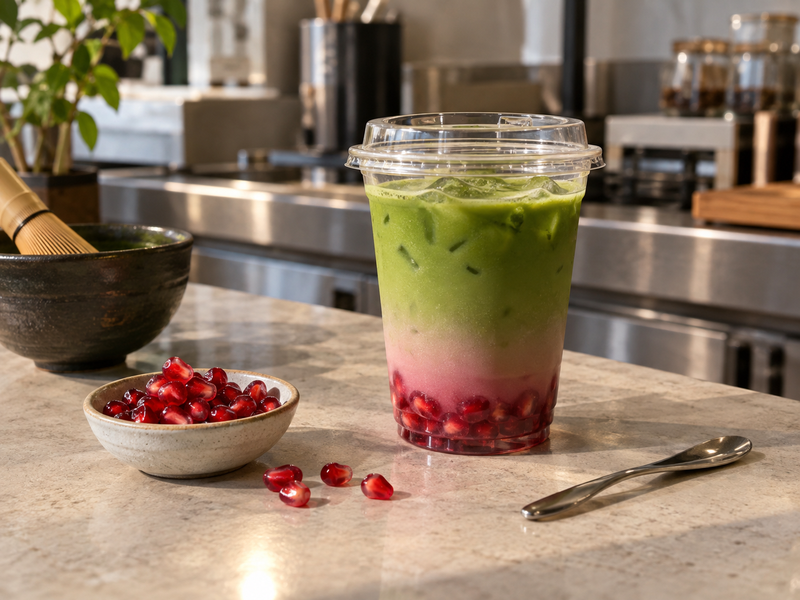
Test the bottom of the cup
Pomegranate arils can signal the flavor, but they also introduce a solid component. Decide whether they belong in the drink, on a separate presentation or nowhere at all. Check whether customers can consume them comfortably with the selected straw, lid or spoon, and whether staff can portion them consistently.
| Cup detail | Observation to make | Possible decision |
|---|---|---|
| Arils at the bottom | Access with the serving utensil | Omit or offer a spoon |
| Ice portion | Liquid displacement | Set a weighed amount |
| Tea top layer | First sip concentration | Stir before handoff |
| Takeaway lid | Clearance and leakage | Revise garnish or cup |
Taste the cup after the normal service interval with the intended ice. Record that interval as a tasting condition, not a permission to hold the beverage without controls. Compare the first and later sips to see whether dilution improves the drink or leaves it weak.
If an aril garnish is used, include preparation loss and handling in the operating plan. A garnish that adds significant work but little flavor may be optional for seated service and unsuitable for takeaway. Keep the menu photograph aligned with whichever version the customer is actually ordering.
8. What extra development does a bottled version require?
Treat the distribution format as a new project
A drink assembled to order is not automatically suitable for bottling. Distribution introduces a longer interval before consumption, different packaging and additional requirements for processing and shelf life. A successful cafe tasting cannot establish a safe commercial process or an acceptable retail storage period.
Give a qualified beverage manufacturer the complete ingredient list, target flavor, intended package and distribution conditions. Ask what testing and process development are needed. Avoid assigning a shelf life from another brand’s juice bottle or assuming that the fruit’s tart taste establishes the finished drink’s safety.
Physical behavior also needs assessment. Record sediment, separation, package appearance and flavor under the proposed validated conditions. Instructions such as shake before drinking should reflect an evaluated product, not an attempt to conceal a process or stability problem that has not been investigated.
For an OEM inquiry, distinguish between a dry tea ingredient request, a prepared component and a finished packaged beverage. Each requires different information and capabilities. Ask the prospective partner to confirm the scope it can actually supply before discussing artwork or forecasting a large retail order.
9. Which numbers make a supplier comparison useful?
Compare the complete served portion
Calculate cost from the selected juice, tea, sweetener, ice service and packaging. Record how much of each opened pack becomes a saleable drink. An inexpensive bulk container can be a poor fit for a low volume menu item if the approved handling procedure results in substantial unused product.
| Record | Unit | Purchasing use |
|---|---|---|
| Juice portion | Grams per cup | Compares pack quotations |
| Tea dose | Grams per cup | Links sample approval to price |
| Sweetener | Product and weight | Prevents hidden recipe changes |
| Garnish | Usable weight and labor | Shows cost beyond decoration |
| Pack remainder | Discarded amount | Matches pack size to demand |
Keep juice and matcha identities on the same sample sheet. If procurement changes one, make a fresh cup before accepting the combination. A recipe adjusted for a tart single fruit juice may not suit a sweeter blend, even when the replacement arrives in a similar bottle.
For tea orders, request available specifications and a lot reference for the sample. Share the drink’s water based application and chosen dose. Those details let the supplier respond to a practical requirement instead of guessing from a request for the greenest powder available.
10. What should the final station sheet show?
Make the mixed result the acceptance reference
List the exact juice, matcha, water and optional sweetener weights, followed by ice and any garnish. State whether the drink is mixed before handoff. Include the cup and lid identities so staff do not unknowingly change the liquid portion when packaging stock is replaced.
Add a photograph of the accepted mixed drink and a brief flavor description. Staff should know that fruit and tea are both expected to remain identifiable, with the approved level of sweetness. A picture of separated red and green layers alone leaves too much room for interpretation during service.
Have another barista make a short sequence of orders, then compare the beginning and end of the run. Watch for juice portion drift, tea left in the preparation vessel and extra ice added to fill an undersized liquid portion. Correct the written method where those differences appear.
Send the chosen tea dose and projected cup count to the buyer, together with the approved juice specification. Before the first large order, prepare a final comparison using the proposed production lot and retain the completed sample record with the supplier quotation.
Frequently asked questions
Q1: Is juice from concentrate the same as syrup?
No. Read the full ingredient statement and preparation instructions. A ready to drink juice from concentrate can differ substantially from a sweetened flavored syrup.
Q2: Why does the mixed drink look less green?
The visible result includes both red juice and green tea. Judge and photograph the fully mixed drink rather than expecting the original layers to remain unchanged.
Q3: Can I omit added sweetener?
Yes, if the selected juice and tea balance tastes acceptable. Assess it first without syrup and distinguish no added syrup from a sugar free claim.
Q4: Are pomegranate arils necessary?
No. They are an optional solid component that requires portioning and suitable service utensils. The measured juice can provide the fruit flavor without them.
Q5: Can the cafe formula be bottled for retail?
Only after appropriate formulation, processing, packaging and shelf life development. A made to order recipe does not establish a validated packaged beverage.