
Grape matcha can mean a juice based iced tea, a sparkling drink with fruit, or a milk drink with grape flavoring. Those versions need different recipes and buying specifications. For a cafe, choosing one clear format makes it easier to control sweetness, cup fill and the amount of fruit customers actually taste.
The useful starting point is a small measured drink, followed by a service check in the real cup. The quantities below are proposed development trials, not tested commercial formulas. Use them to organize comparisons while following your ingredient suppliers’ instructions and the cafe’s food handling procedures.
Contents: 1. Which grape matcha format belongs on your menu | 2. How should you specify the grape ingredient | 3. What is a practical first juice and tea trial | 4. How do you prepare the tea without leaving dry pockets | 5. What changes when sparkling water is added | 6. How should fresh or frozen grapes be used | 7. How do you judge sweetness and tea balance | 8. Which details make takeaway service reliable | 9. How can you compare ingredient cost with service effort | 10. What should you confirm before adding the drink to the menu
1. Which grape matcha format belongs on your menu?
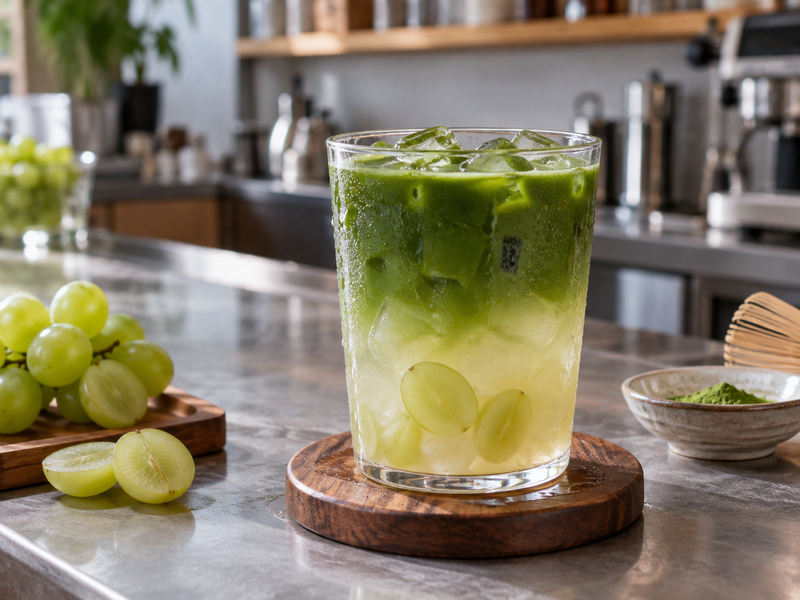
Distinguish juice from fruit decoration
A few grapes in sparkling water produce a different experience from a drink containing a measured portion of grape juice. Customers may see similar fruit in the photograph but receive very different sweetness and flavor. Describe the base clearly in the recipe and in the menu wording used by staff.
Nekohama’s frozen grape matcha combines frozen grapes, sparkling water and separately prepared tea. That recipe provides an example of the sparkling fruit route. It does not demonstrate that whole fruit can replace a measured juice ingredient in another formula.
| Format | Main grape component | Service question |
|---|---|---|
| Iced fruit tea | Measured grape juice | Is the tea still identifiable? |
| Sparkling grape tea | Juice plus sparkling water | Can staff preserve the bubbles? |
| Fruit accented tea | Prepared grape pieces | Does the menu describe it accurately? |
| Grape milk drink | Defined fruit preparation and milk | Is the mixture physically acceptable? |
Select the format that fits the station. A carbonated drink needs gentle assembly; a blended fruit drink needs equipment and cleaning time. Decide before purchasing a large pack of puree or promising a visually layered drink that staff cannot reproduce during a rush.
2. How should you specify the grape ingredient?
Buy by composition and performance
Fresh fruit, juice, concentrate and flavored syrup belong on separate purchasing lines. Ask a juice supplier for its ingredient list, concentration or dilution instructions, pack format and storage guidance. A product described as grape flavored may contain other ingredients, so its front label alone is not enough to build the formula.
For fresh fruit, select an available type and record whether it is seedless, its skin color and its intended use. Green and dark grapes can give different appearances when cut or blended. Do not make a specific cultivar promise on the menu unless the purchase specification and deliveries support it.
The California Table Grape Commission’s foodservice guide advises refrigerated storage on receipt and rinsing grapes before service or recipe use. Apply appropriate produce handling to your own supply rather than treating freezing as a cleaning step.
Keep a note of usable fruit yield after damaged berries, stems and any seeds are removed. This gives purchasing a realistic cost for the garnish or puree. A cheap carton with substantial preparation loss may cost more per usable portion than a more consistent delivery.
3. What is a practical first juice and tea trial?
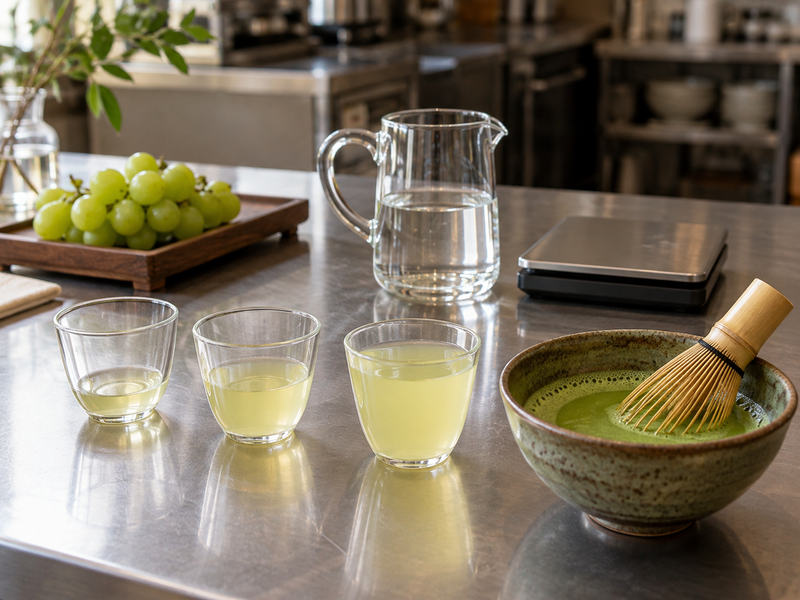
Hold the total liquid weight constant
Start with a still drink so carbonation does not complicate the first tasting. The following three suggested samples use the same tea and total liquid weight. They are unvalidated starting points. Prepare 1.5 g matcha with 40 g water for each sample using a consistent whisking method, then add the remaining ingredients.
| Sample | Grape juice | Additional cold water | Tea preparation |
|---|---|---|---|
| A | 60 g | 120 g | 1.5 g tea with 40 g water |
| B | 90 g | 90 g | 1.5 g tea with 40 g water |
| C | 120 g | 60 g | 1.5 g tea with 40 g water |
Use one juice lot and taste without added syrup first. Add the same weighed ice portion only after the initial liquid comparison. This makes it easier to distinguish the effect of juice proportion from different amounts of dilution during preparation.
Record the actual juice identity and any manufacturer required dilution. Concentrate should not be substituted gram for gram into this table. If the strongest fruit sample hides the tea, compare a smaller juice portion before increasing matcha. The useful result is a balanced drink, not simply the highest possible amount of both ingredients.
4. How do you prepare the tea without leaving dry pockets?
Make a separate tea dispersion
Weigh and sift the powder before whisking it into the measured preparation water. Use a vessel that allows the whisk or mixer to reach the whole portion. Inspect the bottom and sides for unmixed powder before adding the tea to the fruit base; dark clumps become harder to distinguish once juice is present.
Keep the preparation water included in the formula. Adding an informal splash to loosen a thick tea portion changes both the drink volume and the dilution. If the station needs a different preparation ratio, revise the whole recipe and compare it in the intended cup.
Tea particles may settle, so decide whether the drink is served mixed or with a visible top layer. A layered photograph is not evidence that the layers will remain separate through carrying and drinking. The Matcha Village beverage formulation guide provides a place to organize the tea, liquid and service variables.
For a cafe using a premade tea component, establish its preparation, holding and remixing procedure through the responsible food safety process. Do not choose a storage period because the color still looks acceptable. Evaluate the actual prepared component at the point it enters the customer drink.
5. What changes when sparkling water is added?
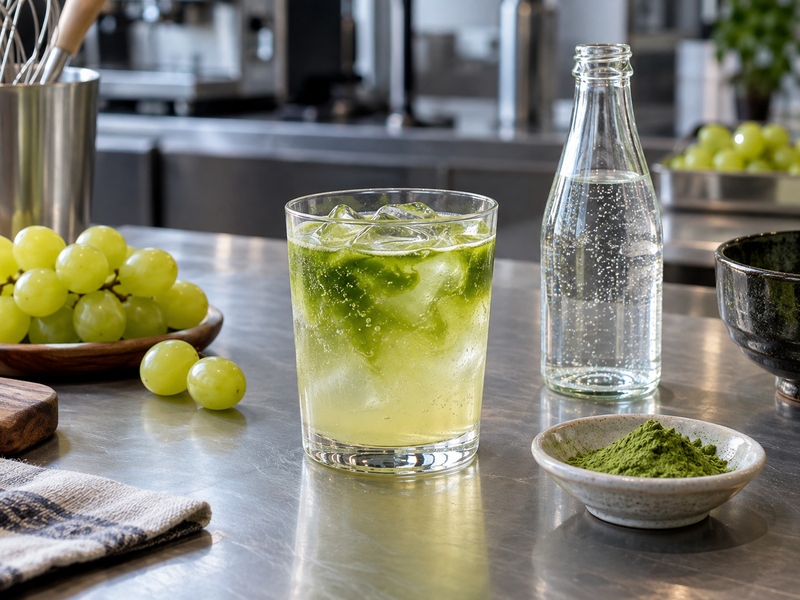
Build the drink gently
After choosing a still juice balance, replace a measured part of the cold water with chilled sparkling water in a new trial. Keep the total liquid quantity recorded. This comparison concerns carbonation as well as flavor, so use the actual water product and bottle handling planned for service.
| Assembly decision | What to observe | Practical adjustment |
|---|---|---|
| Sparkling water temperature | Bubble activity on pouring | Use the approved chilled supply |
| Cup headspace | Foam nearing the rim | Reduce fill or change cup |
| Stirring method | Loss of visible bubbles | Use a brief gentle mix |
| Tea addition | Foaming and uneven distribution | Compare a slower pour |
Do not shake a closed vessel containing sparkling water. Prepare the tea and juice separately where needed, then assemble the carbonated version in an open service cup. Test whether the final drink requires a gentle stir for a consistent first sip.
Include opened bottle management in the service rehearsal. The first cup from a newly opened bottle may differ from a later cup if the bottle is handled poorly. Record acceptable performance under the cafe’s real service pattern instead of assuming every portion will match a freshly opened test bottle.
6. How should fresh or frozen grapes be used?
Give the fruit a defined job
Choose whether the fruit is a garnish, an edible component or the principal source of grape flavor. If it is mostly decorative, keep that distinction clear when staff describe the drink. Frozen fruit can change how the cup looks and feels without supplying the same grape intensity as a weighed juice portion.
Prepare fruit according to the cafe’s produce procedure and choose a size appropriate to the intended customer and serving utensil. Halved seedless grapes can be easier to portion and inspect than irregular clusters with stems. Check the actual fruit before service; seedless on a purchase description does not excuse ignoring damaged pieces.
Weigh the garnish rather than relying only on a berry count when fruit sizes vary. Record how much space it occupies alongside the planned ice. A generous handful can crowd the cup, reduce the liquid portion and make the drink inconsistent even when staff follow every other measure.
If a frozen component is used, test it from the actual storage and portioning system. Pieces that freeze together may slow assembly. Freezing does not establish a validated shelf life or make poor quality produce suitable for service, so retain the normal ingredient acceptance and handling controls.
7. How do you judge sweetness and tea balance?
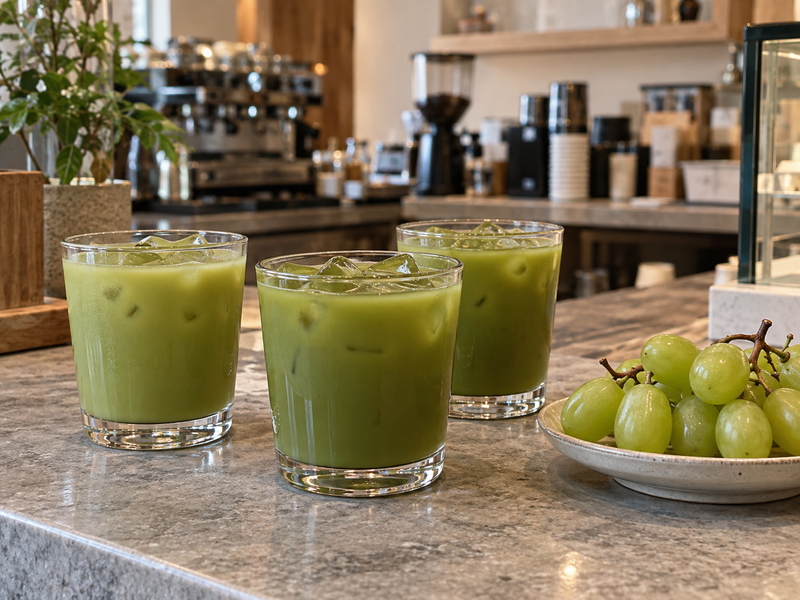
Compare the first and later sips
Taste the drink when assembled, then again after the normal interval between handoff and drinking in your setting. Record that interval. A takeaway customer may experience more melted ice than a taster standing beside the bar, while a fruit piece can release flavor differently from juice already mixed throughout the cup.
| Tasting point | Question | Possible next trial |
|---|---|---|
| First sip | Is grape clear without overpowering tea? | Adjust juice fraction |
| Middle of cup | Does sweetness remain comfortable? | Reduce added syrup if used |
| After stirring | Is the drink more balanced? | Change serving instructions |
| Later sip | Has dilution become excessive? | Revisit ice and liquid weights |
Ask tasters to describe astringency and bitterness separately where possible. A rough drying sensation should not automatically be corrected with more sugar. Compare the juice alone and the tea alone to identify which component needs closer attention.
If syrup is needed, introduce one measured addition at a time and include its composition in the recipe. A sweetened grape syrup contributes both flavor and sugar; plain syrup contributes a different change. Keep those comparisons separate so the final specification does not depend on whichever bottle happens to be available.
8. Which details make takeaway service reliable?
Test the complete cup arrangement
Assemble the drink in the intended cup with the actual lid and serving utensil. Check headspace, leakage during ordinary carrying and whether the garnish can be reached comfortably. A broad photography glass may hide a problem that appears in a narrower takeaway cup filled with the same ingredients.
Confirm whether the drink should be stirred before handoff or by the customer. Train staff to give one clear instruction if needed. Avoid a presentation that looks attractive only when completely undisturbed but delivers a concentrated tea sip followed by plain juice when consumed normally.
Record the sequence on the station sheet: fruit if used, ice, juice base, remaining water and prepared tea, in the order selected by the trial. Different orders can change foaming and layering. Staff should not have to infer the method from a menu photograph during a queue.
Keep the menu description precise. Grape juice, grape syrup and fresh grape pieces are different ingredients. Any caffeine or nutrition information should come from appropriate product data and the actual finished portion, not an assumption that adding fruit makes the tea caffeine free or supplies a particular health benefit.
9. How can you compare ingredient cost with service effort?
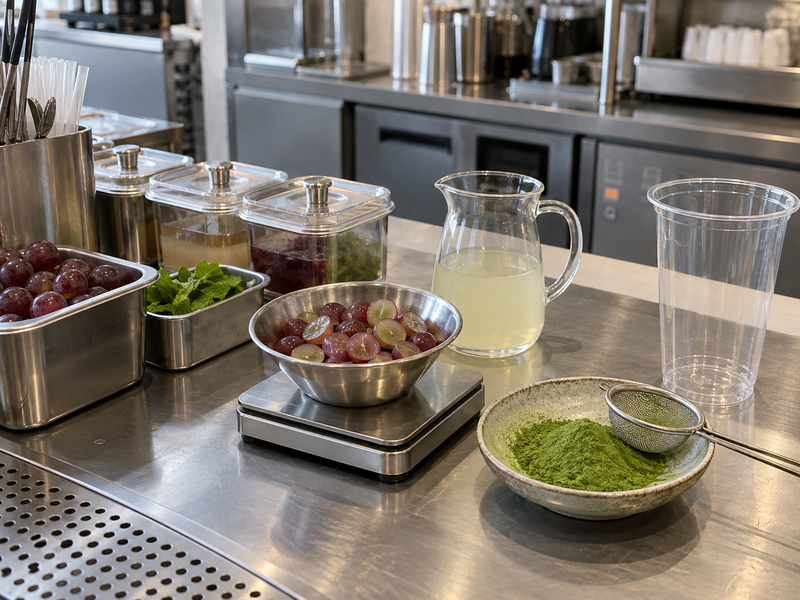
Track what enters the customer cup
Use the chosen liquid and fruit weights to calculate cost per finished drink. Include fruit preparation losses and discarded components under the approved handling procedure. The quantity purchased is not identical to the amount sold, especially when a garnish uses only selected intact berries.
| Component | Record | Business question |
|---|---|---|
| Grape juice | Grams per cup and pack yield | Is the pack size practical? |
| Fresh fruit | Usable portion after trimming | Does the garnish justify its labor? |
| Matcha | Grams at the accepted strength | Which sample works at this dose? |
| Sparkling water | Saleable cups per opened bottle | Is service waste acceptable? |
| Assembly | Time for a short realistic run | Can the station meet demand? |
Compare tea suppliers at the same selected grape balance. Keep samples coded during tasting and retain the lot identities afterward. A low quotation has little value if the proposed lot needs a different recipe that the staff have not assessed.
For multiple locations, specify the juice product and substitution rule as clearly as the matcha. Otherwise branch differences may be blamed on tea when the real change is a different grape concentrate, sweeter syrup or larger fruit garnish.
10. What should you confirm before adding the drink to the menu?
Rehearse a normal service sequence
Have a second barista make several drinks from the written recipe using the intended equipment. Weigh one completed drink and compare its appearance and flavor with the approved sample. Watch for unrecorded water additions, excess ice or a garnish that displaces too much liquid.
Use the rehearsal to set a realistic station arrangement. Place the measured tea preparation where it can be added without spilling over the cup rim. Keep fresh fruit tools and containers within the cafe’s established hygiene system, and make the portion measure easy to use during a busy period.
Record the accepted juice lot, tea dose, fruit portion, ice weight and cup. Keep a simple photograph of both the newly assembled and mixed drink. Those references help staff understand what the customer should receive after normal stirring, not just what appears in an advertisement.
Before ordering launch stock, calculate expected consumption from the planned cup count and actual recipe. Request tea samples tied to the proposed supply lot, then make a final cup with the juice and packaging that will be used on opening day.
Frequently asked questions
Q1: Can whole grapes replace grape juice?
They serve different roles. Whole or cut fruit may add appearance and an edible component, but a juice formula needs a measured liquid ingredient to give consistent flavor throughout.
Q2: Can I use concentrate in the trial table?
Only after preparing it according to its specification or redesigning the formula. Concentrate and ready to drink juice should not be exchanged gram for gram.
Q3: Should sparkling grape tea be shaken?
Prepare noncarbonated components separately and add sparkling water gently in an open cup. Do not shake a sealed carbonated mixture.
Q4: Does grape matcha need milk?
No. The proposed comparison is a water and juice drink. A milk version needs separate flavor and physical stability trials with the selected fruit ingredient.
Q5: Is added syrup always necessary?
No. Taste the selected juice and tea combination first. If extra sweetness is needed, add a measured amount and record the actual syrup product.