
A powder that makes an appealing café latte can bridge inside a vending hopper or leave green residue in a mixer. Vending matcha has to suit the actual machine, water system, cup recipe, and cleaning route before an operator installs it across unattended sites. The Allreasons vending matcha product page distinguishes pure matcha for milk-module machines from latte powders for water-only equipment. Those are useful format categories, not evidence that any powder fits every machine. This guide sets up practical flow, dose, cup, and maintenance trials with recorded acceptance limits chosen by the operator and machine maker.
Contents
- 1. What does machine-ready vending matcha mean?
- 2. Which machine architecture sets the recipe?
- 3. How should powder flow be tested in a hopper?
- 4. How can dose accuracy be checked?
- 5. What cup tests reveal mixing problems?
- 6. How should water and milk be compared?
- 7. What cleaning access does the mix demand?
- 8. How should packs and refills be handled?
- 9. What should a site pilot measure?
- 10. What evidence supports a wider rollout?
1. What does machine-ready vending matcha mean?
Define performance at the machine, not in a hand whisk
Machine-ready means the specified powder dispenses, mixes, and produces acceptable cups in a named machine and recipe under normal service conditions. It does not mean every matcha powder is instant or that a pleasant whisked cup will behave in a dry hopper. Pure matcha particles may remain suspended differently from a formulated latte powder containing sweetener and creamer. Ask the supplier for an ingredient list, particle and handling information where available, pack size, storage guidance, and application advice for the exact sample.
Write a short acceptance sheet before trial. Include dose accuracy, visible clumps, sediment, color, flavor, cup temperature, cycle time, residue, and cleaning time. Set numeric limits from the machine specification and your customer promise, then record actual results. A proposed trial might compare the first cup after refilling with later cups near the end of a hopper load; this catches inconsistency hidden by a single demonstration. Matcha Village lists matcha latte powders and blends among its products, but its general company description does not establish vending-machine compatibility. Request samples for the chosen machine and verify them independently.
2. Which machine architecture sets the recipe?
Map every powder and liquid path
A water-only unit may need a complete latte mix if the desired drink includes creaminess and sweetness. A machine with a milk module can combine pure matcha or a less complete mix with its own milk stream, subject to mixing and cleaning capability. Some machines use powder canisters and whipper bowls; others have different dosing and mixing designs. Get the model manual and diagram before selecting a formula. The Allreasons reference describes these water-only and milk-module categories, but compatibility claims on one supplier page do not substitute for a run on your equipment.
Record hopper volume, auger type, canister outlet, mixing chamber, water flow, water temperature, cup size, milk path, and access for cleaning. Ask the machine maker which powder characteristics are supported. If the desired iced drink is not part of that machine’s setup, do not assume a hot-water recipe can simply be poured over ice. A proposed feasibility check is to run the same sample in two representative models and note where settings differ. Use the model name in every result so a passing cup is never mistaken for universal approval.
| Machine type | Recipe question | Equipment check |
|---|---|---|
| Water-only powder unit | Is a complete mix needed? | Dose and water mixing |
| Milk-module unit | Can matcha pair with milk stream? | Milk path and cleaning |
| Hybrid coffee and powder | Does matcha share hardware? | Residue and flavor carryover |
3. How should powder flow be tested in a hopper?
Watch both a full and a nearly empty canister
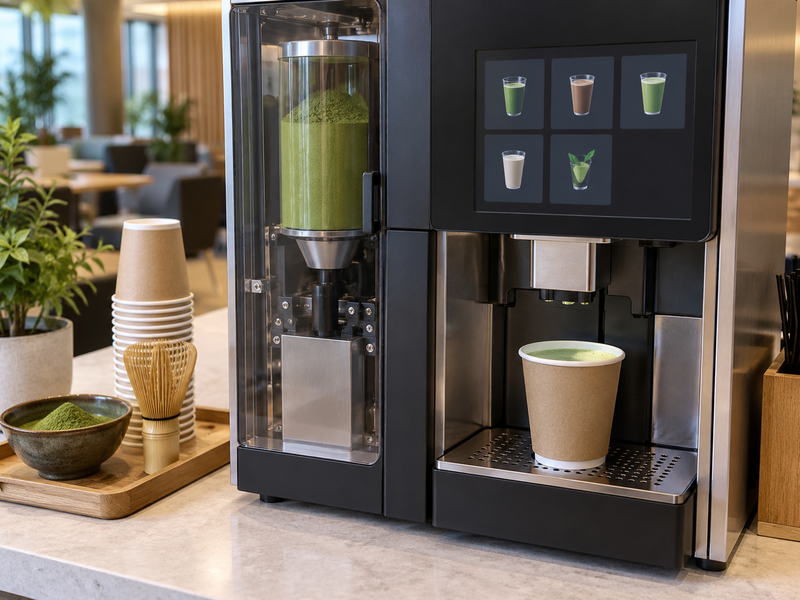
Fill the hopper using the intended commercial pack and normal refill method. Observe whether powder forms a stable bridge above the outlet, sticks to the walls, compacts near the auger, or spills during handling. Run repeated cycles at the machine’s usual site conditions, including an overnight idle period. Humidity, vibration, powder formulation, and hopper geometry can all affect flow. Record room conditions, remaining powder mass, and any manual intervention rather than describing flow as “good.”
Compare the start, middle, and end of a hopper load. A mix that dispenses well for twenty cups but stalls when low can still fail unattended service. For a proposed trial, log every no-dispense, partial-dispense, and canister tap event over a defined number of cycles. Choose the sample size and allowed fault rate before running it. If the powder clumps, determine whether it arrived that way, absorbed moisture during refilling, or picked up humidity inside the machine. Do not loosen a machine guard or alter an auger outside the manufacturer’s approved procedures to make a sample pass.
4. How can dose accuracy be checked?
Weigh output instead of trusting a setting number
An auger setting is a control input, not proof of delivered grams. Collect dry dispense into a tared container if the machine permits a safe service test, or use an approved calibration procedure. Weigh multiple consecutive doses at the start, middle, and low-fill states. Record mean, range, and any blank or partial events. Keep the scale resolution suitable for the intended grams per cup and follow the machine maker’s instructions when accessing service mode.
Define a recipe around the measured dose, water volume, and cup size. A change in powder bulk density can shift grams delivered without changing auger time, so repeat calibration when switching formulation or supplier lot. If a cup tastes weak, check actual dose before increasing a setting that may create overfilled cups on the next batch. A proposed pilot could set an internal dose tolerance based on sensory and cost tests; it is not a universal specification. Track powder used per accepted cup, including purge and failed cycles, because that number drives the real ingredient cost of unattended service.
| Dose record | Why capture it | Possible action |
|---|---|---|
| Setting and machine ID | Reproduce configuration | Lock approved recipe |
| Dry grams per cycle | Find drift and variance | Recalibrate if needed |
| Hopper fill state | Detect low-level faults | Set refill trigger |
| Failed dispense | Account for lost sales | Investigate flow path |
5. What cup tests reveal mixing problems?
Inspect the drink beyond its first sip
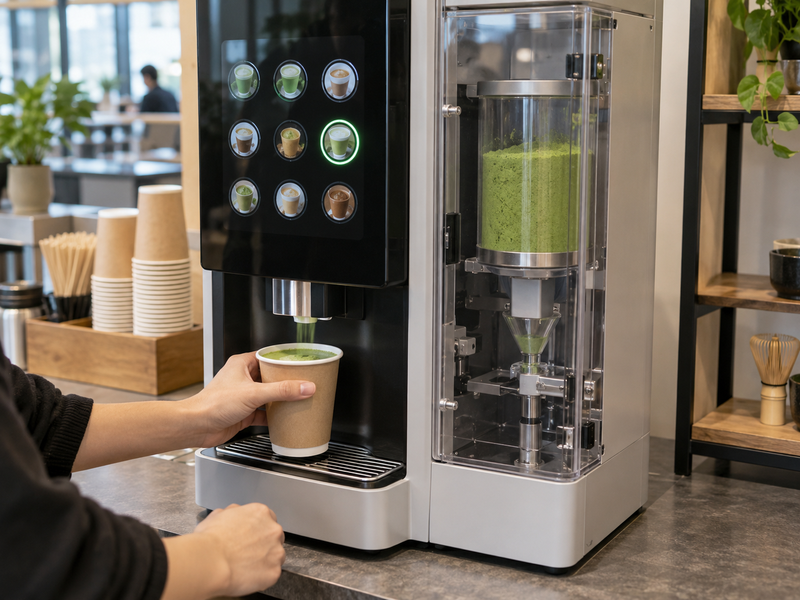
Prepare cups across a normal service run, using the same cup and water conditions planned for launch. Check visual dispersion, dry clumps, foam, color, aroma, flavor, and sediment after a realistic customer delay. Photograph cups under consistent light rather than using one highly edited marketing image. A mix can look even at dispense yet leave a dense layer after two minutes; another may leave powder on the rim because the water jet misses the cup center.
Score the first cup after an idle period, a cup after rapid repeated orders, and one near low hopper level. Compare them blind if several candidate powders are being assessed. A proposed scorecard can use defined descriptors such as “visible dry islands” and “settled layer after three minutes,” with limits chosen from your service target. Note that natural suspension may settle; define what customers will accept rather than promising a cup that never changes. If a formula contains milk ingredients or sweeteners, verify ingredient and allergen information for the local market. A good cup score must sit beside machine residue and cleaning results, not replace them.
6. How should water and milk be compared?
Test the pathway customers will actually buy
Water-only matcha and milk-based matcha are different drinks. Compare them only after defining which one the vending menu promises. Pure matcha in water may expose bitterness and sediment that milk softens; a complete latte powder in water may supply its own sweetness and body. For a milk-module unit, check how the milk stream joins the matcha stream and whether the resulting cup has streaks or unmixed corners. Record cup volume and temperature after the full cycle.
Do not assume a powder sold as “vending latte” suits every milk module or that a pure powder can replace an instant blend in a water-only machine. Ask for ingredient and preparation specifications, then test on the actual equipment. Run an unsweetened and a sweetened candidate only if each matches the target menu and nutrition information. A proposed customer panel can compare the chosen formula against a café reference, but it should be blind and use a realistic vending cup. Keep the machine’s water treatment and milk maintenance settings fixed during comparison. Otherwise the operator may attribute a bad cup to powder when the cause is water flow or milk delivery.
| Recipe path | Product question | Cup check |
|---|---|---|
| Pure powder plus water | Is this the intended taste? | Dispersion and bitterness |
| Complete latte mix plus water | Is sweetness and body right? | Full dissolution and residue |
| Powder plus milk module | Does the blend stay even? | Streaks, foam, and milk path |
7. What cleaning access does the mix demand?
Inspect the path after actual service volume
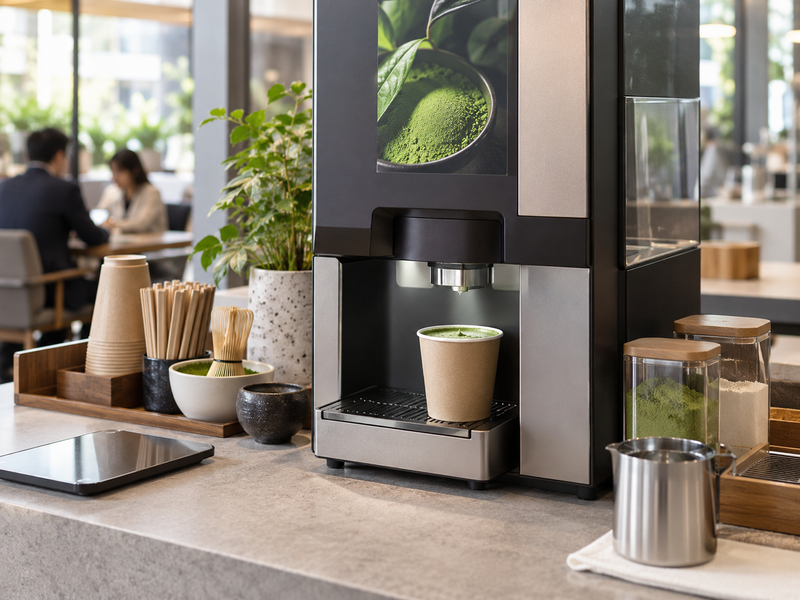
Open the machine only as the manufacturer permits and inspect the powder chute, mixer, whipper, nozzle, drip area, and milk path if present. Photograph residue after a defined number of cups and compare candidates under the same cleaning schedule. Sticky sweetened powders may leave a different residue from pure matcha. Record the time, tools, and parts needed for the approved cleaning procedure. Unattended service depends on a route a technician can perform consistently at each site.
The FDA Food Code 2026 is a model for retail and food-vending operations; local adopted rules and equipment instructions govern specific practice. A previous Food Code inspection guide explicitly discusses vending components being designed for cleaning and protection from contamination. Use those sources to frame the maintenance question, not to claim a generic interval is legally sufficient everywhere. If a formula increases cleaning burden, include technician time and downtime in the purchase decision. A bright cup with an inaccessible dirty nozzle is not an acceptable rollout result.
8. How should packs and refills be handled?
Keep lots legible through an unattended cycle
Choose pack sizes that a technician can transfer cleanly into the hopper without leaving powder exposed during a long service stop. Record opened pack, supplier lot, date, technician, machine ID, refill quantity, and remaining stock. Do not top up a hopper indefinitely without knowing which lots are inside; either empty and clean at a planned changeover or document the blend of lots under an approved procedure. Store unopened packs under the conditions given for that product.
Check how often a site sells enough cups to use a hopper load while it performs well. A large canister may reduce visits at a busy station but leave powder sitting through many idle days at a quiet office. A proposed refill trial should compare full and partial loads, then choose the smaller working quantity if cup quality or flow drops over time. Packaging must protect the powder in transport and allow clear handling. The best-before period on a sealed commercial pack does not establish an in-hopper use period. Study the latter under realistic machine temperature, humidity, and refill habits.
| Refill field | Record | Operational reason |
|---|---|---|
| Machine and site | Unique ID | Locate affected stock |
| Powder lot | Supplier code | Trace complaint |
| Open date and grams | Pack and quantity | Track in-hopper age |
| Cleaning and inspection | Technician log | Link cup quality to maintenance |
9. What should a site pilot measure?
Run beyond a showroom demonstration
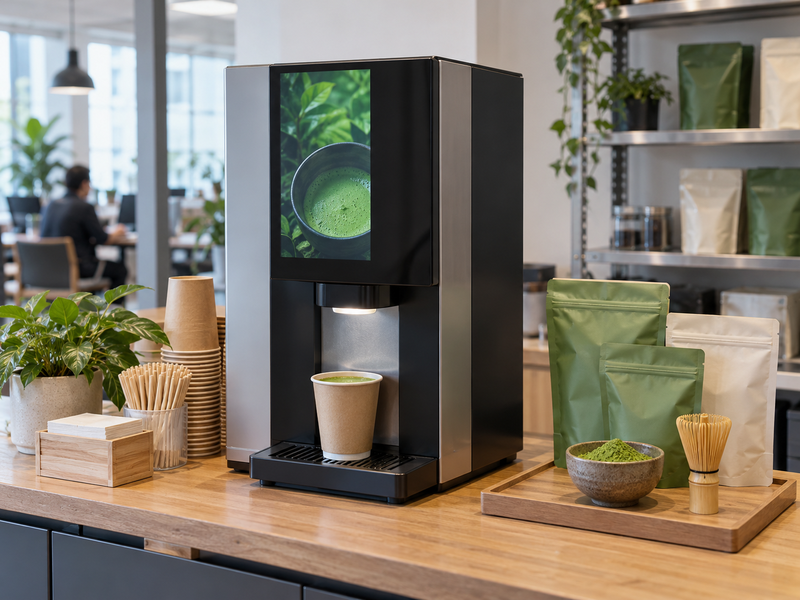
Select a small group of representative sites: one busy and one quiet location, plus a site with more demanding ambient conditions if the target network includes it. Use the intended commercial pack, trained service team, and normal visit schedule. Log cups sold, failed cycles, average delivered dose, customer complaints, refunds, powder waste, cleaning time, and unplanned visits. Compare actual cost per accepted cup with the purchasing estimate.
Keep a cup sample and technician photo record at planned intervals. If complaints rise after weekends, inspect hopper age and machine condition before changing the formula. A proposed pilot length should cover several refills and idle periods, not merely one afternoon. Decide minimum acceptable cup score, dispense fault rate, and service time before examining the data. Include the operator who will maintain the machine in the sign-off; a recipe that only a development technician can keep running is not ready for unattended placement. Compare results by model, because one passing site does not establish compatibility across a mixed fleet.
10. What evidence supports a wider rollout?
Approve a machine, formula, and service procedure together
Keep the tested powder specification, ingredient and allergen documents, machine models, locked recipes, dose records, cup scorecards, fault logs, cleaning instructions, in-hopper handling rule, and site pilot costs. Confirm that spare parts and trained technicians can support the selected route. If a formulation or packaging change occurs, define which checks must be repeated. A supplier’s general statement about compatibility is useful for screening but cannot replace your fleet test.
For a Matcha Village inquiry, send machine model, hopper size, recipe path, target cup size, desired sweetness, operating climate, and expected volume. Request candidate samples and specifications; do not assume a listed latte powder has already been approved for vending. Vending matcha succeeds when a real machine gives an acceptable cup repeatedly and staff can refill and clean it within the planned visit. Scale only after the same evidence holds across representative models and sites, then keep monitoring dose and complaints as the network grows.
| Rollout item | Evidence | Decision owner |
|---|---|---|
| Formula and machine match | Model-specific pilot report | Operations |
| Cup quality | Coded scores across fill states | Product team |
| Cleaning route | Technician log and manual | Service lead |
| Cost per accepted cup | Ingredients, faults, labor | Finance |
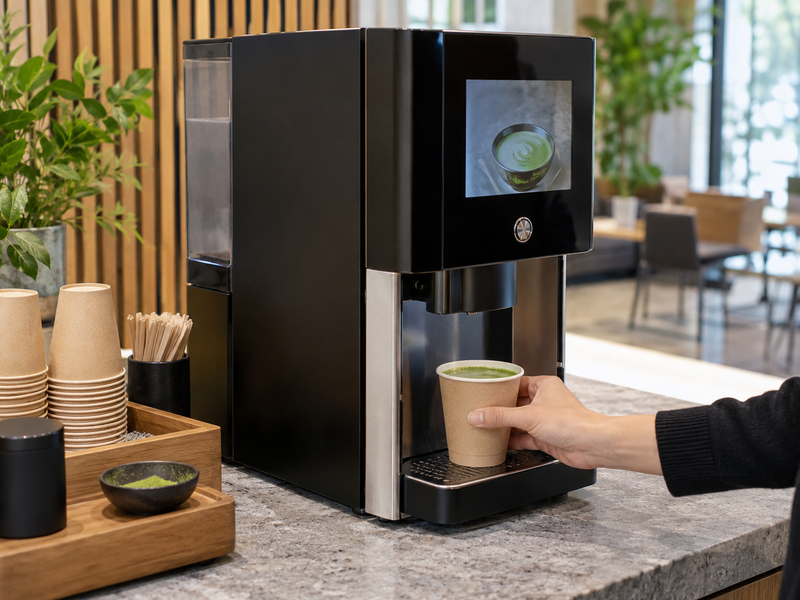
Compare machine maintenance needs with the broader equipment questions in the matcha café equipment guide.
FAQ
Q1. Can pure matcha work in a vending machine? It may work in a compatible machine and recipe, but test dosing, dispersion, settling, and cleaning on the actual model.
Q2. Does a water-only unit need a latte mix? If the menu promises a creamy latte without a milk module, a complete mix may be appropriate; confirm ingredients and cup performance.
Q3. What is the quickest flow check? Weigh repeated dry doses at full and low hopper levels, then inspect interruptions after an idle period.
Q4. How long can powder stay in a hopper? Set an in-hopper rule from the product, machine, and site trial. A sealed-pack date does not answer that question.
Q5. What proves vending matcha is ready to scale? Consistent cups, recorded dose, manageable faults, cleanable equipment, and acceptable cost across representative sites and machine models.