
A café can buy an impressive matcha machine and still have a queue because dosing, cleaning, or cup assembly remains slow. Matcha cafe equipment should be selected for the drinks you sell, the staff who make them, and the number of orders in a rush. The FranchiseFeast equipment guide gives a useful list of possible tools. Here, the task is to turn that list into a purchase decision. Run a short service trial before committing to machinery, and check local food-equipment requirements for every commercial station.
Contents
- 1. What should the equipment brief include?
- 2. Which tools does a small matcha station need?
- 3. How should dosing and sifting be set up?
- 4. Which mixing method fits the menu?
- 5. What should a café ask about water and milk equipment?
- 6. When does an automated matcha machine make sense?
- 7. How should cleanability and safety be checked?
- 8. How can the station fit a busy bar?
- 9. What belongs in a cost comparison?
- 10. How should equipment be tested before purchase?
1. What should the equipment brief include?
Count actual drinks before shopping
List each drink format, expected peak cups per hour, matcha dose, preparation method, milk options, cup sizes, and where the drink will be assembled. A station serving ten iced lattes a day does not need the same setup as a store with a continuous lunch queue. Record the current build time and remake causes if matcha is already on the menu. If this is a new menu, use a timed pilot instead of a sales forecast alone. The goal is to find the bottleneck before buying a device.
Specify utility and space limits: power outlets, water supply, drainage, counter depth, under-counter storage, and the path to the wash area. Ask whether the unit can be cleaned on that site and whether replacement parts are available. Start with the cup: the recipe and service rate determine the station, not the other way around. A machine that pours quickly may not help if staff still weigh powder, strain fruit, and search for lids across the bar. Put your acceptance criteria in writing before a salesperson demonstrates anything.
2. Which tools does a small matcha station need?
Buy for repeatable preparation
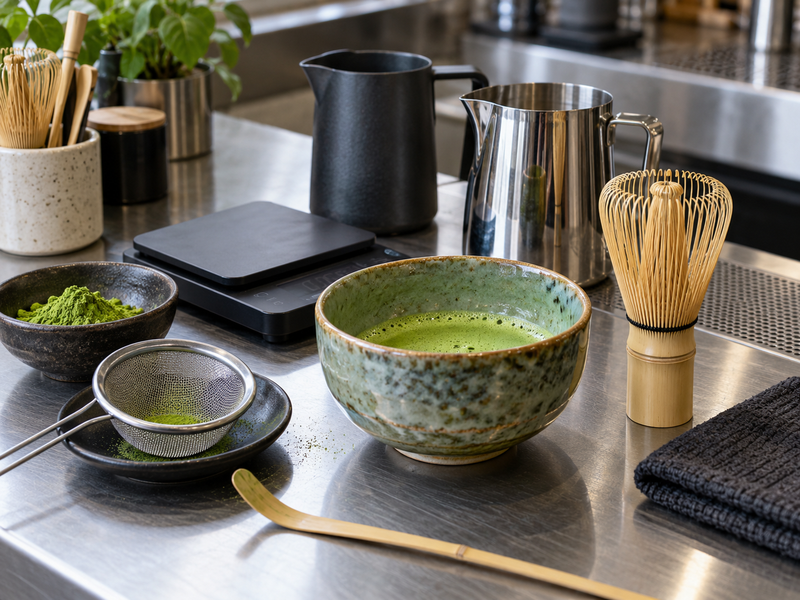
A basic station may need a suitable scale, sifter, mixing vessel, whisk or approved electric mixer, measured water source, storage containers, thermometer if temperature matters to the recipe, and clean utensils. Select the smallest set that supports your approved drinks. Bamboo whisks suit a visible hand-prepared service; electric tools may suit a faster latte line. Neither is automatically better. The FranchiseFeast guide compares common options, but verify each candidate’s current specification and foodservice suitability yourself.
Keep spare tools and a cleaning route in the brief. A single battery frother that fails during a rush can stop the entire menu. A sifter that takes two minutes to clean may be ignored by staff even if it works in a demo. Run a ten-cup trial: the tool should make cup ten as reliably as cup one. Record portion variation, clumps, handling time, and time to wash and reset the station. A modest tool set that staff can maintain is often more useful than a display shelf of specialized accessories.
| Tool | Job | Buying check |
|---|---|---|
| Scale | Repeatable powder dose | Accuracy and stable reading |
| Sifter | Break dry clumps | Throughput and cleanability |
| Mixing vessel | Wet and disperse powder | Spout, grip, food-contact material |
| Whisk or mixer | Create uniform base | Duty cycle and cleanup |
3. How should dosing and sifting be set up?
Keep powder dry until it is measured
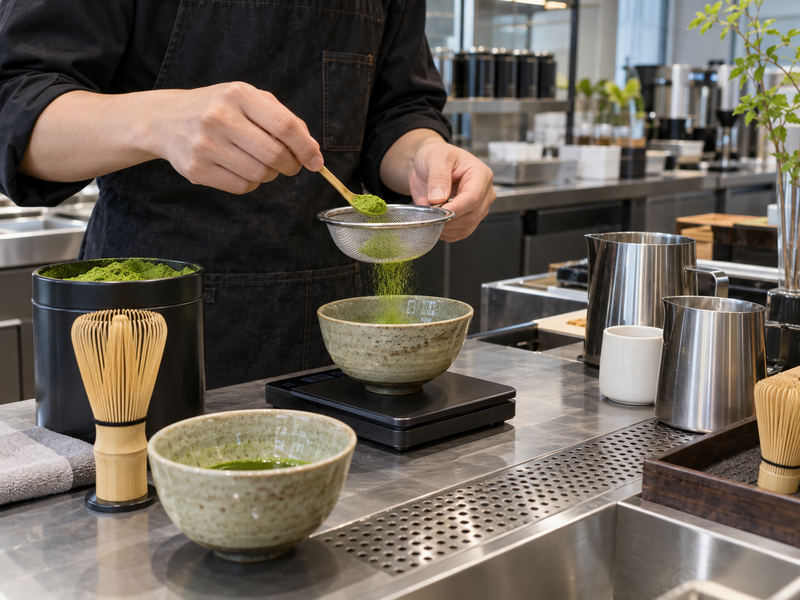
Matcha dose drives both flavor and cost. Test a scale that reads your normal dose clearly while a barista works at speed. Mark the approved grams on the recipe card and keep the powder container close enough to use without crossing a wet sink. If a scoop is proposed, weigh repeated scoops from several staff members before calling it calibrated. Powder density and scoop technique can vary; a quick test settles whether that variance is acceptable for your drink.
Sifting addresses dry clumps before water reaches them. Choose a sifter wide enough for service volume and easy to wash and dry. Some teams may pre-sift a small working quantity, but the handling plan must keep the powder protected and traceable. Look for the hidden step: if staff skip sifting during a rush, either simplify the tool or change the preparation process. Do not write an SOP that relies on a step nobody performs. Observe at the bar and inspect the finished cup for grit, not only the powder in the sifter.
4. Which mixing method fits the menu?
Compare hand, electric, and batch methods
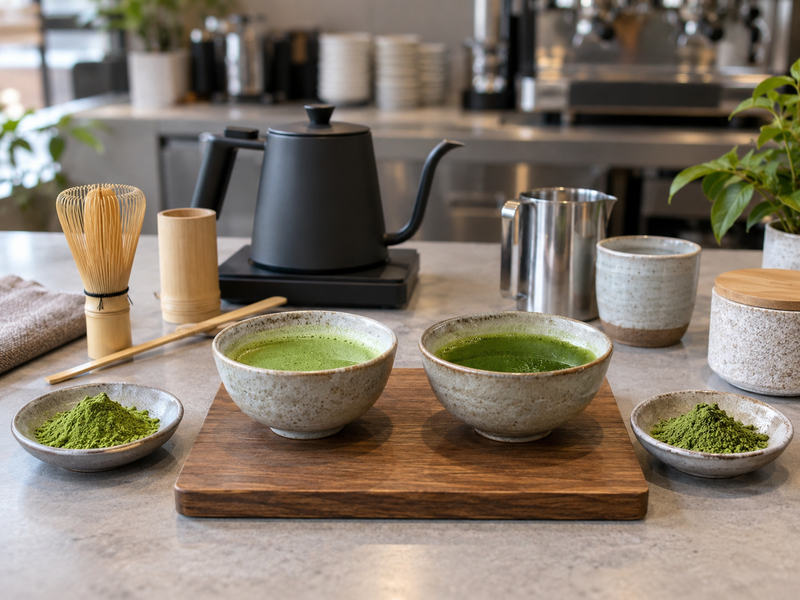
A bamboo whisk offers a visible ritual and fine control in small portions. A handheld electric mixer may shorten training for a standard latte, though its head and vessel must be cleaned between uses. A countertop mixer or powder-to-shot device may offer consistent output at higher volume, but only if it handles the chosen powder and the operator follows maintenance instructions. A pre-mixed base changes the food-safety and quality plan, so evaluate it separately from dry-powder preparation.
Test all candidates with the actual matcha grade, water, milk, and cup. Record build time, visible clumps, foam, sediment after a few minutes, noise, and cleaning time. Do not trust a single demo cup: run consecutive orders with different staff and measure the last cup. Ask whether the device leaves powder in corners or tubing that cannot be inspected. If a method is faster but doubles remakes, it has not improved throughput. Pick the method that delivers accepted drinks per hour at your quality standard.
| Method | Useful setting | Test risk |
|---|---|---|
| Bamboo whisk | Small, visible preparation | Technique and replacement |
| Handheld electric mixer | Regular latte line | Battery, cleaning, splashing |
| Countertop mixer | Higher repeat volume | Batch consistency and footprint |
| Automated unit | Sustained high volume | Cleaning, service, fixed cost |
5. What should a café ask about water and milk equipment?
Use the recipe’s real operating range
Matcha preparation needs a measured water dose and a temperature chosen during product development. Ask whether the existing café hot-water system can deliver that temperature consistently at the station. If it cannot, compare a temperature-controlled kettle, dispenser, or measured cooling step. Avoid publishing one universal brewing temperature for every grade and drink; test flavor with the actual powder. A thermometer and a written recipe may solve the problem before another appliance is added.
Milk tools depend on menu format. Hot lattes need a steaming or heating path; iced drinks need cold storage and a reliable pour. Fruit purées, syrups, and alternative milks add containers and cleaning work. Watch the crossover: a milk wand that serves coffee and matcha can become a queue point. Time a peak order sequence, not a matcha drink in isolation. Include allergy and cross-contact procedures where multiple milks or other ingredients share tools. The FDA Food Code is a model used by jurisdictions for retail rules; local requirements govern your site.
6. When does an automated matcha machine make sense?
Compare accepted output with full ownership cost
Automation deserves review when peak demand regularly exceeds what a well-designed manual station can make, when portion variation remains high after training, or when a machine enables a distinct service format. Ask the manufacturer what the machine actually does: dose powder, grind leaf, mix a shot, dispense a premix, or pour a prepared beverage. Those are different categories with different hygiene and quality needs. Request current performance data for your chosen powder and drink sizes, plus a demonstration at a site with a similar workload.
Include installation, utilities, cleaning, consumables, maintenance, service coverage, downtime, and staff training in the comparison. Set a break-even question: how many accepted drinks per peak hour or labor minutes saved would justify this unit at your margin? Use your own numbers rather than a vendor’s general return-on-investment claim. If the machine locks you to a proprietary powder, include ingredient cost and supply risk. A unit that cannot be cleaned or serviced promptly at your location is a poor fit even when its pour looks fast.
| Decision item | Ask the vendor | Verify on site |
|---|---|---|
| Output | Drinks per hour under stated conditions | Timed peak simulation |
| Ingredients | Compatible powder and milk | Test your approved SKU |
| Cleaning | Steps, parts, and frequency | Staff performs full cycle |
| Support | Warranty and service area | Written response terms |
7. How should cleanability and safety be checked?
Inspect the surfaces staff must maintain
Food-contact parts should be accessible, durable, and cleanable under the manufacturer instructions. Ask for a parts diagram, cleaning procedure, approved chemicals, replacement intervals, and any sanitation or electrical certifications applicable to your market. NSF explains commercial food-equipment sanitation certification, including assessment of cleanability and material safety. A certification mark should be checked for the exact model; a brand-level claim is not enough. Local regulators may require further approval.
Have the staff who will close the café perform a full clean during the trial. Time disassembly, washing, drying, reassembly, and the first safe use afterward. Inspect narrow tubes, seals, and powder traps. Ask for the failure mode: what happens if a seal is missing, a battery dies, or a cleaning cycle is skipped? Write a response that staff can follow. If a unit mixes milk, fruit, or other perishable ingredients, its handling plan needs specific review. Do not assume dry matcha handling rules cover a prepared beverage inside equipment.
8. How can the station fit a busy bar?
Draw the movement of one order
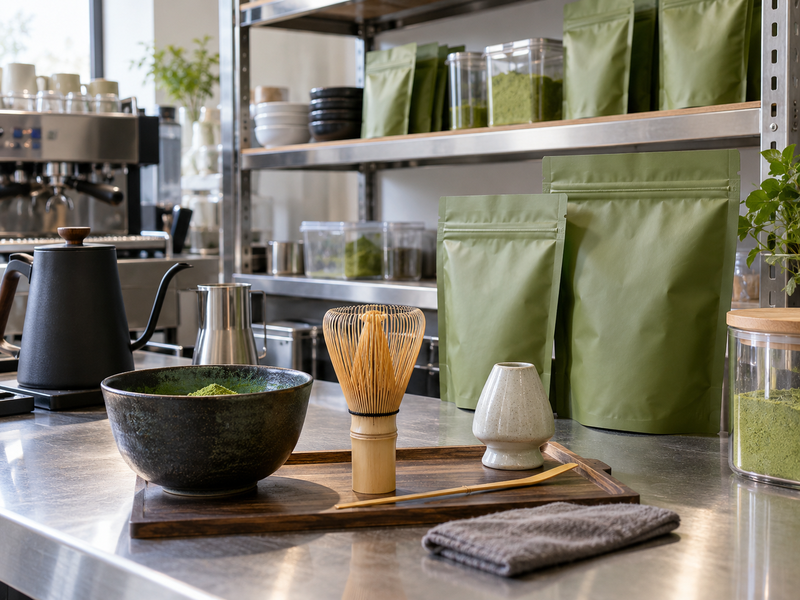
Place powder, clean tools, measured water, milk, ice, cup, lid, and wash area on a simple bar sketch. Follow a barista making one hot and one iced order. Count reaches, turns, shared work surfaces, and points where a wet utensil might touch dry powder. A small change in placement may save more time than a new mixer. Keep allergen-related tools and cleaning steps visible if the menu includes milk, nuts, or flavored toppings. A cramped station that forces staff to put a used whisk beside clean cups will not become safer at higher volume.
Separate prep from handoff. The customer-facing cup area should not be the only place where a barista can dose powder. Test in a rush: two staff members should be able to use the station without blocking each other or the coffee line. Observe where finished cups wait and whether matcha settles while the rest of an order is made. If a recipe requires several specialized vessels, provide enough to handle peak orders without skipping cleaning. Station design is an equipment decision because layout changes how every tool performs.
| Station zone | Place nearby | Keep out of the path |
|---|---|---|
| Dry dosing | Matcha, scale, sifter | Wet cloths and ice |
| Mixing | Water, vessel, mixer | Open ingredient cases |
| Assembly | Milk, cup, ice, lid | Dirty tools |
| Cleaning | Wash and dry supplies | Guest handoff counter |
9. What belongs in a cost comparison?
Count the whole operating year
Purchase price is only one line. Add installation, electricity, water, cleaning supplies, consumable parts, replacement whisks, repair travel, staff training, and the labor needed to clean equipment every shift. Include the cost of remakes and powder lost during calibration. If a machine changes ingredient format, compare the full recipe cost per accepted cup. A cheaper tool may be right for modest volume; a higher-cost unit may earn its place when the workload is sustained and support is dependable.
Use a worksheet with each option under the same forecast and show the assumptions. Do not assume every minute saved becomes a minute of paid labor eliminated. Often it becomes shorter queues or more consistent service. Test the margin case: compare peak-hour accepted cups, normal-day accepted cups, and downtime. The best equipment may not have the lowest cost per theoretical cup; it should meet your quality and service targets under the actual forecast. Ask for a written quotation so the comparison does not rely on a sales demonstration.
10. How should equipment be tested before purchase?
Run the menu, not the brochure
Create a short acceptance trial: ten consecutive drinks, at least two staff members, the approved matcha lot, actual milk and water, and the real serving cups. Measure dose variation, cup appearance, sediment, build time, cleaning time, and any failed drinks. Repeat a hot and iced format if both are on the menu. Ask the vendor to show the full maintenance cycle and provide model-specific documentation. If the trial happens off-site, confirm that utility and space conditions match your store.
Set reject rules before the demonstration: unacceptable clumps, inaccessible food-contact parts, missing service terms, poor fit on the counter, or a result that depends on a vendor technician operating it. Make the decision reversible where possible: pilot one site before ordering for a chain. Train ordinary staff and compare performance after the vendor leaves. Record what changed in drink quality, throughput, and waste. Buy only after the equipment passes the same criteria that led you to look for it.
| Trial measure | How to record it | Decision use |
|---|---|---|
| Accepted cups | Count across timed run | Capacity |
| Dose variation | Weigh consecutive portions | Consistency |
| Cleaning time | Full end-of-shift cycle | Labor and hygiene |
| Remakes | Count and reason | Hidden operating cost |
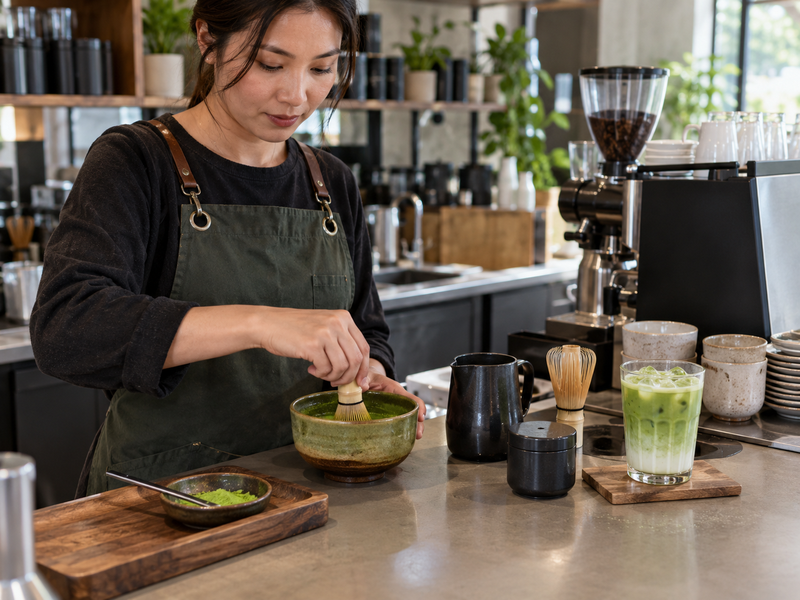
Our matcha bowl guide covers the vessel choice in more detail.
FAQ
Q1: What matcha cafe equipment does a small shop need? Usually a reliable scale, sifter, mixing vessel, whisk or suitable mixer, water source, and clean storage tools, selected for the actual menu.
Q2: Is an automatic matcha machine always faster? Its pour may be faster, but cleaning, setup, refilling, and other bar tasks determine accepted drinks per hour.
Q3: Does every café need a bamboo whisk? No. Choose a method by drink style, volume, quality target, and staff capability.
Q4: Which certification should buyers check? Check sanitation and electrical requirements for the exact model and the rules in the operating location.
Q5: How should two equipment options be compared? Run the same recipe and timed trial with ordinary staff, then compare accepted cups, quality, cleaning, downtime, and total cost.
Before buying matcha cafe equipment, time the current service process and write the result you need. Test candidates on your own recipe with the staff who will clean them. The equipment that passes that trial deserves the purchase order.