
A monthly matcha subscription box can arrive before a customer has finished the previous tin. That creates unused stock at home, avoidable cancellations, and pressure on the brand’s margin. Build the offer from serving cadence, pack size, unopened-pack evidence, flexible order controls, and the cost of each shipment. A consumer comparison of matcha subscriptions shows how current offers differ in quantity and choice; it is a market reference, not evidence that one format will work for every buyer. The plan below gives a B2B team trial calculations and operating checks before committing to recurring inventory.
Contents
- 1. Who is the matcha subscription box for?
- 2. How much matcha should each shipment contain?
- 3. Which pack format helps customers use it well?
- 4. What belongs in the recurring box?
- 5. How should cadence and flexibility work?
- 6. How can a brand calculate delivered margin?
- 7. What does fulfillment need to know each cycle?
- 8. How should freshness and lots be managed?
- 9. Which pilot signals show a viable offer?
- 10. What should be ready before launch?
1. Who is the matcha subscription box for?
Separate a daily drinker from a gift buyer
Start with the drinking occasion. A customer whisking matcha with water every morning may value a small, consistent tea pack. A household making sweetened iced lattes may use a different grade and more grams per cup. A gift recipient might prefer one fixed series with clear instructions and no automatic renewal. These are distinct buying jobs, so an identical box and schedule will not suit all three.
Interview recent buyers about cups per week, dose, preferred preparation, price ceiling, and how often a pack sits open. Check actual reorder intervals rather than relying only on survey enthusiasm. The 2026 consumer comparison notes that an occasional drinker can accumulate unopened stock under a monthly schedule. Treat that as a demand hypothesis for your own customers, not as a universal cancellation forecast. A proposed launch could offer a regular drinker plan and a slower plan before adding elaborate tiers. Name the cup experience on the product page so a latte buyer does not pay for a tea selected mainly for water service.
2. How much matcha should each shipment contain?
Convert servings into grams before selecting a tin
Use a simple formula: cups per week × grams per cup × weeks between shipments. A proposed planning case of five cups weekly at 2 g each over four weeks needs 40 g. This is arithmetic, not a recommended dose or an observed market average. Compare that number with the actual recipe and customer usage data. Add no large “just in case” allowance without checking whether unused powder will age in an open pack.
Offer pack sizes that let customers adjust without receiving a confusing pile of part-used tins. For example, one 40 g pouch or two 20 g tins could serve the same planned month while creating different opening patterns and costs. Ask suppliers for the exact sealed-pack specification and evidence behind any best-before period. An opened-pack usage instruction needs its own basis. The FDA date-label explanation describes quality-based date wording in the United States; a printed date does not tell a brand how quickly an opened tin will perform after home handling.
| Trial customer | Illustrative cups/week | Illustrative dose | Four-week grams |
|---|---|---|---|
| Occasional | 2 | 2 g | 16 g |
| Regular | 5 | 2 g | 40 g |
| Household | 10 | 2 g | 80 g |
3. Which pack format helps customers use it well?
Balance protection, access, and shipping weight
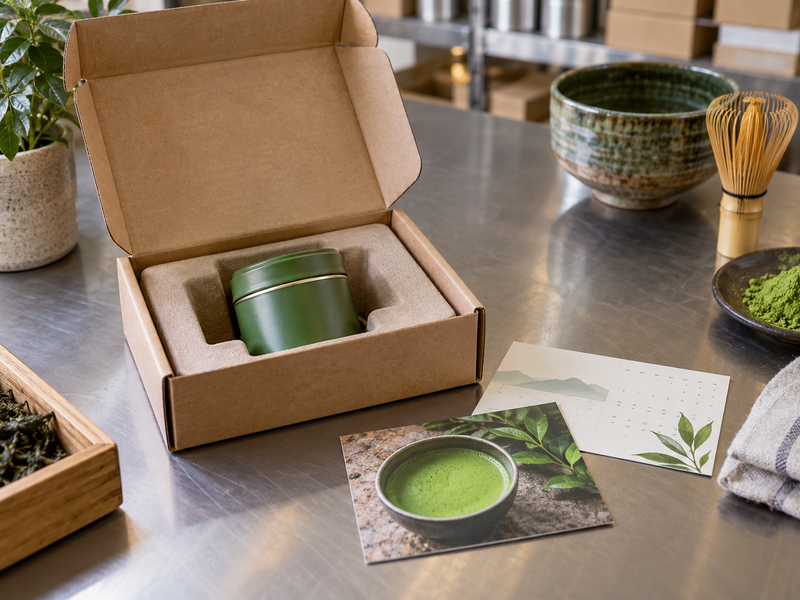
Compare tins, resealable pouches, and sealed single servings using the same approved matcha and expected use period. A tin may present well as a gift but add parcel weight and dent risk. A pouch can reduce freight volume but needs a closure that customers can use repeatedly. Single servings may limit repeated opening exposure yet increase material and packing cost. None of these tradeoffs establishes shelf life by itself; run pack-specific evidence and consumer handling trials.
Check the opening sequence with someone unfamiliar with the brand. Can the customer find the tear notch? Does powder collect in the zipper? Can they read lot and date codes after the pack is opened? Record a proposed home-use trial with normal opening, closing, and cupboard storage under your label directions. Keep it separate from unopened-pack validation. For a brand sourcing from Matcha Village, confirm available packaging structures, fill sizes, artwork options, and case quantities for the actual order. Do not photograph a tin if the commercial pack will be a pouch. The subscription’s repeat arrival makes small usability problems more costly because customers experience them every cycle.
4. What belongs in the recurring box?
Give each component a job and a cost
The core product should carry the value. A recipe card may help new customers make a consistent cup; a whisk might be useful once, not every month. A scoop can improve portioning if its volume is verified against powder mass, but it also adds cost and may be hard to clean. Separate reusable starter tools from repeat shipments. List every component, supplier, unit cost, weight, dimensions, and replacement path before setting a retail price.
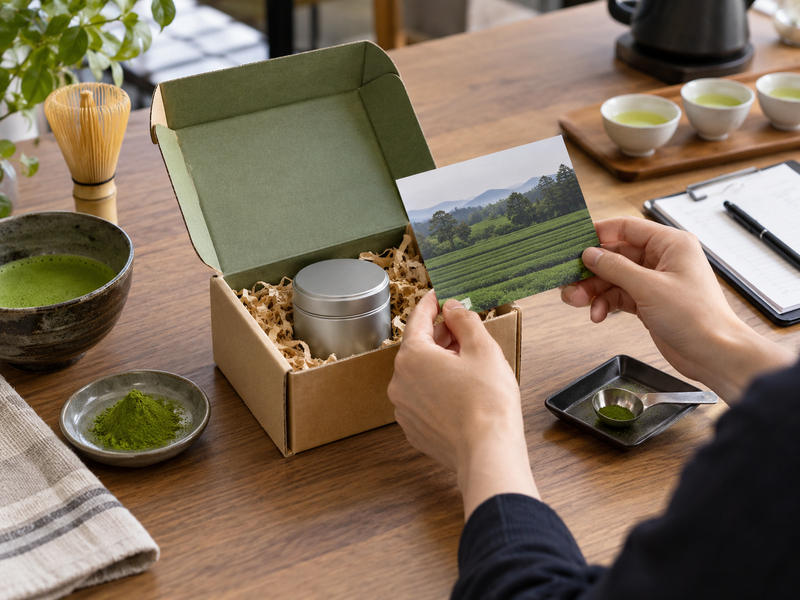
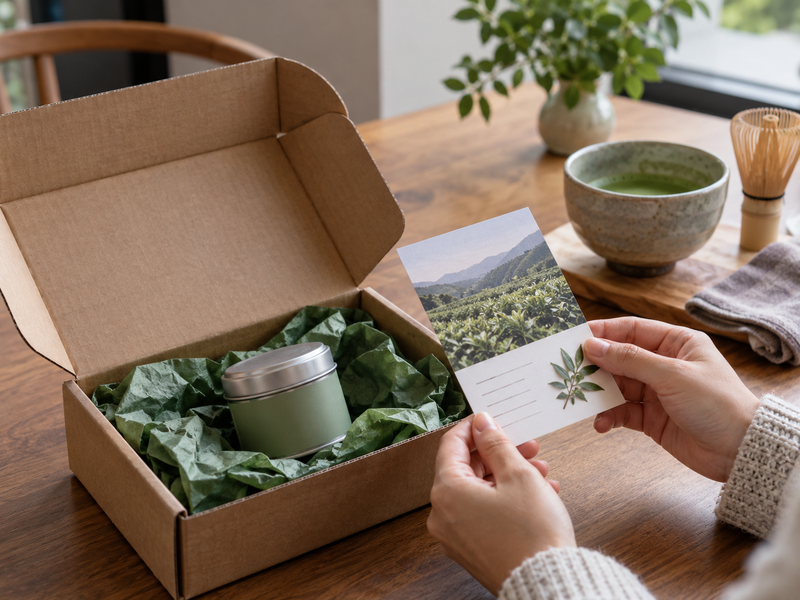
Make the unboxing promise literal. If the product photo shows a bowl and whisk as props, the listing must not imply they are in every box. A proposed starter box might contain one sealed matcha pack, a durable tool, and a short preparation card; later refills can contain only the matcha and a small optional tasting note. Ask a pilot customer to unpack without coaching and state what they believe is included in the next shipment. That test catches ambiguous copy before returns begin. Avoid adding a surprise snack unless ingredient labeling, allergen handling, customs, and storage have been checked for every target market.
| Component | Possible role | Recurring cost check |
|---|---|---|
| Matcha pack | Main consumable | Landed grams and lot |
| Whisk or tool | Starter aid | One-time versus every cycle |
| Recipe card | Usage guidance | Print, translation, and update |
| Box and insert | Protection and presentation | Material plus packing labor |

5. How should cadence and flexibility work?
Let shipment timing reflect actual consumption
Offer a small set of clear intervals such as every four, six, or eight weeks as a proposed starting test. Watch how customers move between them. A customer who drinks two cups a week may need a slower rhythm than a daily drinker, even when both bought the same tin. Show the next charge and shipment dates plainly, with an edit cutoff that gives the warehouse time to act. Include a reminder before a charge if the platform supports it.
The Shopify subscription customer experience guide describes customer tools such as skipping, pausing, and resuming orders. Verify what your chosen subscription platform actually supports and how changes reach the fulfillment provider. Test a skip after an order has been reserved but before packing; the system should release inventory or explain why it cannot. Build a pause path for travel and a swap path for customers switching from straight tea to latte use. Review cancellation requirements for each selling market with qualified local advice. The operational goal is transparent control and fewer unwanted shipments, not a confusing maze that temporarily suppresses cancellations.
6. How can a brand calculate delivered margin?
Count each cost per shipment
Start with selling price less the tea, primary pack, outer box, protective fill, inserts, pick and pack, carrier charge, payment fees, expected replacements, and customer-service cost. Separate one-time acquisition and starter-tool cost from repeat cycle cost. If a discount makes the first order attractive but every refill loses money, more subscribers can deepen the problem. Model at least a low-volume and a higher-volume case because packaging prices and carrier rates may change with volume.
For illustration only, a $30 shipment with $8 tea and pack, $3 box and insert, $4 fulfillment, $6 carrier charge, and $2 combined fees and expected service cost leaves $7 contribution before marketing and overhead. Replace every figure with quotes and observed returns before using it for pricing. Test the actual packed dimensions, since a taller gift box can move a parcel into a different shipping tier. Track gross margin per shipped cycle rather than per account, because skips and failed payments change both revenue and workload. If a swap option creates extra pick lines, include that fee in the model.
| Cost line | Source to verify | Pilot measure |
|---|---|---|
| Tea and retail pack | Supplier quote | Cost per shipped grams |
| Box and protection | Pack vendor | Cost per accepted parcel |
| Pick, pack, and carrier | 3PL and carrier invoice | Cost per actual shipment |
| Returns and service | Tickets and credits | Cost per shipped cycle |
7. What does fulfillment need to know each cycle?
Freeze a clean order file at the agreed cutoff
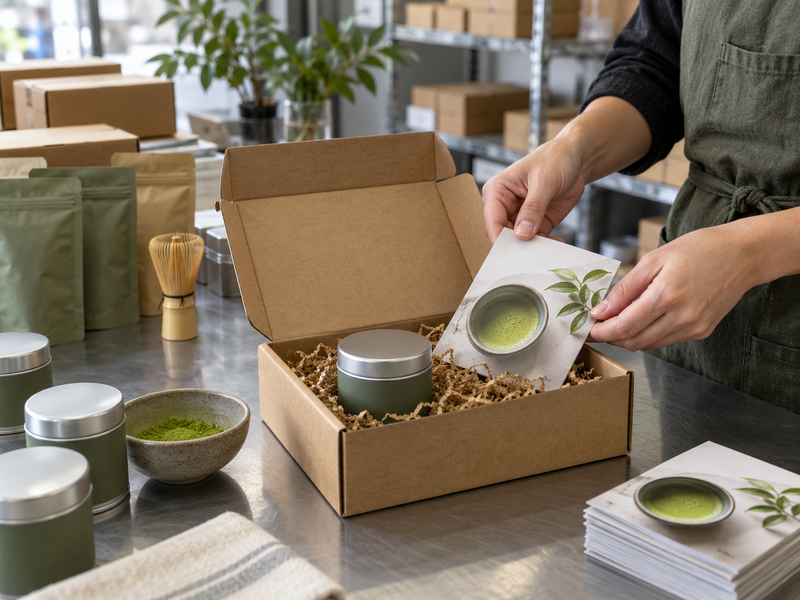
The 3PL needs SKU, quantity, customer address, shipment date, selected interval, gift status, insert version, and any approved substitution rule. Send a confirmed order file after payment and edit windows close. A subscription status alone is not enough; a paused contract can still have an old warehouse order waiting in a queue. Reconcile the imported order count with the platform count before picking starts.
Use lot-aware allocation and a defined minimum remaining-life rule for each matcha pack. A warehouse should not fill a new recurring shipment with a held unit or one that misses the brand’s date floor. If a box contains two different teas, capture both lots. Run a proposed exception test for a failed payment, address change, out-of-stock variant, duplicate export, and customer skip. Each result should show what the customer sees and what the picker sees. Include a return path: a refused parcel cannot flow directly back into available food inventory. The repeat cycle should be boring operationally because its rules were tested before launch.
8. How should freshness and lots be managed?
Match procurement with the slower customer segment
Forecast by cohort, not only total subscribers. Separate four-week, six-week, and eight-week plans, then adjust for skips and churn observed in the pilot. Place orders against realistic shipped units plus a controlled reserve, not against every active account as if it will receive a box each month. Compare incoming lot dates with projected dispatch dates and the remaining-life promise shown to customers. If a shipment would miss the rule, change the allocation or contact the buyer rather than quietly sending it.
Record receiving, storage, kit assembly, dispatch lot, returns, and retained samples. The FDA traceability overview describes formal lot records for covered foods; determine actual legal coverage separately. Operationally, a lot map helps a brand answer a quality complaint without contacting every subscriber. Watch the slow tier: a shipment every eight weeks may hold sealed inventory longer in the warehouse, even though customers open fewer packs. Review stock age and temperature exposure along with subscription growth.
| Lot checkpoint | Record | Question answered |
|---|---|---|
| Supplier receipt | Lot, date, accepted units | What entered inventory? |
| Kit build | Component lots and count | What entered each box? |
| Dispatch | Order and lot link | Who received a lot? |
| Return | Order, condition, disposition | What left sale stock? |
9. Which pilot signals show a viable offer?
Watch behavior across more than one renewal
Run a small pilot long enough for customers to receive, consume, and face another shipment decision. Record scheduled accounts, successful charges, skipped orders, swaps, cancellations, late deliveries, damaged packs, support contacts, and repeat-cycle contribution. Ask a subset why they changed cadence. A high skip rate can mean the pack is too large, the interval too short, or preparation instructions are weak. Do not interpret every skip as dissatisfaction.
Compare what customers say with actual order behavior. Some may claim daily use yet reorder at half that rate. Keep a cohort view so a promotional starter group does not hide poor performance in full-price refills. A proposed acceptance rule could require a target contribution per shipment, an agreed share of on-time parcels, and a manageable complaint rate. Set those targets before seeing results; they are business thresholds, not published matcha benchmarks. Test at least one refund and one pause from the customer’s device. If support staff must manually repair ordinary changes, the offer may not scale even when the tea receives good reviews.
10. What should be ready before launch?
Approve the product, system, and customer promise together
Prepare the final SKU specification, pack evidence, recipe instructions, product photos, subscription terms, charge calendar, customer self-service flow, 3PL packout, lot fields, returns policy, and margin model. Put an owner next to every item. Test a complete order from storefront through delivery and cancellation before a public campaign. Review each target market’s labeling and subscription obligations with the appropriate adviser; a general article cannot approve them.
A buyer discussing private-label supply with Matcha Village can request sample grades for water and milk use, available retail pack formats, lot-code format, case configuration, and the documents needed for the chosen market. Confirm the offer against physical samples and a realistic serving cadence. A matcha subscription box earns repeat orders when the next pack arrives at a useful time, in good condition, and with clear control over the next shipment. After launch, use skip reasons, unused-pack reports, and per-cycle costs to revise the offer.
| Launch gate | Evidence | Owner |
|---|---|---|
| Product and pack | Approved sample and specification | Product lead |
| Subscription controls | Tested skip, pause, swap, cancel | Ecommerce lead |
| Fulfillment | Delivered trial boxes and lot trail | Operations lead |
| Economics | Costed repeat-cycle invoice | Finance lead |
Use the matcha inventory management guide to plan replenishment of every box component before subscribers renew.
FAQ
Q1. What size suits a matcha subscription box? Use customer cups per week, recipe grams, and weeks between shipments to trial pack sizes; no one size suits every customer.
Q2. Should the box ship monthly? Only if consumption supports it. Offer slower options and measure skipped shipments.
Q3. How should freshness be presented? Use pack-specific evidence and a clear unopened date. Study opened-pack use separately.
Q4. Must every shipment include tools? Usually tools belong in a starter offer unless customers deliberately choose replacements. Check actual customer value and unit cost.
Q5. What is the most useful pilot measure? Review delivered contribution and customer behavior across renewals, alongside damage, complaints, and stock age.