
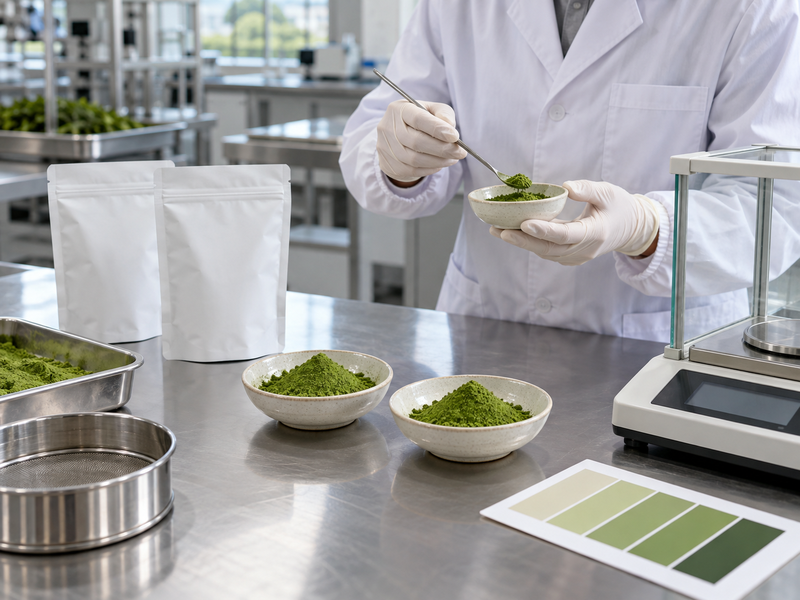
An unsweetened label gives a formulator room to control sugar, but only if the powder inside is what the supplier says it is. A premix with hidden carrier or flavor changes the recipe before development begins. Buyers need the ingredient statement, a clear application test and a lot they can reorder.
Contents
- 1. What should the unsweetened matcha powder specification actually cover?
- 2. Which powder performs in the buyer's product?
- 3. How should candidate formulas be compared?
- 4. Which preparation and lot checks prevent drift?
- 5. What does a blind tasting reveal?
- 6. How does the powder change after storage?
- 7. Which bulk or retail pack protects it?
- 8. Can the supplier repeat the pilot result?
- 9. Which claims need lot-linked evidence?
- 10. What belongs in the approval record?
1. What should the unsweetened matcha powder specification actually cover?
Define the product before approving a sample
Pure matcha and a matcha latte mix can look similar in a sample bag. Require the complete ingredient declaration and match it to the purchase order before sensory work begins. The word unsweetened describes a formulation decision; it does not prove grade, origin, or absence of other additives.
An ingredient can be free of added sugar yet still be blended with a carrier or flavor. Put the complete ingredient line beside the proposed product name and ask the supplier to confirm it in writing. If the buyer plans to claim '100% matcha,' match that exact wording to the commercial lot. The receiving team should also know whether the material arrives in small tins, service pouches or bulk liners. Those formats affect handling, but none can replace the ingredient declaration.
For sourcing teams, the name on a sample bag must connect to a specification and an application. Do not let a loose grade adjective become the buying criterion.
2. Which powder performs in the buyer’s product?
Choose powder against the finished application
Specify intended use before comparing powder. A straight-water retail product requires a gentler finish than a sugar-containing bakery filling. Test at the actual serving dose because extra milk or sweetener can hide the difference between candidates during a supplier tasting.
Run a two-stage selection. In the first stage, confirm that every candidate is unflavored, unsweetened matcha under the proposed ingredient statement and compare its basic cup in water. In the second, use the same powders in the commercial drink or food at an equal tea weight. Keep a sheet for powder lot, serving dose, sweetness added by the final recipe and the score each panelist gave. This prevents the team from mistaking a sweeter finished formula for a superior unsweetened powder.
A matched sample set should include the supplier's proposed commercial lot or a clear statement of how the sample relates to future production.
For a related production decision, see our matcha quality grades guide.
| Candidate | Specific check | Keep if |
|---|---|---|
| Powder | Specify intended use before comparing powder | Tea fits the finished application |
| Formula | Use a weighed dispersion test in water and again in the finished recipe | Dose stays practical |
| Tasting | Assess aroma, umami, astringency and aftertaste in water, then repeat in the commercial product | Flavor remains clear |
3. How should candidate formulas be compared?
Change one variable at a time
Use a weighed dispersion test in water and again in the finished recipe. Note clumps, settling and foam. Do not reject a powder solely because it needs sifting if the commercial process already includes that step; reject it if normal staff cannot reproduce the accepted cup.
Make a simple matrix of powder dose against the product base. One row can be straight water, another the intended milk or beverage, and another a relevant food application if the contract covers more than one use. Hold all non-tea ingredients steady. Note whether the powder needs a sift or premix before it enters a line. A formula sheet that says only 'matcha to taste' is too loose for a buyer signing a repeat supply agreement.
Write the control's source and batch beside every trial. That single habit stops an apparently better formula from being credited to an unnoticed base change.
4. Which preparation and lot checks prevent drift?
Write a method another operator can repeat
Control water source, temperature, vessel, dose and time. A different whisk or longer hold changes the comparison. Keep one sealed reference sample and record each lot code. Photograph the cup under consistent light, but decide flavor by tasting it rather than by color alone.
A useful operator trial starts with two unopened packs from the same candidate lot. Ask separate staff to prepare the standard recipe without discussing the sample. Weigh the powder remaining afterward and record any extra sifting, premixing or rework. If one cup contains visible specks, check the preparation method before declaring the powder defective. If both cups fail under the ordinary method, the purchasing team has a practical reason to ask for a different grade or a process change.
A simple lot code and a consistent preparation sheet let quality staff compare future shipments without repeating the original sales presentation.
| Process point | Specific check | Record |
|---|---|---|
| Preparation | Use a weighed dispersion test in water and again in the finished recipe | Tool and dose |
| Production | Control water source, temperature, vessel, dose and time | Start and end samples |
| Finished unit | Assess aroma, umami, astringency and aftertaste in water, then repeat in the commercial product | Sensory result |
5. What does a blind tasting reveal?
Taste the portion a customer receives
Assess aroma, umami, astringency and aftertaste in water, then repeat in the commercial product. A clean unsweetened label gives the formulator freedom, but the finished drink may still need sugar or a dairy alternative. Record both ingredient dose and finished serving cost.
A tasting panel should separate purity questions from preference. If one sample tastes sweeter, verify that the powder itself contains no added sweetener before awarding it a higher score. In the finished product, ask whether the tea is recognizable at the planned dose and whether astringency lingers. Different panelists may prefer different bitterness levels. Record those differences rather than averaging them into a vague 'premium' score.
Invite purchasing and development to score separately before they reconcile results. A low quote cannot settle a sensory disagreement.
6. How does the powder change after storage?
Use the real shelf or counter conditions
Dry powder can absorb odors and lose its attractive color during storage. Compare a newly opened sample with a retained sample after the proposed storage interval. Use the same cup method and an approved control rather than making a subjective call from a photograph.
For a storage challenge, put the same powder into the bulk container and small service pack the buyer expects to use. Open the service pack on the normal schedule; leave the retain sealed. Prepare blind cups from each at agreed points. A color difference in dry powder may be visible before a flavor change, but the released product should be judged against the written sensory standard. Keep photographs only as supporting evidence, with light and camera position held steady.
A sealed retain of each candidate makes later color or aroma complaints easier to investigate. Store it under the same documented conditions.
| Observation | Specific check | Action |
|---|---|---|
| Storage | Dry powder can absorb odors and lose its attractive color during storage | Compare with control |
| Pack | Request the packaging material and seal specification, not only a glossy tin mockup | Inspect opened unit |
| Customer portion | Assess aroma, umami, astringency and aftertaste in water, then repeat in the commercial product | Taste again |
7. Which bulk or retail pack protects it?
Test the actual selling format
Request the packaging material and seal specification, not only a glossy tin mockup. Small retail packs and bulk cartons face different opening cycles. A buyer should test how much powder operators expose during a shift and whether the reseal works with powder on the zipper.
Open and close the proposed service pack with the same frequency as a café or plant would. Check whether powder collects in the zipper, whether operators spill material into a humid work area and whether the pack can be sealed with gloved hands. Compare a pack used all shift with a sealed retain of the same lot. A packaging decision made from an untouched sample tin will miss the conditions under which unsweetened powder is actually stored.
Ask how packs will be opened and resealed by the actual operator. Bulk use can expose powder more often than a retail tasting suggests.
8. Can the supplier repeat the pilot result?
Measure yield and repeatability
A pilot batch should include the ordinary mixing equipment and the operator who will run the line. Measure preparation time and rejected cups. If the product needs an unusually fine sieve or a slow premix, include that labor in the commercial decision.
Request a quotation at the actual pack size and annual volume, then calculate cost using the acceptable dose from the application test. Add labor for any special preparation, product wasted during opening and powder left in the pack. A cheaper matcha that needs a heavier dose can cost more per saleable serving. Keep that calculation with the sensory sheet so a later buyer does not swap the grade based on kilogram price alone.
The supplier's capacity claim should be tested against the specific grade and packaging format, not a company-wide tonnage number.
| Pilot measure | Specific check | Commercial use |
|---|---|---|
| Yield | A pilot batch should include the ordinary mixing equipment and the operator who will run the line | Cost per saleable unit |
| Loss | Dry powder can absorb odors and lose its attractive color during storage | Set acceptance limit |
| Supply | Ask for a lot-linked certificate of analysis, ingredient statement, product specification, origin support for any stated claim… | Confirm lot evidence |
9. Which claims need lot-linked evidence?
Link claims and batches to documents
Ask for a lot-linked certificate of analysis, ingredient statement, product specification, origin support for any stated claim and change-notification terms. ISO's matcha technical report helps define the underlying tea; it does not certify an individual supplier's unsweetened claim.
File a current specification, complete ingredient statement, lot-linked test results and origin support for any origin wording. Ask the supplier to explain how a material change will be communicated. The buyer should be able to connect a finished product batch back to the ingredient lot without relying on a salesperson's memory. Check the label for the actual sales market and the complete formula, including carriers and processing aids where relevant.
Records should show the material's actual identity and permitted ingredients. Brochures can support context but cannot replace a lot-linked document.
10. What belongs in the approval record?
Release against a written reference
Approve one sample against a written sensory and documentation standard. Put the approved formula, serving dose, supplier code and reference lot in the release file. A later powder substitution needs the same cup and application test before purchase changes.
Make the launch decision with a physical reference and a short written standard. State the approved formula, supplier code, acceptable sensory range, process limits, pack, selling window and person who can release a later lot. Keep a failed example too; it makes training more concrete than a perfect photograph alone. A small controlled launch can show whether operators and customers experience the product as the development team expected.
The release file should identify a fallback material and the conditions under which that fallback needs a new application trial.
| Release item | Specific check | Owner |
|---|---|---|
| Formula | Approve one sample against a written sensory and documentation standard | Development |
| Supplier | Ask for a lot-linked certificate of analysis, ingredient statement, product specification, origin support for any stated claim… | Purchasing |
| Pack | Request the packaging material and seal specification, not only a glossy tin mockup | Quality |
A final production check
Before placing a repeat order, ask a colleague outside development to make the approved serving from a sealed commercial pack. They should use only the written recipe and the tools available at the destination site. Compare that cup with the retained reference and reconcile the ingredient statement with the purchase specification. If the cup passes but the paperwork does not, hold the approval; an unsweetened claim must describe the material actually shipped.
Further reading
Use ISO/TR 21380:2022 on matcha identity for tea identity and FDA food allergen labeling guidance when the full recipe contains covered ingredients. Apply these sources to the actual product and selling market.
FAQ
Q1: What is unsweetened matcha powder in a commercial product?
Pure matcha and a matcha latte mix can look similar in a sample bag. Require the complete ingredient declaration and match it to the purchase order before sensory work begins.
Q2: How should a buyer compare matcha for this use?
Specify intended use before comparing powder. A straight-water retail product requires a gentler finish than a sugar-containing bakery filling.
Q3: What usually causes the first quality failure?
Dry powder can absorb odors and lose its attractive color during storage. Compare a newly opened sample with a retained sample after the proposed storage interval.
Q4: Which documents should the supplier provide?
Ask for a lot-linked certificate of analysis, ingredient statement, product specification, origin support for any stated claim and change-notification terms. ISO's matcha technical report helps define the underlying tea; it does not certify an individual supplier's unsweetened claim.
Q5: When should the formula be approved?
Approve one sample against a written sensory and documentation standard. Put the approved formula, serving dose, supplier code and reference lot in the release file.