
Types of matcha are often presented as a neat ladder from “ceremonial” to “culinary.” Buyers soon discover that the same label can describe quite different powders, and that ready-to-use blends are sometimes listed beside pure tea. The result is an expensive sample round with no clear basis for comparison.
Contents: Categories · Grade · Pure or blend · Straight tea · Milk · Food · Organic · Origin · Samples · Specification
1. What Are the Main Types of Matcha Sold to Buyers?
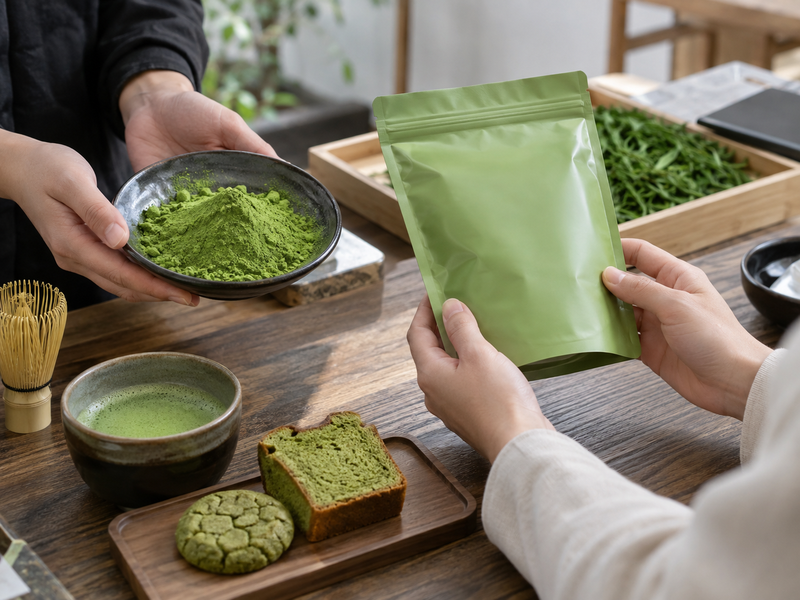
Separate product identity from intended use
The first split is between pure matcha powder and a prepared mix containing matcha plus other ingredients. A pure powder gives a developer control over tea dose, sweetness and flavor. A latte mix may be convenient for service but could include sugar, milk solids, flavors or stabilizers. Read the ingredient list before comparing prices by kilogram. Two products both called matcha may provide very different amounts of tea in a finished cup.
Within pure powder, suppliers may offer lines for straight drinking, milk drinks, bakery use and industrial manufacturing. These are application suggestions, not universal legal classes. The powder’s sensory profile, particle size, color and price can vary. Ask what distinguishes each line and request a production sample. A product that works well in a sweet cake may taste too strong in water, while a gentle straight-tea powder may be lost after baking.
Some listings use terms such as premium, ceremonial, barista and culinary. Treat those as starting questions. A useful product category answers what the powder contains, how it is made, how to store it and how it performs in the buyer’s formula.
| Product on offer | Check first | Typical buyer use |
|---|---|---|
| Pure matcha | Ingredient identity and lot | Flexible recipe development |
| Sweetened latte mix | Matcha proportion and sugar | Fast, standardized service |
| Baking-oriented powder | Flavor and color after heat | Cakes, fillings and desserts |
| Retail tin | Pack barrier and consumer label | Direct-to-consumer sale |
2. How Useful Are Ceremonial and Culinary Grades?
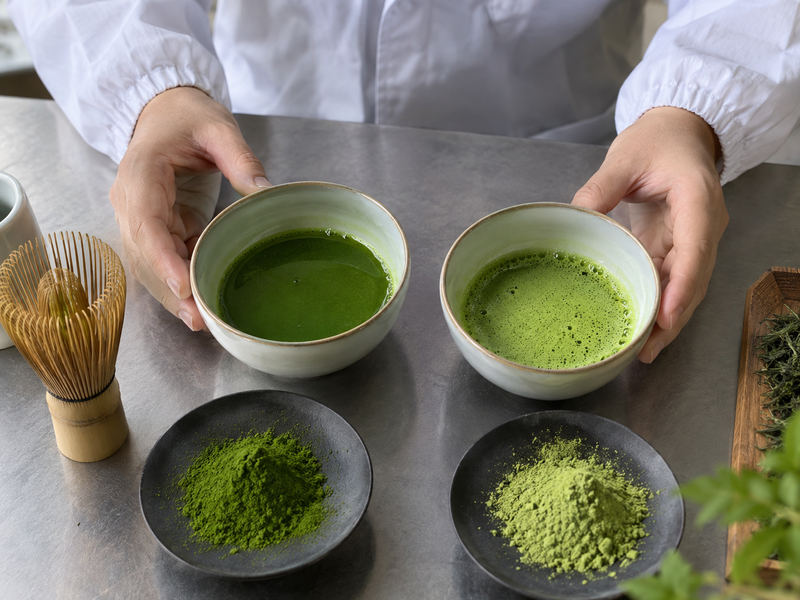
Ask the supplier to define its terms
Grade words can help organize a supplier’s own range, but they do not reliably compare one supplier against another. A “ceremonial” powder from one company may differ substantially from a “ceremonial” powder elsewhere. Ask for a written description of the grade, the intended preparation and the differences between adjacent products. If a label makes a specific origin or production claim, request evidence for that claim separately.
In a straight drink, look for a clean aroma, fine mouthfeel and a finish the target customer enjoys. In a sweet formula, look for a tea character that survives the other ingredients at a sensible dose. This approach may lead to a less expensive grade for a bakery and a more carefully selected powder for a plain-water service. Neither choice is automatically inferior; each is matched to a job.
Avoid telling consumers that a grade word guarantees health effects. A grade is not a medical category. For B2B purchasing, write measurable acceptance criteria instead: target sensory notes, visual range, fineness or dispersion, shelf-life, pack type and lot documents.
3. Is a Matcha Latte Mix the Same as Pure Matcha?
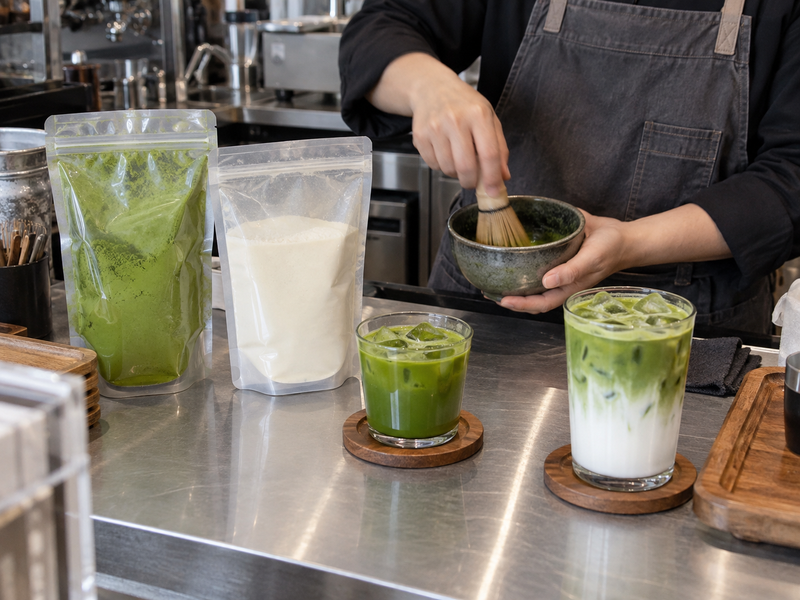
Compare ingredient contribution per serving
A premix can be useful when speed and uniformity matter. It can also hide a small tea dose behind sugar or flavors. Ask for the complete ingredient list and a nutrition panel for the finished mix. Calculate how many grams of the mix go into a serving and how much of that is actual matcha, if the supplier provides the proportion. With pure powder, the café controls the tea dose and adds milk or sweetener separately. That offers flexibility but requires staff training and a reliable mixing method.
Cost comparisons should use the finished cup. A cheap kilogram of sweetened mix may need a large serving and leave little control over sweetness. A pure powder may cost more per kilogram yet need fewer grams per cup. Include labor: a premix that dissolves quickly can reduce service time, while an extra whisking step may be justified for a premium drink. Taste both in the same cup size and with the same desired sweetness before deciding.
| Question | Pure matcha | Prepared mix |
|---|---|---|
| Tea dose | Set by the buyer | Depends on mix composition |
| Sweetness | Flexible | Often built in |
| Staff method | Requires mixing standard | May simplify service |
| Label review | Plain ingredient plus recipe | Full mix ingredient review |
4. What Type Works Best for a Plain Tea Service?
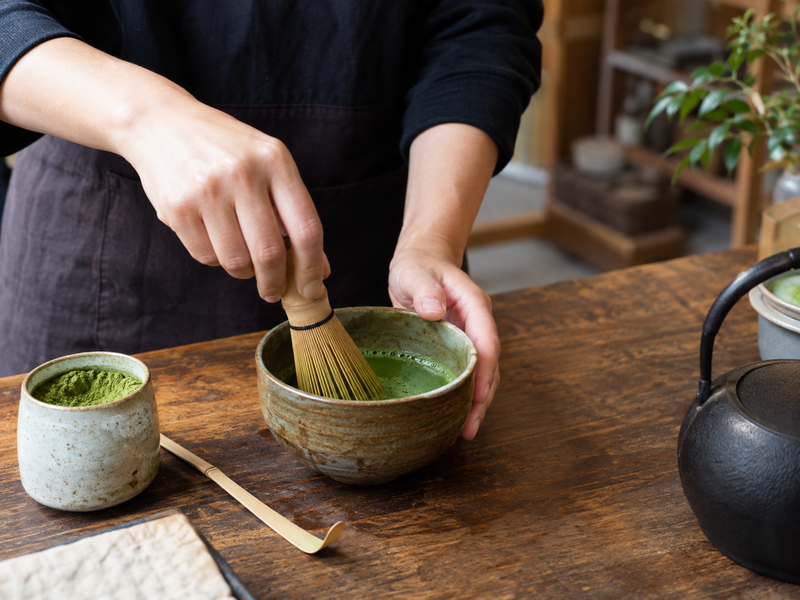
Let water expose the powder
Plain tea shows texture, aroma and bitterness without milk or syrup to soften them. Screen samples under the same conditions: powder weight, water source, volume, temperature and mixing tool. Serve coded cups so tasters do not know the price or grade word. Note dry aroma, prepared aroma, color under neutral light, mouthfeel and finish. A bright photograph is not a substitute for tasting; cameras and screens can make any green powder look more vivid.
The most appealing powder depends on the audience. A specialty tea bar may favor a nuanced cup with seasonal variation. A chain may prioritize a stable, approachable profile and predictable supply. A tiny difference in a tasting flight can disappear during real service, so ask whether the premium translates into a noticeable customer experience. Retain a sealed sample from the approved lot and check a later delivery against it.
If a supplier recommends a premium grade, request a production lot sample rather than only a small promotional sachet. Ask whether the same profile can be supplied across the intended order period.
5. What Should a Milk Drink Powder Do?
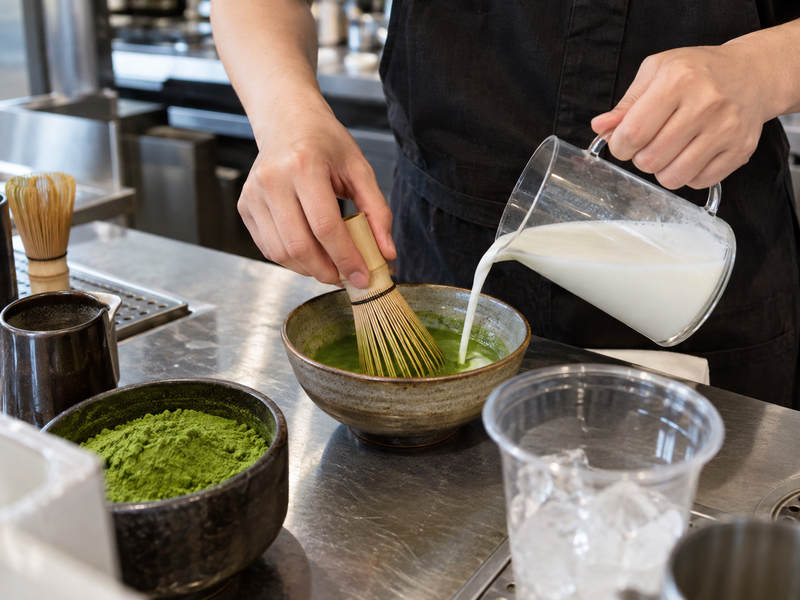
Retain tea identity after dilution
Milk, plant-based alternatives and sweeteners can soften tea bitterness, but they can also erase desirable aroma. Test the powder in the standard milk formula at the intended dose. Compare hot and cold service if both are sold. Watch for clumps and settling in cold drinks. A powder may be excellent in water yet need so much product in milk that the cost per serving becomes unattractive. Another may taste too assertive in plain tea and work beautifully in a latte.
Consider service equipment. A powder that disperses easily in a small warm-water base may be fast enough for a café, even if it needs a short whisk. If staff add it directly to cold milk, run that method in a peak-hour trial and check the bottom of the cup. Color matters, but it should not be achieved by misleading photography or unsupported color claims. Record the actual cup color under normal counter lighting.
For multi-site operations, use the same recipe card and sample lot in each pilot location. Water and milk brands can vary, so compare the final drink rather than assuming the same powder will taste identical everywhere.
| Milk-drink check | What to record | Why it matters |
|---|---|---|
| Tea dose | Grams per cup | Flavor and ingredient cost |
| Mixing | Tool and time | Service speed |
| Milk choice | Type and volume | Sweetness and texture |
| Hold time | Appearance after service | Settling and color |
6. What Matters Most in Baking and Desserts?
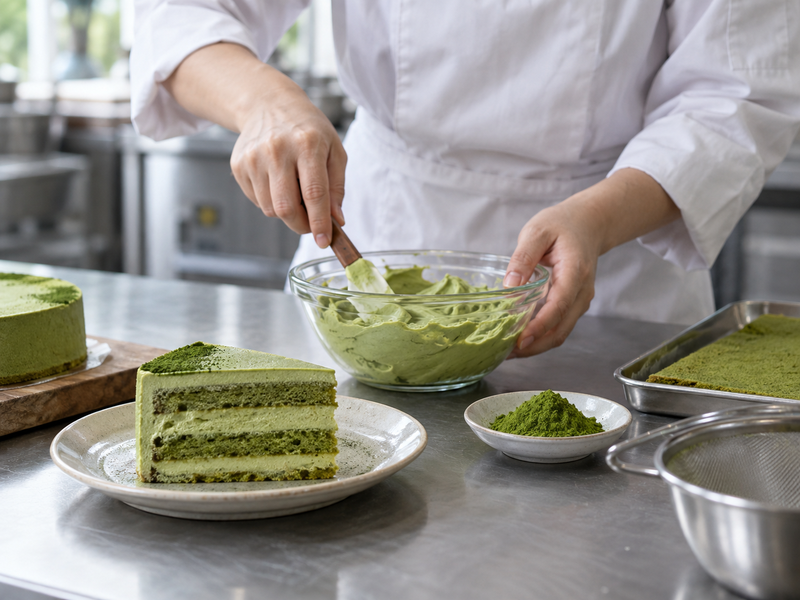
Test after the full process
Heat, sugar, fat and other flavors can change how matcha tastes and looks. A dry powder inspection alone says little about the finished cake, filling, chocolate or frozen dessert. Make a small pilot with the real formula and process. Compare color, tea flavor and any bitter edge after production and through the planned shelf life. In a filling or ice cream, texture can matter as much as flavor; gritty particles may remain visible or feel unpleasant.
Do not assume that a darker, less expensive powder is automatically efficient. It may need a higher dose or more sweetener to reach the target profile. Equally, a delicate premium powder may lose its subtle aromas during baking. Calculate cost per finished unit at the dose that actually works. If color is a core sales feature, test it under the intended package, light and distribution conditions. A green sample at the mixing bowl is not a finished-product guarantee.
Ask the supplier for a specification suited to food manufacturing, including allergen and cross-contact information where relevant to the operation. The buyer remains responsible for validating the complete product.
7. When Does Organic Certification Change the Choice?
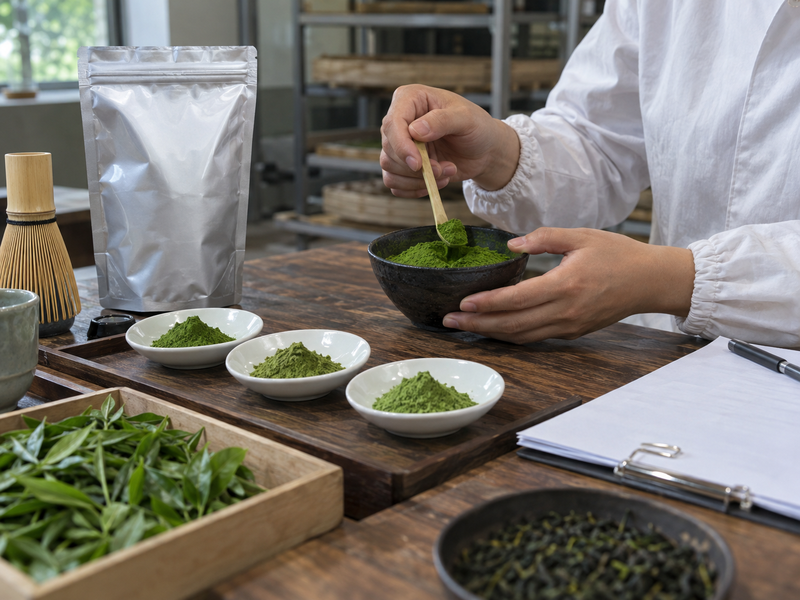
Check the certificate scope and destination market
Organic can be a necessary requirement when a retail brand makes an organic claim or a customer contract specifies it. It is not a shortcut for taste, fineness or color. Ask for a current certificate identifying the certified operator, product and scope, then check how the claim travels through packing and private-label steps. Requirements vary by destination market, so have a qualified regulatory reviewer confirm the label before printing it.
Compare organic and non-organic samples blindly in the intended recipe. If the organic product meets the sensory target and commercial budget, it may justify the choice for a brand with a clear claim. If it performs poorly, the buyer should not assume certification will fix the recipe. The supplier’s batch tests and traceability remain important regardless of organic status. A certificate that belongs to a different company or expired product does not support the offered lot.
| Claim or need | Document to review | Separate quality test |
|---|---|---|
| Organic label | Current certificate and scope | Taste and texture |
| Origin statement | Lot-linked origin record | Formula performance |
| Food safety | Relevant facility and lot records | Receiving inspection |
| Premium grade | Supplier definition | Blind sensory comparison |
8. Do Region and Cultivar Define a Type?
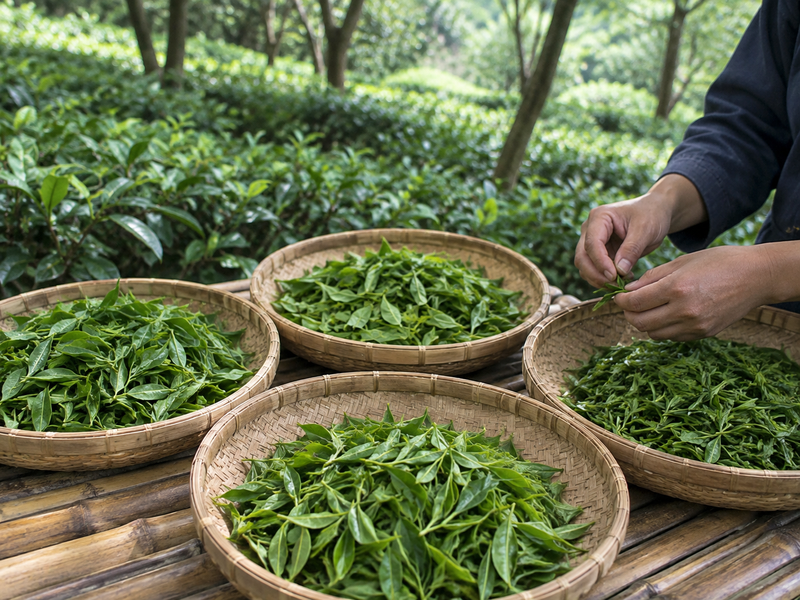
Use provenance to explain, not replace, performance
Growing region and tea cultivar can help describe a powder and may matter deeply to a specialty retail story. They do not create a universal grade. Cultivation, shade, harvest, processing and storage also shape the finished product. A blend of several leaf sources can be designed for consistency; a single-origin seasonal powder may offer a more changing profile. Decide which approach suits the product and label, then ask for records that connect the claim to the lot.
For a café chain, a stable sensory target may be more important than a narrow provenance story. For a small specialty tea line, a documented region or cultivar can be part of the value. In either case, avoid assuming that a familiar name makes the powder suitable for milk, baking or plain water. Run the same application tests. If origin is printed on consumer packaging, agree with the supplier how source changes will be communicated before a repeat order.
This article classifies products by use; a detailed Japanese-origin check belongs in a separate sourcing specification. Keep the two decisions clear so buyers can compare like with like.
9. How Should Different Types Be Compared?
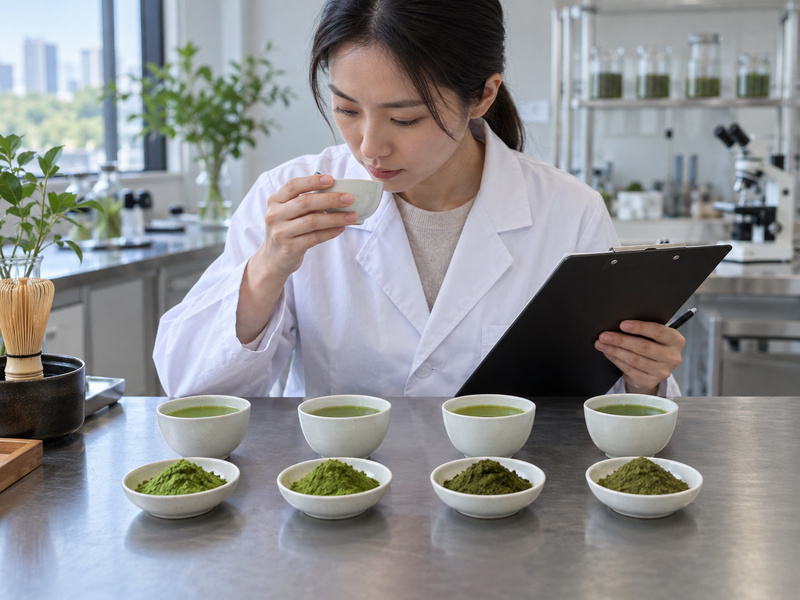
Build one scorecard for the application
Start with three or four candidates, not every powder in a catalog. Ask each supplier for the same documents: product identity, ingredient list, intended application, pack size, date code, shelf-life guidance and lot test information. Prepare blind samples with identical methods. Score what matters to the product: plain-tea flavor, milk presence, color after processing, dispersion, cost per serving and supply reliability. Weight the criteria before seeing prices so the cheapest quote does not silently redefine quality.
Keep the scorecard short enough for the team to use. A sentence such as “fine texture but weak in our oat-milk recipe” is more useful than an unexplained 8/10. Use an approved reference sample when the next lot arrives. A supplier that offers good technical support and documents may be a stronger partner than one with a slightly better first tasting but uncertain supply.
| Criterion | Plain tea | Milk drink | Bakery |
|---|---|---|---|
| Aroma and flavor | High priority | Medium to high | After-process check |
| Dispersion | Important | Critical cold | Formula-dependent |
| Color | Under cup light | In milk | After heat and storage |
| Cost | Per serving | Per serving | Per finished unit |
10. What Should the Final Purchasing Specification Say?
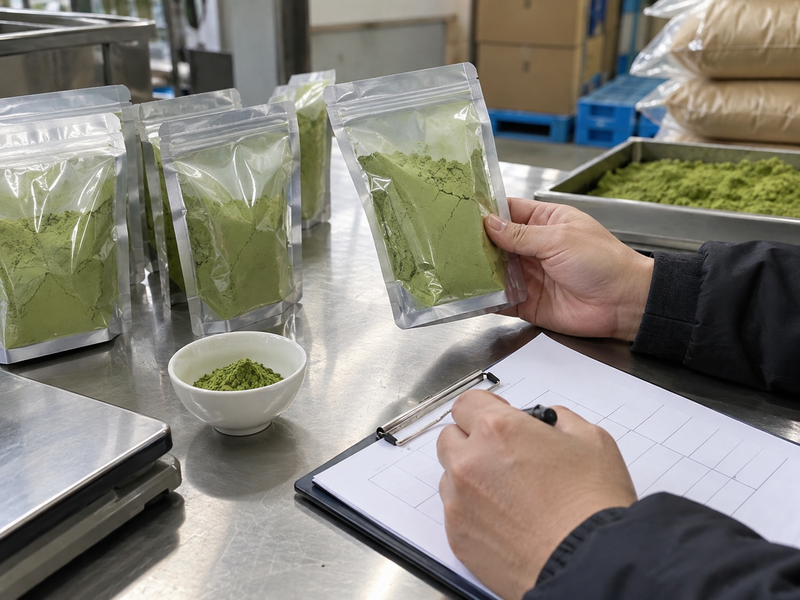
Write requirements that survive a staff change
The specification should name whether the item is pure powder or a mix, list permitted ingredients, identify the intended applications and define the approved sensory reference. Include pack type, net weight, shelf-life on delivery, storage, lot code, required tests and the process for approving a replacement lot. If an organic or origin claim is part of the brand, list the documents and change-notification rule. A grade word can remain on the product name, but it should not carry the whole agreement.
For a pilot, request enough commercial-pack material to test the actual preparation method. A sample in a small, tightly sealed pouch can behave differently from a large bag opened repeatedly. Check both the first and last uses of a working pack. Matcha Village describes pure matcha and prepared application products in its company material; buyers should ask the same identity and performance questions of any supplier before committing to OEM or bulk volumes.
The goal is a repeatable result in a real cup or finished food, supported by records a receiving team can check. That is a more durable way to choose among types of matcha than relying on a catalog hierarchy.
FAQ
Q1. How many types of matcha are there?
There is no single universal count. Suppliers group pure powders and mixes by grade, use, region, cultivar or other features. Define the ingredient and application before comparing categories.
Q2. Is ceremonial matcha always better than culinary matcha?
It may suit plain tea better, but supplier labels are not uniform. Test each powder in the intended product and compare cost at the dose that works.
Q3. Can pure matcha replace a sweetened latte mix?
Yes, if the café adds and controls the other ingredients and has a repeatable mixing method. Rework the recipe and cost calculation rather than substituting gram for gram.
Q4. Does organic matcha taste different?
Certification by itself does not predict a particular flavor. Compare certified and non-certified lots blindly while checking that the certificate covers the offered product and intended label claim.
Q5. What is the fastest way to narrow a supplier catalog?
State the target use, ingredient requirements, price range and pack size. Ask for a few representative samples and a specification for each, then run the same recipe test across them.
For one consumer explanation of categories, see Nio Teas’ overview of matcha types. For commercial purchasing context, see our bulk matcha guide. Always review the offered lot and final recipe before making a label claim.