
Matcha protein bites are easy to roll once and difficult to sell consistently. Nut butter, powdered ingredients, and matcha can produce a mixture that is sticky on Monday and crumbly after the next delivery. A café needs a weighed formula, an observable texture target, and a plan for portioning and handling. Start with the finished bite: define its size, flavor, and sales format before selecting a binder. Our matcha cake guide shows the same principle in baking: test tea in the finished food, not only in a cup.
Contents
- 1. What should the finished bite deliver?
- 2. Which ingredients provide structure?
- 3. How much matcha belongs in the mix?
- 4. How do you control a sticky or dry batch?
- 5. What portion size works for service?
- 6. Should the bites have a coating?
- 7. How should a batch be handled?
- 8. What does the package need to protect?
- 9. How do you calculate cost and protein?
- 10. When is the formula ready to scale?
1. What should the finished bite deliver?
Define a saleable piece
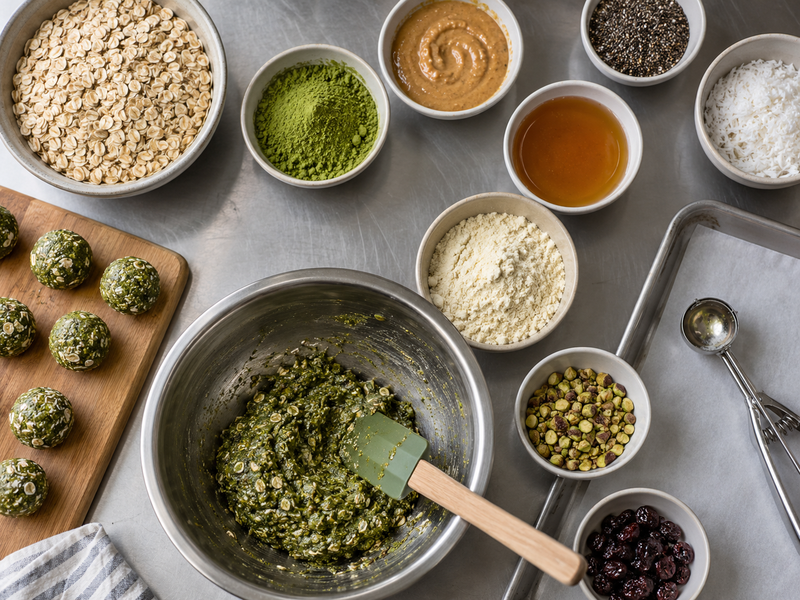
Set a target mass, diameter, texture, and flavor before mixing. Is this a two-bite café snack beside coffee, a packaged multi-piece portion, or a component of a catering box? Each format changes the acceptable size and surface. Decide whether matcha should be prominent or act as a finish to nut and chocolate flavors. A green exterior alone does not prove the center tastes of tea. Taste one piece at preparation and another at the point when customers would buy it.
Write a short pass description: holds its shape in the wrapper, does not leave paste on fingers, and has an identifiable tea note without a dry powder finish. Photograph a passing piece beside the intended pack. Count only pieces that meet that standard after handling. The Poosh example uses an almond-based center with matcha chocolate; it demonstrates a home-style option, not a validated commercial formula or nutrition claim. Your service brief should come from the actual product you intend to sell.
2. Which ingredients provide structure?
Give each component a job
A no-bake bite commonly combines a sticky binder with dry solids. Nut or seed butter can bind and carry flavor; oat flour, ground nuts, or another dry ingredient can absorb moisture; syrup can add sweetness and change firmness. Protein powder, if used, is another dry solid with its own flavor and absorption behavior. List each ingredient by function before adjusting amounts. That keeps a new team member from treating every powder as an interchangeable source of protein.
Build two small controlled trials with the same matcha dose, changing only the binder-to-dry ratio. Weigh the mixed dough, then test whether it forms cleanly and stays formed after the planned rest. A spoonful that tastes good can still be too soft for a wrapper. Read every ingredient statement, especially for allergens and sweeteners, before drafting menu language. If the product will be called a protein bite, have the nutrition information calculated and reviewed for the sales market; the name should not be an unsupported numerical promise.
| Component | Practical role | What to observe |
|---|---|---|
| Nut or seed butter | Binds solids | Stickiness and flavor |
| Dry flour or meal | Takes up moisture | Crumbling or firmness |
| Sweetener | Sweetness and texture | Surface tack after rest |
3. How much matcha belongs in the mix?
Test tea in the finished bite
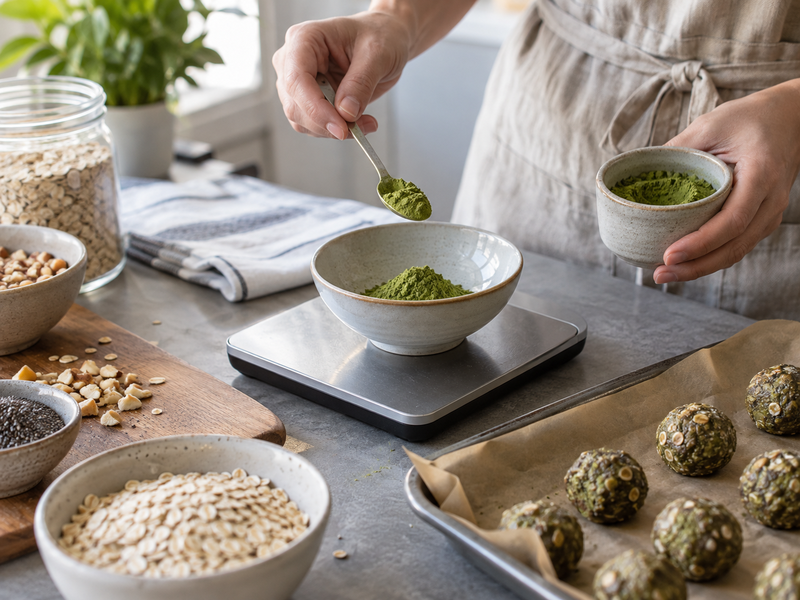
Weigh matcha as a percentage of the total mixture in pilot trials. Use the same binder, portion, and coating while changing only the tea dose. Taste after the rest or chill planned for service. Cold temperature and sweet chocolate can change how noticeable matcha seems. A dose that makes the mix vivid green may taste harsh, while a lower dose may disappear behind nut butter. Choose the lowest dose that meets the flavor target, then record it in grams per batch and per piece.
Ask the supplier for a representative sample of the product that would be supplied commercially. Plain matcha and a sweetened blend are different ingredients and cannot be substituted by equal mass. Keep the lot with the trial sheet, and repeat a small comparison when a new lot or grade arrives. Matcha contributes caffeine, so do not describe a bite as caffeine free or infer a per-piece amount from a generic website figure. If a numerical caffeine statement is needed, connect supplier data to the actual matcha mass in each piece.
4. How do you control a sticky or dry batch?
Diagnose before adding more ingredients
Record the dough’s temperature, rest time, and appearance when the binder and solids first meet. If it sticks to gloves or a scoop, check whether the binder mass, syrup, and mixing time match the approved sheet. If it fractures while rolling, check dry-solid weights and whether a substitution absorbed more moisture. Resist fixing a whole batch with an unmeasured pour of liquid; that can solve today’s forming problem while creating a soft packed product tomorrow.
Run a small adjustment test with one measured change at a time. Make several pieces, rest them under the proposed conditions, and handle them as staff and customers will. Note whether the coating hides a weak structure. A piece that holds only while frozen has a different service plan from one sold from a chilled case. The site’s food-safety lead should decide handling and sale conditions for the complete ingredient mix. Texture trials measure quality; they do not establish microbial safety or a shelf life.
| Failure | First record to inspect | Controlled trial |
|---|---|---|
| Sticky surface | Binder and syrup mass | Small dry-solid change |
| Crumbling edge | Dry-solid mass and rest | Small binder change |
| Uneven green streaks | Mixing order | Disperse matcha in dry phase |
5. What portion size works for service?
Weigh pieces after forming
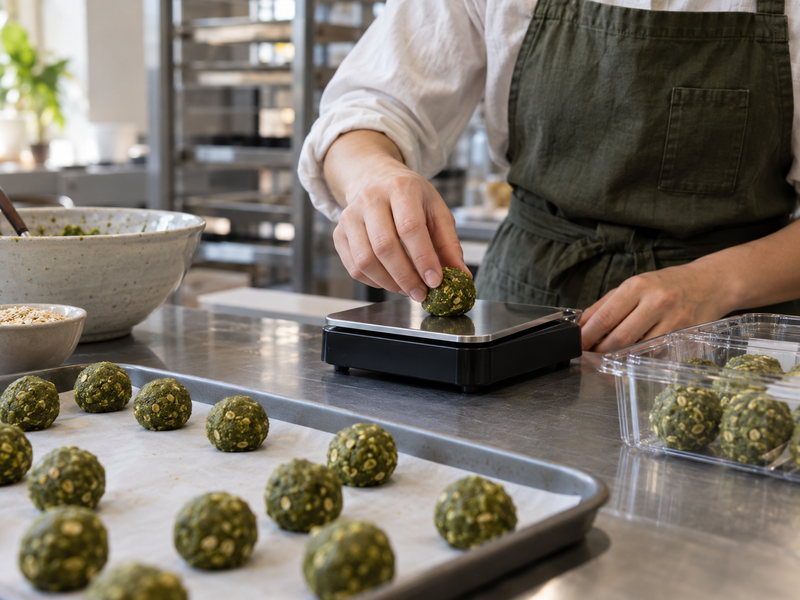
Choose a target piece mass that matches the intended price and number of bites per pack. Portion a pilot batch with the proposed scoop, then weigh pieces from the beginning, middle, and end. A scoop can drift as the mixture warms or sticks. If the range is wide, use a different portioner or add a quick scale check during production. Record both the target mass and the acceptable range determined by the bakery’s own quality trial.
Count saleable pieces after coating and packing, not only the number of scoops. A larger piece may look generous yet make the last pack short; a smaller piece can make nutrition and price-per-serving information unreliable. If the customer buys a two-piece pack, test the whole pack weight and appearance. Use the actual matcha dose per piece for any caffeine estimate. Portion control ties flavor, cost, and label review together, so it belongs at the center of the recipe sheet rather than as a finishing detail.
6. Should the bites have a coating?
Evaluate flavor and handling together
A matcha chocolate shell can add visual contrast and protect a soft center; a dry powder dusting can leave green residue on hands and packages. Seeds or coconut change bite and ingredient declarations. Test coated and uncoated versions with the same center. Note how much coating actually adheres and how much is left in the bowl. Then place pieces in the intended package and inspect for smears, cracks, or coating shed after ordinary transport.
Treat the coating as part of the formulation. White chocolate can make a bite much sweeter than the center test suggested. Powdered matcha on the outside can create a harsh first taste even when the core is balanced. Record coating mass per piece and include it in ingredient cost, nutrition calculation, and allergen review. If the coating needs temperature control to set, document a procedure the shop can carry out without blocking the prep area. The simplest saleable finish may outperform an elaborate shell with high loss.
| Finish | Advantage to test | Possible failure |
|---|---|---|
| Uncoated | Fast production | Sticky pack contact |
| Matcha chocolate | Defined shell | Sweetness and cracking |
| Dry dusting | Simple visual cue | Powder rub-off |
7. How should a batch be handled?
Write the real prep and sale route
Map receiving, storage, mixing, forming, coating, packing, display, and discard for the actual ingredients. The route changes with nut butter, dairy chocolate, fresh additions, and the intended sales channel. Follow supplier instructions and local food-service requirements; the FDA Food Code is a US model reference rather than a universal site rule. Have the responsible food-safety lead set temperatures, labels, and use periods for the complete product.
Do not copy the resting or freezing step of a home recipe into retail service without testing quality and handling. A piece may be pleasant just after setting yet become oily or hard in a chilled display. Label pilot batches with date, formula version, and ingredient lots so observations can be traced. Keep a count of pieces discarded for texture or appearance. If the procedure is too complicated during a normal shift, change batch size or production timing before launch.
8. What does the package need to protect?
Test from kitchen to customer
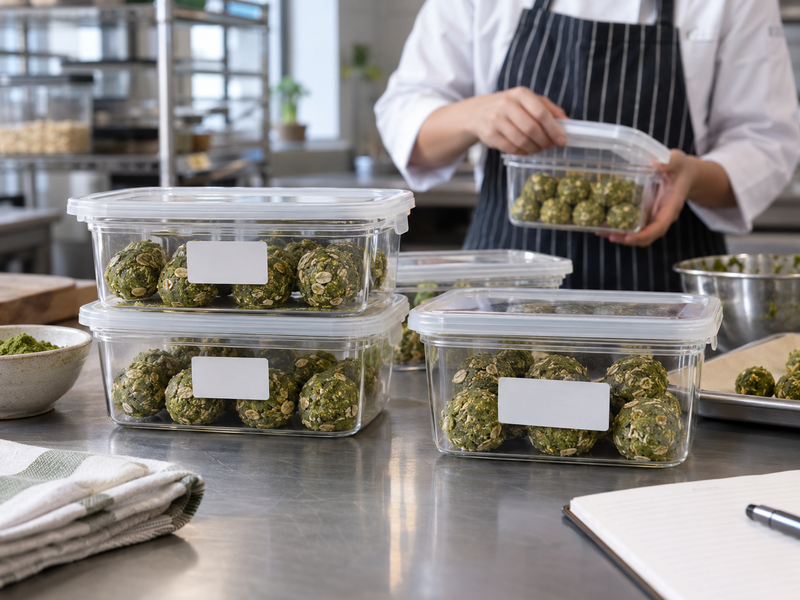
Try the chosen tray, pouch, or box with a full saleable serving. Watch whether pieces flatten, stick together, or leave coating on the lid. A rigid container may protect shape but occupy too much counter or refrigerator space. A flexible pouch may travel well if the center is firm enough. Test the package under actual display conditions and a short transport simulation, then taste the product at the planned end of sale for quality. These observations are not a safety validation.
The pack also needs room for accurate ingredients and required information in the destination market. Nut, seed, dairy, and other allergens must be reviewed against the exact formula and production process. Avoid “high protein,” “gluten free,” or similar claims without the necessary calculation, controls, and review. If the snack is sold loose at a café counter, staff still need the current ingredient record to answer questions. Packaging is part of the product, not a decorative decision made after the recipe is approved.
| Pack trial | Inspect at handoff | Inspect after transport |
|---|---|---|
| Single cavity | Surface contact | Flattening |
| Shared pouch | Separation | Pieces sticking |
| Rigid box | Fit and label room | Coating cracks |
9. How do you calculate cost and protein?
Use the complete served portion
Sum the cost of all ingredients, including matcha, binder, dry solids, sweetener, coating, and packaging. Divide by the number of saleable pieces or packs after routine loss. Do not use the theoretical yield from batch mass if coating and handling remove pieces from sale. A small matcha increase may be inexpensive per piece, while a premium nut butter or coating can dominate cost. Keep the spreadsheet connected to actual invoice prices and the controlled formula version.
For protein content, use reliable ingredient specifications or analytical results as appropriate, calculate from actual masses and saleable yield, and have a qualified reviewer assess any label claim under the target market’s rules. Do not assume that a recipe called “protein bites” has a specific protein amount or health effect. Record the basis for every number so a supplier substitution can trigger recalculation. The costing and nutrition sheets should describe the same portion customers buy, not an idealized uncoated ball from the first trial.
10. When is the formula ready to scale?
Repeat the result with another operator
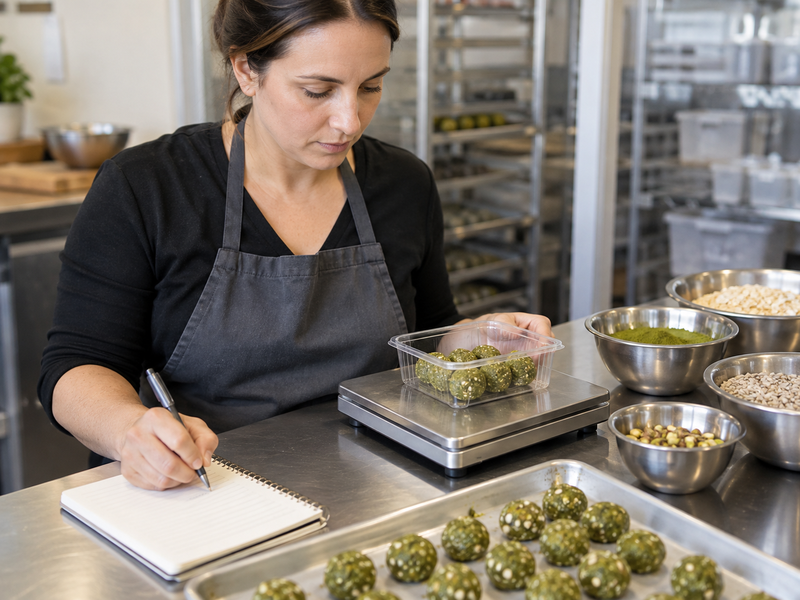
Make at least one pilot batch on another shift using the written method. Compare mixing time, mixture temperature, portion weights, coating pickup, and saleable yield. A larger batch can warm differently in a mixer and take longer to portion; first and last pieces may no longer feel alike. If they differ, test a smaller batch size or revised sequence before multiplying ingredients again. Scaling is a process test as much as a formula calculation.
Put ingredient identifiers, weights, mixing order, rest or chill procedure, portioning, finish, pack, handling approval, and yield on one controlled sheet. Name who can authorize substitutions. Keep the passing reference piece or photograph and a brief description of flavor and texture. When the shop can produce the bite consistently without the developer standing beside the mixer, it has a product rather than a promising demonstration.
| Scale checkpoint | Pilot record | Production check |
|---|---|---|
| Mix | Mass and sequence | Even texture throughout |
| Portion | Target piece mass | Range across batch |
| Yield | Saleable packs | Loss by cause |
FAQ
Q1. Must matcha protein bites contain protein powder? No. The formulation can use protein-containing ingredients, but any quantity or label claim needs calculation and review for the saleable portion.
Q2. Can a home recipe be scaled directly? Weigh it first, define piece size, and test handling and yield in the intended kitchen. A multiplied cup measure is not a production specification.
Q3. Why does the mixture crumble? Check dry-solid and binder weights, ingredient substitutions, and the rest condition before adding liquid by eye.
Q4. Can bites be sold at room temperature? That depends on the complete formula, packaging, validation, and applicable rules. The site’s food-safety lead should set the procedure.
Q5. How should matcha be costed? Use the weighed dose per saleable piece and the actual purchase price, including loss from coating and production.
Make the repeatable bite the goal
The useful no-bake formula is the one staff can mix, portion, pack, and explain on an ordinary shift. Set the finished standard, weigh the ingredients, test the complete sales route, and review every claim against the real serving. That turns a good kitchen sample into a dependable café product.