
The types of matcha drinks that fit a café are defined by how they are built, not by how many names appear on a trend list. Straight tea, milk lattes, sparkling drinks, and smoothies ask different things of a powder, station, and staff. A buyer should map those formats before choosing ingredients or promising every variation on the menu. This guide compares the main drink families by base, sweetness, matcha dose, and work at the bar. Our matcha beverage formulation guide gives a broader method for testing finished beverages.
Contents
- 1. How should a café classify matcha drinks?
- 2. What makes straight matcha service distinct?
- 3. When does a hot latte work best?
- 4. What changes in an iced latte?
- 5. Where do sparkling matcha drinks fit?
- 6. What does a blended matcha drink require?
- 7. How should flavored variations be evaluated?
- 8. Are bottled drinks the same category operationally?
- 9. Which formats deserve a place in the lineup?
- 10. How do you compare products across formats?
1. How should a café classify matcha drinks?
Start with the base and process
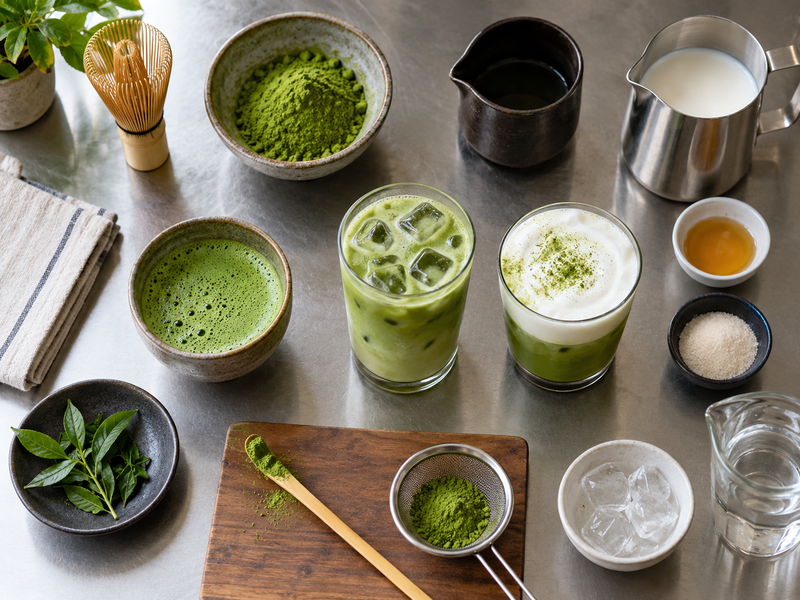
List the drinks by the liquid and equipment that define them: water and whisk for straight tea, milk and steaming for a hot latte, milk and ice for an iced latte, carbonated mixer for a sparkling drink, and blender for a smoothie. These families can share a powder, but they do not share every preparation step or cost. A matcha concentrate that disperses well in hot water may still need an iced build test, while a latte powder may carry sweetener that prevents an unsweetened option.
Make a simple inventory of the station required for each family. Include water, milk, ice, chilled storage, mixing tool, cup, and cleaning. The consumer list of matcha drink styles can offer names and inspiration; a commercial format map should be based on what the café can make repeatedly. If two menu names differ only by syrup, treat them as variations of one operational family. This keeps product selection and staff training manageable.
2. What makes straight matcha service distinct?
Let tea flavor carry the cup
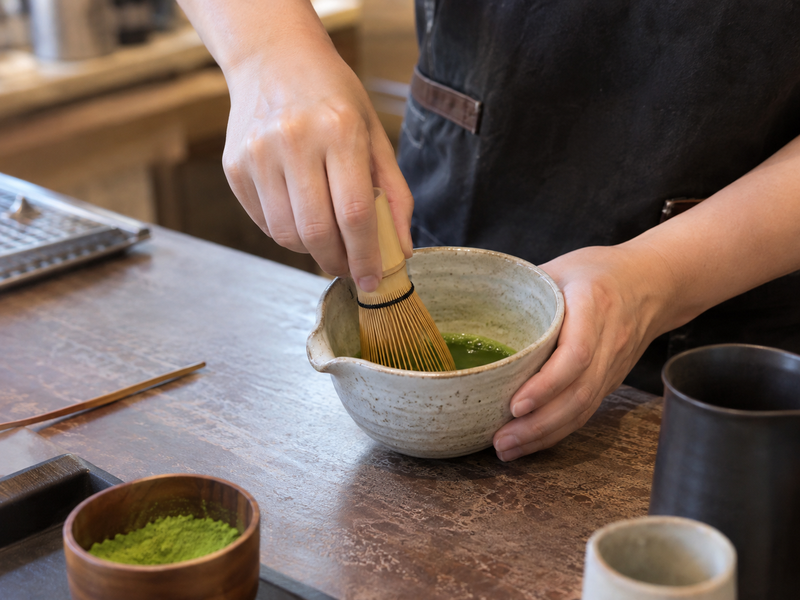
Straight matcha is a useful benchmark because milk and syrup cannot hide the powder’s flavor or texture. Weigh the tea and water, choose a measured preparation temperature, and evaluate aroma, bitterness, smoothness, and visible clumps. A small cup may need more attentive handoff than a takeaway latte, but it also gives customers a clear taste of the ingredient. Train staff to explain the serving size and flavor without claiming a universal grade hierarchy.
The selected powder should be tested in the actual bowl or cup. A candidate that looks vivid in a sample jar may taste harsh in the house serving; another may be subtle but pleasant. Price the measured dose and allow for tool care and service time. Ippodo’s basic matcha method provides a tea maker’s example, while the café should choose its own tested portion. Keep the straight-tea recipe separate from latte specifications so staff do not use a sweetened blend by mistake.
| Straight tea input | What to control | What to judge |
|---|---|---|
| Matcha mass | Scale or calibrated measure | Flavor and cost |
| Water | Volume and temperature method | Balance and warmth |
| Tool | Whisking procedure | Clumps and texture |
3. When does a hot latte work best?
Test the tea through the milk
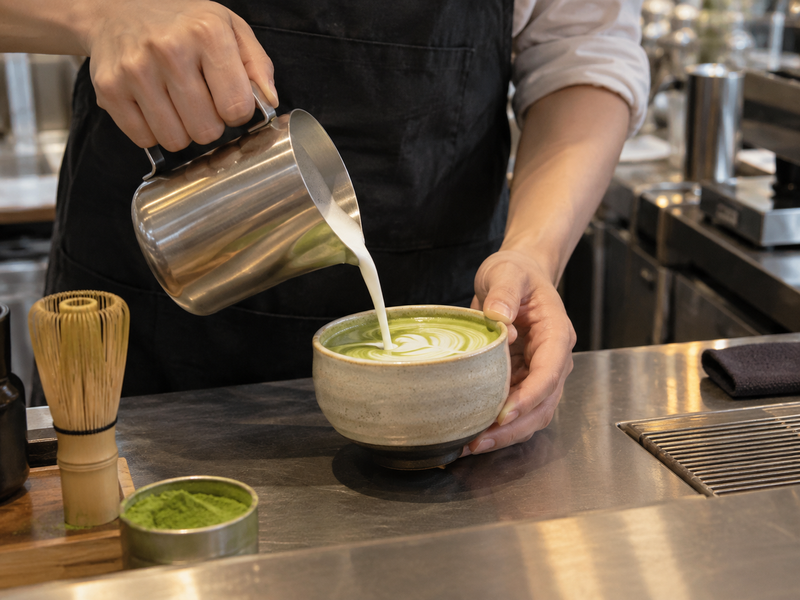
A hot latte uses a dispersed matcha base combined with warmed or steamed milk. This format can be familiar to café guests, but milk volume and texture can easily mute tea flavor. Choose powder by tasting in the finished drink, not only in water. Decide whether the house cup is sweetened; if a premix contains sugar, the menu must reflect that. A separate syrup allows more control but adds a measured service step.
Record matcha, water, milk, sweetener, cup, and final fill for each size. Steam temperature and foam style should follow the shop’s normal process, but the drink still needs a tasting trial after a gentle stir. A decorative top does not prove the lower cup is balanced. Compare dairy and any plant-based option as distinct builds. Cost both rather than assuming a substitution is neutral. The hot latte deserves a menu place when the bar can produce a recognizable tea flavor at the expected service pace.
4. What changes in an iced latte?
Account for ice and delayed tasting
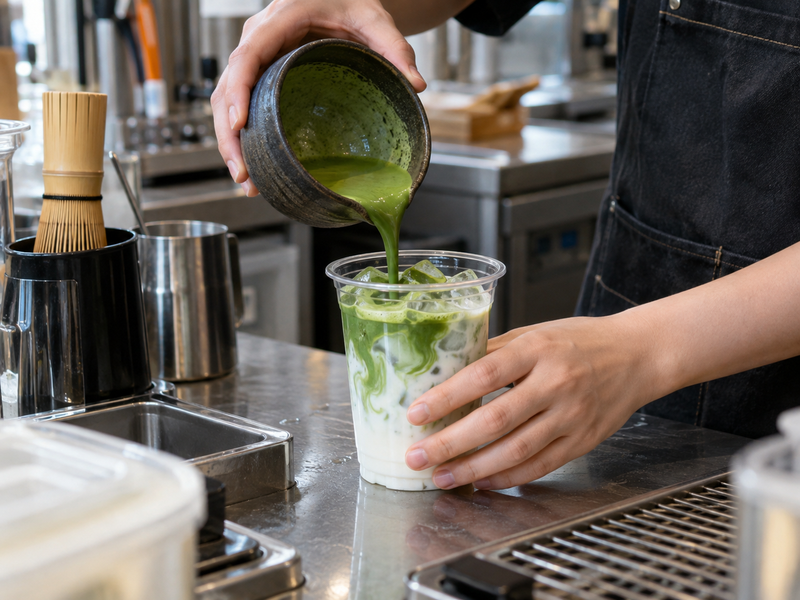
Iced lattes add a dilution variable that a hot recipe does not have. Make a smooth matcha base first, then combine it with measured milk and ice in the saleable cup. Dry powder added to a full cold cup can leave flecks and a gritty bottom. Test the drink immediately and after several minutes, when ice has started to melt. A larger iced cup may need a separately approved tea dose to remain recognizable, but the change should be based on tasting and cost.
If a layered visual is important, check how the drink tastes after the guest stirs it. A striking photograph can mask an over-diluted beverage. Specify the cup and lid so staff can leave enough headspace and deliver a consistent fill. The iced format also needs chilled ingredient handling and a clear order of assembly. It earns its own recipe card even when it shares matcha and milk with the hot latte. That separate card prevents the common shortcut of putting a hot recipe over an arbitrary ice scoop.
| Iced variable | Measure | Failure to watch |
|---|---|---|
| Ice | Mass or fill line | Weak drink after melt |
| Milk | Poured volume | Tea disappears |
| Matcha base | Powder and water | Flecks or excessive warmth |
5. Where do sparkling matcha drinks fit?
Consider bitter, acidic, and carbonated mixers
Sparkling water, tonic, and citrus mixers can make a matcha drink feel lighter than a milk latte, but they are not interchangeable. Tonic often brings sweetness and bitterness, while plain sparkling water does not. Mix matcha into a smooth small base before adding carbonated liquid; vigorous whisking in the finished cup can remove fizz and create overflow. Test the chosen mixer and actual glass. A drink that tastes balanced at first pour may change as ice melts and bubbles fade.
Keep the menu description accurate about sweetener and caffeine. Matcha contributes caffeine; a tonic’s ingredient statement determines its own flavor and sugar information. Sparkling drinks may be a useful summer or afternoon option if the bar has a clear way to open, pour, and use mixers without excessive leftover waste. Measure the matcha dose and mixer volume for cost. Do not add a sparkling format simply because it photographs well; it must survive normal handoff and drinking time.
6. What does a blended matcha drink require?
Treat the blender as a separate station
Smoothies and frozen matcha drinks introduce fruit, ice, powders, and a machine that needs cleaning between orders. Record ingredient masses, blend program, final yield, and the amount left in the pitcher. A cup can look thick because it contains much ice, while matcha flavor becomes weak after melting. Test at handoff and after a short wait. Some fruit masks tea or makes a higher dose taste harsh; select powder and portion in the finished recipe.
Before adding a blender item, time a series of orders during a busy period. One shared blender may become a bottleneck even if each recipe appears simple. Staff also need an approved process for milk or nut allergens in shared equipment. Batch preparation and holding require separate quality and food-safety review; a freshly blended test cannot certify a held product. A blended format belongs on the menu when the team can keep texture, portion, and cleaning reliable under actual demand.
| Blended input | Recipe record | Service question |
|---|---|---|
| Fruit and ice | Prepared masses | Does it dilute tea? |
| Blender | Program and batch size | Is ticket time workable? |
| Pitcher reset | Cleaning procedure | Can next order start safely? |
7. How should flavored variations be evaluated?
Keep a clear matcha base beneath the flavor
Vanilla, citrus, spice, fruit, and cold foam can create useful menu variations. Start with an approved base drink, then change one flavor ingredient at a time. If a syrup hides the tea, reducing syrup or changing the base may be better than simply adding more matcha. Measure every pump or spoonful. A variation should offer a new taste or occasion, not only a new name for the same sweet latte.
Check ingredient and allergen statements for the complete drink. A flavored premix or foam may already contain sweetener and dairy ingredients. Avoid promising “unsweetened” or “dairy free” on the strength of a menu nickname. Test hot and iced versions separately if both will be sold; temperature and dilution can alter sweetness and spice. Count how many extra service steps the variation adds. A flavor that needs five new ingredients and a second tool may not justify its place unless sales support the complexity.
8. Are bottled drinks the same category operationally?
Separate café mixing from packaged production
A drink mixed to order and a sealed ready-to-drink product have different formulation, processing, packaging, testing, and regulatory questions. A café recipe that tastes excellent immediately may separate or change color in a bottle. Do not describe a batch poured into bottles as shelf stable because it looked acceptable overnight. Packaged product development needs qualified process and food-safety review for its ingredients, packaging, and target market.
For a café selling chilled prepared drinks, the site should have a specific handling and labeling procedure. The FDA Food Code is a model US reference, while local requirements govern the outlet. For a manufactured RTD product, work with the production and regulatory team on process validation and shelf-life evidence. A buyer can still use café trials to learn preferred taste, but that is only an input to a separate packaged-product project. Keeping the categories distinct prevents unsafe shortcuts and unrealistic launch plans.
| Channel | Core test | Responsible review |
|---|---|---|
| Made to order | Flavor and ticket time | Café operations |
| Chilled prepared | Quality under approved hold | Site food-safety lead |
| Packaged RTD | Process and shelf-life validation | Manufacturer and regulatory team |
9. Which formats deserve a place in the lineup?
Select for guest choice and station capacity
Choose formats that answer different customer needs. A straight tea, a hot or iced milk drink, and one seasonal or sparkling option can provide variety without forcing a small café to stock every syrup and tool. Map each candidate by audience, matcha product, equipment, prep time, and ingredient overlap. If two drinks require different names but taste almost identical, a variation within one family may be easier to sell and train.
Run a limited trial and track orders, waste, remakes, and questions. A format with moderate demand may still be valuable if it introduces guests to matcha or uses ingredients already on hand. One that repeatedly blocks the line may need a simpler recipe or a narrower service window. Do not decide from social-media attention alone. The chosen lineup should let guests understand their options and let staff make each cup consistently on a busy shift.
10. How do you compare products across formats?
Keep a common trial record
Use a representative matcha sample and prepare it in every drink family under consideration. Record powder mass, preparation method, flavor, dispersion, color, and cost per serving. A product may be best for straight tea and less effective in a large latte; another may work in milk but be too assertive alone. That is a reason to select intentionally, not to declare one universally superior grade. Ask the supplier for product information tied to the exact offered item and lot.
Make recipe cards and purchasing records agree. If the café uses two matcha products, label them clearly at the station and train staff on which goes into each cup. Recheck recipes when a new lot, milk, mixer, cup, or machine changes. A small tasting grid is more useful than an adjective-heavy catalog because it connects the powder to the drink a customer will actually buy. The comparison can also show when one product covers several formats well enough to simplify inventory.
| Format | Matcha test | Cost input |
|---|---|---|
| Straight tea | Flavor in water | Powder per cup |
| Latte | Tea through milk | Powder plus milk |
| Sparkling or blended | Flavor after wait | Mixer, ice and waste |
FAQ
Q1. What are the main types of matcha drinks? For café planning, group them by process: straight tea, milk lattes, sparkling drinks, and blended drinks, with flavors treated as variations.
Q2. Can one powder serve every format? Possibly, but test it in each finished drink. Milk, fruit, and carbonated mixers change how tea flavor appears.
Q3. Is an iced latte just a chilled hot latte? It needs its own ice, milk, and handoff test because dilution changes the final balance.
Q4. Should a small café offer bottled matcha? Only with a separate handling or manufacturing plan suited to the product and channel; a made-to-order recipe is not a shelf-life validation.
Q5. How many matcha drinks should a menu have? Offer enough distinct choices for your guests and station capacity, then expand from measured demand rather than a fixed industry number.
Build the lineup from tested formats
Useful variety comes from drinks with different purposes and controlled methods. Compare matcha in the actual base, measure the serving, and account for the equipment each format needs. A focused lineup can give guests clear choice while leaving the bar room to make every cup well.