
How to drink matcha is partly a preparation question and partly a menu decision. A short bowl of tea, a long water drink and a milk-based cup can use the same leaf powder while giving customers very different experiences. A café should explain those differences clearly, and a buyer should choose powder with the intended service in mind.
Contents: Meaning · First cup · Short tea · Long tea · Milk · Cold · Sweetness · Pairing · Menu · Supply
1. What Does It Mean to Drink Matcha?
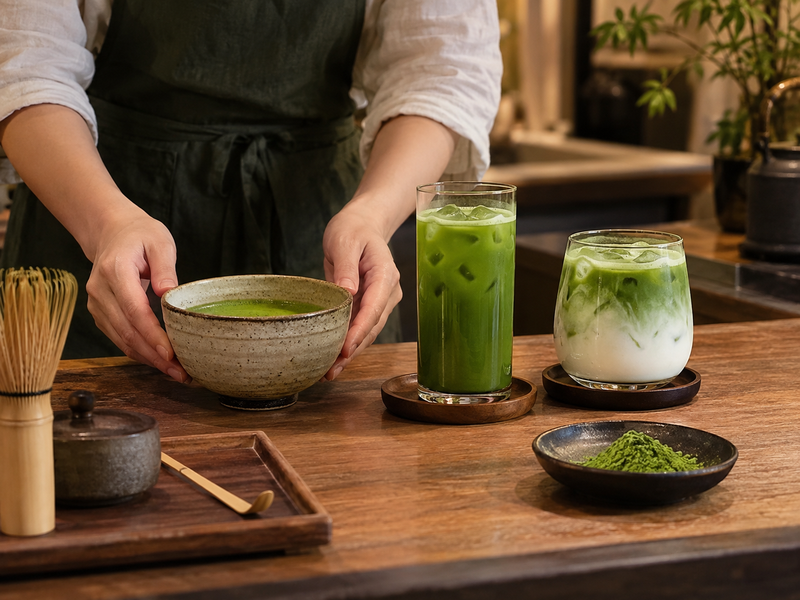
Explain the powdered-tea experience plainly
Matcha is fine tea leaf powder dispersed in a liquid. Customers consume the powder rather than steeping leaves and removing them. That physical difference explains why a cup may have a fuller texture and why some settling can appear if it sits. Staff should not promise that the powder dissolves into a clear liquid. They can simply tell a first-time customer that the drink is whisked tea and is best enjoyed soon after preparation.
For a business, “drink matcha” is too broad to be one recipe. Decide whether the menu offers plain tea, milk drinks, chilled tea, flavored beverages or a short tasting flight. Each format needs its own ratio, method and powder performance check. A delicate powder selected for a straight bowl can be lost under sweet milk; a café powder chosen to cut through milk may taste sharp when served in water. Start by naming the customer experience, then choose the ingredient and recipe.
Avoid building a menu around health promises. Describe flavor, ingredients and serving style accurately; claims about benefits or caffeine need separate substantiation and label review.
| Format | What customers notice | Buyer priority |
|---|---|---|
| Short tea | Intense leaf flavor | Smooth mouthfeel |
| Long water drink | Lighter, refreshing cup | Clear flavor after dilution |
| Milk drink | Creamy balance | Tea presence in milk |
| Chilled format | Temperature and texture | Dispersion and ice control |
2. What Is the Easiest First Cup for a New Customer?
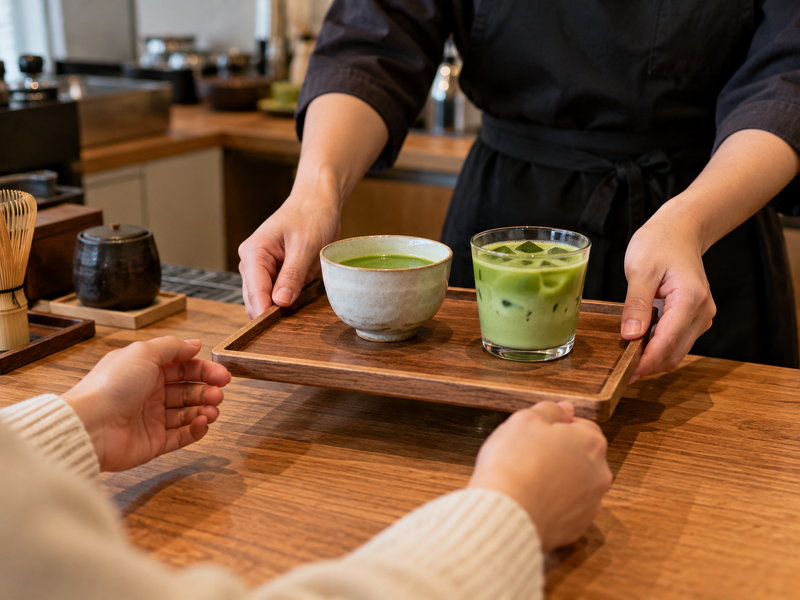
Offer a clear route without guessing preferences
Some customers want to taste the tea itself; others approach matcha through a familiar milk drink. Train staff to ask one short question: “Would you like it tea-forward or creamy?” Then explain the options in ordinary language. A small plain cup can reveal the powder’s aroma, while a lightly sweetened milk drink can be approachable for someone who dislikes bitterness. Neither route is inherently more authentic as a business offering. The right first cup is the one the customer understands and enjoys.
Keep the first-time recommendation simple. A menu with seven syrups and four alternative milks can make matcha seem difficult to order. Show the standard preparation and offer a few meaningful choices. If customers frequently ask for less sweetness, consider an unsweetened standard rather than expecting staff to improvise each time. If a plain cup receives complaints, check powder, water and method before deciding customers simply do not like tea.
Collect feedback in the first weeks of a launch. Record whether customers return and which version they choose next. That is more useful than launch-day photographs alone.
3. When Does a Short Water Preparation Work?
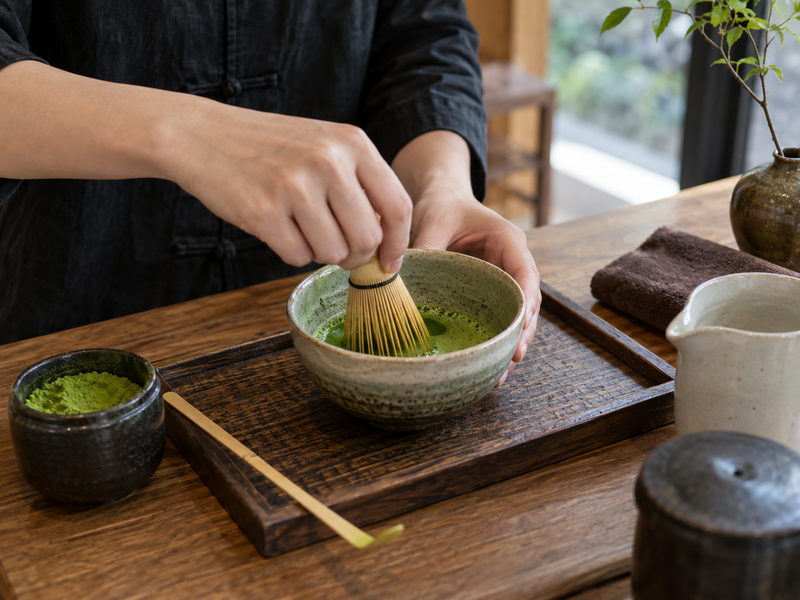
Use it when the powder can carry the cup
A short water-based serving puts aroma, texture and finish at the center. It suits a tea bar or a premium tasting experience, provided the powder tastes good without help from milk or syrup. Develop it with weighed powder, measured water and a consistent temperature. Serve it promptly. If the powder is gritty or unusually harsh, a beautiful bowl and elaborate language will not fix the product. Compare candidate lots blind and keep a reference sample for future deliveries.
Service time matters. Whisking a short cup can be part of the experience, but the method must be possible during a busy period. Write the ratio and tool into a training card. Staff should check the bottom of the bowl for dry powder and avoid handing over a cup with obvious clumps. A customer paying a premium for plain tea will notice defects that a sweet drink can hide.
For a chain, consider whether every location has suitable water and trained staff. A smaller number of sites may deliver a better experience than a rushed national rollout.
| Short-cup decision | Test | Reason |
|---|---|---|
| Powder | Blind water tasting | Exposes flavor and texture |
| Water | Actual store source | Prevents off-taste |
| Dose | Weighed servings | Controls strength |
| Tool | Peak-hour trial | Confirms repeatability |
4. When Is a Longer Water Drink Better?
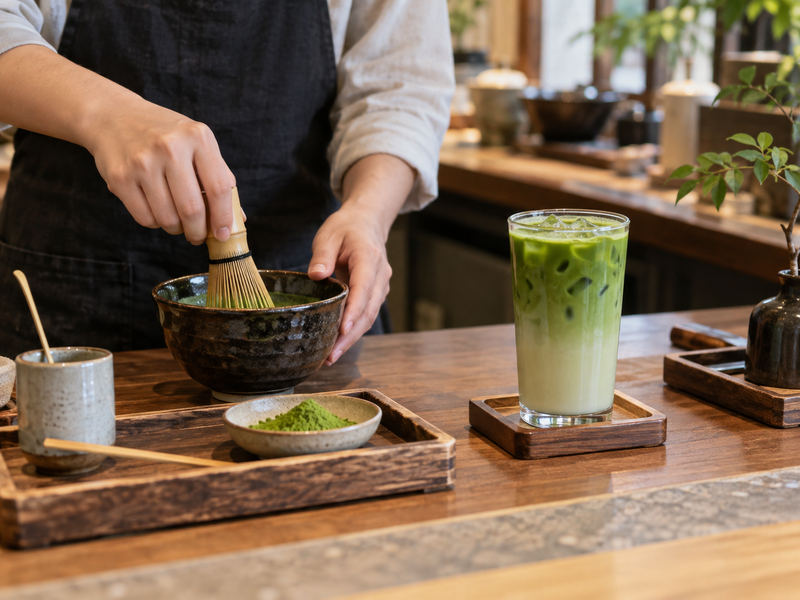
Give the customer a lighter tea option
A longer water drink can be easier to sip over time, especially when a short concentrated cup feels intense. Develop it as a separate recipe rather than adding water by eye to the short version. More liquid changes aroma concentration and mouthfeel. If ice is added, melting changes the drink again. Taste at handoff and after a normal carry time. The target is a recognizable tea flavor that does not become flat after dilution.
Keep the menu distinction clear. A “long matcha” might be a warm water-based drink, a cold one, or a house-specific cup. State temperature and sweetness so customers know what they are ordering. If the drink is poured over ice, a smooth base helps prevent dry pockets. The service card should include powder grams, first-water volume, final liquid and ice amount. A person making one cup at home may adjust freely; a café promising consistency needs the numbers.
This format can also be a useful tasting bridge. A customer who finds plain short tea too intense may enjoy a longer cup without switching to milk or syrup.
5. How Does Milk Change the Experience?
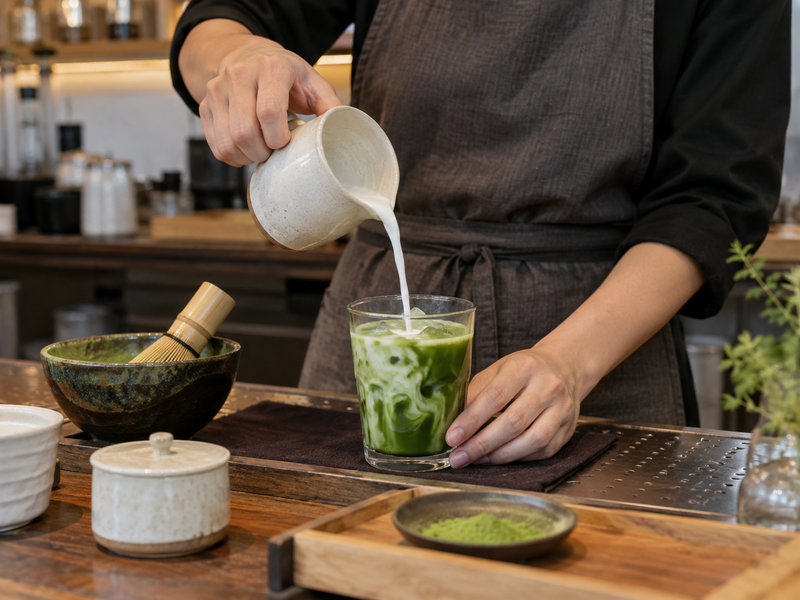
Select for tea presence after the base is added
Milk softens and changes the perception of matcha. Fat, sweetness and temperature can make the same powder taste rounder or less distinct. Test the full drink with the exact milk used in stores. A delicate powder that wins a plain-water tasting may require a higher dose in milk; a stronger powder may be more economical and balanced. Do not assume the highest-priced grade is the best latte ingredient. Compare cost per approved cup.
The cup also needs a clear sweetness policy. If the standard drink contains syrup, the menu should say so. If it is unsweetened, staff should not add sugar automatically because they think first-time customers need it. Test common alternative milks separately. Oat, soy and other bases can alter flavor and foam, and substitutions may need a defined recipe or at least an acceptable range.
Preparation should start with a smooth matcha base. Adding dry powder straight to cold milk can create green clumps, while a poorly mixed hot base can leave sediment. Fix the method before changing the dose.
6. What Should a Cold Matcha Drink Deliver?
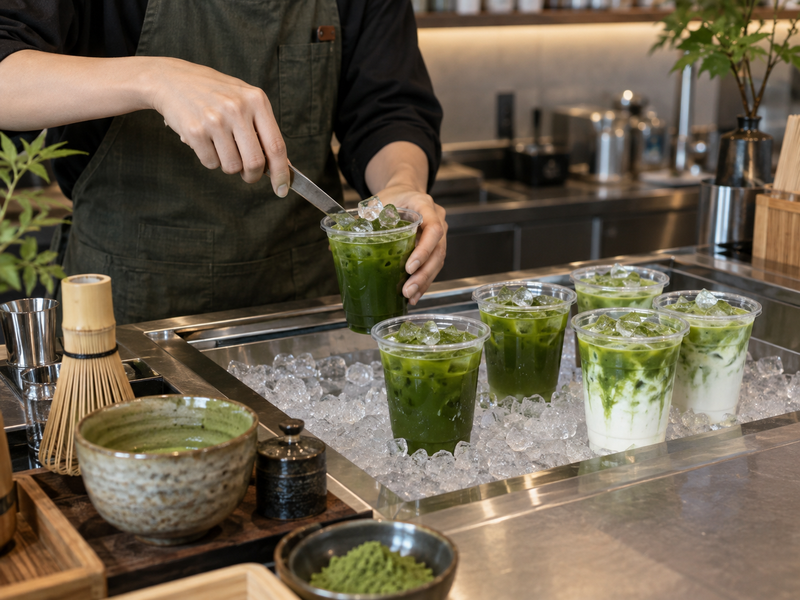
Decide whether visual layers or even flavor matter more
Cold matcha can be served as a plain water drink, a milk drink or a flavored seasonal option. The customer will judge the whole cup, not only its first appearance. A layered photograph can be compelling, but the drink may need stirring to taste balanced. Test the first and last sips, ice melt and visible settling. If the product is sold for takeaway, repeat the test after the time a customer is likely to carry it.
Choose a method that disperses powder before adding large amounts of cold liquid. A small base, shaker or tested mixer can work. Keep ingredient order, liquid volume and ice amount on the recipe card. A staff member should not decide on the fly whether to add more ice to make the cup look full. In an opaque cup, flavor and texture deserve more attention than a dramatic layer no customer will see.
| Cold cup issue | What customers notice | Staff control |
|---|---|---|
| Ice melt | Weak final sips | Ice and liquid measures |
| Dry clumps | Gritty pockets | Smooth base first |
| Settling | Strong bottom of cup | Mix before handoff |
| Layering | Uneven flavor | Stirring guidance |
7. How Much Customization Should Be Offered?
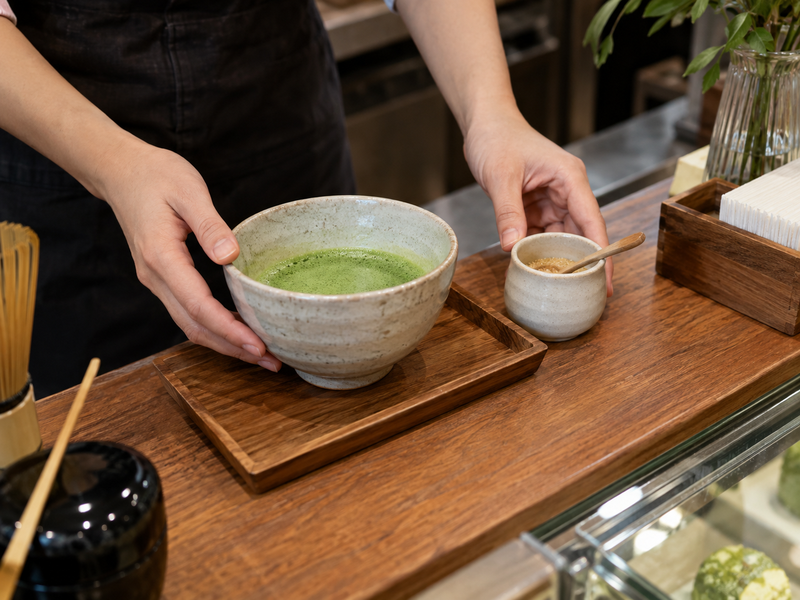
Keep choices meaningful and manageable
Sweetness, milk type, cup size and temperature are the most common variables. Each additional option can slow service and create another recipe that needs testing. Start with a small set of choices customers ask for repeatedly. Decide which substitutions can use the standard dose and which need a separate preparation. If a drink tastes poor without syrup, do not market it as freely customizable on sweetness. Either improve the base recipe or set expectations clearly.
For chain operations, write the customization rules into the point-of-sale and training systems. Staff should know whether “less sweet” removes a measured syrup portion or changes the powder base. A product photograph should show the standard drink, not the most elaborate custom version. Track remakes and complaints by variant so a problem with one milk is not misread as a problem with all matcha.
Health-related customization claims require caution. A lower-sugar order may still contain sweetened mix or flavored milk. Use actual ingredient data rather than assumptions when describing a drink.
8. What Food Pairings Make Sense?
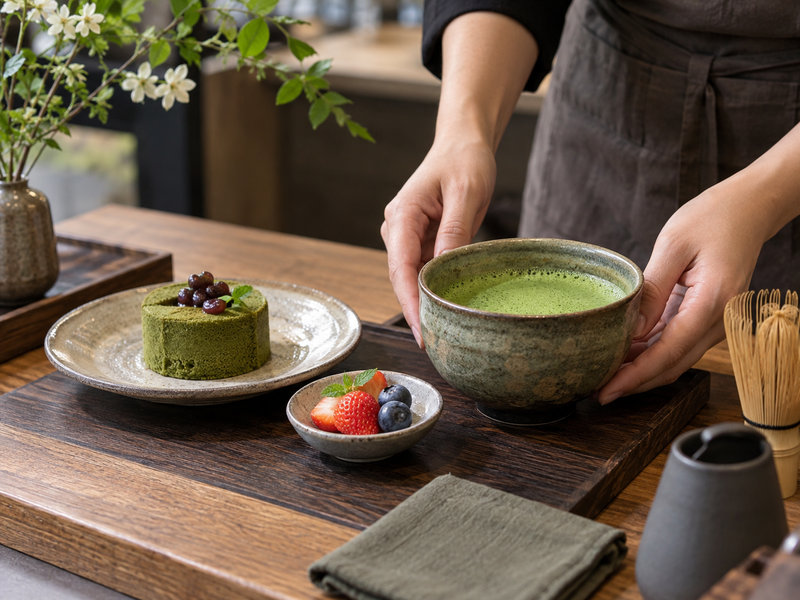
Let flavor and occasion guide the choice
Matcha’s grassy, savory and sometimes bitter notes can work with lightly sweet baked goods, fruit and rich desserts. The best pairing depends on the drink’s strength and sweetness. A delicate plain cup may be overwhelmed by a heavily flavored pastry; a creamy matcha drink can stand beside a stronger dessert. Test the pairing with the actual menu item rather than relying on a generic list of “perfect” combinations.
For a café, pairing is also an operations choice. A drink-and-snack offer should be easy to explain and quick to serve. Check whether the combined price supports the margin and whether the food changes how customers perceive the tea. A small tasting flight can teach staff which pairing to suggest, but it should not become a scripted sales pitch. A simple observation—“this less-sweet tea works well with the citrus cake”—is more useful than an exaggerated claim about harmony.
Retail brands can include preparation and pairing ideas on a product page, provided the pictured cup uses a realistic powder dose and the recipe can be reproduced.
| Drink profile | Pairing direction | Test question |
|---|---|---|
| Plain, delicate | Lightly sweet food | Does food bury the tea? |
| Plain, assertive | Richer dessert | Does bitterness stay balanced? |
| Sweet milk drink | Less-sweet snack | Is the combination too sweet? |
| Cold water drink | Fruit or light pastry | Does acidity alter perception? |
9. How Should a Café Describe Matcha on the Menu?
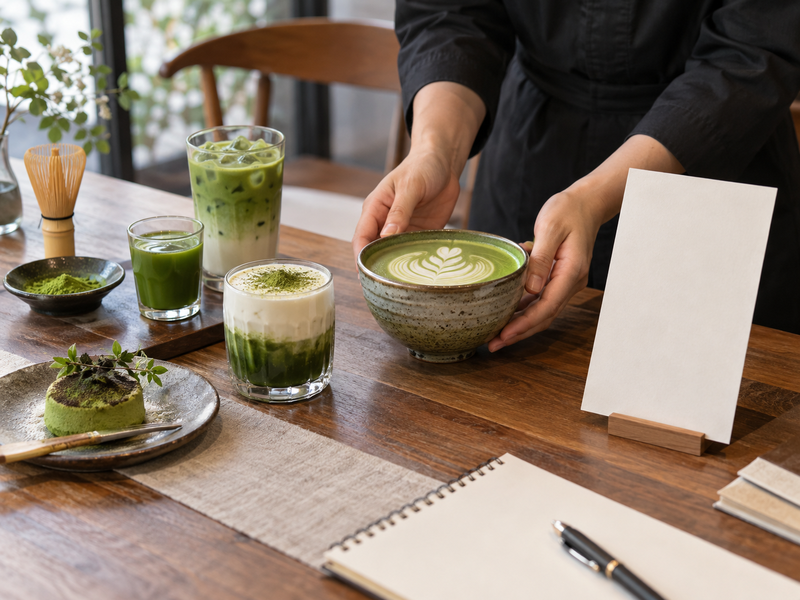
Say what is in the cup and how it tastes
A useful description gives the customer the base, sweetness and serving style. “Whisked matcha with water, served warm” is clearer than a stack of grade adjectives. For a milk drink, name the milk and whether syrup is included. If the product uses a sweetened mix, do not present it as plain powder and water. Origin or organic claims should be supported by the documents for the actual ingredient, not borrowed from a previous lot.
Avoid promising that every matcha drink will make a person calm, focused or healthy. Those effects vary and may trigger claim rules. A menu can describe tea flavor, texture and caffeine presence with appropriate verified information. Staff should have a short answer for first-time customers and a way to find ingredient details for people with allergy or dietary questions.
Keep the language consistent with the cup. If a photo shows a vivid green layered latte but the standard drink is a pale premix in an opaque cup, customers may feel misled even if the ingredient list is correct.
10. What Should a Buyer Check Before Adding Formats?
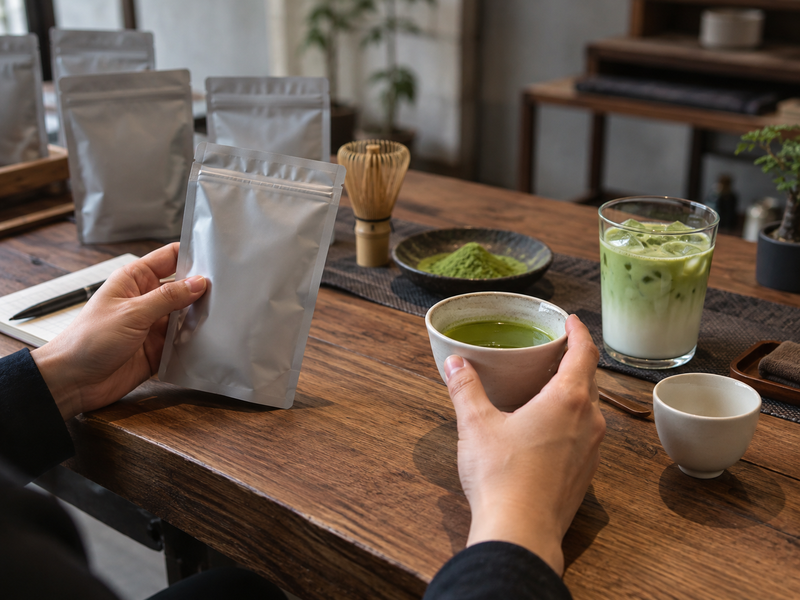
Make the supplier sample match the menu plan
Tell suppliers which formats the business intends to serve and request a representative production sample. Test it in plain water and in the highest-volume recipe. Ask for the specification, ingredients, lot records, shelf-life guidance and pack options. If the menu makes an origin or certification claim, request evidence for that exact lot. Matcha Village describes bulk and OEM supply in its company material; the buyer still needs to test each offered powder in its own cup.
Set a repeat-lot procedure. Keep a sealed sample of the approved powder and compare a new delivery before it reaches stores. If the plain cup changes materially, determine whether the milk or cold formats also need review. The purchasing agreement should cover change notification and damaged stock. Pack size should fit turnover so powder does not sit open beside a hot bar for too long.
The menu can grow after the first formats prove reliable. Start with a distinct plain and a distinct milk option, observe demand, and add only drinks the team can make well.
| Buyer check | Plain format | Milk format |
|---|---|---|
| Taste | Clean finish | Tea presence after milk |
| Texture | Fine suspension | No dry clumps |
| Cost | Per short cup | Per full drink |
FAQ
Q1. What is the simplest way to drink matcha?
Whisk pure matcha powder with measured water and drink it soon after preparation. The exact dose and temperature should suit the powder and your taste.
Q2. Does matcha have to be served with milk?
No. It can be prepared in water, warm or cold. Milk changes flavor and texture but is not required to make matcha.
Q3. Why does a plain matcha taste different from a latte?
Milk and sweetener can soften or cover tea notes. Plain water exposes the powder’s aroma, texture and finish more directly.
Q4. Can one powder work for every menu format?
Sometimes. Test it in each intended drink and compare cost at the dose that works. A single inventory item helps operations only if the cups still meet their targets.
Q5. How should a café introduce matcha to first-time customers?
Ask whether they want a tea-forward or creamy cup, describe the standard sweetness clearly, and offer a small number of well-made choices.
For one consumer view of serving styles, see Matcha Stand Maruni’s guide. For commercial powder choice, see our bulk matcha buyer guide. Test each menu format with the actual production lot before launch.