
Tencha vs matcha compares a processed leaf material with the fine powder made from it. For a cafe, the ready powder is usually the practical purchasing format. For a tea manufacturer or importer, buying leaf material may raise questions about finishing, milling, yield and responsibility for the final ingredient. Start by defining which stage of the supply chain the business can manage. A lower quotation for leaf cannot be compared directly with a finished powder price without accounting for the work between them.
1. What is the difference in tencha vs matcha?
2. How does tencha differ from rolled green tea?
3. What must a tencha quotation include?
4. Why is milling a separate technical decision?
5. Who benefits from buying leaf rather than powder?
6. How should tencha and matcha samples be evaluated?
7. How should the true conversion cost be calculated?
8. What origin and traceability checks are required?
9. What specifications should be agreed for finished powder?
10. How can a buyer choose the next procurement step?
1. What is the difference in tencha vs matcha?
Identify the stage of processing
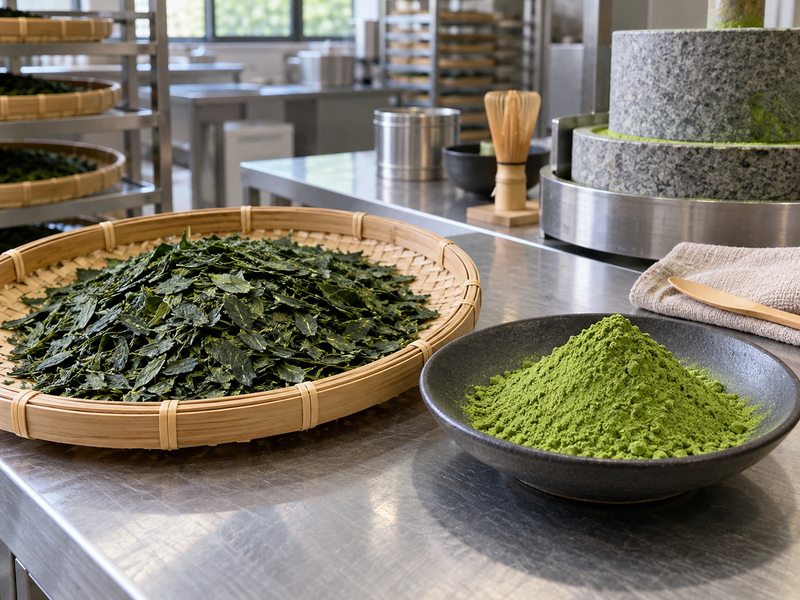
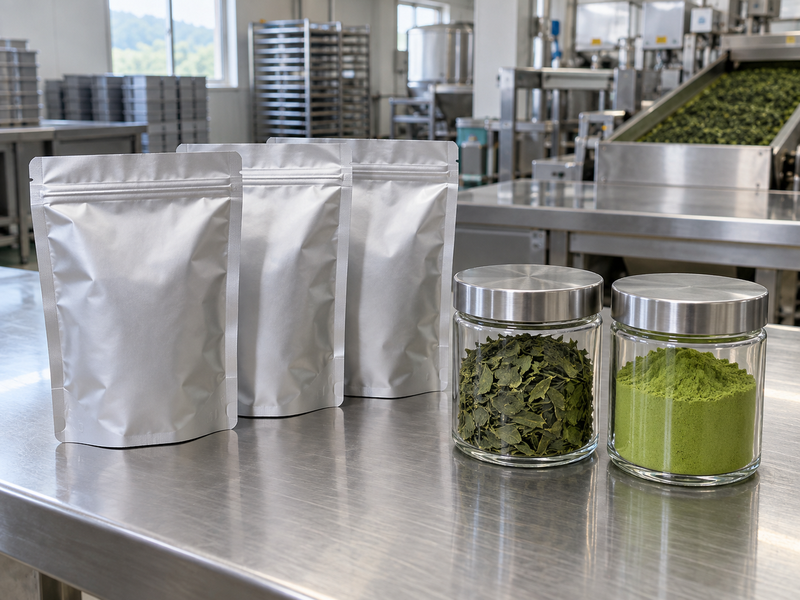
Tencha is the leaf material associated with matcha production; matcha is its finely milled form. The distinction helps a buyer understand why the products look different and why they are not interchangeable at a cafe station. Flat leaf fragments require further work before they can behave like powder in a whisked drink.
Japan’s agriculture ministry identifies matcha as powder produced by grinding tencha in its Uji tea description. That relationship is the basis of this comparison. A commercial transaction still needs details about the condition and finishing stage of the particular tencha being offered.
| Buying point | Tencha | Matcha |
|---|---|---|
| Physical form | Processed leaf material | Fine powder |
| Position in powder production | Before milling | After milling |
| Cafe preparation | Requires a different plan | Ready for dispersion trials |
| Main buyer question | What work remains? | Does the powder meet the application? |
Ask suppliers to name the product and its current stage clearly. Descriptions such as tea raw material or premium green tea leave room for misunderstanding, especially when the buyer assumes the quotation includes processing that the seller has priced separately.
2. How does tencha differ from rolled green tea?
Ask about the leaf process before discussing milling
Tencha processing omits the rolling associated with leaf teas such as sencha and gyokuro. Far East Tea Company’s tencha article describes its flat leaf form and role before milling. Do not assume that any green tea becomes an equivalent matcha ingredient merely because it has been ground into a fine powder.
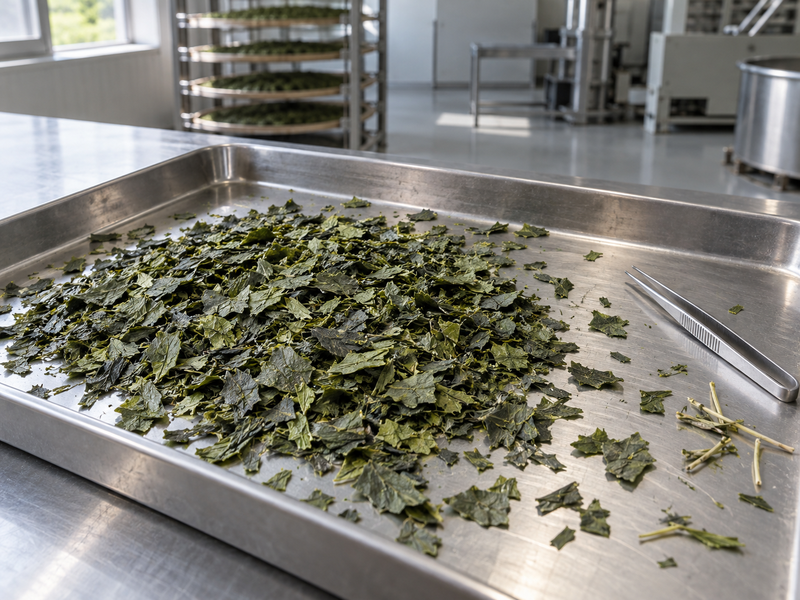
Request the supplier’s process description and identify the leaf material used. Ask about sorting and finishing, including whether stems and other material remain at the offered stage. Terminology can vary between businesses, so record the agreed physical specification rather than relying only on translated names. A sample photograph helps, but the actual representative material is more informative.
If the business wants powdered green tea for an application that does not require a particular matcha specification, state that honestly in the enquiry and labelling review. The task is to select an ingredient that fits the intended product and claim. Changing the name after a cheaper material has been chosen creates avoidable confusion. Keep the leaf process, ingredient identity and intended customer description aligned from the beginning of the procurement discussion.
3. What must a tencha quotation include?
Make the remaining work visible
Ask whether the quotation covers unfinished leaf, refined material ready for milling, or another defined stage. Identify who performs sorting, final drying or finishing where applicable, blending, milling, screening and packing. Request a sample representative of the quoted condition. A cleaner sales sample may conceal work the buyer will need to perform on a commercial lot.
| Quotation field | Question to ask | Commercial consequence |
|---|---|---|
| Material stage | What processing remains? | Labour and equipment required |
| Included fractions | What leaf and stem material is present? | Sorting and usable yield |
| Pack format | How is leaf protected? | Storage and handling |
| Lot structure | Single lot or blend? | Traceability and consistency |
| Milling responsibility | Who produces final powder? | Quality and release ownership |
Ask for the weight basis used in the quotation and clarify any expected processing losses. Avoid assuming the purchased leaf mass will all become saleable powder. Request evidence from the intended process and confirm who owns retained material and rejects.
For a contract milling arrangement, put the handover point in writing. The buyer and processor should agree on incoming acceptance, processing records and finished release criteria before the material leaves its original supplier.
4. Why is milling a separate technical decision?
Evaluate the powder made by the intended process
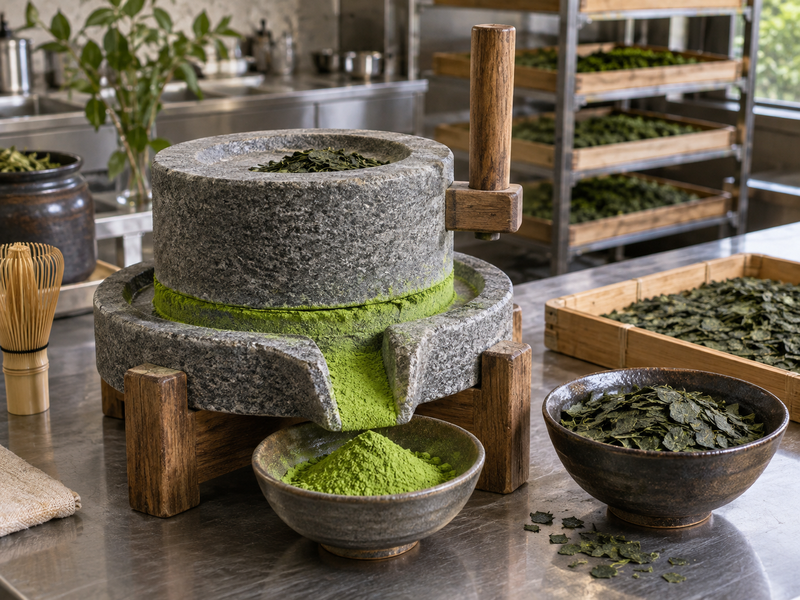
Grinding equipment, operating conditions and finishing can affect the resulting powder. A tabletop demonstration does not establish the quality or capacity of a commercial milling line. Ask the processor to explain how it controls the operation, measures the powder and handles lot changes. Avoid treating a mill type alone as a guarantee of flavour or texture.
Request a trial using representative leaf and the equipment intended for production. Evaluate the resulting powder in the planned application and obtain the processor’s relevant physical and quality measurements. If particle size is specified, agree on the measurement method and reporting basis. A number without a method is difficult to compare between suppliers.
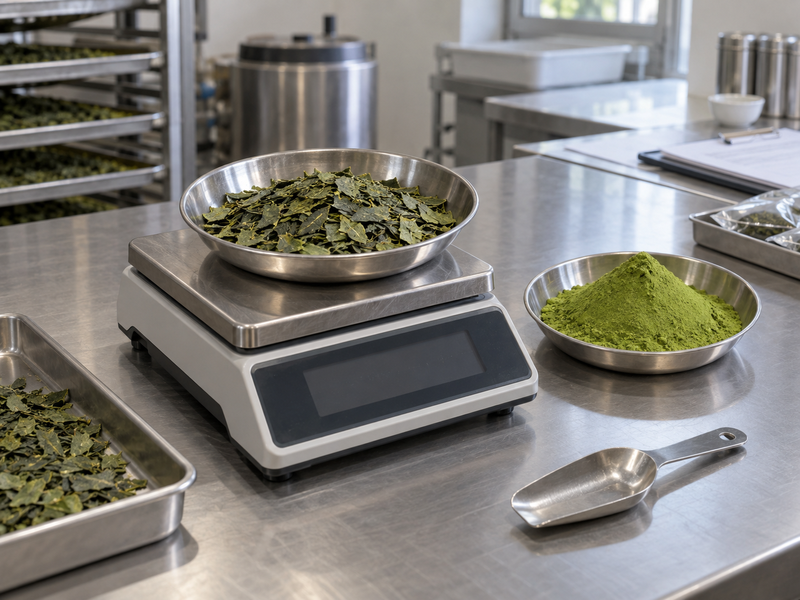
Record the mass of leaf received, material removed, powder produced and saleable powder released. This shows where losses occur and prevents a misleading comparison with ready milled matcha. The process should also retain the connection between incoming leaf lots and outgoing powder batches. A buyer considering in-house milling needs equipment, trained staff, maintenance and quality responsibilities as part of the business case. A small mill purchase alone does not create a complete ingredient production system.
5. Who benefits from buying leaf rather than powder?
Match the format to the business’s capabilities
A cafe needing a repeatable latte ingredient generally has little reason to add leaf finishing and milling to its daily work. A specialist tea manufacturer may have the equipment and knowledge to control those stages. An importer may contract them to a processor, but it still needs clear ownership of specifications and release decisions.
| Business situation | Format to investigate | Work required before approval |
|---|---|---|
| Cafe serving drinks | Finished matcha | Application and service trials |
| Bakery buying ingredients | Finished matcha | Bake and document review |
| Tea manufacturer with milling | Defined tencha stage | Process and yield trial |
| Importer using contract processing | Tencha plus service agreement | Handover and release controls |
| Brand outsourcing finished packs | Finished ingredient or OEM route | Formula, pack and quality approval |
This is an operational choice, not a claim that one format is inherently more authentic or valuable. Buying further upstream only helps when the business can manage the added work and risk at an acceptable cost.
Ask the team who will investigate a powder defect after milling. If no one can identify the responsible processor, test method or retained sample, the proposed supply chain is incomplete. Resolve those responsibilities before accepting the apparent saving in the leaf quotation.
6. How should tencha and matcha samples be evaluated?
Compare the final application through a defined route
A leaf sample can be inspected and discussed with the processor, but a cafe’s matcha application needs powder made through the intended process. Do not judge the eventual latte solely by chewing or infusing a few leaf fragments. Arrange a representative milling trial and keep the resulting powder linked to the original leaf sample.
Evaluate the powder in water and in the actual application. A beverage business should check dispersion, flavour and the complete drink. A bakery should compare the baked result under a controlled formula. Record the tea dose and processing conditions so later samples can be evaluated fairly. Keep tasting vocabulary specific enough for another employee to use.
The Matcha Village manufacturing overview can support a discussion of finished powder sourcing. Send the supplier the application, expected volume and required documents. Clarify whether you are buying finished matcha or requesting an upstream leaf arrangement. A company’s ability to supply powder does not prove it sells every intermediate material or offers contract milling. Obtain a written scope and sample plan before building those services into your procurement schedule.
7. How should the true conversion cost be calculated?
Divide total cost by saleable powder output
Add leaf purchase cost, transport, receiving, finishing, milling, testing, packaging and agreed losses. Then divide by the mass of powder that meets the release specification. Compare that figure with the landed cost of finished matcha at the required quality. A calculation based only on leaf price and nominal mill capacity leaves out substantial parts of the job.
| Cost or yield item | Evidence to collect | Why it belongs |
|---|---|---|
| Incoming leaf | Invoice and accepted mass | Starting material cost |
| Removed material | Process mass record | Usable yield |
| Milling service | Written quotation | Conversion expense |
| Quality release | Testing and sampling costs | Saleable product approval |
| Final packing | Material and labour quote | Delivered ingredient format |
For illustration, if all project costs total 1,200 currency units and the process releases 20 kg of acceptable powder, the cost is 60 per kilogram. These are hypothetical numbers explaining the method, not estimates of tencha prices or expected yields.
Include the cost of a failed or delayed release in the commercial discussion. Ask who pays when incoming leaf fails acceptance or finished powder fails the agreed specification. Put rework, replacement and disposal responsibilities into the contract before a problem occurs.
8. What origin and traceability checks are required?
Keep cultivation, processing and packing locations distinct
Request the country and any claimed regional origin for the leaf, then record where finishing, milling and packing occur. A product packed in one country may use material grown elsewhere. Marketing artwork should reflect the documented product rather than the address most convenient for the brand story.
For a named cultivar, ask whether the lot contains that cultivar alone or a blend and what evidence supports the description. Do not infer a Japanese origin or cultivar from the use of Japanese tea terminology. Matcha Village is a Chinese ingredient and OEM supplier; this article does not establish availability of Japanese tencha or any named cultivar through that business.
Connect each outgoing powder batch with incoming material records and the processor’s production record. Ask how blended lots are identified and how retained samples are managed. The system should support a targeted investigation if a shipment raises a quality question. Review market specific documents with the responsible importer or technical adviser, especially when processing crosses borders. A supplier presentation can introduce capabilities, but the purchase file needs documents applicable to the actual ingredient and shipment being approved.
9. What specifications should be agreed for finished powder?
Use measurable criteria and an application reference
Define product identity, composition, origin claims, packaging and the relevant quality limits with the supplier. Include sensory expectations through an approved sample and preparation method. A phrase such as bright green and smooth can start a conversation, but the parties need a repeatable way to compare incoming lots.
| Specification topic | Clarify in writing | Avoid this shortcut |
|---|---|---|
| Ingredient identity | Tea material and composition | Any green powder qualifies |
| Physical properties | Test method and reporting | Unexplained fineness number |
| Sensory profile | Sample and preparation method | Grade name alone |
| Safety documents | Product and lot relevance | Generic certificate collection |
| Pack and handling | Material, seal and instructions | Unspecified bulk bag |
The Ippodo introduction to Japanese tea provides category context, but category education does not replace your finished ingredient specification. Keep the commercial requirements tied to the powder and application being purchased.
Ask how a supplier handles a lot that is safe but sensorially outside the agreed reference. Decide whether it can be redirected to another application only after testing, or whether it must be replaced. Those decisions should be documented before the powder is blended into a larger food production run.
10. How can a buyer choose the next procurement step?
Write a make or buy comparison from real quotations
Request one quotation for finished matcha suitable for the application and another for the defined tencha route, including all contracted processing. Use representative samples and the same finished acceptance requirements wherever possible. This gives the team a fair comparison of control, cost and operational work.
List the responsibilities the business would take on under each option. Include incoming inspection, milling oversight, testing, packaging, stock management and customer complaints. Assign those jobs to named roles and confirm the equipment and expertise are available. If the upstream route depends on an unquoted service, obtain that quote before presenting a saving to management.
Run the selected route through a limited pilot and review its saleable yield and application result. Ask the supplier or processor to provide the records specified in the agreement. Then place the commercial order using the exact material stage, processing scope, finished specification and pack format. Keep the approved powder sample and the cost calculation together so the next order can be checked against both product performance and the original business case.
FAQ
Q1: Can tencha be used directly in a matcha latte?
Leaf fragments do not disperse like fine matcha powder. A latte designed for powder needs an appropriate milled ingredient. A leaf infusion would be a different formulation.
Q2: Is grinding any green tea enough to make equivalent matcha?
The starting tea and its processing need to be identified. Do not treat all powdered green teas as identical ingredients or assume they support the same product description.
Q3: Is buying tencha always cheaper?
Only a complete conversion calculation can answer that. Include finishing, milling, testing, packing, losses and the mass of saleable powder rather than comparing raw quotations alone.
Q4: Does a stone mill guarantee a better product?
Mill type alone cannot prove finished quality. Evaluate the representative powder from the intended process, its relevant measurements and its performance in the application.
Q5: Should a small cafe buy tencha?
A cafe seeking a reliable drink ingredient will usually evaluate finished powder first. An upstream purchase needs a defined processing route and someone responsible for finished ingredient quality.