
How is matcha made? Producers process green tea leaves and mill the prepared material into a fine powder. For a buyer, “ground green tea” leaves too many unanswered questions: which leaves were used, how were they heated and dried, what was removed before milling, and how is each lot checked? Those decisions shape color, aroma, texture, and performance in milk or food.
Contents: Tea plants · Shading · Harvest · Heat · Drying · Sorting · Grinding · Quality · Grade · Packing
1. What Kind of Tea Leaf Becomes Matcha?
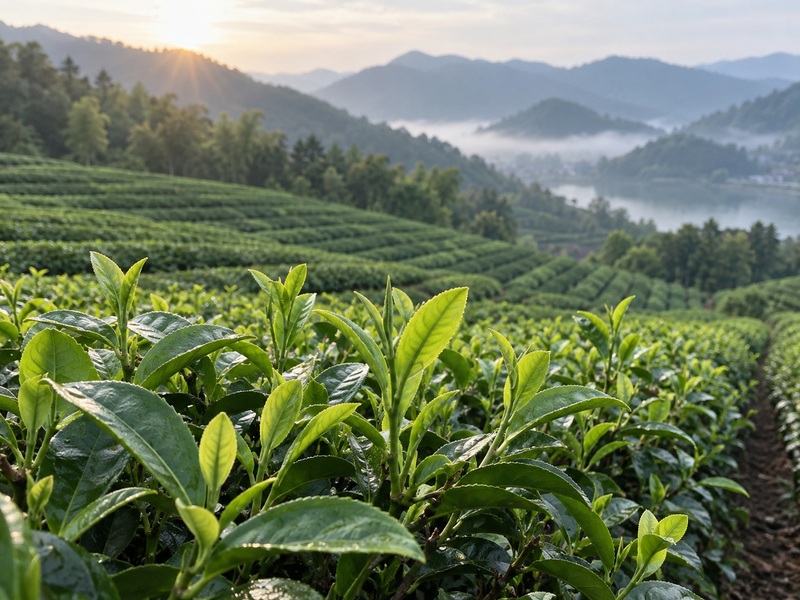
Start with the material, not the grinder
Matcha begins with leaves from the tea plant, Camellia sinensis. The finished powder carries the leaf itself into the drink or food, so raw-leaf choice matters. Growers consider cultivar, field conditions, leaf maturity, and the intended harvest. Young tender leaf generally offers a different color and taste from older leaf, but “young” alone does not specify quality. A buyer needs an application target: a lightly sweetened café drink, a bakery filling, and a straight tea each expose different aspects of the same powder.
Ask where the lot begins: a supplier should be able to identify the raw-material source and connect it with production and finished-batch records. Matcha Village describes access to tea gardens in the Hangzhou growing region and supply-chain management from cultivation through packing. That is relevant to buyers seeking continuity, although a purchasing decision should still rest on samples and documentation for the specific SKU. The comparison has to move from leaf origin through processing and into the finished product your customers will actually use.
2. Why Are Tea Plants Shaded Before Harvest?
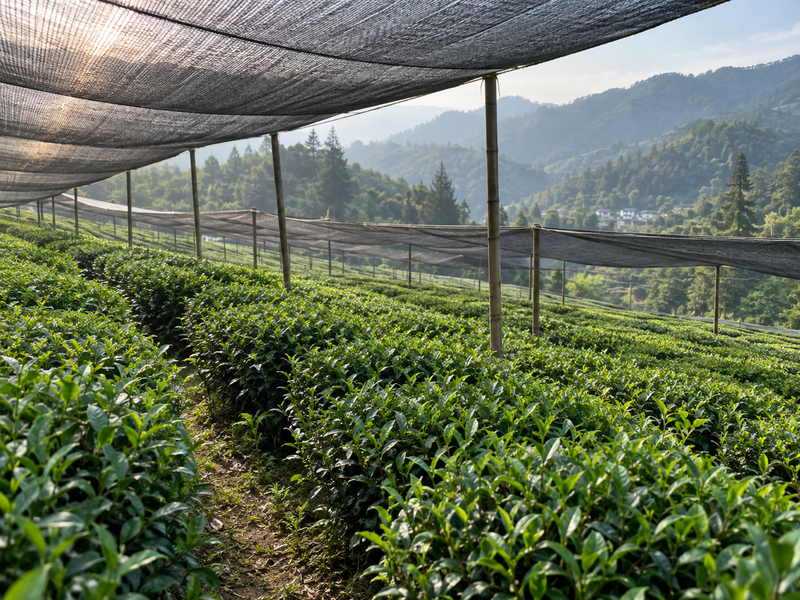
Control light before picking
Shading limits direct sunlight in the period before harvest. The practice changes how the plant develops and can affect green color and flavor. The exact setup and duration vary by producer, weather, and product target. Matcha Village describes roughly 15–20 days of preharvest shading for its leaves; that is a company-reported practice, not a universal matcha rule. Ask suppliers how they define and document their own shading program. A product sold as matcha should be evaluated by its finished characteristics as well as its growing description.
Shading leaves a sensory trace: compare prepared samples for color, sweetness, vegetal notes, bitterness, and lingering finish. More shade does not automatically create the right powder for every use. A delicate straight-tea sample may disappear when mixed with milk and syrup, while a stronger product can work well in a latte. For bakery or confectionery use, processing heat and other ingredients change what remains noticeable. Buyers should therefore link cultivation claims to an application test, and avoid paying for a growing story that adds no clear value in the intended formula.
| Shading question | Why a buyer asks | Evidence to request |
|---|---|---|
| How long were plants shaded? | Helps explain the intended raw leaf | Producer’s process description |
| How was light controlled? | Practices differ across farms | Cultivation procedure or record |
| Which harvest was used? | Harvest affects flavor and availability | Lot and harvest identification |
| How does the powder perform? | Process claims must meet a product need | Sample in the target recipe |
3. When and How Are Matcha Leaves Harvested?
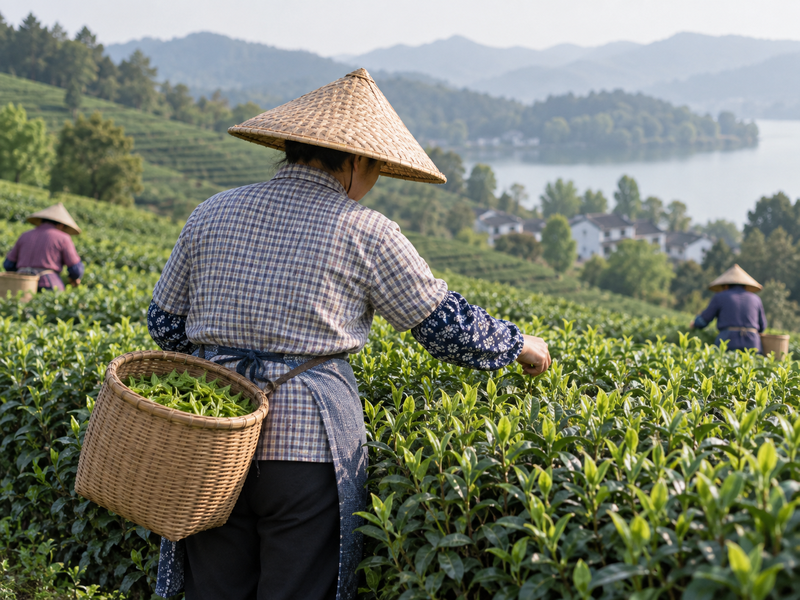
Protect the leaf after picking
Harvest timing influences leaf tenderness, yield, and flavor. A producer may separate harvests or raw-material lots to serve different products. Hand picking and machine harvesting each have operational trade-offs; neither term alone gives a finished quality score. What matters to a commercial buyer is whether the chosen material meets a stable specification at the required volume. Once harvested, leaves need prompt handling. Delays, bruising, and warm storage can affect the material that later enters heating and drying. The producer’s controls across those transitions matter more than a romantic image of a field.
Follow the lot number: ask how raw leaves are identified when delivered to the plant and how they are linked to finished powder. If a supplier blends lots to meet a flavor target, learn how that practice is documented and approved. A café chain may prioritize a consistent green latte across branches, while a specialty tea brand may want harvest-specific differences. Request representative samples from the product the supplier can actually deliver, not a small showcase batch with a different source or harvest. Confirm the expected supply window before building packaging or menu claims around it.
4. Why Are the Leaves Heated After Picking?
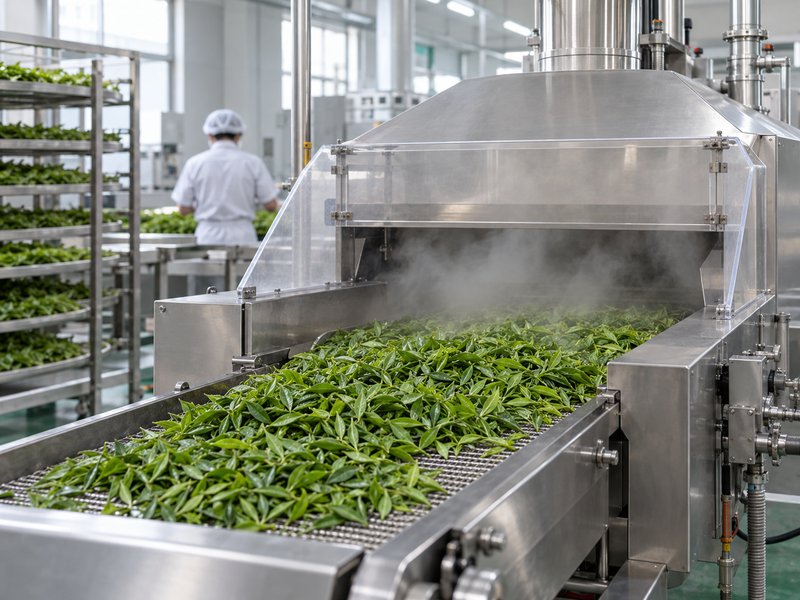
Stop the changes that spoil green color
Fresh tea leaves contain enzymes that can drive oxidation after harvest. Green tea processing applies heat to limit that activity and preserve a greener profile. Steaming is closely associated with matcha-style leaf processing, while some green-tea manufacturing uses other heat methods. A buyer should ask which process the offered powder uses rather than assuming every green powder followed the same path. Time, heat, and leaf condition influence aroma and appearance. Poor control can leave an uneven result or produce a cooked note that becomes obvious when powder is whisked in water.
Check both water and food: a sample may seem pleasant in a sweet latte while showing a rougher note in plain water. Testing both gives a clearer view of raw material and process. For a beverage manufacturer, the issue extends to how the powder behaves after additional processing in the final drink. Ask for an application sample or discuss the planned process with the supplier’s technical team. Do not interpret a production diagram as proof of performance. Verify the proposed lot against the flavor, color, and processing demands of the product you intend to sell.
| Processing stage | Main purpose | Buyer-facing question |
|---|---|---|
| Leaf intake | Identify and handle raw material | Can this lot be traced to its source? |
| Heat treatment | Limit enzyme activity | Which method was used? |
| Cooling and handling | Prevent unwanted change after heating | How is the leaf moved and held? |
| Application trial | Check finished performance | Does it work in our recipe? |
5. How Are the Leaves Dried and Prepared?
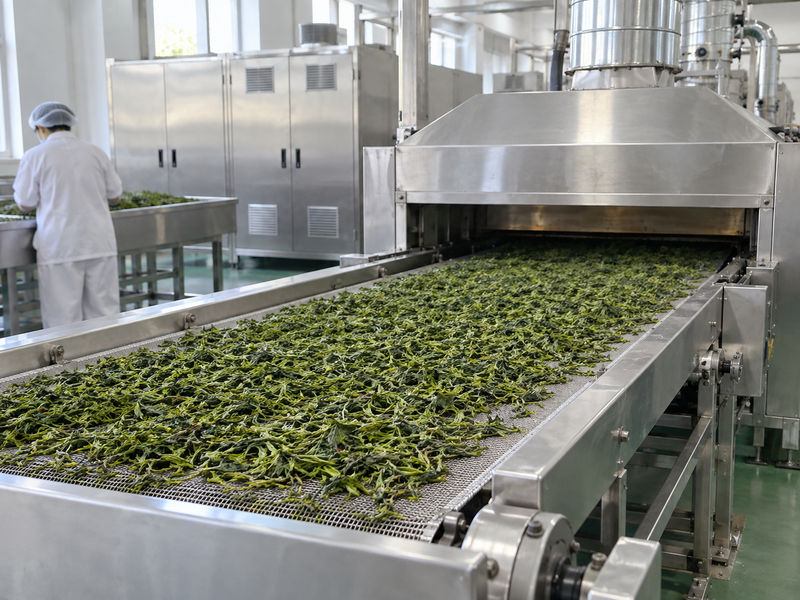
Reduce moisture without losing the intended profile
After heat treatment, leaves must be dried for later handling and milling. Drying conditions affect both storage behavior and sensory quality. Producers use controlled equipment and procedures, though exact settings differ. A buyer need not demand a single universal temperature; a more useful question is whether the producer can explain its method and provide a finished product specification. Overly vague descriptions such as “carefully dried” say little about batch control. Ask how material is identified between heating, drying, sorting, and grinding so lots do not lose their traceable link.
Matcha-style production usually continues with leaf preparation before fine grinding. Depending on the producer and product, the intermediate leaf may be described as tencha or tencha-like material. Terminology can differ, so request a process flow for the offered SKU. A process name needs context: ask whether leaves were rolled, which parts were removed, and how powder was produced. Those steps help explain texture and suitability for whisked tea or food applications. It should match the material actually shipped.
6. Why Are Stems and Veins Removed?
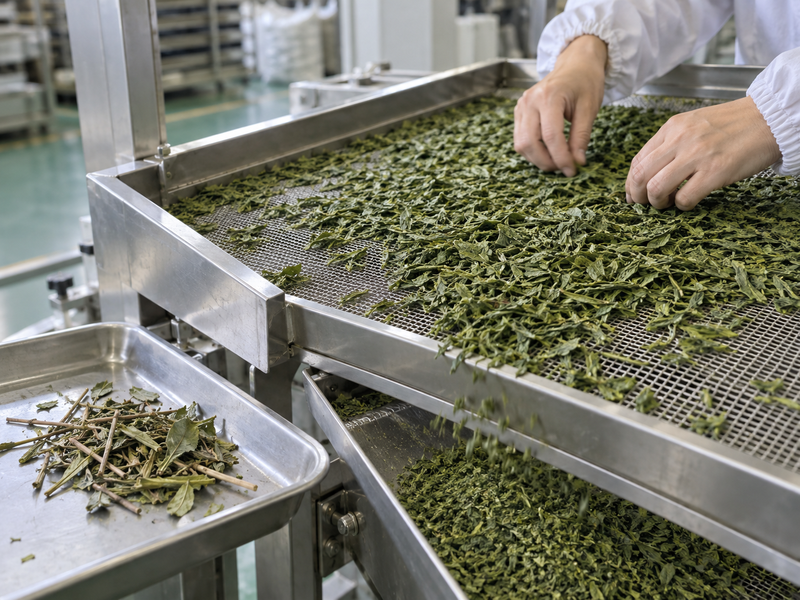
Sort material before it reaches the mill
Fine matcha production commonly removes stems and larger veins from processed leaf. Japan’s agriculture ministry describes Uji matcha as tencha ground after stems and leaf veins are removed. Sorting helps create a more uniform milling feed and affects the finished powder’s texture and flavor. The extent and method vary with product design and manufacturing equipment. A supplier selling a lower-cost food powder may set different raw-material and sorting parameters from one making a powder for straight tea. Ask what raw material is milled and request samples at the intended application dose.
Small particles still matter: a powder that looks uniformly green in a bag may feel gritty when whisked or leave visible sediment in a pale drink. Prepare samples with the same water volume and mixing tool. Let them stand briefly, then inspect the bottom and taste the last sip. If the powder goes into chocolate or baked goods, test texture and color after the actual manufacturing process. Matcha Village describes several product tiers and application-specific selection. Buyers can use that range as a sampling plan rather than treating grade labels as a substitute for a trial in the finished food.
| Sorting outcome | What to inspect | Application impact |
|---|---|---|
| More uniform leaf feed | Visual consistency before milling | Supports stable powder production |
| Fewer coarse parts | Mouthfeel in prepared tea | Reduces rough texture |
| Controlled lot separation | Traceability record | Helps investigate variation |
| Suitable material choice | Finished recipe trial | Avoids paying for an irrelevant grade |
7. How Does Milling Turn Leaf into Powder?
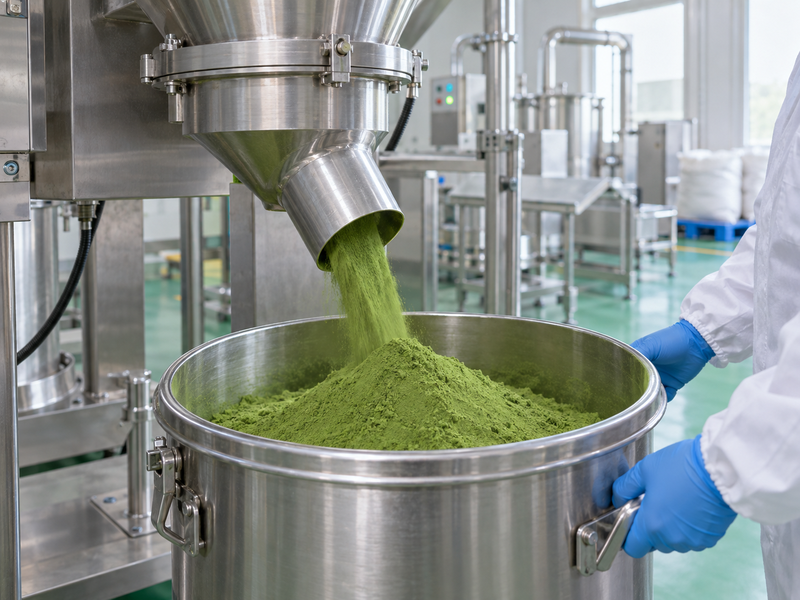
Grind for the intended texture
Prepared leaf is milled into a fine powder. Producers may use different grinding technologies, and each requires control over feed, heat, throughput, and particle-size outcome. Heat and air exposure during milling can affect color and aroma, so equipment settings and handling matter. A claim that one machine type always wins ignores the final product and the consistency a buyer needs. Ask for an actual sample, its specification, and a repeat sample from a separate production lot if continuity matters.
Feel the powder in the product: whisk it in water, mix it into milk, or use it in the target food. Watch for clumps, gritty texture, and how quickly the green spreads. Particle size alone cannot predict every result because dispersion also depends on moisture, mixing method, and formulation. Matcha Village describes automated production and fine grinding among its capabilities. A commercial buyer should connect such claims with their own acceptance criteria: appearance under normal lighting, texture at a defined dose, and performance after a realistic hold. Keep an approved reference sample for future lot comparisons.
8. How Is Finished Matcha Checked?
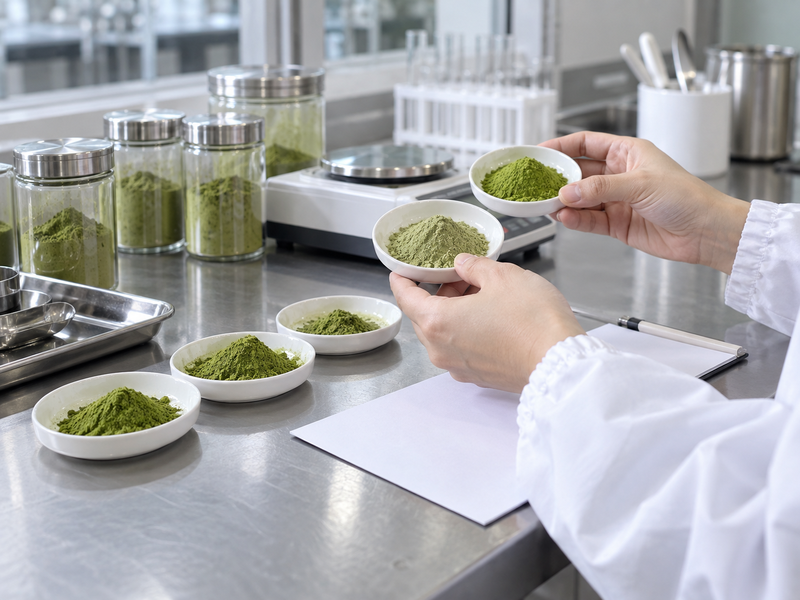
Define acceptance before receiving a shipment
Finished powder can be checked for sensory traits, physical properties, and food safety requirements. Buyers should request a specification that names the offered product and the parameters relevant to its destination and use. Color, aroma, taste, moisture, and particle size may matter for application performance. Residue, heavy-metal, microbiological, and other tests may matter under law or customer requirements. Test scope and limits differ by market, so agree on them in the purchasing specification rather than assuming a generic certificate answers every question. Obtain current documents for the proposed SKU and lot where required.
A certificate needs a match: check product name, lot number, test date, method, units, and limits against the shipment. A supplier may describe broad testing capability while a specific order has a narrower agreed scope. Matcha Village lists traceability and market-specific documentation among its B2B services; request the documents needed for your own market and customer. For an unfamiliar supplier, pair paperwork with a retained sample and a simple incoming inspection. Compare a received lot against the approved sample using the same recipe and lighting.
| Check | What it helps answer | Buyer action |
|---|---|---|
| Sensory sample | Does flavor match approval? | Test at a fixed dose |
| Color and texture | Will it work in the product? | Compare under standard conditions |
| Lot traceability | Can a variance be investigated? | Retain codes and records |
| Test documentation | Does the shipment meet agreed needs? | Verify scope, date, and lot |
9. What Determines the Right Matcha for an Application?
Match the powder to the finished product
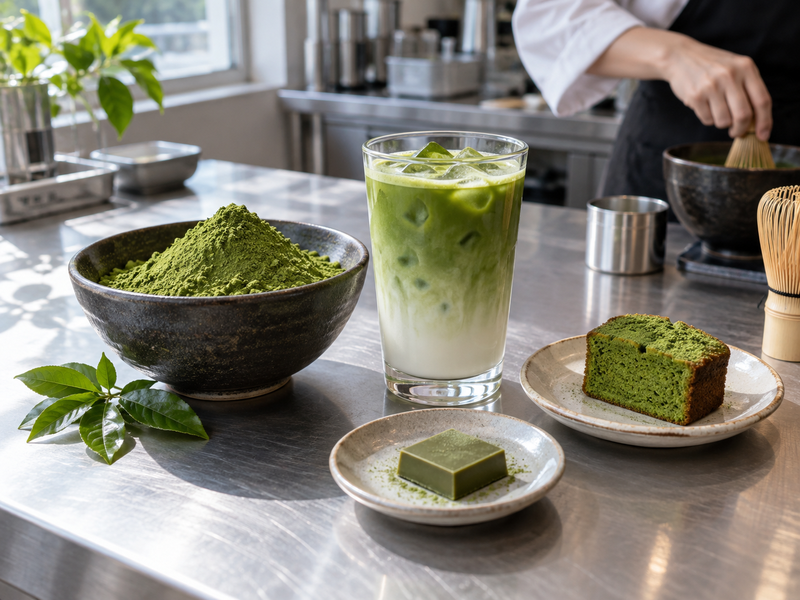
Grade names offer a starting vocabulary, not a universal ranking. A powder for plain whisked tea is judged under different conditions from one going into a sweetened, chilled latte. Bakery heat can change green color; dairy and sugar can soften delicate tea notes; a ready-to-drink beverage brings stability questions. Ask for options suited to your use, then compare at a fixed dosage. Write down color, flavor, finish, texture, and cost per finished unit. If two samples perform equally in a sweet drink, paying more for a distinction that customers cannot detect may make little commercial sense.
Matcha Village offers pure matcha, bulk wholesale supply, and matcha latte powder. Those formats solve different problems. A premix may shorten café preparation but requires review of its full ingredient list. Pure matcha gives a formulator more control over milk and sugar. Buy the application result: give the supplier your recipe, processing conditions, target market, and expected volume. Request samples that correspond to products available for ongoing purchase, with packaging and lead times that suit your operation.
10. How Should Matcha Be Packed and Sourced?
Protect the powder through delivery
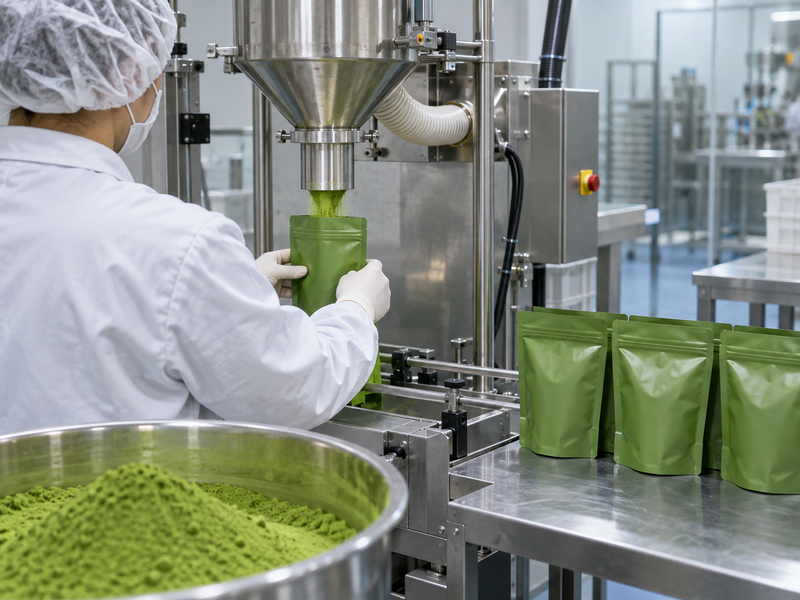
Matcha’s color and aroma are sensitive to storage conditions, air exposure, light, and moisture. Packaging should suit the order size and how quickly a customer opens and uses each unit. A café with modest usage may benefit from smaller sealed packs, while a manufacturer can use larger bulk formats if its handling prevents long exposure after opening. Ask for pack material, net weight, labeling, storage guidance, shelf life, and shipping conditions for the offered SKU.
Plan the reorder before launch: ask about lead time, order quantity, forecast flexibility, and how lot changes are communicated. A chain or importer may need an approved sample, specification, and traceability record before the first shipment. Matcha Village describes bulk, OEM, and private-label options; buyers can discuss specific requirements with the company. The next useful step is a matched sample trial and document review for the actual item you intend to buy. That gives procurement, quality, and product teams one clear basis for approval.
| Sourcing item | Why it belongs in the brief | Decision to record |
|---|---|---|
| Pack size | Controls exposure after opening | Expected usage per pack |
| Storage guidance | Protects color and aroma | Warehouse and branch procedure |
| Lead time | Prevents supply gaps | Reorder point and forecast |
| Approved sample | Anchors future comparisons | Lot code and tasting notes |
| Documentation | Supports import and customer review | Required tests and certificates |
Frequently Asked Questions
Q1: Is matcha simply ordinary green tea ground into powder? Matcha production involves choices about leaf cultivation, heat treatment, drying, sorting, and milling. Ask for the offered product’s process flow.
Q2: Does every matcha use the same shading period? No. Practices vary by producer and product. Compare finished samples as well as cultivation descriptions.
Q3: Is stone milling required for good matcha? Milling method alone does not establish application quality. Evaluate particle feel, flavor, color, and lot consistency in the intended product.
Q4: Which matcha grade should a café buy? Test candidates in the actual milk, sweetener, and serving size. Use taste, color, preparation time, and cost per cup to choose.
Q5: What paperwork should an importer request? Start with the product specification, ingredient information, lot identification, and the test or certification documents required for the destination and contract.