
A strawberry matcha recipe looks simple: red fruit below milk and green tea on top. The Love and Lemons iced strawberry matcha latte uses lightly mashed strawberries, a little sugar, milk, ice and whisked matcha. For a café, the questions are more specific. How much fruit belongs in each glass? Can a guest taste both berry and tea after stirring? How will the team handle fresh berries during a busy shift? This guide turns the home style into a measured test recipe and a service process while keeping the fruit recognizable.
Contents
- 1. What should the finished cup taste like?
- 2. Which ingredients should be specified?
- 3. How should strawberries be prepared?
- 4. How do you choose and whisk the matcha?
- 5. Which milk and sweetness level work?
- 6. How do you build the three layers?
- 7. How should you run a sensory trial?
- 8. What food safety controls belong in service?
- 9. How do you price and train for the drink?
- 10. When does the recipe need revision?
1. What should the finished cup taste like?
Evaluate a stirred serving
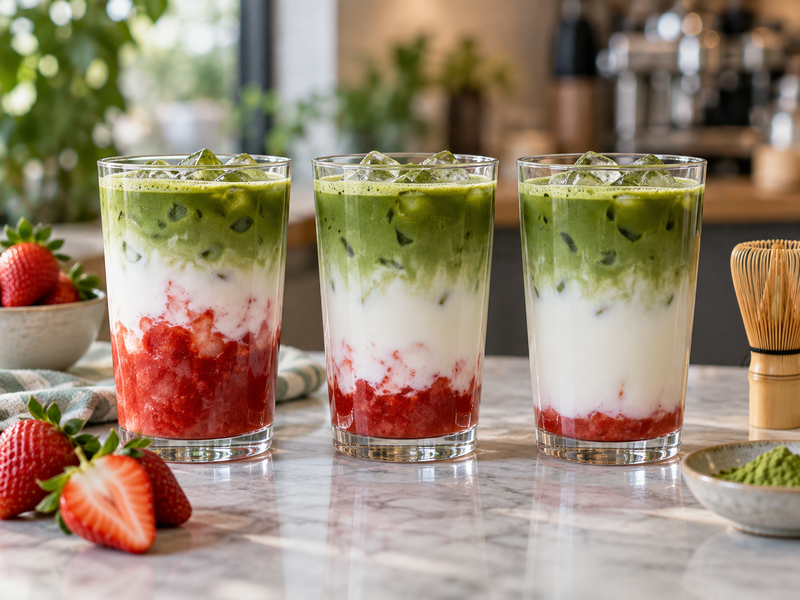
The visual goal is a distinct strawberry base, milk middle and matcha top, but the sensory goal is a drink that works after the guest stirs it. Specify fresh berry flavor, a clear but smooth tea note and sweetness that does not mask either. The drink should be pleasant without relying on a photograph or a garnish. Taste from the top and then after mixing. If the first sip is tea and the final sip is concentrated syrup, the build needs adjustment. A larger strawberry layer can make a dramatic picture while leaving insufficient room for milk and tea.
Record an approved cup with a defined ice mass. Observe it after pouring and several minutes later. Look for fruit pieces that pass through the chosen straw and matcha without dry clumps. For a thick berry layer, use a spoon or appropriate lid. A target such as “berry and tea identifiable after stirring” gives tasters a useful question. Appearance alone says nothing about repeat orders.
| Check | Passing observation | Test if it fails |
|---|---|---|
| Strawberry | Fresh berry taste | Fruit ripeness and dose |
| Matcha | Distinct after stirring | Powder and water ratio |
| Sweetness | Supports both flavors | Sugar and milk choice |
| Texture | Fruit can be consumed | Chop size and straw |
| Last sip | No syrup-heavy puddle | Build and mixing advice |
2. Which ingredients should be specified?
Put a complete serving on the recipe card
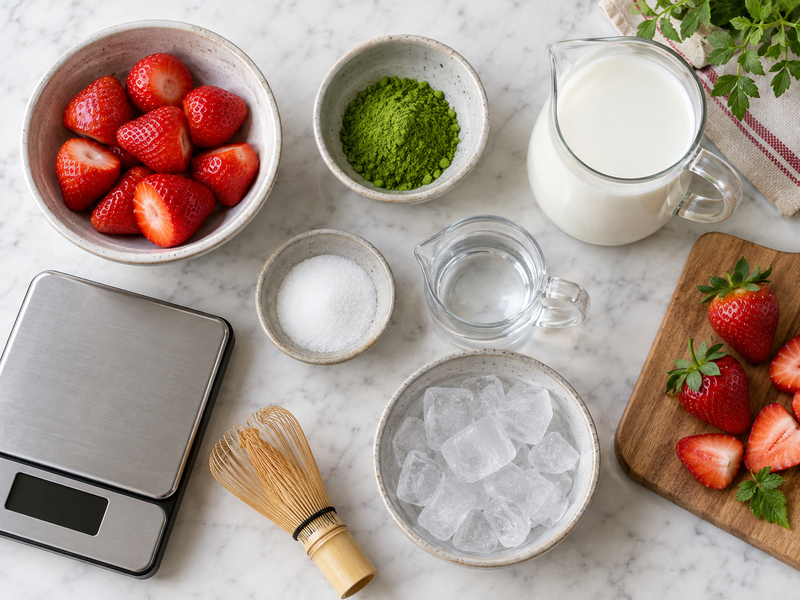
Begin a pilot with 60 grams of prepared strawberries, 5 grams of sugar, 3 grams of matcha, 50 grams of water, 170 grams of milk and 120 grams of ice. These are test amounts for an intended café glass, not a universal recipe or a claim that every berry lot has the same sweetness. Check the finished fill and adjust one variable at a time. Love and Lemons uses chopped berries and sugar, then whisks matcha with water and builds over milk and ice; its home serving is a reference for process. A café must weigh the ingredients it actually purchases.
Write the strawberry variety or supplier specification where possible, but expect seasonal variation. Keep a receiving check for damage, softness and flavor. Record the matcha product and lot, milk product, sugar type, ice scoop and glass. If a berry preparation is made in advance, specify the batch yield and how many servings it actually produces. A cup count based on theoretical fruit weight will be wrong if trimming or draining losses are high. Pump or spoon measures are suitable for service only after they are calibrated against the approved gram amount. This gives the purchasing team a true demand forecast.
3. How should strawberries be prepared?
Keep the fruit fresh and the procedure measurable
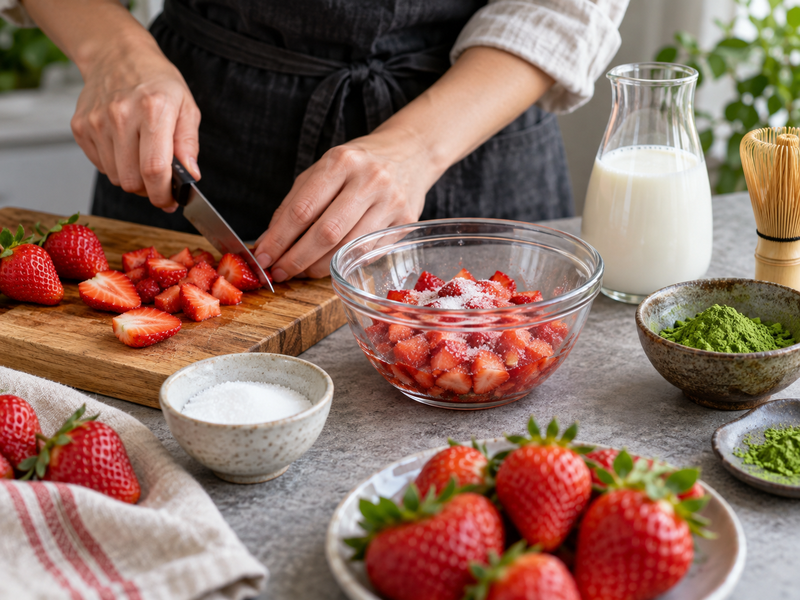
Wash strawberries under running water before cutting, remove damaged fruit and hull with clean tools. FDA’s produce guidance specifically advises washing produce under running water and refrigerating perishable strawberries. Do not use soap or detergent on the berries. Weigh the usable fruit after trimming, since a punnet’s purchase weight is not the same as its recipe yield. Chop to a size that works with the service straw or lightly mash if the intended texture is closer to a fruit base.
Mix the measured fruit and sugar, then test immediately and after a short, defined resting period. The reference recipe macerates berries with sugar to draw out juice. Do not promise that every berry lot will release the same amount. A juicy lot may form a flowing layer; a firmer lot may need a more thorough mash. Weigh portions of the finished fruit mixture into test cups. If the café uses purchased strawberry purée, compare its ingredient statement and sweetness with the fresh version; they are different products. Record preparation time, batch identity and approved cold storage procedure before making larger batches for service.
| Berry preparation | Benefit | Check before approval |
|---|---|---|
| Fine chop | Visible fresh fruit | Straw and spoon usability |
| Light mash | More juice and color | Portion consistency |
| Smooth purée | Quick layer | Ingredient list and sweetness |
| Purchased base | Less prep | Flavor, additives and cost |
4. How do you choose and whisk the matcha?
Test powder in the completed drink
Sample matcha products at the same gram dose, water amount and milk volume. A bright plain-tea sample may become hard to taste once berry acidity and milk are added. Another may be strong but leave an unpleasant harsh note in the finished cup. Choose the product that reaches the sensory target at a workable serving cost and can be reordered by lot. Grade language on a package is less useful than an actual comparison in the approved strawberry formula. The site’s matcha green tea powder guide explains broader powder selection questions for buyers.
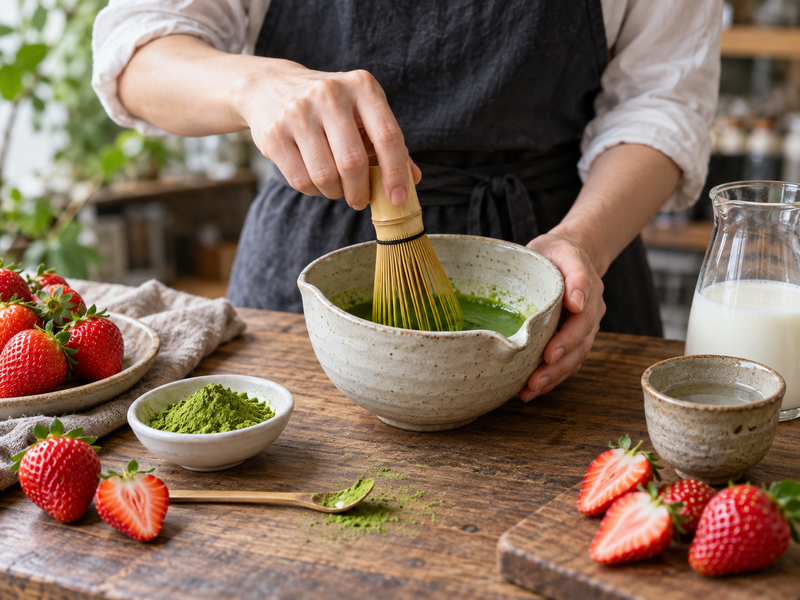
Sift if clumps are visible, then whisk the powder with measured water until the liquid is smooth. Love and Lemons uses cold water in its home recipe. A café can compare cold and warm water if both fit its service setup; record which one disperses the chosen powder consistently. Avoid adding dry matcha straight to cold milk or fruit. Inspect the bottom of the whisking bowl for undispersed powder, then pour through the same spout or tool used during a rush. Make a second cup from the same card with another barista. If their green layers differ, solve the weighing or whisking problem before increasing the matcha dose.
5. Which milk and sweetness level work?
Count the sugar in every ingredient
Strawberries, added sugar and milk each affect sweetness. A sweetened plant drink can make the berry mixture taste jamlike, while an unsweetened milk may let matcha stand out more sharply. Test the chosen standard milk with the approved fruit and tea amounts, then taste after stirring. If sweetness is too high, reduce the added sugar in a measured step before weakening the fruit dose. If the berries are especially tart, a small sugar increase may help, but retest the whole cup. Do not add syrup to the top of a finished test cup and call the formula settled.
Milk alternatives need their own checks for body, separation and allergen information. The FDA identifies milk, soy and tree nuts among the major allergens. Check the actual plant drink label; an almond option introduces a tree-nut concern, while oat products can vary in sweetness and composition. Keep the approved default milk on the card and note any tested substitution. If the alternative makes the matcha taste faint, either provide a separate formula or describe the difference honestly to staff rather than asking them to add an arbitrary extra scoop.
| Milk test | Taste question | Service question |
|---|---|---|
| Dairy | Does creaminess hide fruit? | Milk allergen |
| Unsweetened oat | Is tea still clear? | Product label |
| Sweetened oat | Is sugar excessive? | Adjust fruit sugar |
| Almond | Does nut flavor fit? | Tree-nut procedure |
6. How do you build the three layers?
Use appearance as a service check
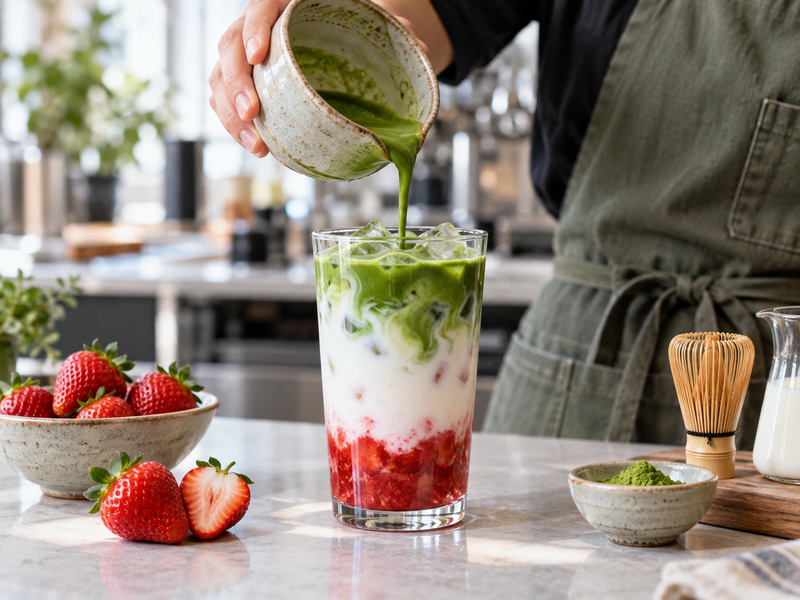
Place the measured strawberry base at the bottom of a clean clear glass. Add the calibrated ice portion, then pour the measured milk slowly. Whisk matcha immediately before finishing and pour it over the ice or the back of a spoon, depending on the approved visual method. The reference home recipe follows the same broad order. Watch the actual glass shape: a narrow cup may mix layers faster than a wide one. Do not refill with milk merely to reach a photograph’s fill line, because that dilutes the recipe. Weigh the finished cup during training.
Invite the guest to stir if the bottom fruit is thick. Decide whether the café supplies a straw wide enough for chopped berries, or a spoon if the fruit remains chunky. A three-layer drink is not successful when half the strawberry base cannot be consumed. If the top green layer sinks immediately, check its water volume and the ice placement before changing ingredients. If the milk picks up an unintended muddy color, inspect the pouring method. Record the approved sequence in short verbs so a barista can perform it without reading a long development note.
7. How should you run a sensory trial?
Compare one variable at a time
Make three identical cups except for the prepared strawberry mass, for example 45, 60 and 75 grams. Keep matcha, water, milk, sugar ratio and ice fixed. Taste the stirred drinks blind and record whether berry or tea leads. If the best cup is too sweet, test sugar as a second trial rather than changing both fruit and tea immediately. Repeat with a second berry lot; fresh fruit changes across deliveries. Compare a freshly made cup with one after a realistic pickup delay. The visible layers may fade, but the flavor should still meet the target.
Use two or more staff tasters and short written observations. “Berry clear, tea missing” is a reason to test matcha dose or powder; “attractive” is not a flavor result. Ask a barista who did not develop the recipe to make it from the card. Measure preparation time and note where they hesitated. A service card that needs constant explanation is not ready for a busy counter. Photograph the approved cup under the shop’s normal lighting and note the glass, ice and straw. If the product is sold as a seasonal item, retain these records so the next launch starts from an actual baseline.
| Trial cup | Strawberry base | Question |
|---|---|---|
| A | 45 g | Is berry detectable? |
| B | 60 g | Are fruit and tea balanced? |
| C | 75 g | Is the fruit too dominant? |
| Retest | Chosen mass | Can staff repeat it? |
8. What food safety controls belong in service?
Handle fresh fruit as a real ingredient
Keep strawberries refrigerated before preparation, wash them under running water, and use clean hands, boards and utensils. FDA advises refrigerating perishable strawberries at 40°F or below and keeping raw produce separate from raw animal products. Follow the café’s local food code and food safety plan for prepared fruit, milk and a finished latte. Set a dated batch container and a discard procedure for any prepared berry base. A bright red color does not prove a batch remains suitable for use. If the recipe uses purchased purée, follow its unopened and opened storage instructions.
Check milk and syrup labels for allergens and ingredients. Use a dedicated ice scoop, not a drinking glass, and keep fruit prep away from surfaces used for raw meat or eggs. If a prepared fruit base is held for service, record when it was made and maintain the site’s required temperature. Train staff to discard a cup that has been left in the wrong conditions instead of topping it with fresh matcha. A layered drink is intended for prompt service; it is not a plan for unrefrigerated display. These controls should appear on the station card alongside the measured recipe.
9. How do you price and train for the drink?
Include fruit yield and preparation labor
Calculate cost from the approved serving masses and landed prices. Strawberry purchase weight includes stems and any discarded damaged fruit, so measure usable yield. Add matcha, milk, sugar, ice, cup, lid and straw. For a purchased purée, use the actual portion cost and account for product left in the package at the end of its approved use period. Matcha may be a small mass but a meaningful share of the drink’s material cost. Compare powders by the cost of a passing cup, not only by price per kilogram.
Time the prep of a small fruit batch, then the assembly of several orders during a realistic shift. A recipe that takes two minutes in a quiet test may slow down when berries require chopping between orders. Decide whether the fruit base is prepared under a documented batch procedure or made to order. The card should show weights, tool, build order, allergen note and image of the approved serving. Train a second barista and compare their finished cup with the development standard. If there is a large difference, correct the card or equipment before launching rather than asking guests to tolerate variable drinks.
| Cost item | Calculation basis |
|---|---|
| Strawberries | Usable grams per cup |
| Matcha | Grams × landed unit cost |
| Milk | Actual measured pour |
| Packaging | Cup, lid and straw |
| Labor | Prep and assembly minutes |
10. When does the recipe need revision?
Recheck fruit season, suppliers and service results
Review the recipe when berry flavor changes with season, a supplier changes matcha or milk, or the café changes cup and ice format. A sweet berry lot may require less added sugar; a watery lot may need a different fruit preparation, not more matcha. Test the changed ingredient in a small set of cups, keeping the rest of the formula fixed. Record the old and new portion masses, the sensory finding and the new card date. If the menu runs at several locations, distribute the same revision and ask each team to make a verification cup.
Use repeated customer feedback as a diagnostic. “Too sweet after stirring” points to total sugar or a concentrated fruit bottom; “matcha disappears” points to tea dose, powder or excess milk. Do not chase a single opinion by changing the standard immediately. Compare the evidence with the approved sensory target, then run a controlled test. The best strawberry matcha recipe is a drink whose berry and tea remain recognizable from a repeatable service method, with safe handling and a cost the café understands.
FAQ
Q1. Can frozen strawberries be used? They can be trialed after safe thawing under the site’s procedure, but their texture and water release differ from fresh fruit. Recheck portion mass, taste and storage.
Q2. Should strawberries be strained? Only if the selected straw, texture target or service format calls for it. Straining changes yield and may reduce the fresh fruit feel.
Q3. Is a syrup base easier than fresh berries? Usually it is faster to portion, but it gives a different ingredient profile and flavor. Compare sweetness, cost and customer expectation before replacing fresh fruit.
Q4. Can I use oat milk? Yes, after testing the specific product with the approved strawberry and matcha doses. Check its sweetness, texture and allergen statement.
Q5. Can the matcha be whisked ahead? Only under an approved preparation and storage process. Compare it with a freshly whisked serving for separation, flavor and service time.