
A matcha tiramisu recipe for a bakery must give the customer a clean slice with recognizable tea flavor and the kitchen a repeatable process. Just One Cookbook’s matcha tiramisu soaks ladyfingers in matcha, layers them with mascarpone cream and chills the dessert before dusting the top. Foodservice also needs a documented cream method, approved cold holding, allergen information and a portion cost. The trial below makes those decisions explicit.
Contents
- 1. What makes a good matcha tiramisu?
- 2. Which ingredients should the bakery specify?
- 3. How do you prepare the matcha soak?
- 4. How do you make a safe stable cream?
- 5. How long should ladyfingers be dipped?
- 6. How should the layers be assembled?
- 7. How do you chill and portion it?
- 8. What food safety and allergen checks apply?
- 9. How do you price and scale a batch?
- 10. When should the formula be revised?
1. What makes a good matcha tiramisu?
Judge the cut piece, not only the tray
The target is a spoonable but coherent dessert: softened biscuits, cream that holds its shape, and matcha that remains distinct after chilling. Powder dusted only on the surface will give a vivid first impression but cannot carry the whole dessert. Put measured matcha into the soaking liquid and test whether the tea survives the cream’s fat and sweetness. The serving should not leak green water onto the plate or collapse as it is transferred. A dry center means the biscuits were not adequately soaked; a puddle means the soak was excessive or the layers were not set.
Decide whether the bakery will sell a tray slice or a sealed individual cup. The same recipe can behave differently in each format because layer thickness and surface exposure change. Photograph the approved portion after service preparation, not just after assembly. Taste it at the proposed sale time and compare with a freshly chilled trial. Specify a finish: a light fresh dusting can preserve color, while a heavy layer may taste bitter and mark the packaging. Write these targets before buying a large matcha lot so ingredient choice follows the desired dessert.
| Quality check | Passing result | Possible adjustment |
|---|---|---|
| Tea flavor | Clear through cream | Test soak concentration |
| Biscuits | Tender, still structured | Shorten or lengthen dip |
| Cream | Holds a portion | Review mixing and chilling |
| Finish | Thin, even dust | Sieve close to service |
| Packaging | No leakage or crushed top | Change portion format |
2. Which ingredients should the bakery specify?
Build a traceable pilot formula
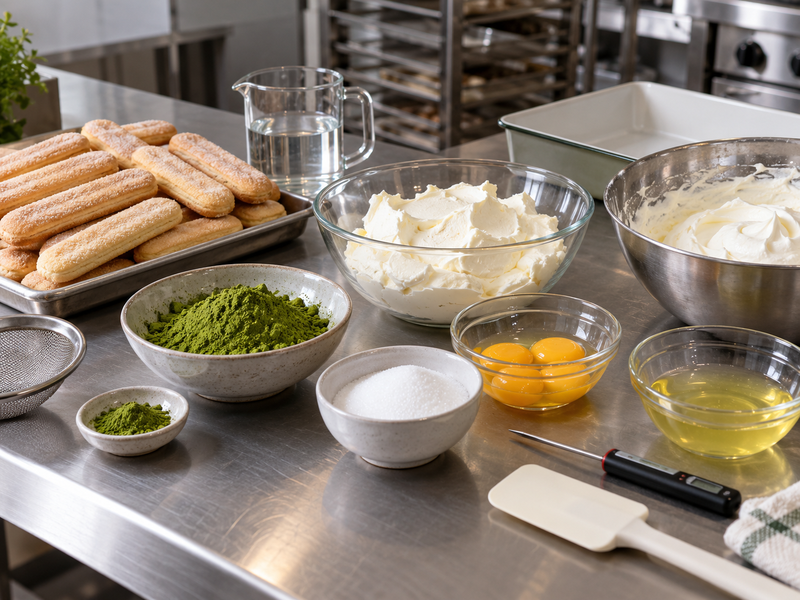
For a test tray, record the exact brand and weight of ladyfingers, mascarpone, cream, sugar, matcha and water. If using eggs, identify whether the product is pasteurized and how it will be prepared. Just One Cookbook’s recipe includes egg yolks and cooks its egg mixture; a commercial kitchen should approve its own method under local rules. A simpler egg-free mascarpone and whipped-cream trial can be compared, but it is a different formula with different flavor and structure. Do not label the two versions as interchangeable merely because both look like tiramisu.
Ask the matcha supplier for a lot-linked sample that can be reordered. Taste it in the actual soak and finished dessert. A very expensive powder is not automatically necessary, while a cheap powder that goes dull and harsh under cream may waste the rest of the ingredients. Record the biscuit dimensions as well as weight: a new shape changes the number of layers and the amount of soak absorbed. Confirm that any alcohol in a reference recipe fits the intended menu, market and labeling. The following formulation steps deliberately leave alcohol optional and require it to be declared if used.
3. How do you prepare the matcha soak?
Measure tea and liquid for the whole tray
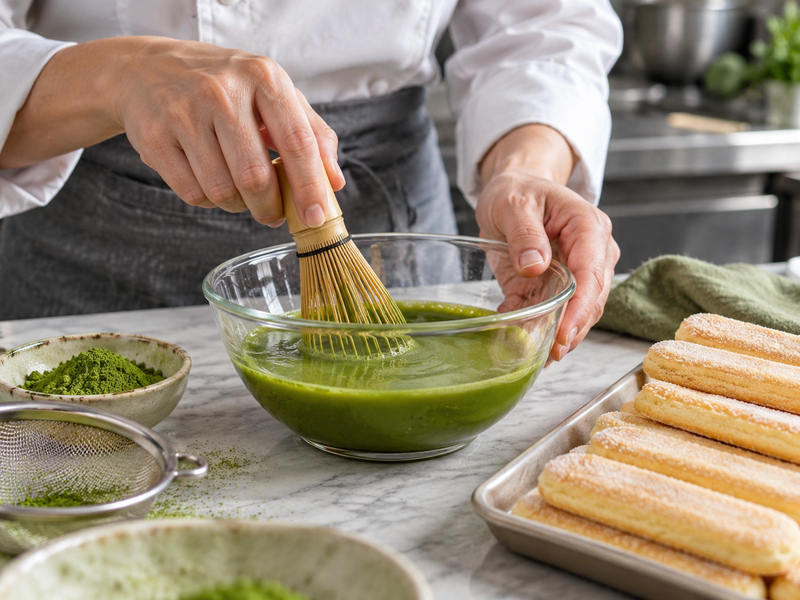
As a development start, whisk 12 grams of matcha into 300 grams of potable water, then cool it as needed before dipping. This is a trial ratio, not a claim that every powder or biscuit needs it. Sift lumpy powder, use a whisk or other approved tool, and inspect the bowl for dry pockets. Record the finished liquid mass. If the soak is sweetened, weigh that addition and compare the completed dessert against an unsweetened soak. Mascarpone cream already supplies sweetness, so a sweet soak can flatten the matcha contrast.
Weigh the soak before and after dipping a fixed number of biscuits. The difference gives an approximate absorption for that brand and technique. That measure is more useful than “dip briefly,” which different pastry cooks interpret differently. Taste a cut piece after chilling before deciding the tea is too weak; adding powder to a wet surface at the end changes bitterness and appearance but cannot repair an underflavored middle layer. For a separate discussion of powder selection, see our matcha green tea powder guide. Record water and powder as part of the batch sheet so a second team member can repeat the soak.
| Trial | Matcha | Water | Evaluation |
|---|---|---|---|
| Base | 12 g | 300 g | Taste after chilling |
| Stronger | 15 g | 300 g | Check bitterness and cost |
| Lighter | 9 g | 300 g | Check whether tea remains clear |
4. How do you make a safe stable cream?
Choose and document one approved egg process
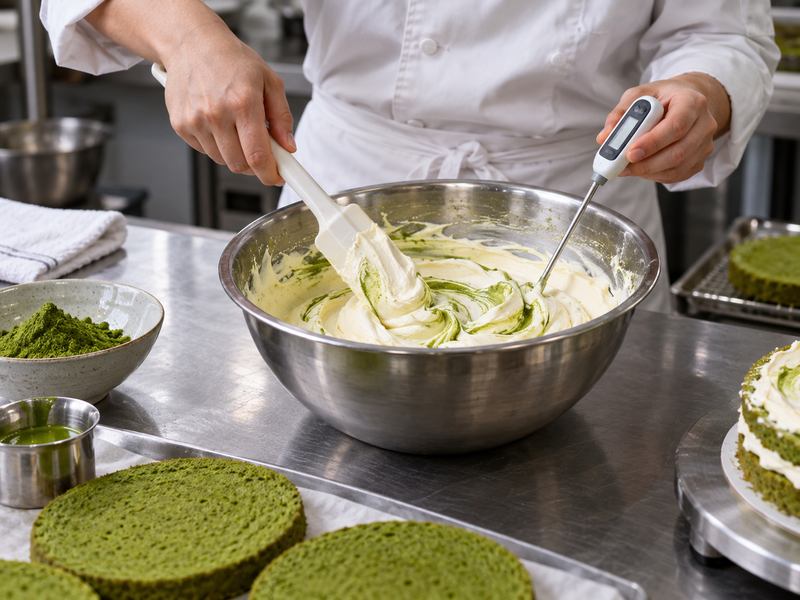
Mascarpone, cream and sugar need a controlled mixing method. If the recipe includes eggs, consult the kitchen’s food safety plan and local authority before service. FDA advises using pasteurized eggs or thoroughly heating egg mixtures for recipes that can contain raw eggs, including tiramisu. The reference recipe cooks its yolk mixture and checks it with a thermometer. A temperature printed in another recipe does not replace a validated local procedure for this formula and batch size. Record product type, temperature check, cooling step and person responsible.
For an egg-free pilot, whip cold cream to a soft structure and fold it into smooth mascarpone and measured sugar. Stop when the mixture spreads easily without becoming runny. Overworking mascarpone can make the texture grainy or loose. Use a clean chilled bowl and keep the mix under the site’s approved time and temperature controls. Test a small tray before scaling; a cream that looks stiff in a mixing bowl may slump once the biscuits absorb liquid. Photograph a cut piece after chilling and at the end of a realistic service period. Approve the cream method together with the soak, since changing either one affects slice structure.
5. How long should ladyfingers be dipped?
Test absorption by weight and by bite
Set out a fixed number of dry biscuits and weigh them. Dip each side in the matcha soak using a consistent motion, then weigh the group again before assembly. The change in mass gives the kitchen a repeatable target for that product, even if it is only approximate. Keep the liquid depth and biscuit orientation steady. A one-second dip with a porous biscuit may be enough; another brand may stay dry. The actual chilled texture decides. Do not chase softness by leaving biscuits submerged until they disintegrate in the cook’s hand.
Make two small samples with different dip times, hold both under the same refrigeration conditions and cut them at the planned sale time. Note the center texture, seepage and whether the first and last spoonful have similar matcha flavor. When purchasing changes the biscuit specification, repeat this check. A soggy layer can result from too much soak, very soft cream or a thin biscuit that absorbs rapidly. Diagnose the cause before reducing matcha concentration; a weaker soak changes flavor but may not correct excessive water uptake. Write the approved dip action and absorption observation into the production sheet.
| Symptom | Likely variable to test | First check |
|---|---|---|
| Dry middle | Too little soak | Cut after chilling |
| Green liquid pooling | Excess soak | Weigh wet biscuits |
| Broken biscuits | Long dip or fragile brand | Compare dry product |
| Faint tea flavor | Weak soak or rich cream | Blind taste trial |
6. How should the layers be assembled?
Keep thickness and tray dimensions fixed
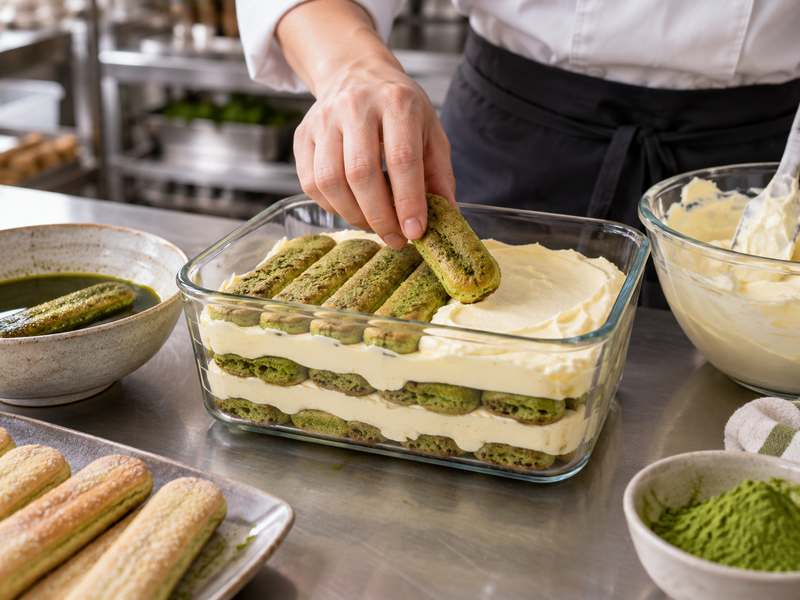
Use a clean tray whose inside dimensions are on the batch sheet. Spread a thin cream base if that is part of the approved build, place the first row of dipped biscuits without large gaps, then weigh or measure the cream layer. Repeat in the same order. If one cook uses half the cream at the bottom and another saves it for the top, their portions will differ. Level the surface with a clean spatula; avoid compressing the soaked biscuits. Photograph the side of a trial tray to show the approved number of layers and their approximate thickness.
Make the matcha finish after the dessert has chilled and close enough to service that the powder still looks fresh. Test this timing in the actual packaging, since condensation can darken a dusted top. The reference recipe completes a chilled layered dessert, but the bakery must choose whether to finish whole trays or portions. Individual cups reduce cutting loss but need controlled fill weights. A large tray can be faster to assemble yet creates edge and center portions with different shapes. Whichever format is chosen, record its yield from a weighed batch rather than estimating from a photograph.
7. How do you chill and portion it?
Validate set time in the real refrigerator
Move the assembled dessert promptly into the approved refrigerator and record its preparation time and temperature under the site’s food safety plan. Chill until the cream and biscuits form a clean portion, then test again at the actual selling point. A home recipe’s “overnight” instruction describes a texture target, not a universal commercial holding limit. Tray depth, container material and refrigerator load change cooling performance. A shallow individual cup may set differently from a deep glass pan. Check temperature with a calibrated instrument where the plan requires it.
Use a clean knife or portioning tool, and weigh several pieces from the center and edge of the tray. If the edge servings are much smaller, account for trim or switch to cup portions. Package promptly and keep the dessert under the approved cold holding conditions. The FDA Food Code is a model for retail food practice; local rules govern the actual business. Set a date-marking and discard procedure rather than copying an online recipe’s storage estimate. A saleable portion must taste good as well as remain within the required controls.
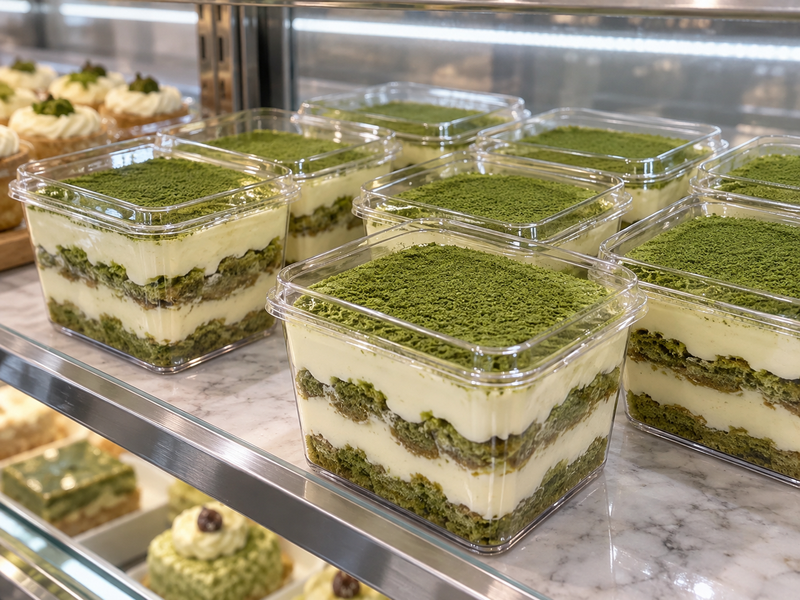
| Portion check | Tray slice | Individual cup |
|---|---|---|
| Yield | Count saleable cuts | Count filled cups |
| Weight | Sample center and edge | Weigh each fill target |
| Finish | Dust after cutting | Dust near sale |
| Loss | Record trim | Record overfill |
8. What food safety and allergen checks apply?
Make the controls visible to the team
Tiramisu commonly contains milk, eggs and wheat, all listed among the FDA’s major food allergens. Check the actual ingredient labels rather than assuming a biscuit or cream is unchanged. Nuts or soy can enter through substitutions, and a plant-based variation needs its own allergen review. Keep ingredient and allergen information available to the staff member answering customer questions. Clean tools and surfaces according to the bakery’s allergen procedure; simply scraping a spatula is not adequate for a declared alternative.
Use approved egg products and the approved method for the selected formula. Keep the finished cream dessert refrigerated under the site’s applicable cold holding rule and date-mark it when required. The Food Code describes 41°F or 5°C as the cold holding limit for many time/temperature control foods; check local adoption and the bakery’s plan rather than treating that number as a complete safety program. Record supplier lots, preparation date, responsible person, refrigerator readings and discard date. If a display case warms during a busy period, follow the corrective action in the plan. A pretty green layer is no evidence that the dessert was held safely.
9. How do you price and scale a batch?
Price the saleable portion, not the raw tray
Add the actual landed cost of matcha, mascarpone, cream, biscuits, sugar, packaging and optional garnish. Divide by portions that can be sold, not by theoretical cuts on paper. If a trial tray uses 24 biscuits and yields nine consistent pieces plus one damaged edge piece, use nine in the cost calculation. Record labor for cooking any egg mixture, dipping, layering, cutting and packaging. A cup version may use more packaging but lose less product. Compare both in a small pilot before selecting the format for several stores.
Scale by multiplying weighed ingredients, then test the larger batch. A doubled tray may be deeper and take longer to chill, even though ingredient arithmetic is simple. Use identical shallow trays if that helps preserve the validated process. Check whether the matcha soak becomes uneven when a large quantity sits undisturbed; whisk again as the approved method directs. Keep the powder, biscuit and dairy specifications fixed during the scale trial so an unexpected result has a traceable cause. The production sheet should show grams, yield, approved tray size, chill check and portion target.
| Cost component | Record per batch |
|---|---|
| Matcha and soak | Grams used, grams left |
| Dairy and biscuits | Invoice cost and waste |
| Packaging | Count and unit cost |
| Yield | Saleable portions |
| Labor | Measured preparation time |
10. When should the formula be revised?
Change one variable and keep the old result
Retest when the matcha lot, ladyfinger brand, dairy product, tray size or packaging changes. A new matcha may differ in color and flavor in cream even if its plain tea tastes appealing. Compare the old and new products in identical small trays. A new biscuit may need a different dip even if it weighs the same. Record the change, the sensory result after chilling and the portion weight. Avoid adjusting powder, sugar and soak volume in one step, because you will not know which change improved or harmed the dessert.
Review repeated customer comments, return reasons and production waste. “Not enough matcha in the middle” suggests a soak or layer issue; “wet base” suggests excess liquid or structure. The bakery can then run one controlled trial and issue a dated recipe revision. Keep the previous version available so staff can explain why the change was made. A good matcha tiramisu recipe is a reproducible chilled dessert with clear purchasing, preparation and service instructions, not merely an attractive tray at the end of a development day.
FAQ
Q1. Can matcha tiramisu be made without eggs? Yes, an egg-free mascarpone and whipped-cream version can be developed. It will have a different structure and must be tested for portioning, cold holding and allergens.
Q2. Should the soak contain sugar? Test it both ways. Cream and biscuits already add sweetness; the preferred soak depends on the matcha, dairy formula and intended guest.
Q3. Can a bakery use culinary matcha? Yes, if a lot-linked sample tastes and looks acceptable in the finished dessert at an economical dose. Grade names alone do not predict the result.
Q4. How far ahead can tiramisu be made? Follow the bakery’s approved cooling, cold holding and date-marking plan under local rules. Validate the desired texture and appearance at the planned sale time.
Q5. When should the top be dusted? Test a light dusting near service. Condensation can darken the powder, so inspect a packaged portion before setting the procedure.