
Matcha green tea powder can look impressive in a sample tin and fail in a busy café. The color may disappear in milk, the finish may turn harsh at the required dose, or the next lot may taste different from the one the buyer approved. Consumer roundups such as Food & Wine’s powder comparison help readers see the range of products. A foodservice buyer needs a different test: can this specific lot make the intended drink or food repeatedly, at a price and supply volume the business can support? The following checks turn a promising sample into a purchasing decision.
Contents
- 1. What job must the powder do?
- 2. Which sample details should you request?
- 3. How can you compare samples fairly?
- 4. What should you ask about the source leaves?
- 5. Which lot documents matter to your business?
- 6. How should the powder perform in recipes?
- 7. What does cost per serving reveal?
- 8. How should storage and shelf life be tested?
- 9. How do you plan for lot changes?
- 10. When is the powder ready to buy?
1. What job must the powder do?
Write the intended use before asking for a grade
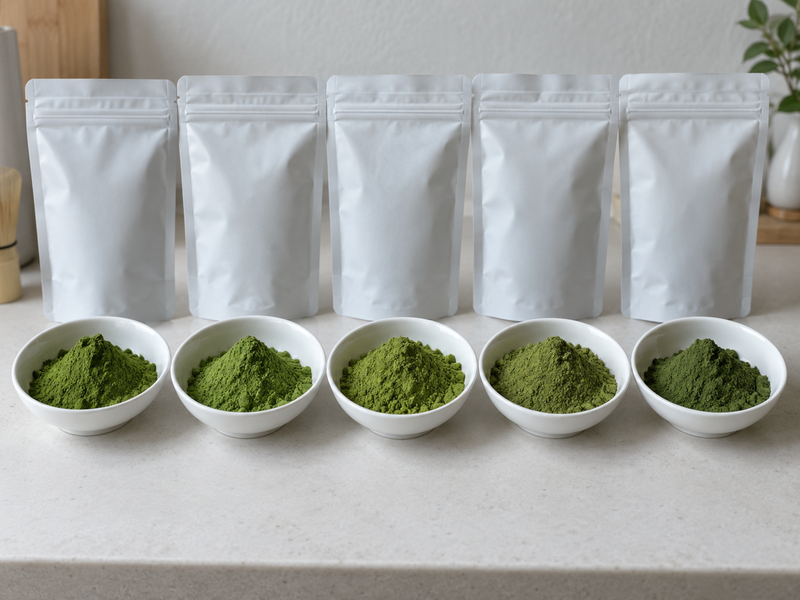
A powder that tastes gentle in water may fade in a 12-ounce oat latte. A more assertive powder may hold its character in a baked filling yet taste too sharp as plain tea. Write down the intended products, serving sizes, sweeteners, milk choices and target price before seeking samples. The word “best” cannot answer those questions. A buyer choosing one powder for both a ceremonial bowl and a sweet pastry is asking it to do two different jobs; separate trials may show that two lots are more sensible.
Ask the team to define an acceptable finished product in observable language. “Tea remains recognizable after milk” is testable; “premium flavor” is not. Record the maximum powder dose the recipe can bear financially and the sensory faults that would reject a sample, such as persistent grit or a harsh finish. Keep the brief short enough that the person preparing the sample can follow it without interpretation. If you need a baseline for how grades are described, read our matcha grades guide, then test the actual lot rather than trusting a grade name alone.
| Product use | What to judge first | Useful trial format |
|---|---|---|
| Plain whisked tea | Aroma, finish, texture | Measured water preparation |
| Iced latte | Tea presence through milk and ice | Full serving cup |
| Sweet dessert | Flavor after sweetener or heat | Small finished batch |
| Retail pouch | Preparation range and instructions | More than one user |
2. Which sample details should you request?
Make the sample traceable to an offer
Ask for a sample tied to a named product and lot, with pack size, quoted price, order minimum and estimated lead time. A sample sent without those details can win a tasting but leave the buyer unable to order the same powder. Confirm whether the commercial pack will use the same formulation and whether a future shipment can contain a different harvest or blend. Put the answer in the purchasing record. An attractive tasting note is of little use when the quoted product cannot be linked to the tasted lot.
Request the packaging format and storage directions alongside the powder. A 30-gram sample tin may have been opened only once; a café bag could be opened dozens of times in a warm service area. The two situations are not equivalent. If the supplier offers several grades, request clearly coded samples and the differences they expect you to notice, rather than tasting labels that disclose price and create bias. Establish who pays for a larger pilot sample before committing to an order. One small spoonful cannot show how a full recipe runs during service.
| Sample record | Reason to collect it | Follow-up if missing |
|---|---|---|
| Product and lot code | Repeat the approved purchase | Ask for traceable identity |
| Commercial pack size | Test actual handling | Request pack specification |
| Price and minimum order | Model landed cost | Request formal quote |
| Lead time | Protect menu continuity | Ask about regular availability |
| Storage advice | Design a realistic trial | Ask for written instructions |
3. How can you compare samples fairly?
Control the cup, then test the menu
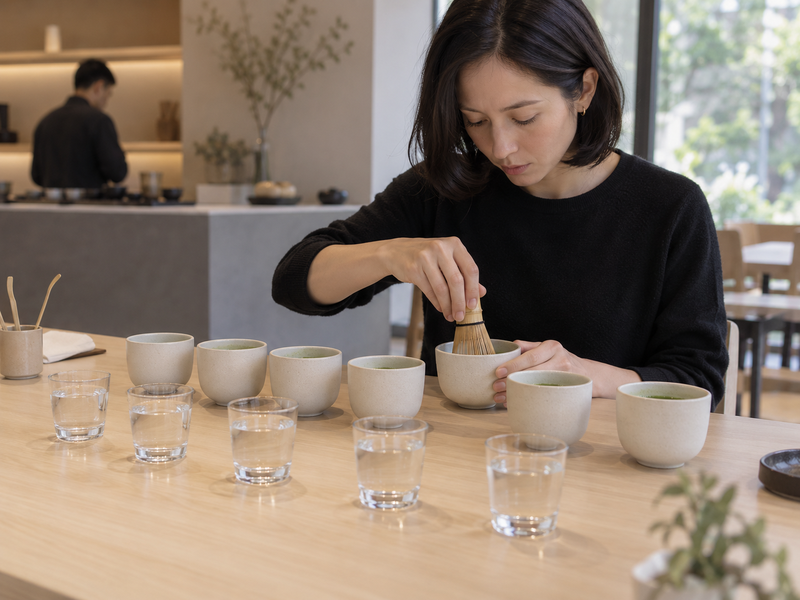
Use a scale for powder and water. Fix water source, volume, temperature, whisking method and time between preparation and tasting. Code the samples so tasters do not see brand or price. Ask each person to write down aroma, first sip, texture and finish before the group discusses favorites. Repeat a sample under a second code if practical. Large differences in its scores may reveal that preparation or judging needs work before a supplier is rejected.
This controlled tasting is only the first screen. Make the leading powders in the drinks and foods you intend to sell. Keep every other recipe component constant. A powder may look pale beside a vivid rival yet give a better finish in milk; another may photograph beautifully but require too much sweetener to cover bitterness. Record the dose at which each sample succeeds. Keep a dated photo under consistent light, but do not let a phone camera’s exposure decide taste. A purchasing choice should rest on a repeatable recipe and notes that another team member can understand.
4. What should you ask about the source leaves?
Separate useful traceability from attractive stories
Matcha is made from tea leaves that are processed and milled into powder. Japanese tea terminology and processing steps are described by Japan’s Ministry of Agriculture, Forestry and Fisheries. A product label may describe an origin or cultivar, but a buyer still needs to know what that description means for the offered lot. Ask whether the powder is a single origin, a blend, or a recipe designed for a consistent taste profile. Ask what can change between orders, and what the supplier will communicate when it does.
Do not infer quality from a place name alone. The useful question is whether the lot meets the product brief and whether the supplier can identify it when a customer complaint or quality question arrives. Origin claims should match the documents and label wording used in the destination market. When a supplier describes shading, milling or a specific cultivar, request enough detail to distinguish the offered product from a generic category claim. A sound answer may be brief. A vague answer dressed in romantic language is difficult to audit and even harder to use when the next shipment tastes different.
| Supplier statement | Practical question | Decision use |
|---|---|---|
| Named origin | Does it apply to this lot? | Label accuracy |
| Single cultivar | Will it remain available? | Flavor consistency |
| Blended profile | What changes are allowed? | Reorder expectations |
| Specific milling process | Is it a product specification? | Verify claim wording |
5. Which lot documents matter to your business?
Match the paperwork to your market and product
Ask for the specification sheet and lot-specific documents needed for your jurisdiction and use. A buyer may need ingredient identity, allergen statements, microbiological criteria, pesticide or contaminant information, country-of-origin details and a certificate of analysis. The exact requirement depends on the importing country, customer contracts and intended product. A generic marketing brochure is not a substitute for a current lot record. Confirm that a document names the same product and lot as the powder you are tasting.
If you sell in the United States, review the applicable FDA food-labeling guidance with your compliance team before printing packaging or menu claims. Ask a qualified regulatory adviser to resolve market-specific questions. A lab result is useful only when its method, date, analyte and sample identity can be understood. A certificate that says “passed” without a stated limit or relevant test does little work for a purchaser. Store documents with the purchase order so receiving staff can compare the delivered lot and pack to the approved record. When information is unavailable, record the gap before launch instead of treating silence as evidence of compliance.
| Document | Check before approval | Who uses it |
|---|---|---|
| Product specification | Identity and stated limits | Buyer, quality team |
| Lot certificate | Lot code, date, measured results | Quality team |
| Allergen statement | Recipe and label implications | Product developer |
| Origin and shipping record | Claim and import alignment | Importer |
6. How should the powder perform in recipes?
Test the highest friction preparation
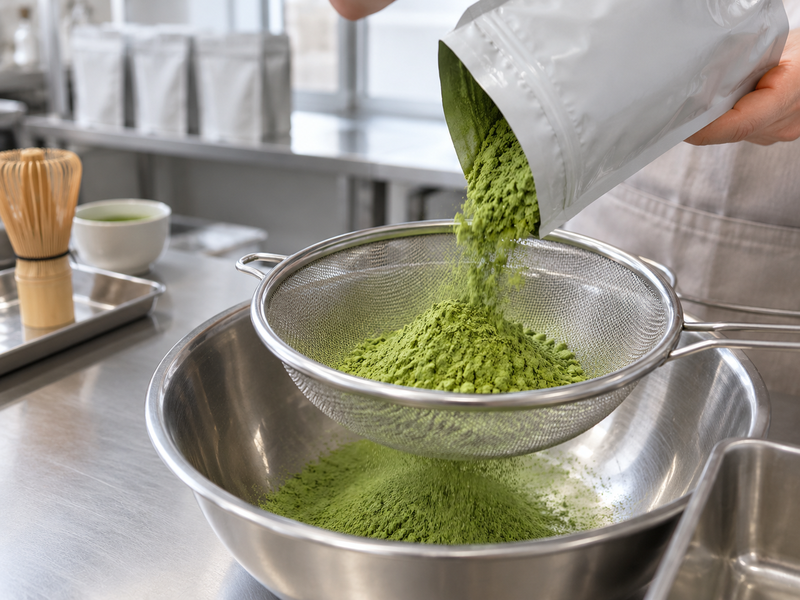
Run a short service trial with the staff and equipment that will actually make the product. Watch how the powder disperses, whether it clumps after a normal rush, how much time sifting adds, and whether the finished cup still shows tea after milk, ice and sweetener. A bench test mixed slowly by one careful developer may conceal a service problem. Put the recipe on a card, then let a second preparer make it without coaching. If the result changes sharply, identify whether the powder or the method is responsible.
For a dessert or packaged food, test the complete process. Heat, fat, sugar and storage may alter perceived tea flavor and color. Set acceptance criteria in the form that will be sold, not just in a plain cup. Note how much powder is needed to reach a clear tea taste and whether that dose adds an unwelcome dry or bitter finish. If a sample needs an unusual preparation step, price the extra labor and training. A powder that tastes excellent but cannot be prepared consistently may be the wrong choice for a high-volume counter.
7. What does cost per serving reveal?
Calculate with the approved dose
Divide the usable price per gram by the grams in the successful recipe, then add relevant freight, duty, packaging loss and waste. A cheaper bag can become the more expensive option when the drink needs a much heavier dose to taste of tea. Conversely, a higher-priced powder may be unnecessary in a strongly flavored baked product. Compare powders at the dose that passes the sensory trial; comparing them at the same gram weight can hide the real cost of the menu item.
For example, a powder costing $0.08 per gram at a 3-gram dose contributes $0.24 to a drink. Another costing $0.11 per gram at a 2-gram dose contributes $0.22. These are illustrative numbers, not market prices. Add a small allowance for powder left in packs and for trial cups, then compare with the menu’s target gross margin. Include labor if one powder must be sifted or premixed in a separate step. The right number is the cost of a repeatable finished serving, not the price on a kilogram quote.
| Illustrative option | Powder cost/g | Passing dose | Powder cost/serving |
|---|---|---|---|
| A | $0.08 | 3 g | $0.24 |
| B | $0.11 | 2 g | $0.22 |
| C | $0.07 | 4 g | $0.28 |
8. How should storage and shelf life be tested?
Try the packaging under real service conditions
Ask for the supplier’s stated shelf life and storage conditions, including what changes after opening. Then run a modest trial in your own operation. Store one unopened sample as directed and use another in the normal service routine. Record opening date, daily handling and any changes in aroma, color or clumping. Keep food safety decisions tied to the supplier’s specifications and your applicable rules; a tasting check cannot extend an expiry date or prove a product safe.
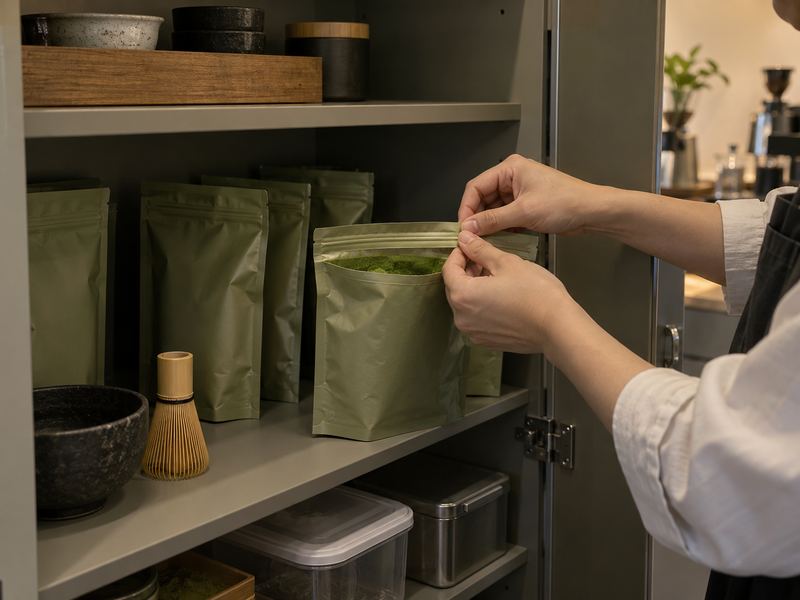
Light, air, heat and moisture are practical handling concerns for a finely milled tea powder. Choose a pack size that staff can use within the supplier’s open-pack guidance. A large bag may lower the invoice price but increase exposure during slow service. Decide who closes the container, where it sits, and how older stock is rotated. If powder is transferred to a working container, retain lot identification so a complaint can be traced. Test whether the original closure survives repeated opening. A packaging claim is only useful if the café can follow it at 8 a.m. during a queue.
9. How do you plan for lot changes?
Keep an approved reference and a change rule
Even when a supplier aims for a stable profile, the delivered lot should be checked against the approved sample. Retain a properly stored reference while its date allows, and keep a one-page acceptance sheet: appearance under fixed light, aroma, recipe dose, texture and finish. Ask the supplier what changes trigger notice, such as a source or blend adjustment. Put the notification requirement into the purchase terms if continuity is important to a named menu product.
At receiving, compare the product name, lot code, pack condition and documents with the order. For a new lot, make a controlled sample and the best-selling finished recipe before releasing it to all stores. Record whether the difference falls inside an agreed range or requires a recipe adjustment. Do not quietly change the dose in every location without calculating cost and training staff. If a lot fails, document the specific defect and contact the supplier with photos and preparation details. “It tastes different” is a starting observation; the actual record makes a resolution possible.
10. When is the powder ready to buy?
Close the gaps in a small pilot order
Approve a powder when its lot is identifiable, required documents have been reviewed, the finished recipe passes a repeatable trial, storage fits the operation and cost per serving meets the product target. A short pilot order can reveal what a tasting cannot: pack durability, replenishment timing, training load and customer response in ordinary service. Write down who approves a change to powder, dose or supplier so a substitution does not drift onto the menu without review.
The purchase record should include the approved product and lot, the recipe card, a list of documents, quoted terms and a recheck date. Keep one alternate candidate if the menu depends heavily on matcha, but test it in the same recipe before treating it as interchangeable. If the first sample is promising yet information is missing, ask for the missing document or a larger trial instead of guessing. The best matcha green tea powder for a business is the one whose quality can be observed, costed, received and prepared again.
Frequently asked questions
Q1. Is ceremonial grade always the best choice for a latte?
No. Grade labels vary by supplier. Taste the actual lot in the latte recipe, then compare dose and serving cost.
Q2. Can color alone identify a good powder?
No. Check aroma, texture and flavor in a controlled preparation. Use color as one recorded observation under consistent light.
Q3. Which sample should a buyer approve?
Approve a traceable lot that passes the finished product trial and has the documents your business needs.
Q4. Why should a café keep an approved recipe card?
It fixes dose, water, milk and method so staff can recognize a changed lot or a preparation problem.
Q5. How often should a buyer retest?
Retest when a new lot arrives, a formulation or supplier changes, or the finished drink no longer matches its approved profile.