
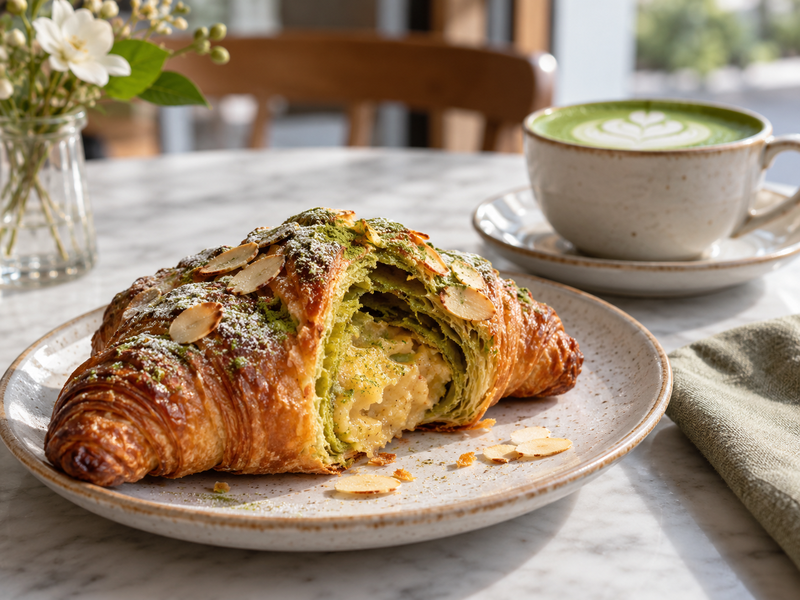
A matcha almond croissant can look attractive in a display case and still disappoint at first bite. Frangipane leaks, an old croissant dries out during its second bake, or the tea disappears under sugar. Bakery teams need a method that controls all three outcomes. Start with a defined croissant size, a measured matcha almond filling and a short bake trial. Keep the accepted sample beside the production sheet so staff know what “done” means. Teak & Thyme’s matcha almond croissants show the consumer version of this pastry; this guide turns that idea into a repeatable café product.
Contents
- 1. What makes a matcha almond croissant different?
- 2. Which croissants work for a second bake?
- 3. How should a bakery build the frangipane?
- 4. How much matcha belongs in the filling?
- 5. How can staff assemble each pastry consistently?
- 6. What should the second bake achieve?
- 7. How should the pastry be held and displayed?
- 8. What should a production trial measure?
- 9. How can a bakery calculate usable yield?
- 10. What belongs in a supplier and staff brief?
1. What makes a matcha almond croissant different?
Begin with the frangipane, not green pastry
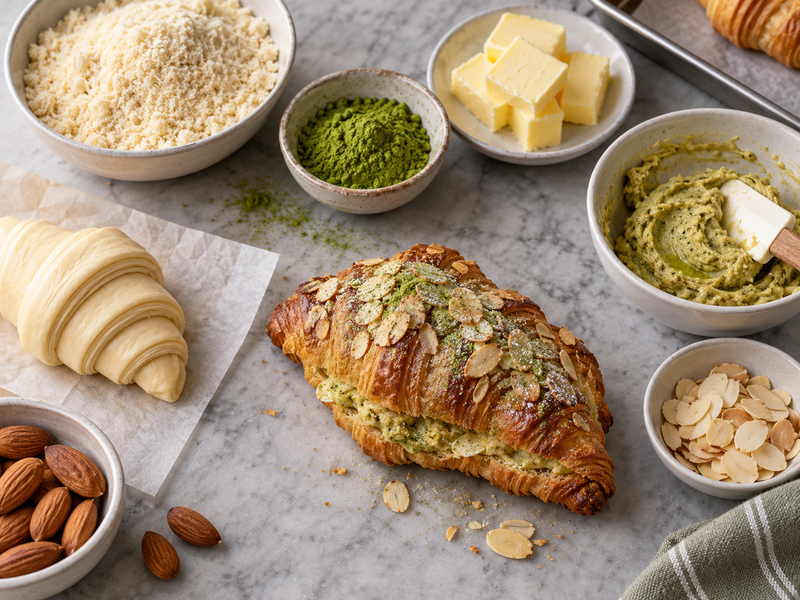
An almond croissant is typically a baked croissant opened, moistened with syrup, filled with almond cream and baked again. Matcha changes the filling rather than requiring a green laminated dough. That distinction makes this product useful for a bakery already buying or making plain croissants. It also gives the buyer a separate decision about tea powder: the matcha must taste clear through butter, almond and sugar after heating. In the reference recipe, matcha joins the frangipane, with sliced almonds on top. A commercial version can follow the same product logic without copying its formula.
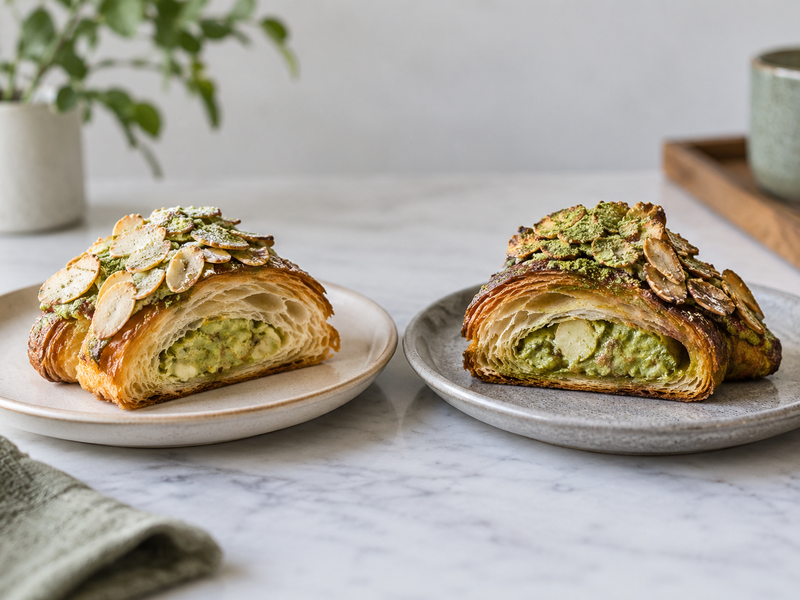
Start with the finished bite. Cut a cooled pastry through the center. Look for a visible but contained filling, crisp outer layers and a middle that does not taste raw. Ask tasters whether they identify almond, matcha and butter without seeing the label. If they only taste sweetness, adding a darker green dusting will not solve the formula. If matcha tastes harsh, changing the powder or amount may work better than adding more syrup. Record those observations before asking a supplier for a larger bag; they define what the powder must do in this specific application.
2. Which croissants work for a second bake?
Select by structure and moisture
A fresh, delicate croissant can collapse when sliced and loaded. A croissant that has dried too far may finish hard after another oven pass. Trial a consistent base: the same supplier, size, lamination style and age for every test. Teak & Thyme recommends day-old croissants for a home recipe because they absorb syrup and crisp during rebaking. For a bakery, that is a test hypothesis, not permission to use poor or mishandled stock. Your food safety plan still governs ingredient handling and sale periods; the FDA Food Code is a model for retail food practice in the United States, while local requirements vary.
Weigh a sample of ten unfilled croissants and note the spread, not only the average. If two sizes arrive in one case, a single filling portion will underfill one and burst another. Slice horizontally with a serrated knife, leaving a hinge if it helps staff align the halves. Check whether the crumb tears when opened and whether the top can support frangipane and almonds. For a chain, photograph one accepted base and one rejected base.
| Base check | Acceptable trial observation | Reason it matters |
|---|---|---|
| Weight spread | Narrow enough for one filling dose | Controls cost and overflow |
| Exterior | Flaky, not crushed or greasy | Survives handling and rebake |
| Interior | Slices cleanly without large voids | Holds filling evenly |
| Flavor | Butter and wheat remain clean | Matcha cannot hide stale notes |
3. How should a bakery build the frangipane?
Mix for piping consistency
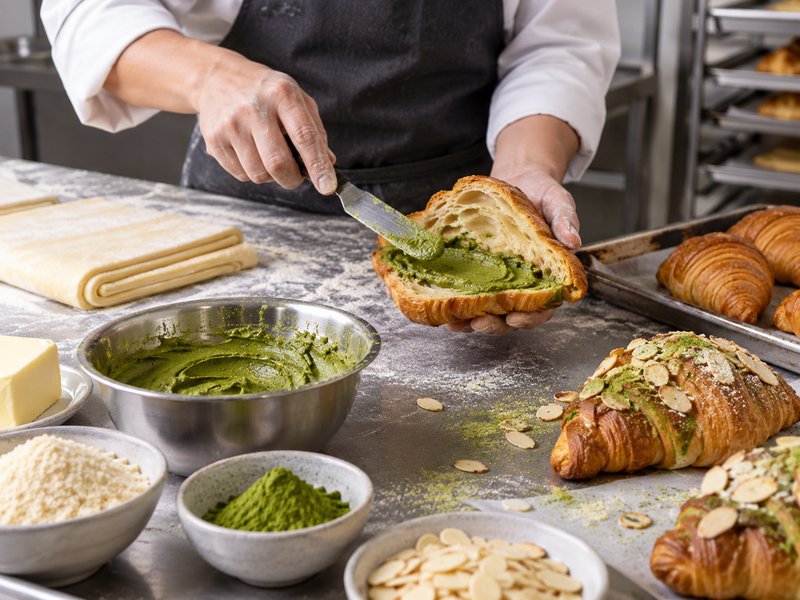
Frangipane combines almond flour, fat, sugar and egg into a cream that sets in the oven. Some bakeries use pastry cream in their almond cream; others do not. Choose one house definition before costing the product. For a first bench trial, make a small batch using your existing approved almond cream, then divide it into two equal bowls. Keep one plain as a control and add matcha to the other. This isolates the tea’s effect on stiffness, color and flavor.
A pipe test saves oven time. Chill both creams under the same conditions, pipe measured strips onto parchment and compare their shape after several minutes at room temperature. Matcha powder can thicken a cream, but an uneven addition creates dry green flecks. Sift it into a small amount of almond flour or sugar before mixing, or disperse it through an approved part of the formula. Avoid adding extra water merely to make the powder disappear; water changes baking behavior. Record mixing order, mixer speed, bowl temperature and final appearance so a second baker can reproduce the accepted batch.
| Formula variable | Trial record | Check after baking |
|---|---|---|
| Almond flour | Supplier and grind | Graininess and nut flavor |
| Matcha powder | Lot and grams per batch | Tea clarity and green color |
| Egg ingredient | Form and quantity | Set center and safe handling |
| Fat | Type and temperature | Spread and mouthfeel |
| Sugar | Amount and form | Sweetness, browning and cost |
4. How much matcha belongs in the filling?
Dose against the whole pastry
A teaspoon measure varies with powder packing and spoon shape. Weigh matcha for the bench trial, then calculate grams per pastry from the total filling yield. Test at least three doses around your current sensory target rather than choosing the greenest cream. A useful initial comparison might be a low, middle and high dose in otherwise identical frangipane. These are internal trial levels, not published universal ratios. Bake the samples on the same tray when possible and mark their positions with a diagram instead of color labels that may bias tasters.
Judge at the temperature customers will eat the pastry. Warm butter and chilled butter carry flavor differently, and heavy powdered sugar can obscure the tea. Taste a cross-section that includes shell, filling and topping. Record whether the matcha comes through as a clean tea note, a bitter edge or only color. For a B2B powder purchase, request the lot specification and sample, then repeat the chosen pastry formula with another lot if continuity matters. Japan’s MAFF description of matcha explains its tencha origin; a grade name alone does not predict how a powder performs inside almond cream.
5. How can staff assemble each pastry consistently?
Turn a bench sample into a station method
Set out the croissant base, syrup, piping bag, almonds and tray in the order staff will use them. Weigh the filled bag before and after a sample run to calculate actual deposited cream. Use a marked piping guide during training. Put most of the filling where a customer will cut or bite, and leave enough clear edge for the top half to settle without squeezing cream onto the tray. Use the same syrup application tool each time; a brush and a squeeze bottle can deliver different amounts.
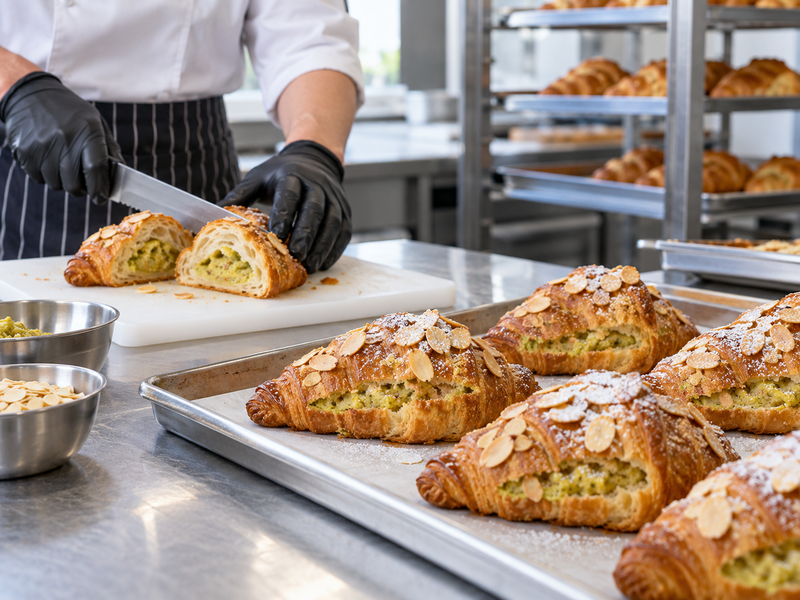
Check one tray before scaling. Assemble a short run, bake it, then score each pastry for overflow, exposed filling and almond adhesion. Photograph the worst and best examples. If only corner pastries overbake, the issue may be tray position rather than staff portioning. If filling leaks from every piece, reduce the deposit or tighten the cream before changing oven time. The acceptance sample should be based on a cut product and a taste panel, not only on the display-side appearance.
| Assembly step | Measured control | Visible rejection sign |
|---|---|---|
| Base selection | Approved weight band | Broken or flattened layers |
| Syrup | Deposited amount per pastry | Wet bottom after baking |
| Filling | Grams per pastry | Overflow or empty center |
| Almond topping | Coverage standard | Bare areas or loose nuts |
6. What should the second bake achieve?
Bake for a set filling and a crisp shell
The second bake has two jobs: set the egg-containing frangipane and restore crispness to the croissant. Surface color alone is unreliable because matcha can darken while the center still needs time. Establish an oven program by testing several pastries, cutting them after a short cooling period and noting the center texture. Use an appropriate probe or validated method when your food safety plan calls for it. Do not publish a universal time or core temperature without validating your exact formula, pastry size and local requirements. Document oven type, tray loading, rack position and starting pastry temperature.
Keep a plain almond croissant in the trial as a process control. If both plain and matcha versions are underbaked, adjust the oven or load. If only matcha filling spreads, investigate the powder addition and cream mixing. Cooling matters too: packaging a warm pastry traps moisture and softens the layers. Leave enough time for the structure to settle before transferring the product into a closed case or bag. The bakery can then define a genuine pass standard: no raw center, no wet base, a crisp exterior and a tea note that survives baking.
7. How should the pastry be held and displayed?
Decide the selling window with a real trial
Display conditions vary. An open bakery case, a heated cabinet and a sealed takeaway box change texture at different rates. Run the product through the actual service route: cool it, place it where it will be sold, sample it at opening, midservice and close. Record crispness, filling texture, aroma and appearance. A fixed “three-day shelf life” copied from a home recipe would not establish a safe commercial life. Ingredients, sanitation, temperature and packaging determine what a business may sell; follow the local food safety plan and validate any stated shelf period.
If reheating is part of service, test one written procedure with the equipment staff have. A brief oven refresh may restore pastry layers while a microwave can soften them; verify against your own croissant. Dusting after cooling can improve the initial display but leaves a powdery first bite if overdone. For packaged retail, test whether condensation clouds the window or makes almonds detach.
| Service condition | Trial question | Record |
|---|---|---|
| Open display | When does shell soften? | Time and sensory notes |
| Takeaway box | Does steam collect? | Box type and packing temperature |
| Reheat | Does filling dry or leak? | Device, setting and result |
| Transport | Do toppings survive? | Distance and damage count |
8. What should a production trial measure?
Score the pastry before discussing scale
Build a one-page scorecard with the attributes that determine whether this product belongs on the menu. Include size, shell crispness, almond flavor, matcha clarity, filling set, leakage, topping retention and appearance after display. Score several pastries from different tray positions. A single attractive sample can conceal an unstable batch. Ask a baker, a counter employee and a buyer to taste independently before discussion. Their jobs expose different faults: the baker sees assembly trouble, the counter employee sees handling trouble and the buyer sees cost or supply gaps.
Test a proposed matcha powder in at least two batches, using a fresh pack for one and a pack stored under your normal approved conditions for the other. Keep lot codes with scores and photographs. If a powder supplier offers different grades, compare them in the same finished pastry and calculate the cost per accepted unit. Ask for ingredient, allergen and lot documentation before a commercial order. The FDA’s food allergy information is relevant to US labeling; almonds, wheat, egg and milk in this pastry require careful control in the intended market.
9. How can a bakery calculate usable yield?
Cost the units customers can buy
Ingredient cost per mixed batch is only the start. Count croissants broken during slicing, pieces rejected for leakage, almonds spilled during topping and pastries unsold at the end of the approved selling period. Divide total ingredient and direct packaging cost by accepted sellable units, then add the labor and overhead method your business uses. This avoids the false economy of a cheap powder that needs a heavy dose or produces color complaints. Compare a plain almond croissant with the matcha version using the same croissant cost so the incremental tea, handling and waste remain visible.
Use your own numbers. Trial sheets should contain actual invoice prices, batch weights and accepted counts, not a market average found online. A bakery supplying several shops should test whether filling can be portioned centrally without separating or losing color before use. Do not assume a central-prep model works until transport and holding trials confirm it. A simple cost sheet makes the menu decision accountable to both product quality and cash margin.
| Cost line | Unit to capture | Common missed loss |
|---|---|---|
| Croissant base | Cost per usable piece | Breakage during slicing |
| Frangipane | Cost per deposited gram | Bag residue and overflow |
| Matcha | Cost per accepted pastry | Dose increase after tasting |
| Packaging | Cost per sold unit | Damaged or damp boxes |
| Unsold pastry | Count by service period | End-of-day disposal |
10. What belongs in a supplier and staff brief?
Send the same specification to both teams
A matcha supplier needs more than a request for “bakery grade.” Share the product format, intended filling, target tea flavor, pack size, expected monthly use and destination market. Ask for a representative lot sample, ingredient statement, storage guidance and relevant quality documents. Matcha Village offers culinary and other matcha grades plus application support; the practical first step is testing a lot in your almond cream rather than choosing from a grade label alone. Record the approved lot and a retained sample if your quality system allows it. Recheck a changed blend or packaging format before it reaches the bakery line.
Staff need a shorter version of the same brief: accepted croissant weight, syrup portion, filling grams, topping standard, oven program, cooling method, service window and reject examples. Put photos beside the written process. Then run a shift trial with a baker who did not develop the recipe. The matcha almond croissant earns its menu space through a clear tea note, a set center and a shell that stays pleasant until sale. Request powder samples against those criteria and approve the finished pastry, not the sales description.
Compare this filled version with our matcha croissants production guide.
FAQ
Q1: Can day-old croissants be used for a matcha almond croissant?
They can be a useful trial base if they were handled under the bakery’s approved food safety process. Judge dryness, slicing strength and the final second-baked texture.
Q2: Should matcha go into the dough or frangipane?
Frangipane is the direct route for this product. Matcha dough is a separate laminated-pastry development project with different process controls.
Q3: How should a bakery choose matcha powder?
Test representative lots in the actual filling. Compare tea flavor after baking, color, texture, documents and cost per accepted pastry.
Q4: Why does filling leak during the second bake?
Overfilling, loose cream, uneven portioning or an oven program that sets the filling too slowly can contribute. Change one variable per trial.
Q5: How long can a matcha almond croissant be sold?
Set a selling window through the bakery’s food safety plan and display trial. A home recipe’s storage note is not a validated commercial shelf life.