
Strawberry matcha ice cream has an appealing color contrast, yet fruit water, tea bitterness, freezing, and storage can change the dessert quickly. A sample scooped from a pilot machine may taste balanced while a production tub becomes icy or a strawberry ribbon bleeds into the green base. Dessert manufacturers and scoop-shop chains need a formula and process built for their equipment and route to sale. This guide covers component design, ingredient selection, swirl control, frozen texture, labeling, and commercial validation. The target is a product that tastes of both strawberry and matcha after it has spent real time in the freezer.
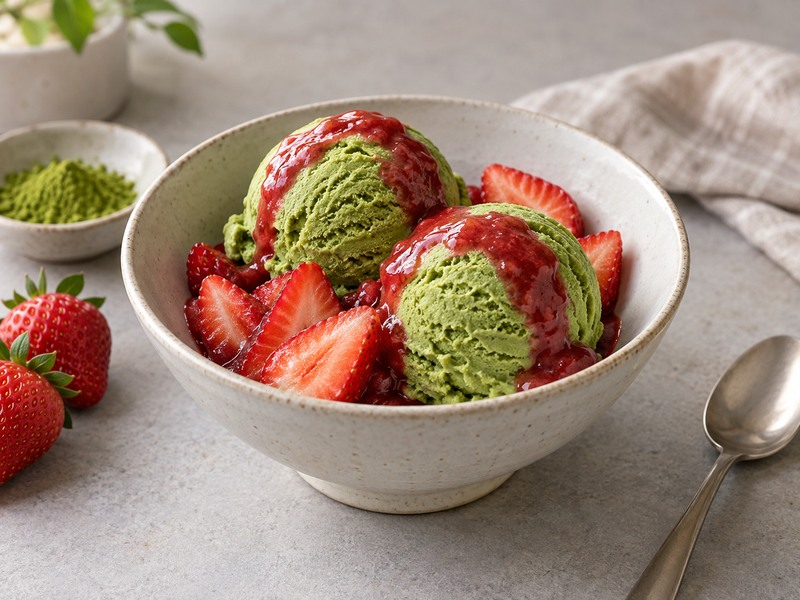
1. What form should strawberry matcha ice cream take?
Decide whether strawberry is blended into the base, added as pieces, or carried in a ribbon. Each creates a different flavor sequence and production challenge. A fully blended base may lose the visual contrast. Pieces can turn icy or hard when frozen. A ribbon can preserve distinct strawberry and matcha notes but needs controlled viscosity and dosage. Define the serving format too: scoop-shop pan, retail pint, foodservice tub, or individually packed bar. Package geometry and serving temperature alter the way customers see and taste the product.
How should a product brief describe the eating experience?
State the desired first spoonful, strawberry intensity, tea finish, sweetness, color contrast, and texture after storage. Taste a full scoop. A ribbon visible at the top may be absent near the bottom of the pan. Trial several scoop locations and record how often guests receive both flavors. Set a maximum acceptable amount of fruit streaking into the matcha base. For a chain, note whether the scoop should hold its shape in a display cabinet. For a retail pint, define the target after a typical home-freezer tempering period instead of judging only at the factory draw temperature.
| Format | Strawberry placement | Primary risk |
|---|---|---|
| Uniform base | Blended fruit | Weak contrast |
| Fruit pieces | Inclusions | Hard or icy bite |
| Ribbon | Variegate swirl | Uneven distribution |
| Layered bar | Separate layers | Adhesion and thaw |
2. Which matcha powder remains clear in a frozen base?
Cold and high fat can mute delicate tea aromas. Compare powders in the actual base rather than in water alone. A strong, rough powder may seem tolerable in a sweet pilot but leave a bitter finish after strawberry fades. Request lot-identified samples and test at fixed inclusion levels. Evaluate color after freezing, matcha identity in a mixed spoonful, sediment or graininess, and any grassy note that conflicts with fruit. A grade name does not predict performance in ice cream; use a written sensory range and a retained sample to control future lots.
How can a team keep the powder test fair?
Use one dairy or plant-based base, one strawberry component, and one freezing profile. Hold the fruit steady. If strawberry varies between trials, tea comparisons become meaningless. Blind-code tubs and taste after a defined hardening and storage interval. Score the matcha-only base as well as the complete dessert, since a flavorful strawberry swirl can hide defects in the green portion. Pure matcha gives developers control over sweetness and solids. If a premix is considered, include its sugar and other ingredients in the formula and labeling review.
3. How should the strawberry component be specified?
Fruit puree, prepared variegate, jam-like ribbon, and freeze-dried pieces have different water, sweetness, texture, and labeling profiles. Choose based on the desired eating experience and the process available. A fresh-fruit story cannot stand in for a supplier specification. Ask for fruit content, soluble solids or other relevant compositional data, ingredient declaration, allergen information where applicable, storage conditions, and lot traceability. Test the component after freezing. A strawberry sauce that tastes vivid at room temperature may become subdued or icy in a cold tub.
What should R&D measure during trials?
Record component dose by finished-product weight, viscosity or pump behavior, fruit distribution, color bleed, and taste across the tub. Sample the bottom. A large ribbon concentrated in the first few scoops creates uneven customer value. If pieces are used, check size and hardness after storage. If the product makes a “real strawberry” or fruit-percentage claim, keep formulation records that support the wording in the destination market. An added acid or flavor may balance the dessert, but it should be declared correctly and tested for its effect on matcha color.
| Strawberry format | Advantage | Control point |
|---|---|---|
| Puree | Direct fruit taste | Water and process fit |
| Prepared ribbon | Defined swirl | Dosage and distribution |
| Pieces | Visible fruit | Frozen hardness |
| Freeze-dried | Low added water | Rehydration and texture |
4. How do dairy and plant-based bases change the pair?
Milk fat, proteins, sugars, and stabilizers affect flavor release and scoop texture. A plant-based base may bring coconut, oat, or nut notes that shift the balance between fruit and tea. Develop against the actual base formula and verify allergens. A successful dairy version should not be copied into a plant-based line without trials. Strawberry acidity can also affect a milk system or the appearance of a swirl. The plant’s process, including heat treatment and homogenization where used, must be reflected in the test.
What is the right comparison set?
Make a matcha base without strawberry, the strawberry component without matcha, and the complete dessert. Separate the causes. If the final product tastes flat, determine whether cold muted matcha, fruit was underdosed, or the base was too sweet. Record draw temperature, overrun or air incorporation under the site’s method, hardening, and tasting temperature. For a scoop chain, compare the same recipe in each display cabinet type. If the product is private label, both supplier and brand need to agree which party owns formula adjustments when a base ingredient changes.
5. How can a ribbon stay visible and evenly distributed?
Variegate performance depends on viscosity, temperature, pump setting, and how it enters the frozen base. Too fluid and it smears green; too thick and it forms isolated pockets. Run a line trial with the intended equipment and pack. Sample product from the beginning, middle, and end of filling, then cut or scoop through different depths after hardening. A top photograph may conceal an empty center. Set an acceptable distribution range and a visual reference that represents normal commercial output, not the prettiest prototype.
Which process records help diagnose uneven swirl?
Log strawberry dose, component temperature, pump speed, base flow, fill weight, and container position. Cut the whole tub. If fruit sinks or clusters, change one process variable at a time. Recheck flavor and texture after any adjustment. A more concentrated ribbon may improve pattern but make individual bites too sweet. For pints, a spiral that looks good at filling may appear different after transport and scooping. Packaging claims should describe the real distribution rather than imply every spoonful contains identical amounts of both flavors.
| Swirl fault | Likely check | Action to trial |
|---|---|---|
| Blurred color | Ribbon viscosity | Adjust component or feed |
| Fruit pockets | Pump and line timing | Improve distribution |
| Weak lower tub | Filling profile | Sample full depth |
| Icy fruit | Water and storage | Reformulate component |
6. What freezing variables affect texture and color?
Freezing and hardening change ice-crystal structure and the way tea and fruit taste. Record the actual line settings, draw condition, hardening path, and storage temperature under the plant’s procedures. In a scoop shop, repeated cabinet openings and temperature fluctuation can damage texture. A retail pack may travel through several warehouses before sale. Color should be checked at the customer serving point; a green base can look different under case lighting or after a partially melted surface refreezes. Avoid adjusting matcha dose solely to fix an equipment-driven texture issue.
How should a team test abuse realistically?
Include a controlled distribution simulation and compare with properly stored controls. Follow the cold chain. Note iciness, freezer burn, fruit bleed, shrinkage, and tea aroma after the proposed life. Do not use an arbitrary room-temperature hold as a substitute for a validated safety and quality study. The quality team should define microbiological and process controls appropriate to dairy or non-dairy frozen dessert. If a scoop-shop chain receives foodservice tubs, train staff on opening, display, and discard rules so the study’s conditions match store practice.
7. What makes this product different from plain matcha ice cream?
Strawberry adds acid, color, water, and an expectation of fruit flavor. That changes formulation, line cleaning, and label review. A plain matcha base may need less sweetness than the combined product; a strawberry ribbon may supply enough sugar that the base should be less sweet. Test that balance in a complete scoop. If strawberries are added as pieces, distribution can become uneven and the package may need a clear statement about inclusions. A product developer should not assume that success with matcha ice cream automatically covers a strawberry version.
How should a brand distinguish the SKU?
Choose one lead promise that the product can deliver: bright fruit against tea, a creamy matcha base with strawberry ribbon, or a layered dessert. Describe the spoonful. Avoid claims about wellness or “antioxidant power” that do not belong to a dessert specification. A café menu can describe taste and components plainly. A retail brand should check whether a photo shows the normal fruit distribution. Run a small customer test at the intended serving temperature and packaging format; preference for a freshly made scoop may not carry into a pint stored for weeks.
8. How should shelf life be established?
The date belongs to the finished packed dessert. Study flavor, color, fruit distribution, ice-crystal perception, package integrity, and safety measures over the intended frozen life. Use the actual package, fill, process, and route. A supplier’s matcha shelf life or strawberry component date cannot be transferred to the combined product. If a retail pint is sold with a paperboard container, test odor transfer and lid fit. If a bar is dipped or coated, include coating defects and layer adhesion in the acceptance criteria.
Which samples should quality retain?
Take units from multiple points in the commercial run and from several positions in hardening. Keep a normal unit. A hand-selected showcase pint may not represent production variance. Photograph color under fixed light at each time point and taste after a defined tempering method. If the formula or pack changes, decide which parts of the study must be repeated. A claim that a frozen product remains “fresh” needs careful wording; quality approval should rest on documented criteria and market rules rather than a marketing adjective.
| Shelf-life attribute | Test at each interval | Customer effect |
|---|---|---|
| Tea flavor | Prepared sensory panel | Product identity |
| Fruit texture | Scoop and bite | Iciness |
| Swirl | Cross-section review | Visual promise |
| Package | Seal and odor | Saleability |
9. How should cost and sourcing be compared?
Calculate ingredient cost per saleable unit using actual matcha dose, fruit dose, base, pack, filling loss, and rejected tubs. Premium matcha may not improve a fruit-heavy formula enough to justify its price; a weak powder may require more grams. Compare candidates at equal sensory targets. Fruit availability and quality can vary by season, so agree on component specifications and a change process. A manufacturer making several flavors may gain efficiency from a shared base, but it still needs a separate strawberry-matcha validation.
What should a supplier brief include?
For matcha, specify the frozen application, target color and flavor, pack size, forecast, origin and certification requirements, and lot documentation. For fruit, specify format, sugar, composition, and processing fit. Price the whole tub. Freight and frozen distribution can outweigh a small saving on powder. If a backup matcha source is needed, qualify it in the same complete recipe and shelf-life conditions. Keep bulk wholesale matcha conversations tied to the approved specification, not a general grade name.
| Sourcing line | Compare on | Approval evidence |
|---|---|---|
| Matcha | Dose per saleable tub | Frozen sensory trial |
| Strawberry | Fruit content and yield | Filled-tub distribution |
| Frozen transport | Delivered cost and damage | Route pilot |
10. When is strawberry matcha ice cream ready to launch?
Approve a normal production unit after the full distribution and storage test, not a pilot scoop. The sign-off should include sensory reference, swirl range, texture, safety controls, label, date, and cost. Test the product through the actual scoop shop or retail channel. Staff may need serving-temperature and handling instructions so fruit and matcha remain visible and pleasant. A limited pilot can reveal whether customers taste both flavors and whether the extra process complexity earns its place in the range.
What should change control cover?
Name the suppliers and approved specifications for powder, fruit component, and base. Protect the reference tub. A new fruit crop, matcha lot, stabilizer, or packaging material can change the finished product. Require notice, compare against a retained sample, and repeat relevant line or shelf-life tests. A good strawberry matcha ice cream should make a coherent spoonful throughout the tub, with documented controls that let the next run taste like the approved one.
FAQs
Q1. Can fresh strawberries be added directly? They need a controlled process and frozen-texture trial; untreated pieces may become hard or icy.
Q2. Which matcha grade is best for ice cream? Test identified powders in the complete frozen base and fruit format, then compare flavor and cost.
Q3. Why did the strawberry swirl disappear? Review ribbon viscosity, temperature, dosing, and filling path across the entire tub.
Q4. Can a dairy recipe become plant-based by swapping milk? It needs a separate formulation, allergen review, process trial, and stability study.
Q5. How is shelf life set? Study the finished product in its actual package and distribution conditions under a documented quality plan.