
A strawberry matcha cake can look striking on a display shelf, yet the same layers create several production risks. Strawberry releases moisture into sponge; matcha color can dull during baking; cream can collapse before the final slice sells. A bakery chain or private-label manufacturer must decide how the product will be assembled, stored, transported, and cut before locking its recipe. This guide maps the tests that turn a showpiece into a reliable SKU. It covers tea powder, fruit format, sponge, filling, layer stability, labeling, shelf life, and the cost of saleable portions.
1. What kind of strawberry matcha cake is being sold?
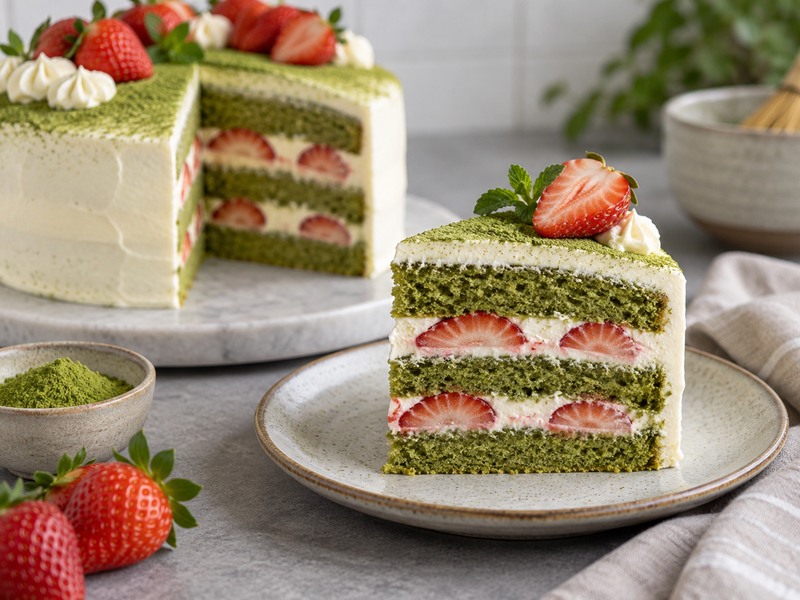
Start with the architecture: matcha sponge and strawberry filling, strawberry sponge with matcha cream, or alternating layers. Decide whether the cake is a whole celebration item, a pre-cut café slice, a chilled packaged piece, or a frozen foodservice product. Each route has different handling and shelf-life needs. A tall cake that photographs well may be hard to transport and cut. A small slice must show enough fruit and green cake to deliver the menu promise. Define the intended customer serving size and the visual target for an ordinary piece, not the center slice chosen for a photo.
How should the development brief be written?
List target tea intensity, strawberry character, sweetness, sponge texture, cream firmness, slice weight, number of layers, and display time. Start at the cut face. The customer usually sees a slice, so check whether fruit and matcha are distributed across it. A reference photograph can guide assembly, but record measurable layer thickness and filling weight too. A chain may need a shorter cake with better transport yield; a pâtisserie may choose more labor for a signature item. The brief should name the channel and price point before the team selects a powder or fruit component.
| Product format | Main design pressure | Approval sample |
|---|---|---|
| Whole cake | Transport and presentation | Delivered cake |
| Café slice | Cut consistency | Normal display slice |
| Packaged piece | Seal and condensation | Packed aged unit |
| Frozen slab | Thaw behavior | Post-thaw slice |
2. Which matcha belongs in the sponge or cream?
A powder that tastes good in water may change after baking or when mixed into cream. Screen candidates in the actual component where they will be used. Sponge needs enough tea flavor and color after heat; cream needs smoothness and a clean finish under refrigeration. One powder may work for both, but do not assume it. Request identified samples and specifications, then compare them at fixed doses. If the cake is sold as a premium matcha item, the tea must remain identifiable after strawberry and sugar enter the bite.
How can a buyer keep powder trials focused?
Make a plain sponge control and a cream control, then test two or three powders in one component at a time. Separate the layer tests. A bright cream can disguise a dull sponge. Taste each component and a complete slice after the planned hold. Record matcha grams per cake and per portion, color, aroma, bitterness, and texture. Compare the actual cost per saleable slice. Pure matcha lets the pastry team control sugar in sponge and cream separately. A sweetened blend may complicate that balance and change the ingredient declaration.
3. How can the sponge stay green and soft?
Tea color and crumb texture depend on powder, formula, mixing, pan depth, bake profile, and storage. Set a sponge target after cooling, since raw batter may look much greener. Record oven loading and sample cakes from several positions. A longer bake can dry edges and dull color, but shortening it without confirming a safe, stable endpoint is not a solution. If matcha replaces part of the flour, account for changes in dry solids and moisture balance. A sponge that is tender alone must also support the weight of fruit and cream.
What should a production trial measure?
Measure batter deposit weight, baked height, shrinkage, crumb moisture or a practical texture check, and cut quality. Inspect the bottom layer. It carries the load and may compress under filling. Photograph color under fixed lighting after cooling and after the display interval. A factory oven may have a different profile from a test kitchen, so approve the plant cake rather than just the pilot. If the cake is frozen, test sponge softness after thawing and during display. The matcha cake category may help position the ingredient, but your own line result defines the recipe.
| Sponge variable | Record | Failure to watch |
|---|---|---|
| Matcha dose | Grams per batch | Weak flavor or bitterness |
| Deposit | Batter weight and depth | Uneven layers |
| Bake | Endpoint and position | Dry edge, dull color |
| Cooling | Time and condition | Condensation or collapse |
4. Which strawberry format avoids a wet cake?
Fresh slices offer clear fruit identity but release moisture and vary by season, size, and ripeness. A compote or prepared filling can be more controlled, yet its sugar and acidity change the cake’s taste and label. Freeze-dried fruit gives another texture and a different customer expectation. Select the format according to the product’s life and handling route. Place fruit on the cake, refrigerate it under intended conditions, and inspect the interface after the proposed sales interval. A slice that looks clean at assembly may become wet by the next day.
What should the fruit specification include?
For fresh fruit, define size, ripeness, trimming, sanitation, and rejection criteria under the bakery’s food safety program. For prepared filling, request composition, storage, ingredient, allergen, and microbiological information as appropriate. Measure the fruit. An uncontrolled handful per layer changes water load, height, and cost. Record the weight and distribution per cake. If the brand claims fresh strawberries, confirm what the formula and supply route actually support. A seasonal substitution should be tested in a full cake before stores receive it, particularly when fruit moisture changes.
5. How should cream or frosting support the layers?
The filling must taste balanced with matcha and strawberry and remain stable at the intended storage temperature. Whipped cream, buttercream, and other systems differ in sweetness, firmness, allergens, and cold-chain needs. A light cream may suit a same-day café cake but fail during transport. A firmer frosting can protect structure while dominating the tea flavor. Trial the complete slice after refrigeration or thawing, not merely the filling in a bowl. Check whether a matcha cream becomes speckled or gritty and whether a strawberry filling bleeds into it.
What makes a filling serviceable?
Specify filling weight per layer, deposit method, finished height, and maximum assembly time. Watch the edges. Filling that bulges during slicing or delivery creates waste and an inconsistent portion. Test the cake at the warmest permitted display condition under the quality plan. If a stabilized cream is used, review the full ingredient list and labeling impact. Train assemblers to spread it consistently rather than correcting low spots with extra material. A filling specification should describe both its taste and its ability to hold the cake through the actual sales route.
| Filling choice | Strength | Validation need |
|---|---|---|
| Whipped cream | Light taste | Cold-chain stability |
| Buttercream | Firm structure | Sweetness balance |
| Fruit compote | Clear fruit note | Moisture migration |
| Matcha cream | Green visual layer | Powder dispersion |
6. How can layers be assembled and cut consistently?
Set a build order that keeps fruit and cream from soaking or sliding against the sponge. Use measured layer weights and an assembly guide. Chill or rest the cake only as validated; a long hold may help cutting but also permit moisture migration. Test the knife, cutting temperature, and target piece size. Portion yield is part of the product economics. A tall cake with uneven layers may produce attractive first slices and crushed final pieces, reducing the number that can be sold.
How should an assembly trial be audited?
Photograph several ordinary cakes from different operators before selecting a reference. Count the sellable slices. Record trimming, broken pieces, smear, and portion weight variance. Evaluate the first, middle, and last slice. If fruit pieces pull through the cream during cutting, adjust their size or placement and retest flavor. For packaged slices, inspect film or lid contact and whether cut faces weep. A chain commissary should verify that assembly methods and portion tools can be trained without relying on one expert decorator.
7. What cold-chain and shelf-life work is required?
The finished cake may contain dairy cream and fresh fruit, so food safety controls belong to the complete formula and its distribution route. Quality should define storage, handling, microbiological assessment where needed, and the evidence for the proposed date. Evaluate tea flavor, fruit texture, cream stability, sponge moisture, color, and package condensation through the intended life. The matcha ingredient’s shelf life does not establish the cake’s date. A chilled cake, frozen cake, and room-temperature display slice need distinct decisions.
Which samples should enter the study?
Take normal production cakes, including ones assembled late in the run, and follow the proposed transport and store handling. Test the displayed slice. A whole cake in a cold room may behave differently after cutting in a café case. If frozen distribution is planned, assess freezing, thawing, and post-thaw holding as a sequence. Record any temperature excursion and do not use a good laboratory sample to excuse a weak real route. Packaging and instructions should match the conditions used in the approved study.
| Shelf-life stage | Inspect | Decision |
|---|---|---|
| After assembly | Layer alignment | Build release |
| After transport | Sliding and damage | Pack design |
| During display | Moisture and cream | Sales window |
| End of life | Flavor and safety criteria | Date approval |
8. How should ingredient claims and allergens be handled?
Matcha, flour, eggs, dairy cream, fruit filling, and decorations all belong in the final ingredient and allergen review. A prepared strawberry component may add ingredients the pastry team did not use in its pilot. If a menu claims a specific tea origin, keep lot-linked documents. If it says “fresh strawberry,” verify the product and supply plan. Do not attach health claims to a cake because it includes matcha. Private-label teams should check destination-market wording before printing packs, especially where a cake is distributed across borders.
What changes require label review?
A new fruit filling, cream base, powder, decoration, portion size, or manufacturing site can alter the approved facts. Compare formula and artwork. Keep a controlled version of each so procurement substitutions cannot enter production without review. If a cake is described as vegetarian, gluten-free, or otherwise suitable for a dietary need, assess every component and cross-contact under the relevant market rules. Store staff need a reliable ingredient card for allergy questions; an online description that omits a decoration or premix is not sufficient.
9. How can buyers calculate cost per sellable slice?
Cost the full cake, including matcha, fruit, filling, sponge, packaging, labor, trim, damaged units, and cold distribution. Divide by saleable pieces, not by the ideal number drawn on a portion chart. Premium powder may be justified if customers clearly taste the improvement; it may be wasted if strawberry filling dominates. Compare candidates at matched sensory performance. Seasonal strawberry pricing and yield can shift the margin, so include a realistic high-cost scenario before setting a year-round selling price.
Which pilot metrics are worth tracking?
Measure prep time, completed cakes per shift, portion weight, reject reasons, case damage, sell-through, and customer comments. Watch the unsold last slice. It often reveals the shelf-life and display weakness that a launch tasting misses. If cutting labor drives cost, a smaller individual cake may be preferable. If a shelf-ready slice sells faster but needs expensive packaging, calculate the full net effect. Keep powder lot and fruit supplier tied to each pilot so a change in taste can be traced to ingredients rather than guessed at.
| Cost line | Basis | Hidden loss |
|---|---|---|
| Matcha | Grams per cake | Mixing residue |
| Strawberries | Usable fruit weight | Trimming |
| Slices | Accepted portions | Smear and breakage |
| Distribution | Delivered unit | Cold-chain damage |
10. When is a strawberry matcha cake ready to launch?
Approve the normal saleable cake after production, packing, transport, display, and cutting trials. The sign-off should name the powder and fruit specifications, reference flavor, layer dimensions, portion yield, label, date, and storage instructions. A few stores can pilot service and identify whether the cake survives real handling. Revise one variable at a time and retain photographs and samples under controlled conditions. The next production run should be judged against the same standard, not a memory of the best pilot cake.
What belongs in the supplier handoff?
Tell a matcha supplier whether powder goes into sponge, cream, or both; specify volume, pack, destination, and required documentation. Test the component that matters. A powder chosen for green sponge may not be the best one for smooth cream. Request identified lots and change notification. For fruit and dairy components, agree on composition and seasonality plans. A cake can earn its display space when ordinary slices look and taste like the product the menu promises, with enough shelf life and margin for the bakery to repeat it.
FAQs
Q1. Can the same matcha be used in sponge and cream? Possibly, but test flavor, color, and texture separately in each component.
Q2. Why does the cake turn wet? Fruit water, filling placement, storage, and packaging can move moisture into the sponge.
Q3. Can strawberry matcha cake be frozen? It can be developed for frozen distribution after thaw, texture, safety, and display validation.
Q4. What makes portions inconsistent? Uneven layers, variable fruit weight, soft filling, and cutting temperature can all affect yield.
Q5. What sets the best-before date? A study of the complete cake in its intended package and sales route, approved by quality.