
A chocolate matcha latte combines two powders that can clump, settle, and compete for flavor. A sweet cocoa syrup can hide a weak matcha; a strong matcha can make an unsweetened cocoa drink harsh. For a café chain or beverage brand, the product needs a defined tea-to-chocolate balance and a method staff or equipment can repeat. This guide covers ingredient selection, mix order, hot and iced service, milk options, visual design, costing, and the extra tests needed for a ready-to-drink line. It treats the finished cup as the standard, rather than either powder in isolation.
1. What should a chocolate matcha latte deliver?
Decide whether the menu promise is a chocolate drink with a tea finish or a matcha latte with cocoa depth. Both can work, but the name and customer expectation should agree with the cup. Write targets for chocolate aroma, recognizable tea flavor, sweetness, bitterness, mouthfeel, color, and serving temperature. A layered drink can show both components at handoff, yet guests often stir it. Taste the mixed version after the expected wait. A drink that tastes good only in its first unmixed photograph is not a strong menu candidate.
How can a team build a reference cup?
Prepare a matcha-only latte, a cocoa-only drink, and a combined candidate using the same milk and cup size. Start with the two controls. Tasters can then tell whether the combined drink retains both flavors or merely becomes sweeter. Record a target score for each attribute and keep an approved recipe sheet. For a chain, have several baristas make it without coaching; their cups expose ambiguous pump or scoop instructions. For a packaged product, the reference should be a production pack tasted after processing, since heat and storage can change the profile.
| Target | Test question | Common failure |
|---|---|---|
| Tea identity | Is matcha recognizable? | Cocoa hides it |
| Chocolate | Does cocoa taste clear? | Tea bitterness dominates |
| Sweetness | Is balance intentional? | Syrup overload |
| Texture | Is each sip smooth? | Powder sediment |
2. Which chocolate format suits the operation?
Cocoa powder, chocolate sauce, and a formulated chocolate base differ in sugar, fat, labor, and label consequences. Cocoa powder provides control over sweetness but needs proper dispersion. Sauce is convenient for a café but can vary by pump and may contribute more sugar than the recipe team expects. A chocolate base may fit bottled production, subject to processing and shelf-life tests. Compare options in the same serving size and calculate total cost, including any sugar or stabilizer they replace. The cheapest kilogram can make a more expensive drink if it needs a high dose or creates waste.
What should procurement collect before tasting?
Ask for an ingredient statement, allergen declaration, cocoa content or relevant compositional details, pack size, storage guidance, and change notice. Read the whole label. A sauce sold as “dark chocolate” may already contain sweeteners or dairy that affect menu claims. If the chain offers a lower-sugar version, the chocolate format must allow it. For an iced product, test whether the chosen format mixes into cold liquid under store conditions. For a hot cup, check whether sauce coats the vessel or leaves a heavy bottom layer. Ingredient choice is a workflow decision as much as a flavor decision.
3. Which matcha works beside cocoa?
Cocoa can mask delicate tea aroma, while a highly astringent matcha can make the drink taste sharply bitter. Request lot-identified powders and compare them at a fixed dose in the complete recipe. Check color too, but do not use green intensity as the sole selection criterion: chocolate may make the drink olive or brown regardless of powder brightness. Compare dry aroma, first sip, mixed middle, and final sip. An expensive plain-drinking powder is worthwhile only if customers can detect its improvement in this application.
How should the matcha trial be scored?
Blind-code candidate cups, hold chocolate and milk constant, and taste at both fresh service and after a realistic wait. Taste beyond the top layer. Powder that floats attractively can leave grit underneath. Record matcha grams per cup, tea strength, bitterness, sediment, color, and cost. Keep a retained reference from the accepted lot so future shipments can be checked. Pure matcha lets the brand adjust sweetness separately; a matcha latte powder may simplify service but requires its premix ingredients to be included in the formula and allergen review.
| Matcha decision | Evidence | Why it matters |
|---|---|---|
| Dose | Weighed recipe | Flavor and cost |
| Sensory fit | Blind finished-cup test | Cocoa balance |
| Particle behavior | Timed cup inspection | Last-sip quality |
| Lot continuity | Specification and retain | Repeat orders |
4. How can staff mix both powders without lumps?
Matcha and cocoa need sufficient wetting and mixing energy. One workable approach is to disperse them separately in measured liquid before combining; another may use a validated dry premix. The chosen method should fit station equipment and speed. Dumping both dry powders onto ice can form pockets that a quick shake misses. Specify liquid volume, temperature if relevant, mixing tool, sequence, and final dilution. Check the last sip as well as the first because settling can make the bottom gritty or bitter.
What should a busy-shift trial reveal?
Have several operators make consecutive drinks using only the station card. Watch the hands, not the demonstration. Record preparation time, clump rate, spills, and whether staff add unmeasured liquid to rescue a thick base. If a blender produces the best pilot, account for cleaning time and noise during service. A premade chocolate base might save a step, but its holding rule and pump output need validation. In a factory, mixing order and shear can affect suspension and line fouling; use the actual process equipment before approving a bottled formula.
5. Do hot and iced versions need separate recipes?
Hot milk, ice, and dilution change perceived sweetness and bitterness. A fixed powder dose in two cup sizes rarely produces the same drink. Develop each version with named final volume, liquid temperature, ice weight or fill, and service delay. A hot version may release more tea and cocoa aroma while a cold version can feel sweeter or more muted depending on ingredients. If the menu sells both under one name, the sensory profile should be recognizably related, not necessarily numerically identical.
How can a chain compare the two formats?
Make each to its proposed station recipe, then taste blind at actual serving temperature. Measure the melted ice. An iced latte that is balanced at handoff may become weak on a customer’s walk. A hot drink held under a lid may change aroma and foam before it is consumed. Document separate syrup or cocoa doses if needed. Provide two station cards rather than a verbal “make it hot.” Iced matcha tea can inform broader serving choices, but the chocolate product requires its own finished-cup trial.
| Format | Control | Evaluation point |
|---|---|---|
| Hot | Milk temperature and final volume | Under lid after service delay |
| Iced | Ice mass and pour order | After partial melt |
| Blended | Blender time and ice size | Immediately and after hold |
6. What happens when dairy or plant drinks change?
Milk bases contribute their own sweetness, fat, protein, color, and flavor. A chocolate matcha latte made with one oat drink may taste unlike the same recipe made with dairy or another oat brand. Test the primary base first, then evaluate each menu substitute at equal ingredient doses. Decide whether it needs a separate recipe. Ingredient changes can also affect allergens and nutrition information. A packaged version requires more than a taste test: process stability, sediment, microbiology, and labeling must be reviewed in the final pack.
What should alternative-base trials record?
Record supplier SKU, serving temperature, foam or body, cocoa dispersion, tea identity, and the appearance after waiting. Treat each base as an ingredient. Do not write “any milk” on a chain card if one base separates or hides matcha. If a plant-based option tastes naturally sweeter, reducing syrup may preserve balance. If that adjustment changes the visual layers, test presentation too. Cross-contact procedures must match the operation’s food safety plan. For private label, the final formula and supplier declarations should drive the ingredient and allergen statements.
7. Can a layered presentation stay honest to the flavor?
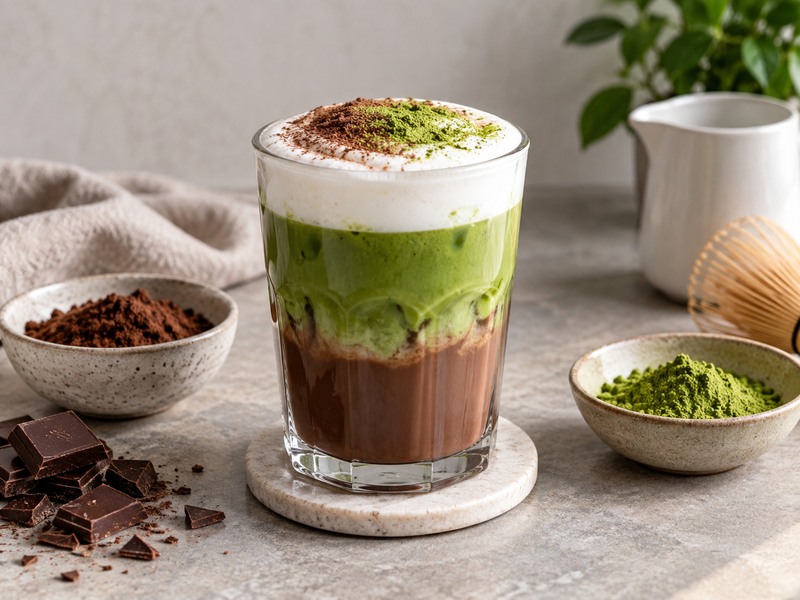
A chocolate layer and green matcha layer can create strong menu imagery. Density, pour order, ice, and time affect the boundary. Decide whether customers should stir, sip through layers, or receive a fully mixed drink. A layered cup can taste like chocolate first and matcha last; that may be intentional, but describe and test it. If the layers merge quickly, the final mixed color and flavor need to meet the target. The team should photograph the product at handoff and after a normal wait, not only seconds after assembly.
How should stores reproduce the look?
Specify vessel size, ice fill, liquid volumes, pour order, and whether a separate prepared matcha base is used. Test a real queue. A technique that works in a quiet studio may fail at a busy café where drinks wait before collection. Avoid pouring hot matcha over cold chocolate unless the resulting temperature and dilution have been tested. If decorative chocolate drizzle is used, measure it; it changes sweetness and cost. Train with an acceptable visual range rather than one perfect photograph that operators cannot reliably match.
| Presentation | Benefit | Operational check |
|---|---|---|
| Layered | Distinct visual identity | Stability during wait |
| Fully mixed | Consistent sip | Color and suspension |
| Chocolate drizzle | Dessert cue | Dose and cup mess |
8. What does a bottled chocolate matcha latte need?
A ready-to-drink formula must retain flavor, safe quality, and acceptable appearance through processing and distribution. Matcha particles and cocoa solids may settle at different rates. Dairy or plant proteins can change under heat. Package oxygen and light may affect color and aroma. Set a finished-product stability protocol with defined time points and acceptance criteria. Use the actual production process and pack; a blended café sample is only an initial concept. Quality should determine the safety tests appropriate to the formulation and intended market.
Which prototype questions should be answered before scale-up?
Can the line mix and fill the formula uniformly? Does the first bottle match the last? Does the drink separate within its intended life, and can a customer reasonably remix it if instructions say so? Inspect the whole run. Sample bottles from start, middle, and end, then check them at storage conditions that reflect the distribution route. If a stabilizer or sweetener changes, repeat relevant tests. Labels should describe the actual ingredients and any claims should be checked against the final formula and supplier records.
9. How should the product be costed and described?
Cost the matcha, chocolate system, milk, sweetener, packaging, labor, and waste per sold unit. Account for extra preparation time or cleaning if two powders are dispersed separately. Compare powders at doses that reach the same finished-cup target. A lower purchase price can disappear if staff use more grams to make the tea noticeable. Menu copy should state the drink plainly and avoid health promises. If the product includes syrup or a premix, do not call it unsweetened without reviewing the full formula.
What should a pilot measure beyond sales?
Track remakes from clumps, customer requests for less sweetness, slow station times, and ingredient variance. Watch the bottom of returned cups. Repeated sediment or uneaten powder is more informative than a good launch photograph. Ask customers whether they taste both chocolate and tea. For a packaged product, log returns tied to separation or color. Keep the recipe version and ingredient lots attached to pilot results. Cost changes should be evaluated against those observations so a margin improvement does not quietly remove the flavor customers came for.
| Cost or claim | Evidence | Owner |
|---|---|---|
| Matcha per cup | Weighed recipe and usage | Operations |
| Chocolate cost | Supplier SKU and dose | Procurement |
| Nutrition | Final formula | Regulatory |
| Menu description | Reference cup | Product team |
10. When is the drink ready for rollout?
Approve a reference cup or production pack with measured doses, named ingredients, a timed sensory test, and a realistic operating method. Train more than one barista and test at a busy period. For a bottled line, complete the process and stability work. Procurement should secure specifications and change notification for both powders; quality should approve the claims and food safety plan. Keep a reference sample and versioned recipe so a future supplier change triggers comparison rather than a silent flavor shift.
What should the supplier brief ask for?
State hot or iced use, milk base, sweetness, cup size, expected volume, destination market, and the tea profile the chocolate must not hide. Request identified matcha lots, pack options, and required documents. Approve the mixed drink. A powder that wins alone may lose in the complete formula. Once the team can repeat flavor, texture, and cost through a full shift, the menu has a credible product rather than an attractive one-time experiment.
FAQs
Q1. Is chocolate matcha latte usually very sweet? It need not be. Sweetness depends on cocoa format, milk, syrup, and the chosen sensory target.
Q2. Can cocoa and matcha be mixed dry? They can be part of a validated premix, but the final process must prevent lumps and uneven servings.
Q3. Should hot and iced drinks use identical doses? Test them separately because temperature, ice, and final volume change perception.
Q4. Why does the drink settle? Matcha and cocoa contain particles. Dose, mixing, base, and hold time affect what reaches the last sip.
Q5. Can this be sold ready to drink? Yes, after production-scale safety, physical stability, sensory, package, and label validation.