
Strawberry matcha cookies combine tea flavor with a fruit note in one bakery item. The pairing gets harder once a bakery has to hold color, texture and portion weight across a full tray, then keep the cookie appealing in a case or wrapper. A practical launch begins with one defined format, a written formula and a trial through the actual sales route. Bakeries can then judge a cookie after cooling and holding, where moisture migration and broken edges become visible.
For: commercial bakeries, café groups and snack brands. Decision: which cookie format can be made and sold consistently.
1. What should strawberry matcha cookies taste and feel like?
Define the bite before choosing ingredients
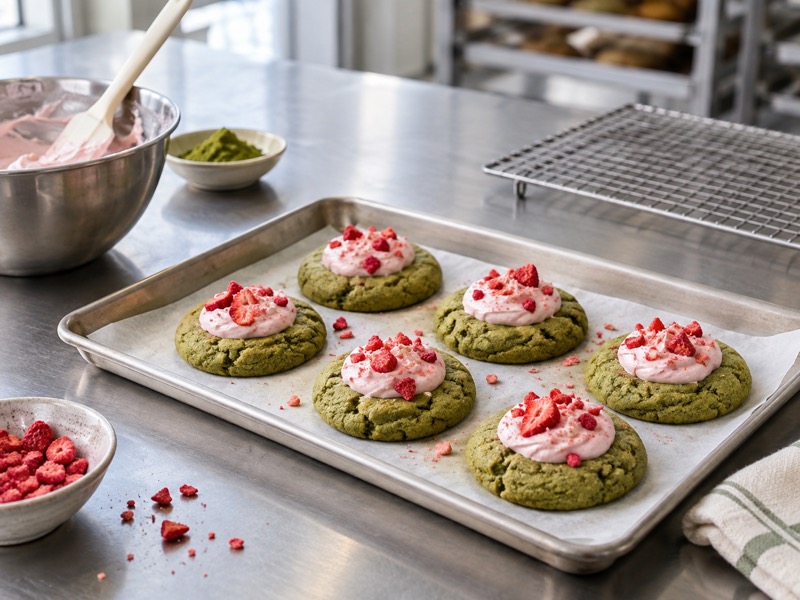
Decide whether customers should meet strawberry in the first bite, as a filling at the center, or as a light finish over a tea-forward cookie. Those choices create different products. A matcha dough with freeze-dried strawberry pieces can stay relatively dry, while a jam center brings fruit intensity and a soft contact zone. A frosted cookie offers a visible pink surface but depends on careful display and handling. Write down the desired edge, center and finish in ordinary terms: crisp edge, tender middle, recognizable tea aroma and fruit that does not taste artificial. Taste the whole unit, including any white chocolate, because sweetness can erase the tea. One useful check: ask tasters to describe the fruit and tea without showing them a product name. If they can identify only sugar or color, the formula needs work. Keep a retained sample and photographs under consistent light. Photographs help track appearance, though they cannot replace a bite taken at the intended sale time.
A bakery should settle the format before trying to solve every weakness with more matcha. Extra powder can change dough behavior and leave a dry or bitter finish. Define an acceptable baked shade rather than promising the raw dough’s bright green in the display case. That promise gives product development, buying and marketing the same target.
2. Which sales route changes the cookie design?
Follow the cookie past the oven
A cookie eaten at a café counter faces a short open-air hold. A wrapped snack may travel, sit on a shelf and be opened days later. A cream-topped cookie adds another set of handling and storage questions. Map each step from cooling rack to customer: decoration, packing, transfer, display and service. Note where trays are stacked and where a warm cookie might trap steam inside a wrapper. For a dry retail cookie, judge whether the chosen film and seal preserve its intended snap or chew under the proposed distribution route. For a case item, check whether topping smears when staff lift it with normal tools. Watch the handoff: a product that looks fine on a development plate may fail when one operator packs a full tray at speed.
Treat formats as separate approvals. A jam-filled cookie that works in a café box might soften after sealed storage. A dry inclusion cookie could survive packing but disappoint a buyer expecting a bright strawberry center. State the unit weight, pack count and planned customer use for each route, then repeat sensory checks at the end of the planned hold. Set handling limits with the site’s food-safety team for the complete formula, particularly where dairy or fruit fillings are involved.
| Sales format | Likely stress | Trial observation |
|---|---|---|
| Open café case | Surface drying and handling | Edge texture, topping shape and service damage |
| Sealed dry pack | Trapped moisture and breakage | Texture after holding and pack integrity |
| Filled or frosted item | Moisture transfer and temperature | Contact zone, appearance and approved handling |
3. How should a bakery compare strawberry and matcha ingredients?
Change one source at a time
Strawberry ingredients differ in water, acidity, piece size and flavor delivery. Freeze-dried pieces, powder, jam and fresh fruit cannot be swapped by weight without changing the dough. Screen fruit formats in the same base cookie and judge the baked center as well as the surface. Powder can distribute evenly yet color the dough; pieces create pockets that may break at the deposit; jam adds moisture at a specific seam. Once the fruit format is chosen, compare identified matcha lots at equal dose. Prepare them with the same flour, fat, sugar, mixing order and oven setting. Taste coded samples after cooling. Use the finished cookie: dry powder color cannot predict how a lot tastes after baking or beside a sweet berry component.
Ask suppliers for lot identity, ingredient statements, storage guidance and pack sizes that suit actual production. A large opened matcha bag may be cheap per kilogram but awkward for a small bakery to use before aroma declines. Check any fruit preparation for added colors, flavors or allergens before writing packaging language. If a recipe uses white chocolate, taste a version with and without it; a coating can help the first bite and still bury the tea finish. Keep sample codes with tasting notes so buying can reorder the same material that passed the trial.
| Ingredient decision | Keep fixed | Compare in baked units |
|---|---|---|
| Fruit format | Base dough and deposit weight | Distribution, moisture and fruit clarity |
| Matcha lot | Dose, fruit and bake profile | Tea aroma, finish and baked shade |
| White chocolate | Dough and fruit amount | Sweetness, tea visibility and handling |
4. What belongs on the first batch sheet?
Record mass, yield and placement
Start with ingredient weights, mixing order and the exact form of each fruit component. Record dough temperature before depositing, target dough-ball mass, piece count per tray and spacing. A deposit size written as “one scoop” tells a second site very little unless the scoop and resulting weight are named. Weigh a cooled cookie too; baked yield, topping weight and rejected pieces determine saleable cost. If fruit is placed in the center or added after baking, record its weight and position separately from the dough. The batch sheet should answer a complaint: another operator must be able to find which lot, oven load and decoration step produced a soft or broken pack.
For initial trials, vary one factor at a time where possible. A small dose ladder for matcha makes sense after the fruit format and sweetness are fixed. Changing tea, fruit and bake profile together produces a sample but teaches little about why it works. Note oven rack positions, bake time and the visual endpoint used to pull a tray. Weigh several deposits from the beginning and end of a batch because fruit pieces can distribute unevenly during scooping. Document accepted yield and waste separately; do not hide cracked cookies inside an average piece weight.
| Batch field | Record on every trial | What it helps explain |
|---|---|---|
| Dough and fruit weights | Ingredient lots and grams | Flavor or distribution changes |
| Deposit and cooled mass | Several pieces across the run | Portion drift and bake loss |
| Accepted and rejected count | Reason for each rejection | Saleable unit cost |
5. Which mixing and baking steps control repeatability?
Control spread without chasing color
Sift matcha with a compatible dry ingredient so green pockets do not survive mixing. Record how long fat and sugar are mixed, when flour enters and when fruit pieces are folded in. Excessive mixing after flour addition can alter texture; a poorly mixed batch leaves uneven color and fruit pockets. Dough temperature matters because warm fat can change spread before the tray reaches the oven. If a production delay warms the deposits, compare that delayed tray with one baked immediately. Look at a full tray: a cookie that works alone on a test pan may spread differently when ovens carry their normal load.
Use a defined deposit weight and spacing. Measure a sample of cooled diameters rather than judging spread by eye. Photograph the edge and center under the same light, then taste both. Matcha color can darken at the rim during normal browning; rejecting a tea lot because of an overheated rack solves the wrong problem. If one side browns harder, check oven position and tray condition before reformulating. When adding jam or topping after baking, set a cooling endpoint before application. Warm cookies can loosen fillings and create condensation in packs. Record the point where decoration begins and where finished units move into approved storage.
6. What defects should inspectors separate?
Diagnose the cause before changing ingredients
A dark edge, faded center, wet filling seam and cracked base are separate signals. Compare each defect with an intact unit from the same batch. Dark rims may follow excess heat or thin spread; dull color through the whole cookie could involve the tea, exposure or formula. A gummy patch near jam suggests a local moisture issue. Surface powder that tastes grassy can indicate poor dispersion rather than an excessive matcha dose. Cut one open: the top photograph often hides a damp center or an uneven berry deposit. Make inspection criteria specific enough that two people can classify a reject the same way.
Track defects by tray and by stage. Cracks before packing suggest formulation or handling; breaks appearing after transport point toward pack protection or stacking. If a frosted unit smears only during service, test the service tool and frosting condition. Taste at the planned sale time, not only ten minutes after baking. Defect logs should identify the smallest useful correction: deposit weight, cooling, oven setting, filling placement or packaging. Change tea only after process causes have been checked. That sequence protects a good ingredient from being blamed for a line problem.
| Observed defect | Check next | Possible controlled trial |
|---|---|---|
| Dark rim | Rack, tray and diameter | Same dough at adjusted oven setting |
| Soft filling seam | Filling mass and hold | Lower deposit or changed barrier design |
| Breakage in pack | Cooling and movement | Same cookie in revised tray or insert |
7. How should cookies be packed and held?
Test the complete unit in its container
Pack only after the cookie reaches the cooling condition written on the production card. A warm unit can release moisture into a sealed pack, changing both texture and appearance. Check the selected pack with the actual cookie count and arrangement. A tight wrap may protect against movement but crush a topping; a loose box may preserve decoration but allow edge breakage. Compare samples at packing, after the intended hold and after ordinary handling. If the cookie is sold crisp, test that crispness at opening. If it is meant to be soft, check that the center remains pleasant without a wet fruit seam. Use the real route: a sample held untouched on a lab shelf does not represent store transfers and customer handling.
Set storage and date language from a documented evaluation of the finished product and packaging. Do not copy a home recipe’s holding advice. Products with cream cheese, fresh fruit or other perishable components need a handling plan based on their complete formulation and local requirements. Appearance alone does not establish safety. Keep sensory acceptance separate from food-safety decisions in the release record. Where several routes are proposed, validate each one and label the product accordingly. Staff need a clear discard and damage rule, especially for decorated case items that can no longer be sold neatly.
8. Which supplier and label records should be ready?
Build a file for the whole recipe
Link the approved cookie formula to current specifications for matcha, strawberry material, flour, fat, chocolate and topping ingredients. Keep item codes, lot numbers, pack sizes, storage instructions and supplier change notices. Check ingredient declarations for added colors, flavors and compound components. Allergen review belongs to the whole cookie: wheat and dairy may be obvious, while soy or nuts may enter through chocolate, toppings or shared handling. Read beyond the front label: a supplier’s marketing sheet does not substitute for its item-specific specification or allergen statement.
If packaging names a fruit type, origin, organic status or other claim, the relevant records must support the exact purchased ingredient and final recipe. Have the responsible quality or regulatory staff review artwork before printing. Keep a retained sample linked to its approved lots and formula revision. When a supplier changes fruit particle size or matcha pack format, check whether deposit distribution, appearance or shelf performance changes. A document file is useful only if production can connect it with real batches. Put version numbers on the recipe and on the packing instructions, then remove old copies from the line when a new one is approved.
9. How should a bakery price saleable cookies?
Cost accepted pieces, not planned pieces
Calculate cost from the full recipe, finishing materials, packaging and accepted yield. A matcha price per kilogram says little about margin until the actual grams per cookie are known. The fruit format can change labor as much as ingredient cost: a dry inclusion may enter during mixing, while a jam center or frosting requires additional handling. Record setup, deposit and decoration time in the pilot. Count fruit left in a piping bag, frosting rejected during changeovers and cookies broken during packing. The useful denominator is saleable units. A tray of fifty deposits does not create fifty products when several are undersized or cracked.
Compare alternatives on the same finished specification. A cheaper tea that needs a higher dose or produces more rejected color may cost more per accepted cookie. A different pack can reduce damage but add material and assembly time. Include likely unsold case units in the business model; their cost does not vanish because ingredient yield looked good. Keep assumptions visible rather than inventing a fixed waste percentage before a trial exists. Once the item launches, replace pilot estimates with actual batch records. That feedback is how buyers decide whether a supplier change saves money or only shifts cost to production.
| Cost line | Measure from | Decision it supports |
|---|---|---|
| Ingredients | Weighed formula and lot prices | Dose and sourcing choice |
| Labor and packing | Observed line and finishing time | Format feasibility |
| Loss | Rejected and unsold units | Real margin per accepted cookie |
10. What pilot should release the cookie for sale?
Run the proposed line and route
Pilot with the intended oven load, tray layout, staff and pack. Begin with written acceptance rules for flavor, diameter, edge and center texture, decoration, damage and sale-time condition. Sample the first, middle and last trays. Ask different operators to deposit and finish a batch; a formula that works only for its developer is not ready for rollout. Hold finished cookies in the actual case or pack for the planned period, then inspect and taste them against the retained target. End at the customer: include opening a wrapper or lifting a case cookie with the normal service tool in the final check.
Record accepted yield, labor time, ingredient lots and every change made during the run. If the pilot fails, isolate the defect and repeat a controlled trial rather than changing several settings at once. Sign off formula, storage instructions, label copy and purchasing specification together. For related tea flavor choices, see the matcha flavors guide. The home-style strawberry matcha cookies example can suggest a flavor direction; a commercial release still depends on the bakery’s own measured line and hold. Approve a limited launch only when ordinary staff can reproduce the cookie and the unit arrives in the condition promised.
FAQ
Q1: Can fresh strawberries go into a retail cookie? They add water and can change texture during holding. Trial the exact fruit form in the final pack and set handling from the complete recipe.
Q2: Should matcha be judged in raw dough? No. Compare coded lots in cooled, finished cookies because baking and strawberry ingredients change flavor and appearance.
Q3: Why do jam centers soften? Moisture can move from the filling into the surrounding cookie. Test deposit weight, placement and held texture.
Q4: What should a bakery weigh? Record each ingredient, dough deposit, cooled piece, topping or filling and accepted batch yield.
Q5: When is the cookie ready to launch? Release it after a full-load pilot meets written sensory, handling, documentation and cost criteria on the intended sales route.