
Matcha flavors are the taste directions created when powdered green tea is paired with other ingredients in drinks, desserts, or packaged products. The tea can taste grassy, savory, bitter, and gently sweet depending on the powder and preparation. A pairing that sounds attractive on a menu can still fail in the cup: fruit acid may sharpen bitterness, a creamy base may hide tea, and a sweet syrup may leave only green color. Ujicha Matcha’s flavor-pairing article collects consumer ideas. A product team needs to turn those ideas into measured sensory and production trials before adding them to a range.
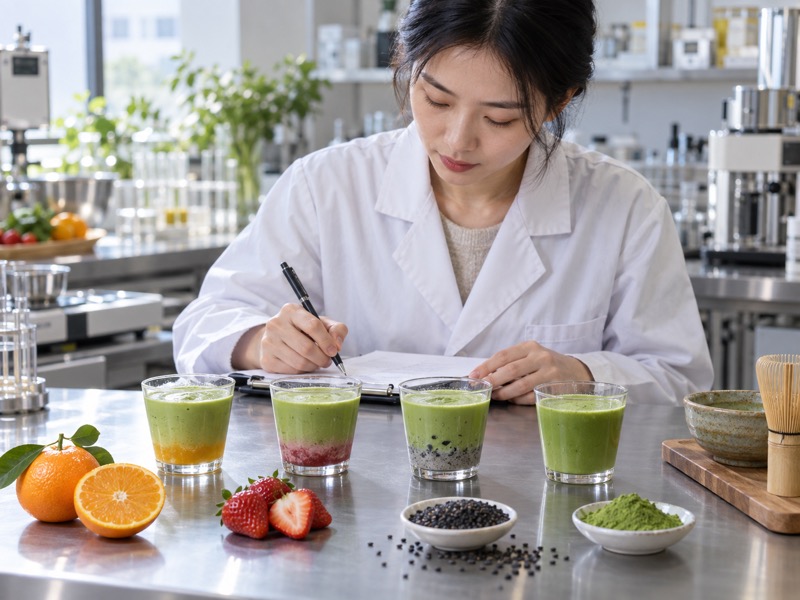
For: beverage and dessert developers, café menu teams, ingredient buyers and distributors. Decision: which pairing makes the tea more appealing without erasing it or making the product hard to repeat.
1. What role should matcha play in the flavor?
Decide whether tea is the lead
“Matcha flavor” can mean a tea-forward product with a small supporting note, or a fruit-first product where matcha adds color and a mild finish. Both can be valid, but the name and sample should agree. Write a one-sentence target such as “strawberry leads, with a distinct tea finish” or “tea leads, with citrus lifting the aroma.” That target tells the team what to taste for and prevents every trial from becoming a contest for the sweetest cup.
Set a reference. Make a plain matcha control using the intended tea and base. Then add one flavor at a time while keeping final serving volume constant. Taste blind if possible. Ask whether matcha remains recognizable, whether the added ingredient improves balance, and whether the finish is pleasant. A pairing should earn its place by changing the drinking experience in a useful way. If a syrup can be removed without anyone noticing, it is a cost and label burden rather than a flavor decision.
| Intended role | What the guest should notice | Trial question |
|---|---|---|
| Tea-led | Clear matcha first | Does the addition support it? |
| Balanced | Tea and second flavor together | Are both recognizable? |
| Fruit-led | Fruit first, tea finish | Does the name set that expectation? |
2. Which tea sample should be the starting point?
Match the tea to the application
Use identified matcha samples and test them in the finished format. A soft, expensive drinking tea can be lost in a sweet, creamy dessert. A more assertive powder can stand up to fruit but become too bitter in a simple latte. Do not treat grade language as a sensory result. Compare equal doses in the same base, then adjust the chosen sample within a measured range. Record the lot and storage condition used; an opened powder that has lost aroma can mislead the team into adding unnecessary flavor.
Keep the cost tied to taste. Calculate tea grams per accepted serving rather than comparing only kilograms. A lower-priced powder that needs a high dose can become the costly choice. Ask the supplier for specification, lot traceability, pack format, and a reference sample. If a new flavor is expected to run year-round, check whether the tea can be supplied with consistent color and taste. A beautiful single trial is not a range plan.
3. How do fruit pairings change the tea?
Test acid and aroma separately
Strawberry, mango, citrus, and other fruits bring different levels of sweetness, acidity, pulp, and aroma. A fruit puree is not interchangeable with a clear syrup. Acid can make a drink taste brighter but may also make a tea’s bitterness stand out. Pulp can add body while creating settling or an uneven last sip. Make controlled trials with the same matcha and serving volume, then measure the fruit ingredient rather than adding it by eye. Taste immediately and after a normal service wait.
Check each fruit supply. Seasonal puree can vary between lots. Use the supplier’s specification and a practical incoming taste check. If a menu features real fruit, do not replace it quietly with a flavored syrup without revisiting the label and guest expectation. For a packaged drink, test color, sediment and shelf behavior through the intended process. The question is not only whether matcha and fruit taste pleasant together; it is whether the combination stays pleasant after production and service.
| Fruit format | Opportunity | Main check |
|---|---|---|
| Fresh puree | Natural fruit body | Lot variation and settling |
| Clear syrup | Fast service | Sweetness and authenticity |
| Juice | Bright flavor | Acid balance and dilution |
4. What happens when matcha meets dairy or plant bases?
Judge the finished cup
Milk and plant drinks soften some tea notes and change body. They can also hide the matcha a product is named for. Prepare each pairing in the base that customers will actually receive. A vanilla note may seem balanced in dairy but overly sweet in an oat drink with its own sweetness. Sesame or nut flavors may add depth, but they bring allergen and cleaning questions. Coconut can make a drink rich enough that a delicate tea disappears. Keep the tea dose and final volume fixed during the first comparison.
Foam is part of flavor delivery. A hot latte is smelled before it is tasted. If a flavored syrup changes foam or leaves a sticky finish, that matters to the experience. Test hot and iced separately; ice dilution can make both tea and flavor seem weaker. If the menu offers several milks, write recipe variants or select a pairing that survives the most common choices. Do not assume a single flavor name guarantees a single sensory experience across bases.
5. How should sweetness be set?
Build a dose ladder
Sweetness can reduce perceived bitterness, but it can also flatten the tea and make several flavors taste alike. Start with an unsweetened or minimally sweetened control, then increase sweetener in measured steps while holding tea and flavor constant. Taste for the point where the pairing becomes pleasant and the point where matcha vanishes. Use the prepared serving as the unit. A small dessert sample and a full café cup may need different balance because portion size changes the experience.
Watch hidden sugar. Fruit puree, flavored milk, white chocolate and premixed powders may already contain sweetener. Request ingredient and nutrition information rather than treating each component as neutral. If customers can order “less sweet,” test whether reducing syrup also removes the second flavor. A good operational recipe should separate sweetness from flavor where the concept requires flexibility. If a complete premix is used, be honest about the fixed sweetness in the menu description.
| Trial level | Keep constant | Judge |
|---|---|---|
| Low sweet | Tea, flavor, final volume | Bitterness and clarity |
| Standard | Tea, flavor, final volume | Balance |
| High sweet | Tea, flavor, final volume | Whether tea is masked |
6. Which flavor ideas survive processing?
Test the real route
A flavor can be excellent in a fresh cup and poor after heat, freezing, or longer storage. For bakery products, taste after baking and after the normal display period. For frozen desserts, judge at serving temperature rather than in liquid mix. For a ready-to-drink product, use the intended processing and package before deciding that color and aroma are stable. Matcha is a suspended powder, and added fruit or fat can change how it disperses. Trial the full formula rather than relying on a spoonful of flavor added to a finished sample.
Record order of addition. When ingredients enter the process can affect clumping, color, and aroma. A measured pre-dispersion can help matcha spread through a base, but the method needs validation on the actual equipment. Check top, middle and bottom samples before filling or serving. If different portions taste different, a pairing may be promising but the process is not ready. Do not make broad shelf-life claims from a one-day tasting.
7. How should a menu range avoid tasting repetitive?
Give each item a reason to exist
A line of five green drinks can look varied in a photograph while delivering nearly the same sweet vanilla profile. Put candidates side by side and compare their main taste, sweetness, texture, temperature, and occasion. Keep options that offer a meaningful choice: a tea-forward classic, a bright fruit drink, and perhaps one richer dessert-style serve. A larger number of names can burden staff and inventory without helping the customer choose. The range should also use shared ingredients sensibly, but not at the cost of identical drinks.
Name from the glass. If the product is called “mango matcha,” both mango and tea should be detectable. If an ingredient appears only as a colored layer for photography, the menu may be making too strong a promise. Use a small sensory panel and ask tasters to describe each cup without seeing its name. Their words reveal whether the intended distinction is real. Then write menu descriptions from those observed qualities, not from a list of fashionable ingredients.
8. What should be checked on labels and claims?
Follow the actual ingredient list
Flavor names, fruit claims, origin statements, organic claims, vegan claims, and allergen statements depend on the exact formula and market. A matcha powder may have one set of documents while a flavored blend contains additional ingredients from other suppliers. Keep the full bill of materials and ask the responsible regulatory team to review the proposed wording. Do not assume that an “all-natural” description or a tea-origin story transfers to a finished flavored product.
Separate recipe from marketing. A product can be enjoyable without health promises. Describe taste, texture, and preparation accurately. If the formula contains nuts, milk, soy, or other regulated allergens, build those facts into development and service training. For a café, make sure staff can tell customers what is in each flavor. For packaged goods, the label should be tested against the commercial formula, not the first kitchen trial.
| Claim area | Supporting record | Common gap |
|---|---|---|
| Fruit naming | Formula and ingredient source | Syrup described as fresh fruit |
| Origin | Tea lot documentation | Broad supplier story only |
| Dietary claim | Complete ingredient review | Checking matcha alone |
9. What does each flavor cost to operate?
Calculate a sellable unit
Cost tea, second flavor, milk or base, sweetener, cup or pack, labor, and expected waste at the accepted recipe. A fruit puree may be appealing but have a short use window after opening. A syrup can be easier to handle but less distinctive. A topping can slow a busy bar. A flavor line should be priced using actual portions and realistic daily volume. Include rejects from poor dispersion or separation, not just theoretical batch yield.
Check inventory overlap. Shared base ingredients can make a range simpler, but a unique garnish or fragile puree for one slow-selling SKU may be expensive. Ask the team how many orders each flavor can support without a separate preparation station. Measure service time and discarded ingredients during a pilot. The winning pairing is one customers like and the operation can keep in stock and make consistently.
10. What pilot should approve a new pairing?
Bring the recipe into service
Make coded samples with the intended tea, flavor ingredients and serving method. Taste immediately, after a normal wait, and at the end of the expected display or storage period. Let staff prepare the drinks or desserts from written instructions. Record taste, tea clarity, sweetness, color, texture, sediment, speed and cost. For packaged products, include the intended process and pack. For a café, run the best candidates during a real shift and listen for guest descriptions rather than asking only whether they “like matcha.”
Approve one spec per item. Keep the ingredient codes, accepted lot samples, formula, preparation steps, appearance reference, and retest triggers together. If a supplier changes fruit puree or matcha, retest the finished pairing. The next step is a small controlled menu or production trial. That trial will show which matcha flavors deserve a permanent place, and which sounded better as ideas than they taste in the finished product.
| Pilot moment | Main question | Evidence |
|---|---|---|
| Fresh | Are both named flavors clear? | Blind tasting |
| Service wait | Does the product remain appealing? | Timed cup check |
| New lot | Is the accepted profile preserved? | Reference comparison |
| Shift end | Is waste manageable? | Inventory and discard log |
For a baseline before adding flavors, use the matcha flavor buying guide.
Reference: Matcha Flavor Pairings: Best Combinations for Drinks & Desserts is a consumer idea source. The development framework above is independent.
FAQ
Q1: Which fruit flavor is best with matcha? There is no universal winner. Test the fruit format, acid, sweetness and tea together in the intended product.
Q2: Can one matcha powder support every flavor? It may, but compare tea presence and cost in each finished recipe.
Q3: Why do flavored matcha drinks taste weak over ice? Ice changes final volume and temperature; test the served drink at its real dilution.
Q4: Are matcha flavors only for sweet products? No. The tea can work in other applications, but each formula needs its own sensory and processing trial.
Q5: What should trigger a retest? A change in tea lot, fruit source, base, process, package or serving method.