
A matcha crepe is a thin cooked batter sheet carrying tea flavor and color. For a café, the challenge is repeatable release from the griddle, a tender sheet and a filling that still lets customers taste matcha. Set the serving format and target diameter before tuning powder dose. Then test cooked sheets with the actual filling and wait time. Those checks reveal torn edges, dry stacks and lost tea flavor that a bowl of green batter cannot show.
For: dessert cafés, commissaries and foodservice developers. Decision: whether the crepe can be prepared and served consistently.
1. What should a matcha crepe deliver to the customer?
Specify the serving, not merely the batter
A folded street-style crepe, a plated dessert and a layer for a mille crepe cake require different sheet strength and handling. Choose one primary format. State diameter, thickness, filling load and the texture expected at service. A sheet intended for folding needs enough flexibility at its edge; a cake layer must lie flat and survive stacking. The matcha should remain detectable beside cream, fruit or syrup without leaving a harsh powder finish. Taste the plain cooked sheet before tasting the complete dessert. Check both bites: the unfilled edge shows the batter’s tea note, while the filled center reveals whether the menu promise survives the toppings.
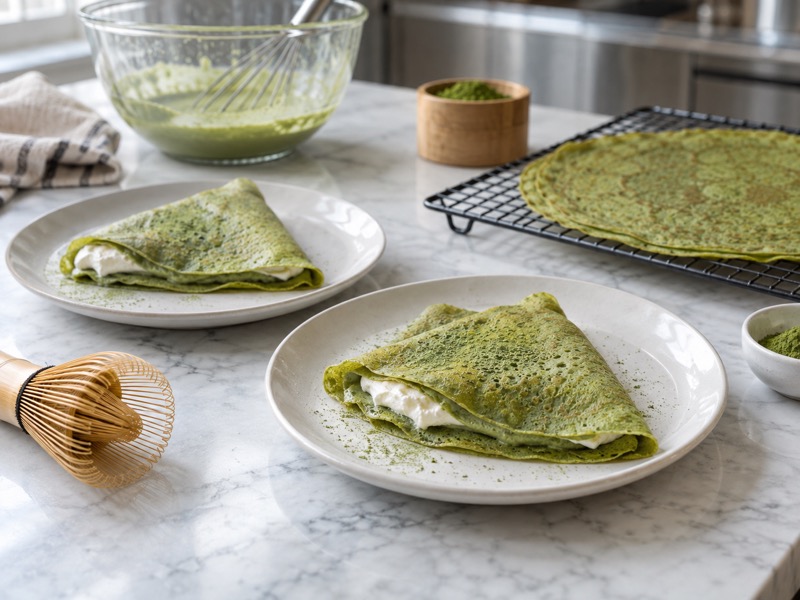
Set a visual target for cooked color under normal kitchen light. Bright batter may cook to a muted green, particularly where thin edges brown. A photograph can help operators compare sheets, but a color target cannot substitute for tenderness or flavor. Note whether a slight lace edge fits the product or counts as a reject. Write the customer promise in terms staff can observe: a sheet that lifts whole, folds without cracking and tastes of tea after the planned service delay. That description lets developers compare recipes without chasing the greenest sample at the expense of quality.
2. How does the service route change the recipe?
Map the time between pan and plate
A crepe cooked to order can be filled while warm. A commissary sheet may be cooled, stacked, transported and separated later. Each path exposes different failure points. Warm service emphasizes pan release and quick assembly; advance production tests whether sheets dry at the edge or stick together. Decide whether staff will hold batter, cooked sheets or fully assembled desserts. Record each handoff, its container and the planned time before service. Follow one real order: a sheet that bends well straight from the pan may tear when an operator pulls it from a cold stack during a rush.
For a prepared stack, trial the separator, stack height and container. Protect sheets from surface drying without trapping condensation. A filled item brings the filling’s own handling and storage requirements. Measure its condition when a customer would eat it, not only at assembly. If the menu includes both plated and takeaway crepes, run separate checks with the actual box and utensils. A tall cream-filled fold may shift during delivery even when its sheet remains tender. Set holding limits with food-safety staff based on the complete batter and filling, then test sensory quality within that approved route.
| Route | Main handling stress | Observe at service |
|---|---|---|
| Cooked to order | Griddle release and assembly pace | Fold, temperature and tea flavor |
| Pre-cooked stack | Separation, drying and condensation | Intact sheet and tender edge |
| Filled takeaway | Travel and filling movement | Shape, leakage and eating texture |
3. Which ingredients need a side-by-side test?
Compare tea inside the cooked sheet
Flour strength, egg, liquid and fat all shape how a thin sheet stretches and releases. Choose the base batter before judging matcha alternatives. Sift each identified tea lot into otherwise identical batches at the same weight. Cook sheets on the same griddle with matched ladle mass and heat setting, then taste them plain and with the planned filling. A dry powder sample misleads: aroma from an open bag does not tell a buyer how matcha reads beside whipped cream or sweet fruit. A tea that looks darker in batter may leave a harsher finish in the final dessert.
If the batter uses a plant base or egg alternative, treat it as a separate formula; its viscosity and browning can differ. Check whether vanilla, sweetened filling or fruit sauce hides the tea before increasing matcha dose. A short series of tea doses within the chosen base is more informative than a single heavily colored sample. Record the supplier item code and lot for each trial. Ask for composition, storage and pack information suited to the kitchen’s drawdown rate. A large pack left open through slow sales can lose quality even when its price per kilogram looks attractive. Keep the selected tea linked to the actual approved recipe.
| Variable | Hold steady | Judge after cooking |
|---|---|---|
| Matcha lot | Base batter, dose and pan method | Aroma, bitterness and shade |
| Liquid base | Tea lot and target yield | Flexibility and browning |
| Filling | Cooked sheet formula | Tea visibility and final bite |
4. What should the batter record include?
Put usable measures on the production card
Weigh flour, tea, liquid, egg or substitute, fat and sweetener. Record total batter mass and the number of accepted sheets it yields. A ladle described only by volume can drift when batter viscosity changes; confirm the deposited mass. Record cooked diameter and a practical thickness check from the same griddle setting. Note batter rest time, temperature and any remixing before service. Look at the last ladle: settling can leave early sheets pale and later ones tea-heavy unless staff stir to a defined routine. A finished sheet count tells buying more than a theoretical recipe yield.
Mark batter version and ingredient lots on each trial. If developers adjust matcha, liquid and rest together, the next cook cannot tell which adjustment fixed the tear. Change one variable where possible and keep a control batch. Track the number of unusable sheets from pan release, edge damage and filling. Weigh a cooled sheet from each stage of a test run; an unusually light sheet may be too thin for the chosen fold. Keep actual operator notes, including whether batter needed frequent stirring or extra straining. Those steps take labor and should be written on the service card if the formula cannot work without them.
| Record | Measure | Why it belongs on the card |
|---|---|---|
| Batter and ladle mass | Weighed batch and deposits | Portion and cost control |
| Rest and remix | Time, condition and action | Viscosity consistency |
| Cooked output | Diameter and accepted count | Service fit and yield |
5. How should staff mix and cook the batter?
Build a smooth film on a steady griddle
Sift matcha with flour or pre-disperse it in a portion of liquid, according to the chosen recipe, before the full mix. Dry green clumps can create bitter spots and weak patches in a sheet. Strain only if the formula and kitchen workflow support that step. Rest the batter for a written period, then check viscosity before the first ladle. A batter that sat longer than the trial standard may spread differently. Set the pan before the pour: stabilize griddle heat and use the specified surface preparation rather than compensating for a cold pan with a thicker ladle.
Deposit a measured mass and spread by a repeatable motion. Record the point at which the edge loosens and the sheet is ready to turn or lift. Avoid cooking solely by clock time because plate recovery changes with order volume. If the edge browns while the center remains fragile, check film thickness and heat distribution. When an operator uses a second griddle, qualify that equipment rather than assuming one dial position equals another. Cool sheets as the recipe requires before stacking or filling. Train staff with visual endpoints and accepted examples; a single phrase such as “cook until done” cannot control a thin matcha batter during peak service.
6. Which defects reveal a process problem?
Read the edge, center and release together
A sheet can tear because it was too thin, lifted early, stuck to the surface or lacked enough structure. Record where a tear begins. Lacy holes across the center suggest a different problem from an edge that adheres after overcooking. Brown edges can come from griddle heat or a thin film; they do not automatically condemn the tea lot. Green specks may be undistributed powder. A rubbery sheet can result from the formula or from how it was held. Inspect it cooled: hot flexibility can conceal the stiffness customers meet after assembly or transport.
Keep a simple defect sheet with pan position, operator, ladle mass, cook time and batter age. Compare a rejected crepe with a successful one from the same batch before changing ingredients. If only later sheets fail, check batter settling and plate recovery. If damage appears during separation from a stack, examine cooling and interleaving. Taste a plain sheet when diagnosing color or tea complaints; fruit syrup can cover the real flavor difference. Set rejection language that kitchen staff can apply quickly, such as a tear across the fold zone or an edge that cracks on a standard fold. Defect counts must feed the yield calculation.
| Defect | Inspect first | Controlled follow-up |
|---|---|---|
| Tear during lift | Pan release and film thickness | Same batter with adjusted deposit or endpoint |
| Brown rim | Griddle temperature map | Same batter at a revised setting |
| Sticky stack | Cooling and separator | Same sheets with revised stack method |
7. How should batter and cooked sheets be held?
Separate food safety from eating quality
The complete recipe determines the food-safety plan for batter, cooked sheets and filled desserts. Eggs, milk, cream and fruit toppings may each affect handling. Follow the site’s approved time and temperature controls; a visual check of green color cannot establish safety. Label prepared batter with its version, lot and production time. If staff stir or strain it during service, write that step into the hold procedure. Test the worst normal wait: cook a sheet near the end of an approved batter hold and compare it with one from the start. Viscosity or settling can change even when the batter remains within its handling limit.
For cooked sheets, test the chosen cover and stack height. A bare stack can dry at the perimeter; a sealed warm stack can collect moisture and cling. Cool to the approved endpoint before closing a container. Trial separation after the actual hold, not immediately after cooking. Filled crepes need their own test because cream and fruit can wet the sheet at contact points. If a takeaway box traps steam, check the fold and filling after travel. Store sensory results beside food-safety sign-off so a batch is released only when both conditions are met.
8. What belongs in the ingredient and label file?
Connect the recipe with purchased lots
Keep item codes and specifications for matcha, flour, eggs or substitute, liquid base, fats and each filling. The file should include lot identity, pack size, storage guidance and current ingredient and allergen statements. Egg, milk and wheat commonly arise in conventional crepes, while toppings can add nuts, soy or other declared allergens. Review the entire serving, including drizzle and garnish, before approving a menu or packaged label. A tea certificate covers tea: it cannot answer whether the assembled dessert’s ingredient list is correct.
If a supplier changes a base or filling, check performance as well as paperwork. A different fat or plant milk may alter film formation and browning; a new fruit sauce may wet the sheet faster. Tie any named origin, organic or other claim to current documents for the exact purchased item and jurisdiction. Keep the approved batter card and assembly card together so production uses the same revision. Retain a reference serving photograph and tasting note as a practical comparator. When a complaint arrives, staff should be able to trace the sheet batch, topping lots and operator shift without reconstructing the day from memory.
9. How can a café calculate the cost of an accepted crepe?
Count rejects and service work
Begin with ingredient mass per batter batch and divide by accepted cooked sheets, not by planned ladles. Torn sheets consume tea, flour, pan time and labor. Add the actual filling weight, garnishes, packaging and assembly time for the sold portion. A crepe folded to order takes different labor from a stack prepared in advance. The griddle sets capacity: one cooker’s sheet rate can limit orders even when batter ingredients are cheap. Observe a normal service period and note idle time, remakes and a realistic filling station pace.
Compare matcha choices at the dose needed for the same flavor target. A lower price per kilogram may not save money if the kitchen adds more powder or loses sheets through clumps. Include waste from batter that remains after the approved hold and from prepared stacks that do not sell. Do not assign a convenient waste percentage before the pilot; use actual counts, then update estimates after launch. If a different filling reduces sheet breakage but costs more, compare cost per accepted finished dessert. Keep one sheet cost and one assembled-serving cost in the model so menu planning does not confuse them.
| Cost component | Source record | Effect on decision |
|---|---|---|
| Batter and tea | Weighed batch and accepted sheets | True sheet cost |
| Filling and pack | Assembled portion weights | Full serving cost |
| Labor and loss | Timed service and reject log | Margin under normal demand |
10. What pilot is enough for a menu launch?
Test more than one pan cycle
Run the intended formula on actual service equipment with several operators. Sample early, middle and late sheets, including batter that has experienced a normal approved hold. Measure ladle mass and cooked diameter and count tears by cause. Build the real serving with its filling, then taste it hot or cooled as customers will receive it. For takeaway, close the intended box and test a normal travel interval. Use the ordinary team: a development chef can rescue delicate sheets in ways a busy station cannot repeat. Their expertise is useful for tuning, but release criteria belong to routine operations.
Write pass rules before the pilot for plain-sheet flavor, filled flavor, fold integrity, appearance, holding and accepted yield. Keep food-safety sign-off for the complete formula and route. If one criterion fails, revise the specific step and rerun it rather than approving an attractive photograph. The matcha flavors guide can help frame tea tasting language. The consumer matcha crepe example is useful as a reference for the dish, while foodservice release depends on measured station performance. Launch a limited menu only after a second operator can reproduce the written method and the dessert survives its actual handoff.
FAQ
Q1: Can a matcha crepe batter be made ahead? Set any hold through the kitchen’s approved food-safety plan and test pan performance at the end of that hold.
Q2: Why does a cooked sheet tear? Check film thickness, pan release, lift timing, batter condition and stacking stage before changing tea.
Q3: Should tea be tasted with filling? Yes. Taste plain sheets for batter quality and assembled servings for the menu promise.
Q4: How should sheets be stacked? Trial cooling, cover and separators so sheets separate without drying or condensation.
Q5: What does an accepted unit cost include? Include batter, filling, pack, service labor and every rejected or unsold sheet.