
Matcha tres leches puts tea into a chilled, milk-soaked sponge. The cake must absorb enough liquid to feel generous while remaining sliceable through display and delivery. A bakery cannot judge that balance from a warm sponge or a freshly poured soak. Product development needs a finished slice, a defined chill period, and a packaging trial. This guide covers the decisions that turn the dessert into a repeatable menu item or packaged cup, including matcha selection, soak control, cold handling, allergens, and unit economics.
1. What defines a commercial matcha tres leches cake?
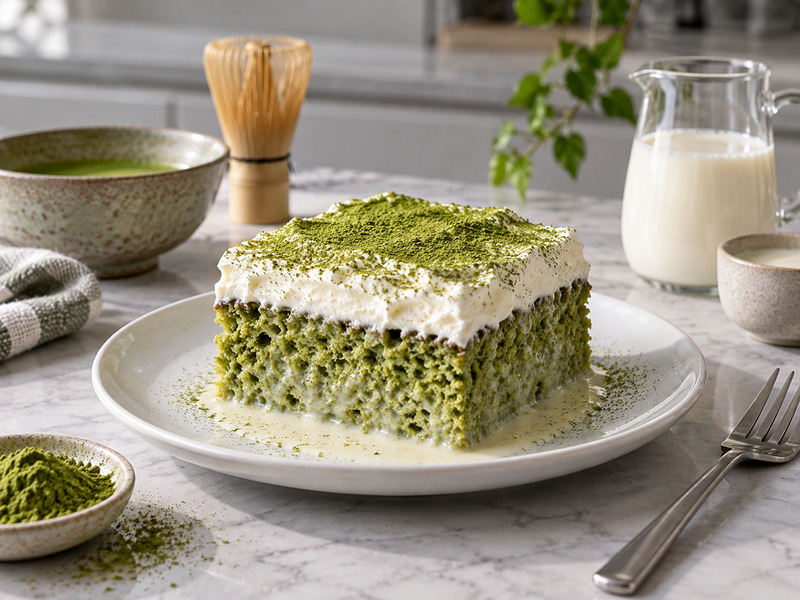
The core product is a sponge saturated with a mixture of milks and served cold, often with a cream topping. Matcha can sit in the sponge, soak, topping, or more than one component. Each placement gives a different result. Tea in the sponge faces oven heat; tea in the soak stays more visible but may pool; tea in cream dominates the first bite. The business should decide what a customer should taste from the first forkful through the last. A green top alone does not establish a matcha dessert.
Write a product standard before testing recipes
Define portion size, target weight, expected moisture, tea intensity, sweetness, topping height, and serving temperature. Decide whether the dessert is a slab cut in-store, a pre-cut slice, or a sealed single-serve cup. The slab may offer attractive bakery display but introduces cutting loss and variable soak distribution. A cup can simplify portioning while changing the eating experience. Build one control version and one tea-forward version. Ask tasters which one matches the menu description without telling them the powder dose. Their answers will show whether the concept needs more tea, less sugar, or a different component placement.
2. Which sponge structure tolerates the milk soak?
A tres leches sponge must accept liquid without collapsing into paste. Egg foam, flour level, bake endpoint, and cake thickness all influence absorption. A dense butter cake can resist the soak, leaving a wet layer at the bottom and a dry middle. A very delicate sponge may break during portioning. The bakery should select the structure around its production equipment, not around a home pan dimension. A full-sheet bake behaves differently from a small round cake, especially at edges and corners.
Measure absorption rather than guessing
Weigh a baked, cooled cake before soaking. Apply a measured amount of liquid by area or by portion, then weigh again after a defined chill. Note liquid left in the pan and the condition of the center crumb. Cut samples from edge, middle, and corner. If the center is dry while the edge is soggy, changing matcha grade will not solve the distribution problem. Adjust the soak method, cake thickness, or delivery sequence. Keep the accepted uptake range on the batch sheet so future operators have a practical check. A cake that takes more liquid is not automatically better if it cannot hold its shape.
| Sponge check | Evidence to record | Decision |
|---|---|---|
| Baked structure | Height and cooled weight | Can it hold a measured soak? |
| Soak uptake | Weight before and after chilling | Is moisture even? |
| Portion integrity | Edge and center cuts | Will it survive service? |
3. Where should matcha enter the dessert?
Putting matcha in the sponge gives color throughout, but baking may soften its aroma. Adding it to the soak can provide a clearer tea note and a layered appearance. A matcha cream topping puts flavor on the first bite but can cover a weak cake beneath. A brand can use more than one location, although each addition raises cost and adds a control point. Development should compare placements at equal total powder weight before increasing the dose. Otherwise a two-component version may win simply because it contains more tea.
Build a component map
Prepare a plain-sponge control with matcha soak, a matcha sponge with plain soak, and a split-dose version. Keep milk formula, topping, portion, and chill time fixed. Taste the components alone and the assembled slice. Check whether powder creates specks in cream or a dry note in cake. If matcha enters a cold liquid, test a small slurry before combining it with a larger dairy batch; dry powder can clump. Record any straining loss so the stated dose matches what reaches the dessert. The winner should be the version customers can identify as matcha after the cake has spent its full planned time in display.
4. How should a buyer select matcha for a milk-rich cake?
Three milks and a sweet topping can suppress quiet tea notes. A powder that tastes excellent in plain water may be too subtle here. Screen candidates for clear tea flavor after soaking and chilling, acceptable color, fine texture, and a cost that fits the portion. Pure matcha powder is a starting category for sampling; the bakery should approve a specific lot in the actual dessert. A grade label provides a vendor’s shorthand, not a universal baking result.
Run a blind finished-slice tasting
Use the same recipe, total powder mass, pan, bake, soak, and chill period for every candidate. Randomize sample order and include the current product, if one exists, as a control. Score tea aroma, balance against dairy, finish, crumb color, and any powdery texture. Then taste again after the planned sell-by interval. A bright day-one slice that fades during refrigerated display does not meet the brief. Separate sensory approval from pricing: cost per kilogram is useful only after the tea works. Keep a retained powder sample and a photograph of an approved slice under consistent lighting.
| Powder attribute | Test in finished cake | Failure signal |
|---|---|---|
| Flavor strength | Blind slice tasting | Tea disappears under milk |
| Fineness | Soak and topping texture | Specks or dry pockets |
| Color | Chilled slice photograph | Unappealing drift during display |
5. How should the three-milk soak be specified?
The name describes the traditional concept, but formulas differ. A bakery may use evaporated milk, condensed milk, cream, or local substitutes, and each choice changes sweetness, solids, and viscosity. Write the exact ingredient declaration rather than relying on the phrase “three milks.” If the product must be less sweet, adjust the soak as a formula; do not simply pour less and leave dry cake. The soak should deliver moisture and flavor evenly at the chosen portion size.
Control application and hold time
Record the mass of each milk, the temperature of the mixture, how it is applied, and how long the cake chills before cutting. Trial a squeeze-bottle pattern, multiple passes, or a metered depositor as appropriate to scale. A hurried single pour can send most liquid to a low corner. Measure residue in the tray after chilling and inspect the center of several portions. If the recipe includes matcha in the soak, stir or recirculate as needed to maintain uniform powder distribution from the first pan to the last. The soak specification should tell an operator what acceptable absorption looks like, not merely list ingredients.
6. What texture defects appear after chilling?
A freshly assembled cake may appear stable while the next day’s portions weep, compact, or slide under cream. Chilling can reveal a dry center or a bottom layer of free liquid. The topping can also absorb color or moisture from the cake. Observe the dessert at the actual sale point. Do not extend shelf life because it still looks green; eating quality and food safety need separate evidence. A display case can dry exposed edges even while a covered tray keeps them moist.
Sample the entire tray and package
Cut portions from multiple positions and weigh them after the soak. Check fork resistance, liquid release, and the ease of lifting a slice into its container. For a single-serve cup, look through the side and under the seal for trapped liquid. Photograph the surface before and after transport. A cream topping that smears against a lid might be a package-height problem rather than a formula problem. Set reject examples for excessive pooling, slumped layers, or dry pockets. Those examples help quality and store teams make the same decision without relying on one developer’s memory.
| Defect | Likely point to inspect | Practical check |
|---|---|---|
| Dry middle | Soak distribution | Center cut after full chill |
| Liquid pool | Uptake or excess dose | Tray residue and portion weight |
| Slumped slice | Sponge strength or handling | Transfer into final pack |
7. What cold-chain and allergen work is needed?
A milk-soaked cake with cream belongs in a controlled chilled workflow. Food safety staff should validate preparation, cooling, holding, transport, and the stated sale period for the actual formula and pack. A recipe found online cannot support a retail date. Store teams need a clear rule for when the cake leaves refrigeration during decorating, cutting, and handoff. The rule must fit the equipment and volume they actually have. A crowded case that cannot maintain its specified temperature will undermine a sound recipe.
Review every layer of the ingredient list
Milk, egg, and wheat are common in the cake; nuts or soy may enter through toppings or alternatives. The FDA’s food allergen guidance is useful for U.S. packaged-food review, while other markets require their own assessment. Keep a component-level allergen matrix for sponge, soak, cream, garnish, and shared equipment. A plant-based topping does not make the cake dairy-free if the soak contains milk. Recheck the matrix when any component supplier changes. The approved printed label and the in-store allergen information must describe the same finished dessert.
8. Which format works for bakery display or delivery?
A whole tray, pre-cut slice, and lidded cup each trade visual appeal against handling and waste. A tray gives a baker flexibility to cut according to demand, but portions may vary and exposed edges can dry. A pre-cut slice helps cost control and speeds service if it survives transfer. A cup may be more secure for delivery and retail cases, although its shape can hide the sponge layer. Select the route around how customers will buy and eat the dessert, not only how it photographs on a workbench.
Trial the filled pack, not an empty sample
Load portions at the approved weight and topping height, close the pack, and run the planned transport route. Inspect movement, smear, liquid leakage, seal integrity, and whether the customer can eat the product cleanly. A dome lid may preserve cream but increase shipping volume. A shallow clamshell may look efficient yet press on the topping. If the pack is transparent, check that condensation does not obscure the product or loosen the label. Test how quickly staff can place a slice without damage during a rush. Packaging cost should be attached to accepted saleable portions, including those rejected after a handling trial.
| Sales format | Strength | Main test |
|---|---|---|
| Whole tray | Flexible cutting | Edge-to-center consistency |
| Pre-cut slice | Fast portion service | Transfer and display life |
| Single-serve cup | Better transport control | Layer appearance and opening |
9. How should the bakery model yield and price?
Start with the number of saleable portions after soaking, chilling, topping, and cutting. Ingredient cost alone understates the product. Include milk mixture left in pans, cream overage, broken slices, packaging, refrigeration, labor, and returns. If a matcha powder raises the ingredient cost, compare the added tea flavor at the portion level. A small difference per kilogram may be negligible per slice, while a small change in rejected slices can dominate the margin.
Use batch records from a real production run
Weigh inputs, finished tray, and accepted portions. Record labor separately for baking, soaking, decorating, and packing. Compare a normal demand day with a slow day because unsold chilled cake cannot always be carried into the next sales window. Test the proposed selling price against competing desserts in the same channel without assuming identical portion value. If the cake is supplied to another business, agree which party bears cold transport losses and date-code responsibilities. A sensible pilot order should reveal whether customers return for the product, not just whether the launch display attracts a first purchase.
10. What belongs in final approval and supplier review?
The release file should contain a measured formula, powder specification, sample lot, sponge and soak targets, finished-slice photographs, validated chilled handling, approved pack, label, and costing sheet. Purchasing should request relevant product documents and a clear change-notification route. A powder substitution can alter flavor, color, or soak texture even if its grade name stays the same. Bulk matcha supply can be evaluated against this file; commercial availability is one part of approval.
Make the repeat order testable
Keep a retained powder sample and the finished-dessert sensory description. On a new lot, bake a small controlled batch beside the reference rather than relying on a dry-powder comparison. Review any change in the dairy blend, topping, pan depth, or delivery pack as well. Train production staff with accepted and rejected portions. Sales and service teams should receive the same portion description used by quality. If the first production run does not match the approved slice after the full chill and transport window, hold release and identify the stage that changed before adjusting the recipe.
| Approval item | Evidence | Recheck when |
|---|---|---|
| Tea input | Lot sample and specification | Source or lot changes |
| Cake process | Batch sheet and texture standard | Pan or soak method changes |
| Chilled sale | Validated handling and final pack | Route or pack changes |
FAQ
Q1: Should matcha go in the sponge or the soak?
Test both at equal total powder weight. The better choice is the one that delivers clear tea flavor after chilling and at sale time.
Q2: Can a bakery sell matcha tres leches as a delivery dessert?
Yes, if the selected portion and pack survive transport and the chilled handling plan is validated for that route.
Q3: Why does liquid collect at the bottom?
The soak may exceed the sponge’s uptake or may be applied unevenly. Measure absorbed liquid and inspect center and edge portions.
Q4: Does a plant-based topping make the cake dairy-free?
No. Review the full recipe, including the soak, sponge, and garnish, before making an allergen or dairy-free claim.
Q5: What should trigger a new production trial?
Changes in matcha lot, sponge formula, soak, pan depth, topping, pack, or chilled route should prompt a targeted retest.