
A shaken matcha latte can fit a busy bar when its powder wets evenly and its foam survives the handoff. Shaking changes dilution and temperature, so a recipe copied from a whisked cup can taste thin. This article gives café and chain teams a way to specify the drink, train staff, and price each serving. The SERP intent reference is Fresh Strawberry Basil Shaken Matcha Latte; only its title and URL inform topic framing. The method here differs from cold-whisk matcha latte because a shaker controls chilled mixing, ice contact, and foam in one service step.
1. Why choose a shaken matcha latte for a café menu?
Specify what shaking contributes
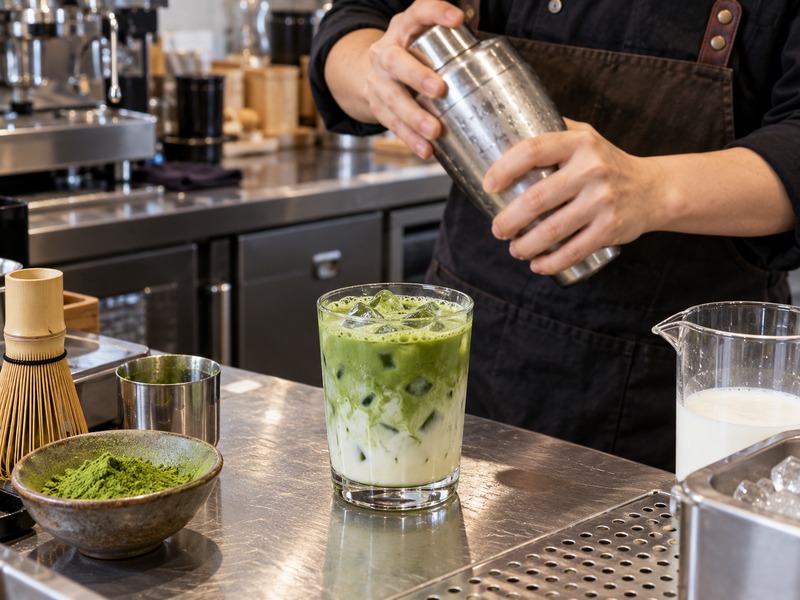
A shaker can chill a tea base quickly and create a fine layer of bubbles without a blender station. Its appeal for an operator is a short process with visible theatre, but a dramatic shake is not the goal. A useful drink has a measured volume, uniform tea color, and a clean surface after pouring. Staff need enough headspace in the shaker to move liquid across ice; a packed tin only rattles. Shaking also melts ice. That water must be included in the formula rather than dismissed as a side effect. If a café wants distinct milk and matcha layers, it can shake the tea component separately and pour it over milk. If it wants a fully mixed latte, all liquid components can enter the shaker after matcha has been dispersed. Both are legitimate products, yet they require different photos, training cards, and fill targets. Choose one before pricing or writing a menu description.
2. What ingredients should enter the starting recipe?
Keep the powder and dilution visible
Begin with a weighed matcha dose and a small amount of water for a smooth slurry. Cold water can work with enough agitation, but testing warm water for predispersion may reduce dry pockets. A syrup should be fully soluble at the service temperature. Milk contributes most of the body; its sugar and fat content can alter perceived matcha strength. The table gives a trial composition for a single liquid base before shake ice, expressed by mass so it can be scaled. It is a trial point, not a claimed industry norm. Record the mass after shaking as well. The increase relative to pre-shake ingredients estimates ice melt, while any loss on the strainer or tin reduces served yield. A café with a 12-ounce and a 16-ounce size should create separate approved weights rather than silently adding milk to a single matcha dose. That practice protects flavor consistency and makes powder purchasing forecasts more credible.
| Ingredient | Trial share before ice | Job in cup |
|---|---|---|
| Milk or plant milk | 81% | Body and finish |
| Water for slurry | 12% | Powder wetting |
| Matcha | 1% | Tea color and taste |
| Syrup | 6% | Sweetness |
3. How should matcha be dispersed before shaking?
Prevent the powder ring
Loose powder added over ice can lodge against the tin wall or collect around a cube, leaving green flecks after pouring. Prepare a slurry in a small cup and inspect it against the light before it enters the shaker. Staff can use a small whisk, frother, or another approved mixing tool, but the measure of success is the absence of dry powder and coarse clumps. Screen matcha if the lot or storage conditions make lumps likely. Dry tools matter: moisture left in a powder scoop can create clumps in the storage bag, which no shaker program can reliably correct. A dedicated predispersion cup adds one piece to wash, yet it reduces remakes and makes training easier. For a layered drink, the slurry may be diluted into a tea concentrate before shaking. For a mixed latte, combine slurry with milk and syrup only after the powder has wetted. Record the order on the station card.
4. How do ice load and shaker size affect texture?
Measure melt instead of guessing
Ice is a process ingredient even when the guest never sees the cubes from the shaker. Its mass, size, surface area, and starting temperature affect dilution. Use the same ice source for development and store trials. A few large cubes can chill differently from crushed ice, which melts fast and can over-dilute a small drink. Specify a working fill range for each shaker model and leave enough air space for movement. After shaking, strain the liquid into a weighed cup and calculate the difference between input liquid and served mass. Some liquid remains with ice and on the tin, so a simple mass gain is only an approximation of melt; repeat trials help establish a useful operating range. If staff report a weak drink during rush periods, check ice condition and shaker load before increasing matcha. A warmer ice bin or partially melted cubes can shift the drink even when the recipe card stays unchanged.
| Variable | Possible cup effect | Control at the station |
|---|---|---|
| Crushed ice | Fast chilling and dilution | Use the specified ice form |
| Overfilled shaker | Poor circulation | Observe the approved fill line |
| Long shake | More melt, thinner cup | Use an equipment-specific endpoint |
5. Which milk base behaves well under a hard shake?
Trial the actual brand
Dairy, oat, soy, and almond beverages can all produce acceptable shaken lattes, but they do not behave alike. Protein, fat, added oil, sweetener, and stabilizers affect bubbles and separation. A plant milk labeled barista style may foam strongly, while another from the same crop may leave almost no cap. For fair comparison, keep matcha lot, dose, syrup, ice, and shaker load fixed. Taste both the immediate pour and a cup after a realistic pickup delay. A base that photographs well but separates quickly may create complaints in delivery or takeaway service. If a milk is already sweetened, reduce added syrup deliberately and record the new total solids. Do not assume that replacing dairy with a plant beverage preserves the allergen statement. Soy and nut products require accurate declarations, dedicated cleaning practices, and staff training under the business’s food-safety plan. Cost the exact supplied carton or bulk pack, including open-pack loss.
6. How can the bar keep foam consistent?
Decide what the customer should see
Shaking introduces air and may create a light foam that signals freshness. The target should be a stable, drinkable cap rather than a thick layer hiding an underfilled cup. Weigh the served liquid and mark an acceptable foam band on a control cup. Photograph the drink immediately and after the standard handoff interval under consistent light. If the foam is coarse, consider shaker fill, milk base, and shake intensity. If the foam disappears, check dilution and whether an oil-rich syrup or flavor ingredient is suppressing bubbles. Strainers also change the pour; a fine strainer may remove larger bubbles and powder specks, while a wider opening may let ice shards through. Choose the equipment path that suits the menu promise, then write it into training. Do not rely on an operator’s ability to judge foam by the sound of the shake alone.
| QC observation | Likely cause | Action to test |
|---|---|---|
| Large dry-looking bubbles | Too much air or low fill | Adjust shaker load |
| Green specks on cup wall | Incomplete slurry | Inspect predispersion step |
| Thin tea layer | High ice melt | Check ice and shake duration |
7. Should tea and milk be shaken together or separately?
Match process to presentation
A layered version uses a shaken matcha concentrate poured over milk and fresh cup ice. It gives a striking green top, but the customer must mix it before drinking if the layers taste unbalanced. A fully mixed version puts the tea slurry, milk, and syrup through one shake and produces a more uniform cup. The latter may be easier for delivery because appearance changes less as the cup moves. For either version, decide whether shaker ice is strained away and whether fresh cup ice is added. Counting both lots of ice as a single measure obscures dilution. A seasonal fruit syrup might be introduced into milk or tea depending on its color, acidity, and density. Test for curdling when acidic fruit meets dairy. The café should not add a new syrup to an approved shaker formula without checking separation, allergen labels, and cost. Presentation is part of formulation, not a garnish decision made after mixing.
8. What batch and hygiene checks matter during service?
Control residues between orders
Shaker tins and lids contact every ingredient in the drink. Residual dairy, nut milk, fruit puree, or syrup can carry allergens into the next order, so cleaning and separation must follow the operator’s food-safety procedure. A bar should define whether equipment is dedicated, washed between products, or replaced for an allergen-sensitive order. Powder containers should remain sealed between portions and protected from steam and wet scoops. If a location pre-mixes matcha slurry, it must establish time and temperature limits through its own validated process. A slurry can settle, so staff would need a remix and a discard rule; open-ended holding is unsuitable. Record matcha lots and milk substitutions on the shift log. When a complaint arrives, those records help distinguish a powder issue from a change in ice or milk. Clean equipment also protects the green color from brown coffee residue and flavored syrup carryover.
| Control point | Record | Reason |
|---|---|---|
| Matcha lot and open date | Batch label | Traceability and flavor review |
| Milk substitution | Shift note | Foam and allergen control |
| Shaker cleaning | Station procedure | Residue and cross-contact control |
9. How should a chain calculate speed and cost?
Include the manual steps
A shaker drink may avoid blender cleaning, but it still uses a predispersion vessel, a tin, a strainer, and ice handling. Time the full sequence from powder weighing through cup handoff during ordinary service, then repeat under a busy station layout. Do not base labor estimates on an isolated development bench. Portion cost should include matcha, milk, syrup, shaker ice, cup ice, packaging, and expected waste from residual liquid. Every serving size needs its own cost sheet. Compare powder grades in finished cups; a lower price per kilogram is not helpful if it demands a larger dose or more syrup. Matcha Village can supply beverage-grade samples for a buyer’s standard test, but procurement should approve a lot only after station performance and delivered cost are clear. If the drink takes too long, removing the slurry step may appear attractive. Check remake rates before accepting that shortcut.
| Cost element | Measurement | Review point |
|---|---|---|
| Tea powder | Grams per serving | Grade versus finished-cup dose |
| Shaker ice | Mass loaded and drained | Dilution and water cost |
| Labor | Full station cycle | Rush-hour capacity |
10. What does a reliable store rollout require?
Train to one physical cup standard
Issue a concise recipe card with grams, equipment, ice form, ingredient order, and a picture of acceptable color and foam. Supply a control cup marked for liquid and foam levels. Each store should run the same approval drink and report served mass, taste, and visible defects before a launch. If a regional supplier changes the milk, repeat the compatibility trial instead of assuming equivalence. Require operators to explain when a cup should be remade: visible dry powder, extreme foam collapse, foreign flavor carryover, or a clear fill shortfall. A training video can demonstrate movement, but the written mass and hygiene requirements remain necessary for audit. A shaken matcha latte succeeds when the same cup leaves multiple bars under routine staffing. That result comes from measured powder, controlled ice, and an honest record of what the shaker changes.
For a seasonal shaken version, change the flavor component in a controlled trial rather than adding it during service. Fruit puree may thicken the liquid and trap powder on the shaker wall. A thin syrup may increase dilution without adding enough flavor. Weigh the shaker contents before and after, inspect the strainer, and taste the last portion poured. If a topping changes the cup’s appearance, update the photo standard and training card. The base recipe should remain available as a reference whenever staff report a weak or uneven seasonal cup.
FAQ
Q1: Can staff shake matcha powder directly with milk? They can, but a separate slurry gives a clearer clump check and more reliable dispersion.
Q2: Does shaking replace a blender? For a pourable chilled latte, often yes. A frozen texture needs a different process.
Q3: Should the ice used for shaking reach the cup? Decide that in the recipe; straining and adding fresh ice gives more control over presentation.
Q4: Can a shaken latte be prepared in advance? Only under a validated holding process, because foam and dispersed powder change while standing.
Q5: How should a store handle a milk switch? Run a short foam, taste, allergen, and cost check with the exact replacement product.
Approve one cup standard, record dilution and mass, then train against visible defects. The shaker can deliver a fast drink when its ice and powder handling are treated as measured process steps.