
A cold whisk matcha latte starts with matcha dispersed in chilled water before milk and ice are added. It sounds simple until powder sticks to the bowl or dark specks reach the customer. A café can solve that problem by comparing a fully cold preparation with a small warm-water concentrate under its own service conditions. Ippodo’s cold-whisked matcha recipe shows that cold water can work with a bamboo whisk; its separate iced latte recipe uses hot water.
Contents
- 1. What counts as a cold whisk matcha latte?
- 2. Which ingredients and tools should stay constant?
- 3. How do you whisk matcha with cold water?
- 4. When does a warm-water concentrate help?
- 5. How should milk and ice enter the recipe?
- 6. What should a side-by-side trial measure?
- 7. How can staff reduce clumps without slowing service?
- 8. Does the method work with every matcha and milk?
- 9. How do you train a café team on the chosen method?
- 10. What belongs in the final recipe card?
1. What counts as a cold whisk matcha latte?
Define the mixing step before comparing recipes
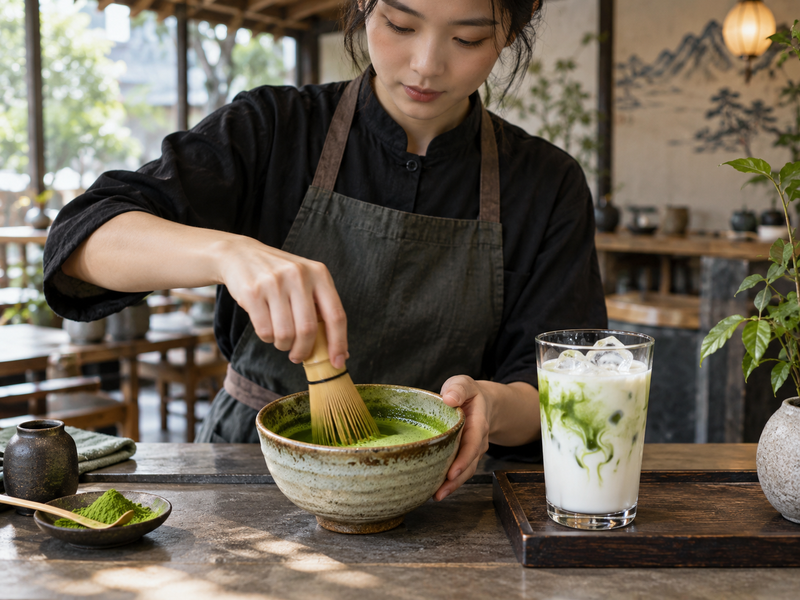
For this trial, “fully cold” means sifted matcha meets chilled water in a bowl and a chasen disperses it before any milk is poured. The finished latte can still contain ambient-temperature milk or ice; the definition describes the initial mixing step. A “warm concentrate” starts with measured warm water, then meets cold milk and ice. Both make iced lattes, but they put different demands on powder dispersion and station layout. Label the methods clearly so an operator does not call a drink cold whisked merely because the final cup feels cold.
Kim’s Matcha House calls its drink a cold whisk recipe, yet its published steps begin with a small amount of hot water and then add cold oat milk. That is a useful hybrid recipe, not an example of powder whisked entirely with cold water. It can join the trial as a third method if the menu needs it.
2. Which ingredients and tools should stay constant?
Set up a fair comparison
Use one matcha lot, one dose, the same water volume, the same milk, the same ice weight, and the same serving cup. The bowl, sifter, whisk model, and operator should also remain fixed during the first round. This isolates preparation temperature as far as a café trial reasonably can. Record water temperature at mixing rather than writing “cold” or “warm” on the sheet. Those labels can hide a large difference between tap water, refrigerated water, and water held on an open counter.
Pick a recipe that already sells or one that matches the planned cup size. For example, a café may begin with its existing matcha dose and change only the water temperature. The exact gram and millilitre targets are local recipe choices, not universal standards. Weigh the powder and water instead of relying on a heaped scoop. If the whisk is damaged or the matcha has been left open beside a steamy bar, redo the sample before judging the method.
| Keep fixed during round one | Record on trial sheet | Reason |
|---|---|---|
| Matcha lot and dose | Batch and weight | Limits powder variation |
| Water volume | Measured quantity | Keeps concentration comparable |
| Milk and ice | Brand, volume, ice weight | Keeps finished drink comparable |
| Bowl and whisk | Exact tools | Changes how powder disperses |
| Water temperature | Actual reading | Defines each method |
3. How do you whisk matcha with cold water?
Make one drink from powder to pour
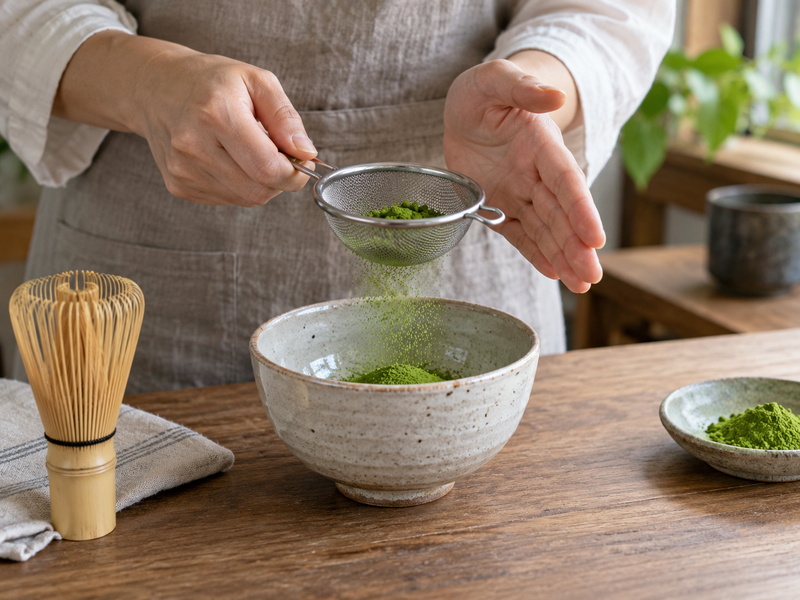
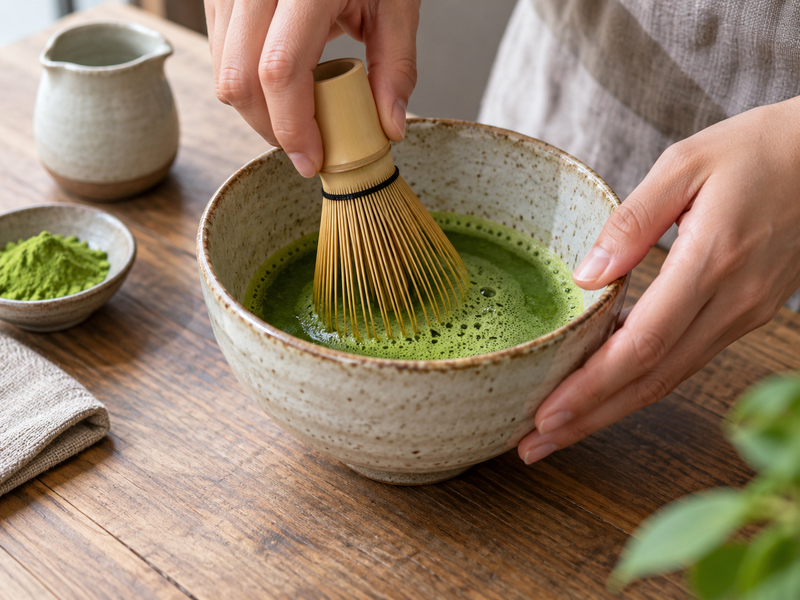
Sift the measured matcha into a dry bowl. Add a small portion of the measured chilled water and work the powder into a smooth liquid before adding the rest. Then whisk briskly with the tips suspended near the bowl floor rather than grinding them against it. Ippodo’s cold-whisked recipe uses chilled water and a short vigorous M-shaped movement; a café should test its own dose, bowl and timing instead of copying a consumer serving unchanged. Stop when the mixture looks uniform, not when an arbitrary timer expires.
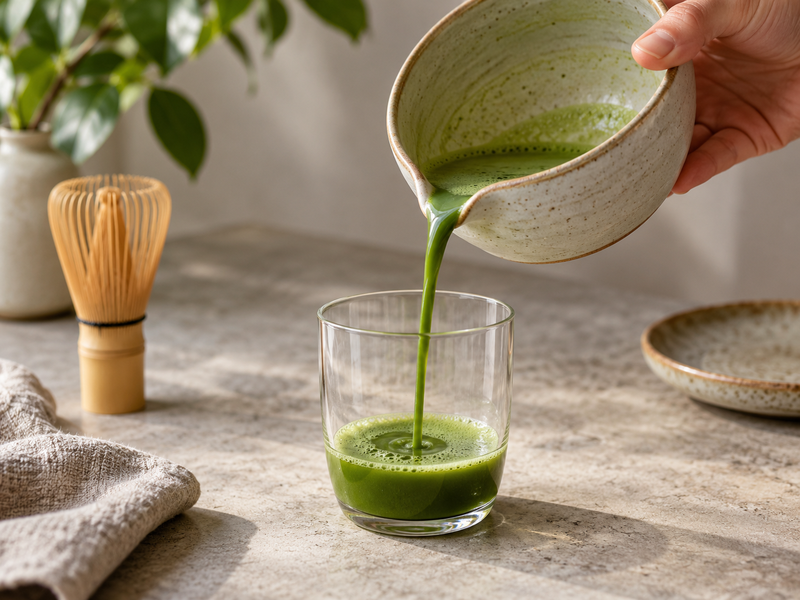
Inspect the concentrate before pouring. Dry pockets at the rim and green specks riding above the liquid indicate incomplete dispersion. Pour into the prepared milk and ice promptly, then assess the finished cup at the time a guest would receive it.
4. When does a warm-water concentrate help?
Compare the real alternative
Warm water may make a powder easier to wet and work into an even concentrate, particularly when an operator is new or the recipe uses little liquid. The café should test that possibility rather than assume it. Ippodo’s iced matcha latte prepares matcha in hot water before pouring over milk and ice. Kim’s recipe starts with a much smaller warm-water step, then incorporates cold oat milk. Neither should be described as fully cold whisking.
A warm base brings its own service questions. A hot kettle may be far from the cold-drink station. More warm liquid can melt ice faster or change the drink’s handoff temperature. Test both methods with the actual cup, normal ice load, and intended milk. If the warm method produces a smoother latte within the service target, write the exact water amount and temperature range on the card.
| Method | Initial liquid | Main question for the café |
|---|---|---|
| Fully cold whisk | Chilled water | Does it disperse within service time? |
| Warm tea portion | Warm water | Does the finished cup stay cold enough? |
| Warm paste, cold finish | Small warm-water dose | Can every operator reproduce the paste? |
5. How should milk and ice enter the recipe?
Finish the drink the same way each time
Prepare the serving cup with a measured ice load and measured milk before pouring the matcha concentrate. That sequence makes a layered presentation possible and gives staff a consistent target. A café can reverse the order if its drink specification calls for a uniform color, but that becomes a separate test. Do not compare one fully cold sample stirred into milk with one warm sample carefully floated on top and conclude that the water temperature created the difference. Stir or leave layered samples according to the same handoff rule.
Check the first sip, middle of the cup, and residue after a few minutes. A dramatic green layer may look attractive in a photograph while the customer reaches a weak milk layer first and a dense powder pocket later. Test oat milk, dairy milk, or another option only after the base method is established; different viscosities and sweetness profiles can change what tasters notice.
6. What should a side-by-side trial measure?
Score what customers and operators notice
Blind the tasting where practical. One person prepares coded drinks; another assesses them without knowing which used cold or warm water. Look for visible clumps, even color after the normal handoff time, mouthfeel, matcha flavor, drink temperature, and dilution as ice melts. Ask operators to record preparation time from weighing powder through final pour.
Use a short scorecard with definitions. “Smooth” can mean no graininess to one person and thick foam to another. Let a visible clump count and a tasting note coexist instead of forcing one number to carry everything. The trial is not laboratory evidence that cold water changes matcha chemistry; it is a practical comparison for a specific powder, recipe, tool and menu. Choose the method that meets the drink standard and can be reproduced at ordinary service speed.
| Measure | How to observe it | Pass rule to define locally |
|---|---|---|
| Clumps | Inspect bowl and final cup | Maximum visible residue |
| Texture | Blind sip at handoff | Agreed tasting description |
| Temperature | Probe a fresh cup | Menu’s acceptable range |
| Time | Start at dose, stop at handoff | Station service target |
| Repeatability | Compare operators and shifts | Same recipe, similar result |
7. How can staff reduce clumps without slowing service?
Fix the point where powder stays dry
Start by watching where lumps appear. If they sit in the original powder, a sifting step or better storage may help. If they form around the bowl edge after water addition, change how the first water portion is incorporated. If powder reaches the finished cup after an apparently smooth concentrate, check whether the mixture stood long enough to settle before pouring. Matcha is a suspension, so a quick stir immediately before transfer may be part of the recipe. Avoid adding extra water without recording it; that changes the taste comparison.
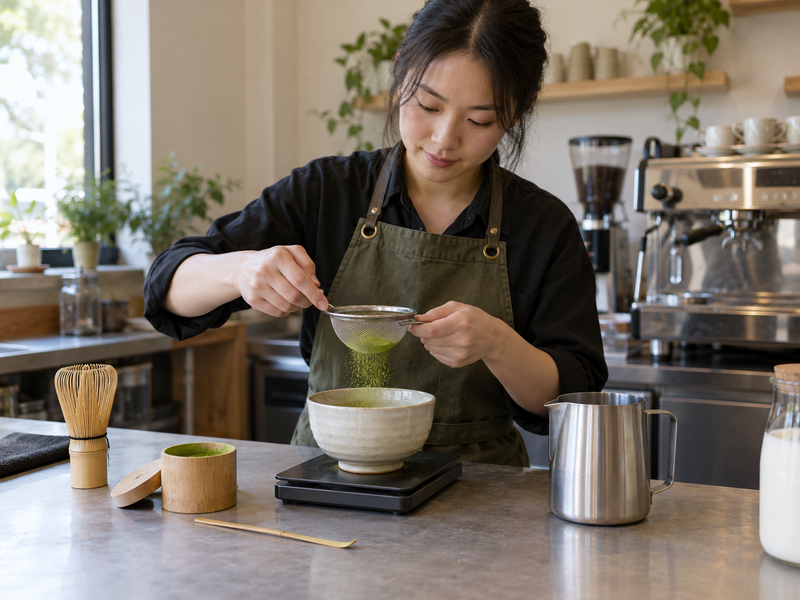
Keep a dry sifter, clean bowl, and measured water within one reach of the barista. Observe actual service rather than writing a perfect demonstration procedure. If clumps persist with one powder lot, try an approved alternative matcha while holding the method fixed.
8. Does the method work with every matcha and milk?
Repeat the test when an ingredient changes
No mixing method can make every matcha and milk combination taste the same. Powder texture, flavor strength, moisture exposure, and the milk’s sweetness or body can change the finished latte. A dose that reads clearly in dairy milk may fade in a sweet plant milk. Another powder may show more sediment even when the same operator uses the same whisk. These are reasons for a controlled application test, not grounds for labeling a matcha “bad” after one cup.
For wholesale menu development, request sample lots intended for latte use and run the selected method with the exact milk sold in store. Matcha Village supplies matcha and matcha-based products for B2B applications; buyers can discuss an application sample and target flavor rather than assume a single grade solves all drinks. Treat claims about a supplier’s powder as separate from the whisking method.
| Changed input | Keep unchanged | Recheck before approval |
|---|---|---|
| Matcha lot | Water and milk recipe | Color, flavor, sediment |
| Milk brand | Matcha and mixing step | Sweetness, body, layering |
| Cup size | Ingredient ratios | Ice dilution and handoff |
| Whisk model | Powder and liquid | Time and dispersion |
9. How do you train a cafe team on the chosen method?
Show the target and the failure examples
Train with one approved recipe card, a live demonstration, and three real cups: a passing drink, a visibly clumped drink, and a drink diluted by an incorrect water or ice amount. Staff can learn what to correct when they can see and taste the error. Demonstrate how far the whisk tips should travel without striking the bowl, where dry powder collects, and the point at which the concentrate should be poured. Give new operators a chance to prepare the drink while a trainer uses the same scorecard developed in the trial.
Build the process into the station. Mark the water measure, locate a dry sifter, stage clean whisks, and place milk and ice near the cup. A procedure that depends on one unusually fast employee will not hold during a weekend rush. If repeated errors occur at the same step, change the station or instructions instead of asking staff to “be more careful.”
10. What belongs in the final recipe card?
Specify the drink staff will actually make
The card needs matcha SKU and dose, water volume and temperature range, sifting instruction, whisk and bowl, milk volume, ice quantity, cup size, mixing motion, stopping cue, pour order, and handoff check. Include a photograph of a passing concentrate and final latte taken under normal service light. State whether the drink is fully cold whisked or uses a warm paste. That single line prevents the common confusion created by a recipe name that says “cold” while its powder meets hot water first.
Give the card an owner and version date. When the matcha, milk, bowl or cup changes, run a short confirmation trial and update the version if the result shifts. A useful card fits on a station screen or one page; deeper trial notes can sit in a separate file. Test the card with someone who did not help write it.
| Recipe-card field | Example of a useful instruction | Avoid |
|---|---|---|
| Water | Measured amount and temperature range | “A splash, cold” |
| Mixing | Bowl, whisk motion, visual stop cue | “Whisk well” |
| Finish | Measured milk, ice, pour order | “Top up” |
| Check | Visible clump and taste standard | “Looks good” |
| Control | SKU, version and owner | Undated photocopy |
For an iced-drink station that also shakes matcha, compare the matcha shaker bottle guide with the cold-whisk trial.
FAQ
Q1. Can matcha be whisked with cold water? Yes. Ippodo publishes a cold-water chasen recipe. Test the timing and dispersion with your powder and serving size.
Q2. Does Kim’s cold whisk recipe use only cold liquid? No. Its published method starts with a small hot-water step, then adds cold oat milk.
Q3. Should a café always use warm water for iced lattes? No. Compare a fully cold base and a warm concentrate using the same powder, milk, ice and service target.
Q4. Will a sifter remove every clump? Sifting can help with dry powder lumps, but staff still need to wet and whisk the powder evenly.
Q5. What should a buyer send a matcha supplier for testing? Share the intended milk, cup size, matcha dose, mixing method and target flavor so samples can be evaluated in the actual drink.
Put the winning method on the bar
Run the cold and warm preparations with one controlled recipe, then choose the cup that tastes right and repeats at service speed. Document the exact water step. A customer should get the same smooth iced latte whether a senior barista or a new colleague makes it.