
A blended matcha latte gives a café a smooth, aerated drink without turning it into a frozen dessert. The difficulty lies in dispersion: powder can collect beneath a foam cap, and too much air makes a cup look full while leaving the guest with less drink. This guide sets out a controlled formula, blending sequence, and service checks for beverage teams. The search-intent reference is Blender Oat Milk Matcha Latte; its title and URL are cited for topic context only. For a true slush format, see Matcha Village’s frozen latte guide.
1. What makes a blended matcha latte different from a frozen latte?
Define the texture before choosing equipment
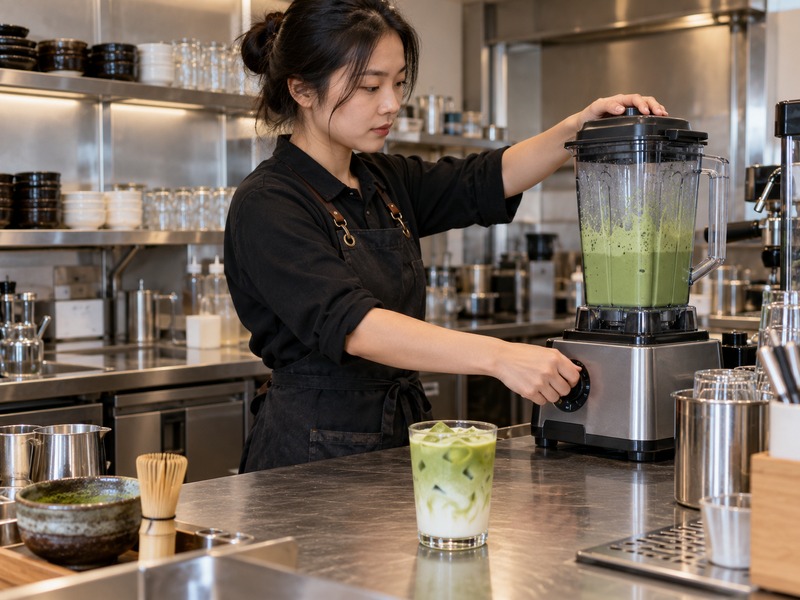
A blended latte uses mechanical mixing to disperse matcha and introduce a restrained amount of air. It can be served cold or warm, although a warm drink needs a vessel and blender rated for hot liquids. A frozen latte depends on ice as a structural ingredient and tends toward a spoonable or slushy texture. That distinction changes purchasing, workflow, and the customer’s expectation. A café may already own a blender for smoothies, yet a full-speed smoothie program can make matcha foam coarse and unstable. Start by describing the target in operational terms: no visible powder islands, a consistent green body, and a foam layer that stays proportionate after the cup reaches the counter. Record whether staff strain the drink, what cup size they fill, and whether a lid contacts foam. Those details affect the perceived serving more than an abstract instruction to blend until smooth.
2. Which matcha should a café specify for high-shear mixing?
Buy for flavor after dilution
Ask suppliers for a sample set that spans the color and flavor range you can afford. A very delicate powder may taste attractive in water yet disappear beneath milk and syrup. An aggressively bitter powder can remain harsh even after blending. Judge candidates in the actual milk base at the intended serving strength. Note color immediately and again after holding, because air exposure may dull the drink. Also inspect whether particles remain visible on the cup wall after a short stand. Fine particle size helps dispersion, although the mixing method and powder storage matter too. Request lot identification, microbiological specifications, moisture information, and a record of how the powder is packed. Matcha Village offers grades for different beverage applications; a buyer should compare samples against one written bench procedure before selecting a commercial lot. A sample tasted with a different milk or dose gives little basis for a price decision.
| Ingredient decision | Check in the finished cup | Procurement question |
|---|---|---|
| Matcha grade | Color and finish after milk dilution | Can the supplier provide a retained lot sample? |
| Milk base | Body and foam after blending | Is the formulation stable across deliveries? |
| Sweetener | Cold solubility and flavor masking | What solids and allergens are declared? |
3. What starting formula makes development measurable?
Weigh a bench cup
Use a percentage formula so staff can scale it without converting spoon measures. The table below is a development starting point, not a finished specification. It assumes an iced drink with no ice blended into the body; ice goes into the serving cup. Make three versions around the matcha dose while keeping total mass constant, then compare color, flavor, sediment, and cost. A predispersion step is worth preserving even when a powerful blender appears capable of wetting powder directly. A small amount of water lets an operator see whether lumps remain before milk hides them. If syrup sweetness changes, correct milk mass rather than quietly increasing cup fill. Document the milk brand or dairy standard used in every trial. Two oat milks with the same label description may produce different foam and sweetness, which can make a sound matcha formula appear inconsistent across stores.
| Bench ingredient | Starting share by mass | Function |
|---|---|---|
| Milk or plant milk | 81.7% | Main body |
| Water for predispersion | 12.0% | Wet matcha before milk |
| Matcha powder | 1.3% | Tea flavor and color |
| Liquid sweetener | 5.0% | Sweetness and mouthfeel |
4. In what order should ingredients enter the blender?
Keep powder away from a dry wall
Prepare the matcha slurry in a separate small vessel, using measured water and a whisk or suitable mixer. Add milk to the blender jar, pour in the slurry, then add syrup. This sequence keeps loose powder from clinging above the liquid line. A brief low-speed mix can combine the liquids before a short higher-speed finish develops texture. Set a process by visual endpoints and validated times for the chosen machine; a universal timed instruction would mislead teams using different blade shapes and jar loads. Avoid underfilling a large jar because its blades may pull air without circulating enough liquid. Avoid overfilling because the lid and splash zone need headspace. Rinse and inspect the jar between flavored recipes, especially after nut syrups or dairy cream. The blending sequence belongs on the station card, with weights and sanitation steps, so a new shift does not invent its own version.
5. How much aeration belongs in the finished drink?
Measure drink mass and cup height
Foam creates a pleasing top, but a thick cap can hide a small liquid portion. Fill a clear control cup by weight, mark the body and foam levels, and check again after the service interval the business actually uses. Track foam collapse and any pale layer developing below it. A café using a domed lid has room for a taller cap; a flat lid may smear it and leave a poor handoff. Plant milks with added stabilizers can behave differently from fresh dairy, so do not rely on visual appearance alone. If air volume varies, standardize jar load, ingredient temperature, blender program, and pour technique before changing the recipe. An operator can reduce excess air by shortening the high-speed stage or allowing a brief settling period before pouring. That change must be tested for powder sediment, because less shear can trade one defect for another.
| Observed cup | Likely process cause | Next controlled check |
|---|---|---|
| Large, fast-collapsing bubbles | Excessive high-speed mixing | Reduce the finishing stage |
| Dense powder at the base | Incomplete predispersion | Inspect slurry before adding milk |
| Thin body, little foam | Milk or jar-load change | Verify base and batch mass |
6. How should dairy, oat, and soy bases be compared?
Keep the tea dose fixed during milk trials
Run milk trials with the same matcha lot, powder dose, syrup amount, serving temperature, and blender program. Dairy contributes its own protein and fat structure. Oat beverages may bring cereal sweetness and a different body; soy can supply more protein but may show a distinct flavor or heat behavior. Brand-level formulation matters more than the plant name on the carton. Check whether a base contains sugar, oil, stabilizers, or flavoring before attributing every change to matcha. Record finished drink mass, foam height, sediment, and sensory notes after the same waiting period. Cost comparisons should use a delivered price for the exact carton or bulk pack, including waste after opening. If a café serves multiple bases, staff should know whether each needs a separate blender program. A single recipe that looks good with dairy may need a different sweetener or mixing time with oat milk.
7. What should happen to ice and temperature?
Separate chilling from texture design
For a blended but pourable iced latte, keep measured ice in the serving cup and blend the liquid ingredients cold. Ice in the jar moves the drink toward a frozen format and changes yield as it melts. If a business wants that product, it should price and label it separately. Chilled milk reduces the cooling load on the serving ice and helps repeatable foam. Warm drinks require a validated hot-liquid process and equipment suited to pressure and steam; a sealed cold blender jar can be unsafe. Check the machine manual and operating procedure before adding hot liquid. For a warm version, tea predispersion and gentle mixing may work better than a high-speed stage. Temperature also affects sweetness perception and matcha aroma, so run hot and cold tastings as distinct products rather than assuming one formula transfers unchanged. Hold times should be set through the business’s food-safety program.
| Service choice | Process effect | Operational note |
|---|---|---|
| Cold liquid over cup ice | Pourable body | Count ice separately from drink mass |
| Ice blended into drink | Thicker, melting texture | Treat as a frozen product |
| Warm liquid | Different foam and aroma | Use hot-liquid-rated equipment |
8. Which checks catch an inconsistent blended latte?
Build a small station specification
A practical station specification needs a few observations that a shift lead can repeat. Weigh the powder and total liquid, inspect the slurry, check fill mass, and compare color under the same light. A photograph can help train staff, but a photograph alone cannot reveal sediment beneath foam. Pour one control cup into a clear vessel after its normal handoff interval and inspect the base. Taste for harshness, stale notes, sweetness balance, and milk aftertaste. For purchased matcha, record supplier, lot, open date, storage conditions, and any lot change. A café chain should send the same recipe sheet and acceptance criteria to every location before a seasonal launch. If two sites disagree, compare their water, milk, syrup, scale calibration, and blender program. Changing matcha grade before checking those variables can add cost without fixing the root cause.
9. How should a buyer calculate portion cost and waste?
Price the served mass
Costing by cup requires more than dividing powder price by the bag weight. Include matcha grams, milk, syrup, lid, cup, ice, and any garnish, then add the expected loss from slurry left in a vessel or product discarded after an open-pack limit. A portion sheet should use weights instead of subjective scoops. For a blender batch serving several cups, measure what leaves the jar and what remains on its walls. The gap can become material across a large menu program. Compare a premium and a culinary matcha on finished-cup performance, not price per kilogram alone: one may require more powder or syrup to reach the same sensory target. For wholesale bids, ask whether lot size, packing format, and freight affect unit cost. Keep promotional pricing separate from the base formula, otherwise margin review becomes difficult after a campaign ends.
| Cost line | Data to record | Common blind spot |
|---|---|---|
| Matcha | Delivered cost per weighed portion | Extra powder used to fix weak flavor |
| Milk and syrup | Actual volume and open-pack loss | Unrecorded substitutions |
| Service materials | Cup, lid, ice, garnish | Different sizes under one menu price |
10. How can a team launch the drink across several stores?
Approve one version before scaling
Send stores a formula by weight, a blender program tied to the equipment model, an ingredient list, and pictures of acceptable foam and defects. Train operators with the same milk and syrup specified for launch. If a distributor substitutes a milk brand, run a short equivalence check before the change reaches the menu. Keep matcha sealed, dry, and away from heat and strong odors; record an open-pack use period through the business’s own quality system. A central team should collect feedback on sediment, foam collapse, preparation time, and guest returns in a common format. Rework one variable at a time. A blended matcha latte earns a place on a busy menu when its texture can be repeated at rush hour, not only in a development kitchen. Matcha Village can provide application samples for comparison under a buyer’s written brief.
Before moving from one-cup trials to a multi-cup jar, run a separate yield test. A larger liquid load changes circulation and foam even when proportions stay fixed. Weigh each cup poured from the batch because the last pour may carry more settled matcha than the opening pour. Set a maximum batch size only after checking both. If stores prepare several orders in one run, record the time between blending and the final pour. That timing belongs in the station procedure and in the cost calculation, alongside jar-cleaning time and leftover liquid.
FAQ
Q1: Can a blended matcha latte be made without syrup? Yes. Test the unsweetened version separately because reduced solids change body and perceived bitterness.
Q2: Should matcha go directly into the blender? A measured slurry makes dry pockets easier to spot and correct before adding milk.
Q3: Is a frozen latte the same menu item? No. Ice blended into the body changes texture, yield, melting, and cost.
Q4: Which milk foams best? Compare the exact dairy or plant-milk products available to your operation under one fixed process.
Q5: How long can a blended drink wait? Set a validated service window through local food-safety and quality procedures; inspect separation during that window.
A sound launch starts with one weighed formula and a cup-level acceptance check. Keep the blend pourable, cost the actual portion, and change powder or milk only after process variables have been checked.