
A matcha latte with vanilla syrup looks simple on a menu, yet syrup choice affects sweetness, color, powder dispersion, and portion cost. This guide helps café buyers and beverage developers specify a repeatable syrup-based drink. It focuses on syrup solids and dosing rather than the broad vanilla flavor options covered by Matcha Village’s vanilla latte article. The search-intent reference is Vanilla Matcha Latte Recipe (Hot or Iced, 2 Minutes); its title and URL identify the topic, not a formula to copy.
1. Why specify vanilla syrup instead of a generic vanilla flavor?
Define the purchased component
Vanilla can arrive as extract, paste, powder, bean infusion, or syrup. A syrup contributes flavor and a measurable amount of sweetness and water in one liquid. That makes it convenient for a bar, yet two syrups with the same name may behave very differently. One may be thin and strongly flavored, while another relies on a larger dose to provide sweetness. A café that writes “one pump” without specifying a pump and syrup has no reliable formula. Start with a supplier product code, ingredient declaration, declared concentration where available, and a measured grams-per-serving target. Ask whether the syrup contains natural vanilla, other natural flavoring, or synthetic vanillin if that distinction matters to the menu claim. The drink should be evaluated after milk dilution, not by tasting the syrup alone. Matcha bitterness, milk sweetness, and serving temperature can make a syrup taste weaker or sharper than expected.
2. Which syrup specifications belong on a buying sheet?
Compare function and flavor
Procurement should collect the ingredient statement, allergens, sugar or sweetener content, viscosity information if supplied, packaging size, storage directions, shelf life, and delivered price. A foodservice pump may dispense different masses with a thick syrup than with a thin one, so check the actual pump on the bar. Color matters too. Darker vanilla syrups can turn an otherwise bright green matcha latte muddy. Some products use caramel color, which may suit coffee but not a green tea drink. If a brand promises visible vanilla seeds, inspect whether particulates settle or clog dispensing equipment. Ask for a production lot identifier and retain a sample when launching across sites. A specification should state what substitutions are allowed. Changing syrup brand during a rush may keep vanilla in the cup while shifting sweetness, aroma, and cost enough to make a returning customer notice.
| Syrup attribute | Practical check | Why it affects the latte |
|---|---|---|
| Sweetness/solids | Compare at equal syrup mass | Changes matcha perception and cost |
| Color | Inspect in clear milk and final cup | Can dull the green |
| Viscosity | Weigh a pump stroke | Alters portion accuracy |
| Flavor declaration | Read supplier label | Supports menu wording |
3. What trial formula gives developers a clear baseline?
Weigh every component
Set a baseline in grams before comparing vanilla syrups. The example below totals one hundred parts of liquid beverage and leaves serving ice outside the calculation. It is a development starting point, not a recommended nutritional target. Change syrup dose in small steps and offset the change with milk, keeping matcha and predispersion water fixed. That makes sweetness comparison more meaningful. Then run a new series around matcha dose after choosing a syrup. If both change at once, a pleasant cup may be difficult to reproduce because the source of the improvement is unclear. Use the exact milk intended for service; a sweet oat beverage can make the same syrup dose seem excessive. Record served mass and cup size. Staff should have one portion number for the drink, not a verbal instruction to add syrup until it tastes right. Hot and iced versions may need separate approved formulas.
| Component | Trial share by mass | Control point |
|---|---|---|
| Milk base | 82.0% | Exact product and temperature |
| Water for matcha slurry | 11.5% | Measured, suitable for drinking |
| Matcha powder | 1.0% | Lot and grade |
| Vanilla syrup | 5.5% | Supplier code and dose |
4. When should syrup enter the mixing sequence?
Protect matcha dispersion
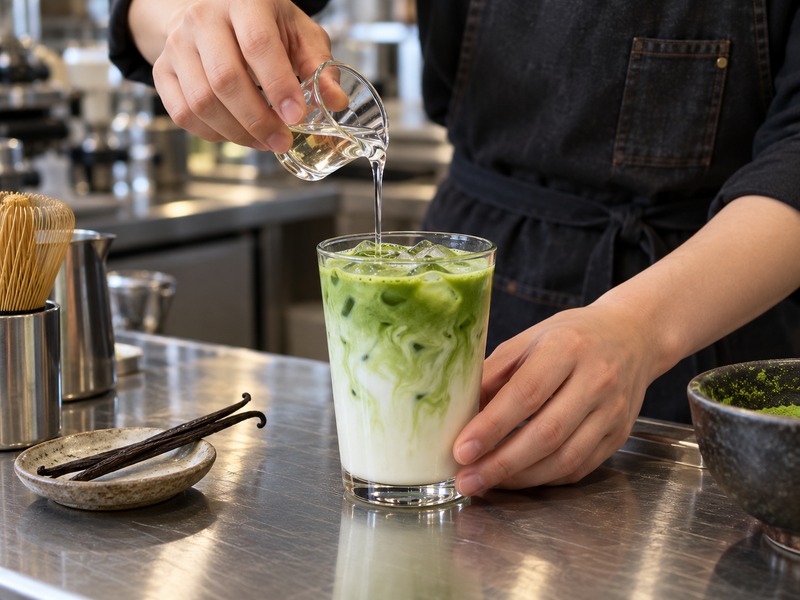
Wet matcha with measured water before adding thick syrup. Syrup placed on dry powder can form sticky clumps that resist a quick stir. Once the slurry is smooth, combine it with syrup and milk in a sequence suitable for the equipment. For an iced drink, syrup can be mixed into the milk before matcha is poured, provided the final cup remains uniform. A layered drink may put vanilla milk beneath matcha, but the customer will need to stir it for an even taste. For a hot latte, mix syrup into warmed milk or into the combined liquid rather than holding it against a hot vessel wall where flavor may concentrate. Use equipment instructions for hot mixing. A central team should document the sequence with photos of a correct slurry and finished cup. If a syrup is chilled and very viscous, check that it clears the dispenser completely; residue in a pump creates variable dosing between orders.
5. How do hot and iced service change the vanilla balance?
Approve both temperatures separately
Heat releases vanilla aroma and can make a moderate syrup dose seem more expressive. Cold milk may suppress aroma while ice melt lowers sweetness and matcha strength. A café serving both styles should trial both at their intended service temperatures. For iced drinks, weigh fresh cup ice separately from liquid formula and check the drink after a realistic pickup delay. For hot drinks, follow the milk equipment’s safe temperature range and avoid scorching, which can distort vanilla and tea notes. A clear cup helps inspect iced color; an opaque hot cup needs a separate tasting and a temperature log during development. Syrup may dissolve readily in a hot base yet collect near the bottom of a cold layered cup. Test the actual build order with the actual cup and straw or lid. A recipe that tastes balanced after stirring may disappoint a guest who drinks the opening sip through an unmixed layer.
| Service style | Likely shift | Development check |
|---|---|---|
| Hot | Stronger vanilla aroma | Taste after milk warming |
| Iced, fully mixed | Ice dilution over time | Retaste at pickup delay |
| Iced, layered | Uneven sweetness before stirring | Test opening and final sips |
6. Which matcha grade works with vanilla syrup?
Judge the blend, not the powder alone
Vanilla can round perceived bitterness, but it should not be used to cover stale or poorly stored matcha. Compare grades in the final syrup and milk formula at a fixed dose. Record tea aroma, green color, drying finish, and sediment. A brighter but more expensive powder may allow a lower dose, or it may offer little benefit after sweetened milk dilution. Calculate cost per served cup rather than selecting by bag price. Request lot-specific information from suppliers and retain a sample during the menu approval period. Matcha Village provides different grades for beverage applications; the buyer’s brief should state syrup type, milk base, target color, and intended price point. Store powder sealed and dry away from steam and strong aromas. Vanilla syrup can hide early flavor deterioration, so a lot-change tasting should still include an unsweetened reference cup.
7. How should a café judge color and separation?
Inspect after the handoff interval
A vanilla syrup may be clear, pale, amber, or visibly speckled. Its effect on green color becomes clearer when tested in the full drink under consistent light. Compare a freshly made cup with one held for the time it normally takes to reach a customer. Look for green sediment, syrup bands, foam loss, and a dull or brown cast. If the cup separates, check matcha predispersion and mixing before adding stabilizer or changing grade. An acidic flavor blend could interfere with a dairy base, although a plain vanilla syrup usually has a different profile from fruit syrup. Verify any flavored variant individually. When a shop uses both dairy and plant milk, keep separate photo standards if their background colors differ. The most useful acceptance rule is specific: no visible clumps, no dark syrup pool at the base, a defined fill mass, and an acceptable color after the normal handoff.
| Defect | Possible source | Check next |
|---|---|---|
| Brown-green appearance | Dark syrup or oxidized powder | Test components separately |
| Sweet bottom layer | Incomplete cold mixing | Revise build order |
| Dry green specks | Poor matcha wetting | Inspect slurry step |
8. What food-safety and labeling details matter?
Keep component documents current
Obtain supplier specifications for matcha, milk, and syrup and keep current ingredient and allergen statements at each location. A vanilla syrup can contain ingredients beyond sugar, water, and vanilla flavor. A plant milk may contain soy, nuts, or gluten-bearing ingredients depending on product and market, so the menu statement must follow the actual supplied base. Cleaning between drinks matters when the same pump, pitcher, or blender contacts allergens. Syrup storage rules also vary by product: some remain at ambient temperature after opening, while others require refrigeration. Follow the supplier label and the operation’s food-safety plan rather than assuming a general rule. For a private-label packaged latte, ingredient ordering, nutrition declaration, and shelf-life work require a separate regulatory and technical review. A café recipe card alone is not a validation package for a bottled beverage.
9. How can operators control cost across stores?
Calibrate the pump and include waste
Weigh several pump strokes at the start of a new syrup bottle and after equipment maintenance. If stroke mass varies, measure syrup by a dosing tool or repair the pump rather than accepting a drifting formula. Cost a cup with delivered matcha, syrup, milk, packaging, and expected loss from opened containers. The supplier’s bottle price matters less than the syrup mass needed for the target flavor. A strong syrup may cost more per liter and less per cup. Track whether staff add an extra pump for perceived sweetness; that behavior can signal a poorly specified recipe or a milk substitution. A chain purchasing multiple syrup formats should compare storage space, dispenser fit, handling time, and waste. Keep a record of approved alternatives and the formula adjustments they require. Promotional toppings belong in a separate cost line so the base latte margin remains visible.
| Cost item | Unit to track | Decision affected |
|---|---|---|
| Matcha | Grams per cup | Grade and dose |
| Vanilla syrup | Grams per pump and cup | Supplier and dispenser |
| Milk | Served mass plus waste | Pack and base choice |
| Packaging | Set per drink size | Menu price |
10. How should a syrup-based latte be approved for rollout?
Lock product codes and visual standards
A rollout pack should name the syrup, matcha lot or approved grade, milk base, dose by mass, build order, and service temperature. Include a photo of the finished cup and a note about acceptable foam and color. Train staff on predispersion and pump calibration, then collect a small number of cup checks from each site. If a syrup becomes unavailable, an alternative needs a bench comparison for sweetness, color, and dosing; a flavor name alone is insufficient. A buyer should also ask how suppliers handle lot changes and whether samples from a new production run can be reviewed before a national switch. The matcha latte with vanilla syrup earns repeat sales through a quiet discipline: every cup should taste of tea and vanilla at the same strength. Matcha Village can provide powder samples for such a fixed-formula comparison.
A supplier change deserves a paired cup test. Prepare one drink with the approved syrup and another with the proposed replacement, keeping matcha lot, milk, temperature, and serving mass fixed. Compare vanilla aroma, sweetness, color, and any residue after the same waiting period. Then weigh pump strokes from both bottles. A replacement can taste similar at equal grams yet deliver a different mass through the old pump. Put the approved dose and dispenser together in the purchasing record so a packaging change does not quietly change the drink.
FAQ
Q1: Can vanilla extract replace syrup? It can flavor the drink, but sweetness and liquid balance must be reformulated.
Q2: Is one pump a valid measure? Only after the pump is calibrated for the exact syrup and target serving size.
Q3: Does syrup go into dry matcha? Prepare a smooth tea slurry before adding viscous syrup.
Q4: Can one formula serve hot and iced? Use it as a starting point, then approve each temperature separately for aroma and dilution.
Q5: What should trigger a remake? Visible powder clumps, a syrup pool, a short fill, or flavor outside the approved cup standard.
Set the syrup by product code and grams, then judge the full drink at its service temperature. That small discipline protects color, flavor, and margin when the recipe moves beyond one bar. Recheck supplier changes before they reach the menu board or training card.