
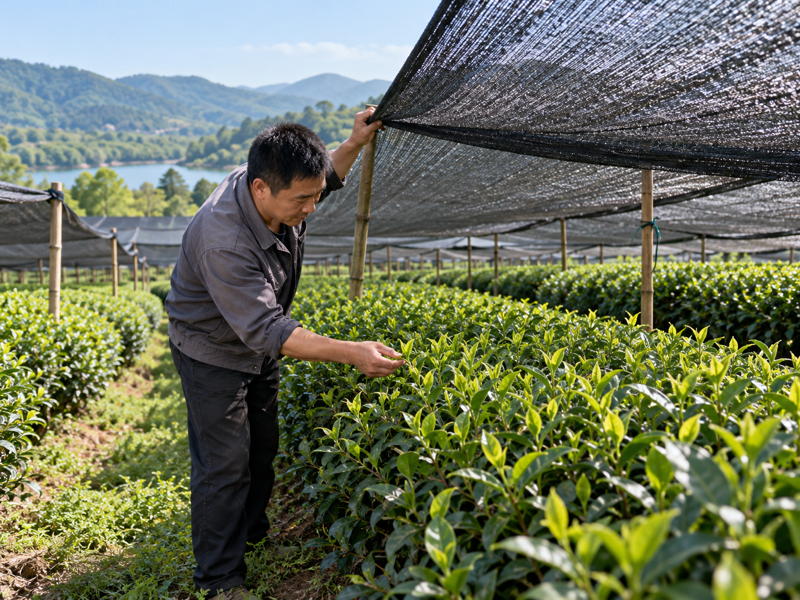
“Shade grown matcha powder” sounds precise, yet the phrase can hide very different cultivation and product practices. A buyer needs to know what was shaded, for how long, how the leaves were processed, and whether the resulting powder suits the intended drink or food. This guide turns the phrase into questions a supplier can answer and checks a product team can repeat. It also distinguishes an agricultural claim from a guarantee about quality, safety, or origin.
Contents
- 1. What does shade grown matcha powder mean?
- 2. How is tea shaded before harvest?
- 3. Why can shading affect color and flavor?
- 4. Is shade grown matcha the same as ordinary green tea powder?
- 5. What records should support a shading claim?
- 6. Which quality measures belong in a purchase specification?
- 7. How should buyers sample and compare suppliers?
- 8. Does shade grown always mean better matcha?
- 9. How should a brand describe shade grown powder to customers?
- 10. What should a buyer ask before placing a bulk order?
1. What does shade grown matcha powder mean?
Understand the cultivation step
Shade grown matcha powder comes from tea leaves grown under reduced light before harvest and then processed into a finely ground tea powder. Shading is associated with traditional matcha production because it changes the leaf's development and can affect color and flavor. The term alone does not tell a buyer which tea cultivar was used, how shade was provided, when it began, or what happened after harvest. Ask for a cultivation description tied to the actual supply chain.
Here is the buyer's test: a supplier should describe the leaf source, shading approach, approximate duration, harvest stage, and subsequent processing in plain terms. The claim should match the product specification and any marketing copy. Matcha Village describes roughly 15–20 days of pre-harvest shading for its tea supply. That statement is a starting point for product discussion, not a universal threshold for every matcha or a substitute for lot-specific verification.
| Claim or attribute | What it tells a buyer | What still needs checking |
|---|---|---|
| Shade grown | Leaves received reduced light | Method, timing, source records |
| Fine powder | Particle size may suit mixing | Mouthfeel in actual recipe |
| Bright green | Visual cue | Lighting, lot stability, flavor |
| Ceremonial label | Supplier's positioning | Defined specification and use fit |
2. How is tea shaded before harvest?
Ask about real field practice
Producers can reduce light with structures or coverings placed above tea rows. The practical method must leave room for plant growth, weather, worker access, and harvest. Buyers do not need to prescribe a farm design from a desk, but they should expect a plausible explanation of how shading is applied and monitored. A generic photograph of a dark net does not prove that every leaf in a shipment came from that site. Traceability links the story to a batch.
Ask for a timeline. When did shading begin? Which plots were covered? When were leaves harvested? How were shaded leaves kept distinct from other leaf streams during processing? These questions matter more than a dramatic percentage of light reduction printed without measurement context. Different canopy materials, weather, geography, and tea varieties can change the actual light exposure. An importer should avoid copying a supplier's broad statement into a retail package until the supporting records and wording have been reviewed.
3. Why can shading affect color and flavor?
Separate tendency from guarantee
Reducing light before harvest changes how leaves develop. In matcha buying, shading is often sought for a greener appearance and a softer, more savory flavor profile. Yet color and taste depend on other choices too. Milling heat, oxygen exposure, storage temperature, and age can dull an otherwise promising powder. A bright dry sample can taste harsh in water; a softer tea can vanish in sweet milk. A buyer should test finished performance rather than assuming one farm practice decides the result.
Make sensory notes specific. Record whether a sample tastes grassy, marine, sweet, bitter, or astringent, and how those perceptions change after cooling. Compare samples under the same light and serving conditions. A color card or reference photo can help a quality team, but physical samples under controlled lighting are more useful than a supplier's edited image. Keep a retained sample from the approved lot so the next shipment can be checked against something real.
Match the sensory target to use
Straight tea rewards a different balance than a high-sugar pastry. A delicate shaded powder may justify a premium in an unsweetened whisked drink; the same flavor may be hard to detect after chocolate or fruit is added. Conversely, a stronger powder can work well in bakery formulas while feeling rough in plain water. Decide whether the product's role is color, tea aroma, a distinctive taste, or a mix of those attributes. Document the priority order before negotiating grade and price.
| Application | Desired behavior | Trial condition |
|---|---|---|
| Straight tea | Balanced aroma and finish | Whisked in measured water |
| Milk drink | Tea stays present | Exact milk and sweetener SKU |
| Ice cream | Color and flavor survive base | Real dairy or plant base |
| Baked product | Flavor survives heat | Approved bake and storage test |
4. Is shade grown matcha the same as ordinary green tea powder?
Read the production description
The words “green tea powder” can cover many materials and methods. A matcha specification should identify the leaf and processing route used for that product. Shading is one relevant feature, but a buyer also needs to know how the leaves were handled after harvest and whether the powder was milled to an application-appropriate fineness. Different tea powders may perform differently in water, milk, ice cream, or bakery items. They should be evaluated as separate products rather than treated as interchangeable because both look green.
The label cannot answer every question. Ask for the ingredient statement, origin information, processing summary, particle-size or mouthfeel guidance where available, and a sample from the proposed commercial grade. If the supplier uses the term “tencha,” ask how that intermediate leaf material relates to the offered powder. Do not assume every product marketed as matcha has identical field or processing records. For private-label retail, obtain legal review of market-specific product naming and origin claims.
5. What records should support a shading claim?
Link farm information with the lot
A credible claim rests on records that connect cultivation, harvest, processing, and packed product. Depending on the supplier's system, those may include plot records, farm purchase records, harvest dates, processing batch records, lot coding, and internal audits. The buyer should ask what documents can actually be shared and how they map to the lot offered. Some farm-level details may be commercially sensitive. A supplier can still explain its traceability method and provide appropriate evidence under a commercial agreement.
Follow one lot backward. Start with the code on a saleable package. Ask which milling batch and leaf intake it came from and how the shaded leaf stream was identified. If the chain breaks at a vague “regional source,” the marketing claim deserves narrower wording. If a retailer intends to say “shade grown” on pack, keep an approval file that includes the supporting evidence and the final approved language.
Verify certifications separately
Organic, halal, kosher, and food-safety certifications address different questions. None automatically proves that a specific lot was shade grown. Check certificate scope, issuing body, validity, product name, and facility coverage against the transaction. Request lot-specific test documents when the destination market or customer requires them. Matcha Village lists support for several certifications and testing categories, but buyers should review current documents for the actual product and destination. An old brochure or supplier website is not a substitute.
| Evidence | Useful question | Warning sign |
|---|---|---|
| Plot or farm record | Which leaf source was shaded? | No link to supplied lot |
| Harvest record | When was shaded leaf picked? | Only a generic season statement |
| Processing record | How was leaf kept identified? | Mixed streams with no controls |
| Pack lot code | Can this bag be traced backward? | Code absent or unreadable |
| Certificate | Does scope cover this product? | Expired or unrelated facility |
6. Which quality measures belong in a purchase specification?
Write acceptance criteria for the end use
A useful specification includes the ingredient identity, origin statement agreed with the supplier, appearance, sensory profile, particle or dispersion behavior, packaging, storage guidance, shelf-life information, and relevant test requirements. It also describes what happens when a lot falls outside tolerance. Buyers should avoid vague terms such as “premium green” without a reference sample or measurable method. A description can guide discussion, but acceptance needs a repeatable comparison.
Test where the powder will be used. A chain buying for sweetened lattes should not approve a lot only after tasting plain tea. A food manufacturer should put the powder into its actual process and inspect the finished product after normal storage. If a specification includes color, define lighting or an instrument method rather than judging from phone photographs. If mouthfeel matters, standardize powder dose, water temperature, mixing tool, and tasting interval.
7. How should buyers sample and compare suppliers?
Request comparable samples
Send each supplier the same application brief: target product, expected monthly volume, packaging format, destination market, price range if appropriate, and documents needed. Request samples from grades they can supply consistently. A hand-picked exhibition sample with no matching saleable product has little value. Record the sample lot and date received. Store every sample according to its instructions and test them within a similar window.
Run two rounds. In round one, screen dry appearance, aroma, basic water preparation, documents, and commercial fit. In round two, make the real drink or food at pilot scale and compare quality after ordinary handling. A third check may be needed on a commercial lot before full rollout. Note each failure in practical language: “tea lost behind oat milk” or “visible dark flecks after mixing.” That gives suppliers a chance to suggest an appropriate grade without guessing what “better” means.
Keep price attached to performance
Calculate cost per approved serving or batch, not simply cost per kilogram. If one sample needs a higher dose, its lower unit price may not deliver savings. Account for loss from sifters, container residue, and pack size if those are material in the operation. Import costs, duties, lead time, and inventory carrying costs also affect buyer economics. These figures belong in the buyer's own model; do not borrow a generic margin estimate from a marketing article.
| Supplier comparison | Record | Decision impact |
|---|---|---|
| Sample identity | Lot, grade, date | Reproducibility |
| Water tasting | Dose and notes | Straight-tea suitability |
| Application trial | Exact recipe and result | Commercial fit |
| Documentation | Files and validity | Market readiness |
| Landed cost | Agreed buying terms | Real serving cost |
8. Does shade grown always mean better matcha?
Define “better” before ranking products
Shading can be an attractive feature, but a buyer's definition of better depends on the application. A plain tea brand may prioritize a soft finish and identifiable leaf source. A bakery may prioritize color after baking and a price that fits its recipe. A café chain may care most about flavor through milk and repeatability across outlets. A powder can be a strong fit for one customer and poor for another. The shade claim should invite testing, not end the evaluation.
Reject broad superiority claims. A longer shading period, a greener photograph, or a higher quoted grade does not automatically mean the powder will perform better in every finished product. Supplier practices and product descriptions vary. Ask for the sensory and technical reasons behind a recommendation. Then verify them in a blind or controlled application trial. If one supplier's powder works at a lower dose, that may be a defensible purchasing reason; if it merely looks brighter on a screen, it is weak evidence.
9. How should a brand describe shade grown powder to customers?
Use language the evidence supports
Say what the supplier can document. “Made from tea leaves shaded before harvest” may be appropriate when the traceability record supports it and the market's labeling rules allow it. More specific claims about duration, geography, or method require stronger corresponding records. If a blend contains powders from several sources, check whether the claim fairly represents every component. Do not imply a health effect from shading without substantiation and legal review.
Keep the copy close to the product. A product page can explain how shade growing relates to the intended taste and use, then show the actual ingredient statement and preparation guidance. A café menu may have room for only a short description; that line should help customers choose a drink rather than recite agricultural jargon. A buyer of bulk powder may need technical details in the specification instead of consumer-facing storytelling.
Check origin wording
Matcha is often associated with Japan, but the word alone should not be used to imply Japanese origin when the powder comes from elsewhere. Identify actual origin and any blending or packing location accurately. Matcha Village is a China-based supplier with tea resources in the Hangzhou area; a buyer using its powder should draft origin claims accordingly. Retail artwork, customs documents, and supplier records should agree. If a brand operates in several markets, have the local label reviewer check each version before printing.
| Wording topic | Evidence to keep | Review owner |
|---|---|---|
| Shading | Cultivation and lot link | Procurement and quality |
| Origin | Supply and customs records | Label and legal team |
| Organic status | Valid product certificate | Certification specialist |
| Flavor description | Controlled sensory notes | Product team |
10. What should a buyer ask before placing a bulk order?
Send a complete brief
State whether the powder will be used for straight tea, lattes, bakery, frozen desserts, or a packaged blend. Include target market, expected volume, pack size, desired sensory profile, price framework, and required documents. Ask for shade cultivation details and traceability at a level that supports the intended claim. Request a saleable-lot sample and test it in the actual product. This keeps supplier recommendations relevant and reduces rounds of vague quotations.
Finish with a practical approval gate. Procurement, quality, and product development should agree on the reference sample, acceptance criteria, certificate review, and delivery terms. Set a process for future lot comparisons and substitutions. Ask the supplier how it will handle a failed incoming test or a sensory drift. Matcha Village can discuss shaded-leaf sourcing, product grades, bulk supply, and market documents, but the purchase decision should rest on current evidence and a successful application trial. A clear brief makes that conversation faster and more useful.
FAQ
Q1: Does shade grown mean the tea is organic?
No. Shading describes light management; organic status requires separate certification and product-scope checks.
Q2: Is every green tea powder shade grown?
No. Ask for cultivation and processing details for the specific powder rather than inferring them from color.
Q3: Can a buyer verify shading from a powder sample?
Sensory testing helps assess the finished product, but cultivation claims need traceable supplier records.
Q4: Does longer shading always improve flavor?
No single duration guarantees a better finished powder. Compare lots in the intended application.
Q5: What is the best opening question for a supplier?
Ask how the proposed saleable lot links to its leaf source, shading practice, processing batch, and finished specification.
For the manufacturing scope behind matcha terminology, consult the ISO matcha report. For commercial sourcing context, see our powder comparison.