
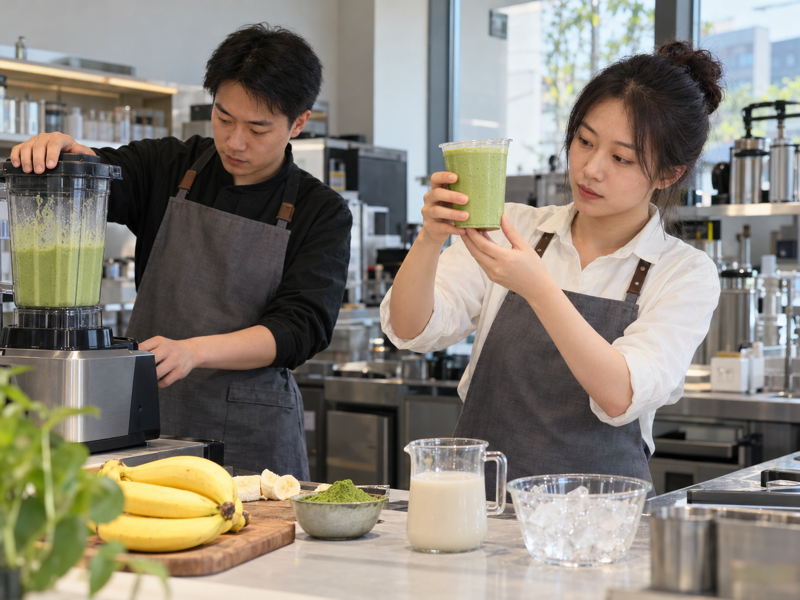
A matcha powder smoothie can look excellent in a development kitchen and turn dull, watery, or gritty at a busy counter. Café buyers need a powder that works with their actual fruit, milk, ice, equipment, and serving time. This guide covers development, service trials, and a written buying specification. The quantities below are trial points for product development, not nutrition promises or universal recipes.
Contents
- 1. What makes a matcha powder smoothie work on a commercial menu?
- 2. Which matcha powder should a smoothie operator test?
- 3. How should a café build a reliable base recipe?
- 4. Which fruits and liquids pair well with matcha in a smoothie?
- 5. How do ice, temperature, and hold time change the cup?
- 6. How can a smoothie recipe be made faster without losing control?
- 7. How should buyers calculate the real cost per smoothie?
- 8. What quality checks belong in a chain rollout?
- 9. Which label and safety questions should product teams resolve?
- 10. How should an operator launch and improve the smoothie?
1. What makes a matcha powder smoothie work on a commercial menu?
Start with the finished cup
A smoothie succeeds when a guest can taste the intended tea note after fruit and milk enter the recipe. It should pour at a predictable speed, fit the advertised cup, and hold a pleasant texture for a normal takeaway interval. Color matters, although a vivid green powder alone cannot rescue an unbalanced drink. Bananas, berries, citrus, yogurt, and sweetened plant drinks each pull matcha in a different direction. Select a target flavor before ordering a case of powder.
At the counter, this means one thing: describe the approved cup in observable terms. Record its ingredient weights, blended yield, pour time, appearance, and taste immediately after preparation and after a realistic wait. A café with two cup sizes needs two cards or a verified scaling rule. Otherwise, staff may fill a larger cup with extra milk and unintentionally erase the tea flavor.
| Menu brief | Desired tea role | Development check |
|---|---|---|
| Plain matcha smoothie | Lead flavor | Tea remains clear after milk and ice |
| Matcha banana | Shared flavor | Banana does not bury tea |
| Matcha berry | Supporting note | Fruit acidity and color stay acceptable |
| Matcha protein blend | Distinct ingredient | Protein texture does not exaggerate grit |
2. Which matcha powder should a smoothie operator test?
Buy against the recipe
Choose candidates by performance in the intended smoothie, not by a ceremonial or culinary label alone. Make identical drinks with each sample: same fruit batch, milk, ice weight, blend cycle, and cup. Taste them blind where practical. Record tea aroma, bitterness, color, mouthfeel, sediment, and how each changes after waiting. A powder that tastes smooth in water may disappear behind banana. Another can look promising dry but leave an unpleasant coarse finish after blending.
The useful comparison happens in milk and fruit. Ask each supplier for a full ingredient statement, production lot, storage guidance, pack size, and a sample from a saleable lot. Pure matcha and sweetened matcha premixes cannot be compared by bag price. A premix can contain other ingredients that affect flavor, allergen handling, and the actual amount of tea per serving. Request the relevant composition details before calculating serving cost. If those details are unavailable, do not make a cost or label decision from the front of the pack.
3. How should a café build a reliable base recipe?
Measure inputs before adjusting flavor
Begin with one cup size and weigh every input. Powder, liquid, frozen fruit, sweetener, ice, and any yogurt belong on the card. Volume measures are less reliable for fruit pieces and crushed ice. Blend a modest trial series in which only one variable changes at a time. If the drink tastes weak, check dilution and fruit load before adding matcha. If the drink feels thick, adjust liquid or frozen solids without changing three other ingredients at once.
A useful starting trial might compare three matcha doses in the same 350 mL serving. Those doses should come from supplier guidance and sensory testing, not a rule copied from another café. Write down finished yield, because air incorporation and ingredient density can change how a cup fills. Use the exact blender model and jar size intended for service. A home blender result is only a concept test for a commercial station.
Lock the sequence
Some powders disperse better when briefly mixed with liquid before frozen ingredients are added. Others disperse acceptably in a one-step commercial blend. Test both methods and choose the faster method that still meets texture standards. Add ingredients in the same order for each trial, keep the blend cycle constant, and inspect the bottom of the jar for dry clumps before pouring. Make a second cup immediately after the first to see whether warm equipment or rushed rinsing changes the result.
| Variable | Keep fixed during a dose trial | Record after blending |
|---|---|---|
| Fruit | Same SKU and ripeness or frozen lot | Flavor dominance |
| Liquid | Same brand and weight | Pouring texture |
| Ice | Same weight and size | Dilution and coldness |
| Blender | Same jar and program | Clumps and cycle time |
| Cup | Same capacity | Fill level and final yield |
4. Which fruits and liquids pair well with matcha in a smoothie?
Test flavor and texture together
Banana brings body and sweetness, although a ripe banana can dominate delicate tea. Mango gives a bright, soft texture and may make color appear less green. Berry mixes contribute acidity and a darker hue; a purple finished cup is not a defect if the menu describes it honestly. Avocado can add body but may make a drink too heavy for the intended price and audience. Treat these as trial hypotheses. The specific variety, ripeness, frozen format, and dosage decide the result.
Watch the ingredients that hide tea. Sweetened yogurt, flavored protein powder, and concentrated fruit puree can each change sweetness before any syrup is added. Taste every ingredient alone, then in the complete formula. Dairy, oat, soy, and coconut drinks carry different flavor and allergen profiles. A plant drink selected for a hot latte may behave differently under high-speed blending with ice. Use the exact commercial SKU the buyer can replenish.
5. How do ice, temperature, and hold time change the cup?
Treat ice as an ingredient
Ice controls temperature, texture, and eventual dilution. Weigh it instead of filling an unmarked scoop. Frozen fruit can replace some ice, but the resulting sweetness and thickness will change. Test a cup immediately, after a normal queue or courier pickup delay, and near the end of the expected drinking interval. Check for separation, sediment, color change, and a watery top layer. Record findings without pretending that one timed trial guarantees all-day stability.
Here's the operational test: place the approved drink in its real takeaway cup with its real lid. Carry it, set it down, and taste it again after the likely customer wait. A clear cup may show layers that an opaque cup hides. A tightly sealed lid can change foam behavior. Warm fruit at prep can melt ice before blending finishes. These small details explain why a bench recipe may fail in delivery service.
Set a service window
Do not advertise a hold time based only on appearance. Food safety rules, dairy or plant-drink handling, fruit preparation, and store temperature also govern service. The team should validate its own safe handling procedure under local requirements. For quality, decide when the drink should be made to order and when an unfinished base may be held. A premixed matcha slurry may speed assembly, but it needs controlled preparation, labeling, temperature, and discard rules. For many stores, accurately weighed single-cup assembly is simpler.
| Observation time | What to inspect | Possible response |
|---|---|---|
| At pour | Color, clumps, fill line | Adjust sequence or yield |
| After short wait | Foam, settling, visible layers | Revise blending or solids |
| At pickup | Temperature and cup condition | Review ice and packing |
| After realistic transit | Flavor and separation | Change recipe or service claim |
6. How can a smoothie recipe be made faster without losing control?
Simplify the station
Speed comes from fewer decisions during a rush. Portion frozen fruit in approved weights, place powder near the scale, and position clean blender jars where staff can reach them. A color-coded storage system can help, but its labels and allergen controls must follow the operator's actual procedures. Preportioning can reduce scooping variation; it also adds preparation labor and packaging. Count both before adopting it chain-wide.
Measure the full ticket. Time from order receipt through handoff for several staff members, not only the blend cycle. Include washing or changing jars between allergen-sensitive orders. A smoothie that blends in 30 seconds may still occupy a worker for several minutes when fruit retrieval, weighing, garnish, and cleanup are included. Observe a lunch rush because a quiet test does not expose station conflicts.
7. How should buyers calculate the real cost per smoothie?
Cost the finished serving
The powder's price per kilogram is only one input. Calculate the actual grams used, fruit and milk, ice, sweetener, garnish, cup, lid, straw, and any portioning waste. Add a realistic allowance for spoilage from prepared fruit and remakes observed in the pilot. A lower-priced powder may require a larger dose to remain noticeable in the finished smoothie. Compare cost at the approved sensory target, not at equal powder weight alone.
Keep price and yield on one sheet. A powder with stronger flavor can be economical if a smaller dose works. The reverse can also happen if it introduces bitterness that demands more fruit or syrup. Test substitutions when procurement proposes a cheaper milk or frozen fruit supplier. Ingredients interact, and a saving on one line can erase the drink's signature flavor. Avoid a margin forecast based on a single ideal cup made by the development lead.
Include procurement conditions
Ask about minimum order quantity, lead time, shipping format, shelf-life information, and lot consistency. A café chain expanding into new outlets needs a replenishment plan that fits small stores and central warehouses. For international buyers, import documents, local labeling rules, and testing requirements belong in the purchasing plan. Matcha Village states it can provide bulk matcha, application selection support, and export documentation; a buyer should still review current documents and the actual sample before approval.
| Cost line | Evidence needed | Common blind spot |
|---|---|---|
| Matcha | Dose and purchase price | Comparing unequal flavor strength |
| Fruit and milk | Approved SKU and weight | Seasonal substitution |
| Packaging | Real cup and lid | Delivery format cost |
| Labor | Observed ticket time | Cleanup between orders |
| Waste | Pilot remake and discard record | Idealized zero-waste model |
8. What quality checks belong in a chain rollout?
Check every change that can alter the drink
Set an opening check for powder lot, storage condition, scale, blender jar, frozen fruit, and milk SKU. Staff should know the approved appearance and a simple action when a cup looks wrong. Compare a new powder lot with a retained approved sample in the standard smoothie. A color mismatch under different store lights can be misleading, so make the comparison under repeatable conditions. Document the result, including whether staff needed an extra blend cycle.
Use complaints as data. Record whether customers report a weak tea note, excessive sweetness, grit, melting, or separation. Link the complaint to a recipe version and ingredient lot when possible. A complaint from one busy store may indicate a staffing or equipment issue rather than a supplier problem. If the defect repeats across stores after a lot change, procurement has stronger evidence to investigate that lot. Do not change the recipe silently at individual outlets.
9. Which label and safety questions should product teams resolve?
Describe the full formula
A menu item made with pure matcha still contains all its other ingredients. Review the supplier's ingredient statement and the formula's milk, nut, soy, protein, or other allergen sources under local rules. Do not treat a green color as proof of a health outcome. Avoid claims about detoxification, disease, weight loss, or guaranteed energy. Even a caffeine statement should be based on relevant product information and the finished serving rather than a generic internet figure.
A clear menu protects the buyer and the guest. Say whether the drink is sweetened, contains dairy, includes a protein mix, or uses a matcha blend rather than pure tea when that distinction affects the customer. For packaged smoothies, the regulatory work goes further: ingredient order, nutrition, claims, allergens, date marking, and shelf life require jurisdiction-specific review. A café menu and a bottled beverage are different compliance projects.
Ask suppliers for usable files
Procurement may need specifications, lot identification, certificate of analysis, relevant food safety documents, and market-specific test results. Ask for documents covering the product and lot being bought. Certifications may help with a target market, but a logo in a brochure does not replace checking certificate scope and validity. For a private-label blend, the contract should identify who owns the formula, which party approves substitutions, and who signs off on final artwork and claims.
| Question | Café menu | Packaged retail smoothie |
|---|---|---|
| Ingredient review | Recipe card and menu copy | Full ingredient declaration |
| Allergen handling | Station controls and disclosure | Formula and label review |
| Shelf life | Made-to-order handling | Validated product life |
| Claims | Menu wording | Jurisdiction-specific review |
10. How should an operator launch and improve the smoothie?
Run a paid, measurable pilot
Serve the drink at its intended price with the real cup and ordinary staff. Track orders, ingredient use, ticket time, remakes, and reasons for complaints. Compare sales with an existing smoothie only if the offers, placement, and period make the comparison fair. Offer a small range of variants rather than a sprawling launch menu. A classic matcha smoothie can establish whether guests want tea flavor; a fruit version can reveal whether they prefer matcha as an accent.
Change one thing at a time. If the drink is weak, verify actual weights and ice before changing powder. If it is slow, observe station movement before cutting ingredients that give it its identity. If complaints center on graininess, compare matcha dispersion, protein powder, and blender performance separately. Keep each approved recipe version dated and retire old cards. That prevents a store from using yesterday's formula with today's ingredients.
Turn the pilot into a purchase specification
Once the cup is approved, write the powder performance requirement, pack format, expected use volume, documents needed, and lot-change review into a supplier brief. Send suppliers the actual application: smoothie with the intended milk, fruit, and ice. Ask them to recommend samples against that use. Matcha Village can discuss grade selection, bulk supply, and custom blends for this kind of brief. The useful next step is a side-by-side trial, followed by a commercial discussion grounded in the finished cup and its operating cost.
FAQ
Q1: Can any matcha powder work in a smoothie?
No. Test flavor, mouthfeel, color, and cost in the actual formula; water-only tasting misses fruit and milk interactions.
Q2: Should a café use pure matcha or a sweetened premix?
Either can fit a menu, but compare ingredient declarations, real tea content, sweetness control, and serving cost.
Q3: Can a matcha smoothie be made ahead?
Only after the operator validates quality and safe handling for its recipe, packaging, temperature, and local rules.
Q4: Why does a smoothie separate after blending?
Ingredient solids, ice melt, blending method, and waiting time can all contribute. Test each variable before changing the formula.
Q5: What should a buyer send a matcha supplier?
Send the target drink, approved ingredients, cup size, expected volume, pack needs, and required market documents.
For flavor ideas at household scale, compare smoothie recipes. For commercial sourcing context, see matcha buying for cafés.