
Sencha and matcha can both appear on a green tea menu, but treating them as interchangeable leads to poor purchasing decisions. One arrives as leaf to be steeped and removed; the other arrives as powder that remains in the drink. That difference changes preparation, texture, portion cost and the questions a buyer should ask a supplier. This sencha vs matcha guide gives cafés and product teams a practical comparison, then turns it into a sample test and a purchasing brief. For a consumer-facing introduction, Senbird Tea’s comparison is a useful starting point. Here, the focus is what a business needs to verify before placing an order.
Contents
- 1. What are sencha and matcha made from?
- 2. How does cultivation affect the two teas?
- 3. What happens during processing?
- 4. How do preparation methods differ?
- 5. What should a buyer taste in each sample?
- 6. How should caffeine comparisons be handled?
- 7. Which tea suits a drink or food application?
- 8. What does cost per serving reveal?
- 9. How should a business run a sample trial?
- 10. What belongs in the purchase specification?
1. What are sencha and matcha made from?
Start with the form that reaches your kitchen
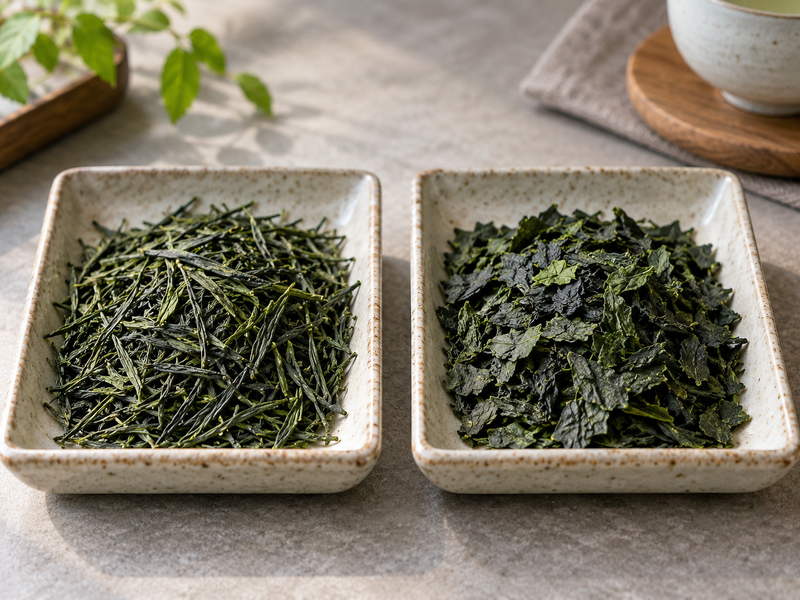
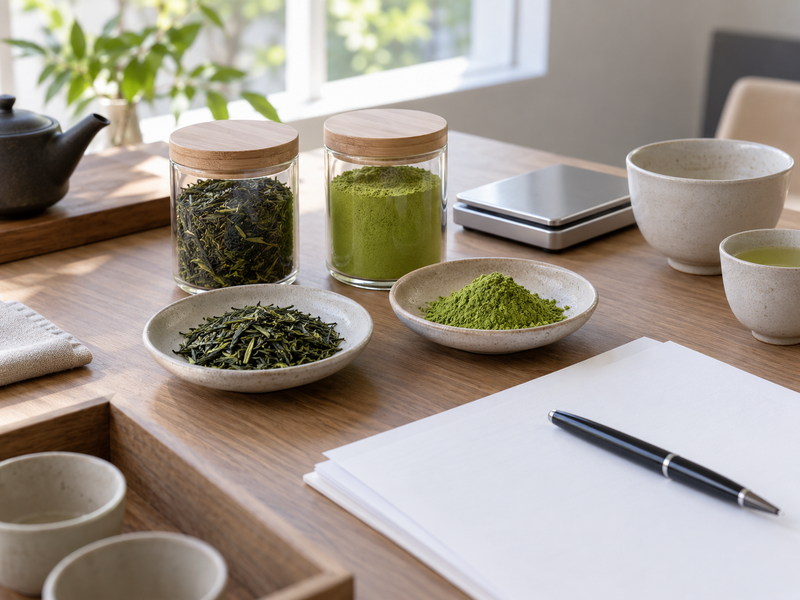
Both teas come from the tea plant, Camellia sinensis. Their commercial forms differ. Sencha is normally sold as dried, rolled leaves. A café steeps those leaves, pours off the liquid and leaves the spent material behind. Matcha is finely milled tea intended for whisking into water or another liquid. The powder remains in the finished drink unless a recipe separates it again. Japan’s Ministry of Agriculture, Forestry and Fisheries describes matcha as tencha ground into powder and distinguishes tencha from sencha by cultivation and processing.
Those definitions give a buyer two immediate checks. First, ask whether a sample is whole leaf, tencha, or finished powder; “green tea” alone is too broad for a purchasing specification. Second, decide whether the finished product needs a clear infusion or an opaque suspension. A loose-leaf sencha may be right for a pot service or a clear bottled tea concept. A matcha powder may suit a latte, bakery formula or beverage where the tea itself supplies color and body. A ground sencha product is still ground sencha; the grinding step alone does not tell you how its source leaves were grown and processed.
2. How does cultivation affect the two teas?
Compare the growing brief, then ask for the lot
Traditional sencha is commonly grown in open sunlight. Leaves destined for tencha are shaded before harvest. Japan’s MAFF green tea guide describes shaded young leaves for tencha and a different production route for sencha. Shade changes the leaf material available to the processor, but it does not make every matcha taste identical. Cultivar, harvest, growing region, shade practice and later handling also affect a sample. A buyer cannot infer all of those details from the word “ceremonial” on a packet.
Request a lot-linked description of the raw material: where the leaves were grown, whether the powder came from tencha and where milling occurred. If a supplier uses a different process, ask for wording precise enough for your label and menu. A country name in a brand story may not identify every production step.
| Buying question | Sencha sample | Matcha sample |
|---|---|---|
| What raw material is supplied? | Dried leaf | Milled tea powder |
| Was the crop shaded? | Ask for the actual lot practice | Ask for the tencha growing method |
| Which locations matter? | Growing and leaf processing | Growing, tencha processing and milling |
| What should be checked on arrival? | Leaf integrity and aroma | Powder aroma, color, texture and seal |
3. What happens during processing?
Follow the leaf past harvest
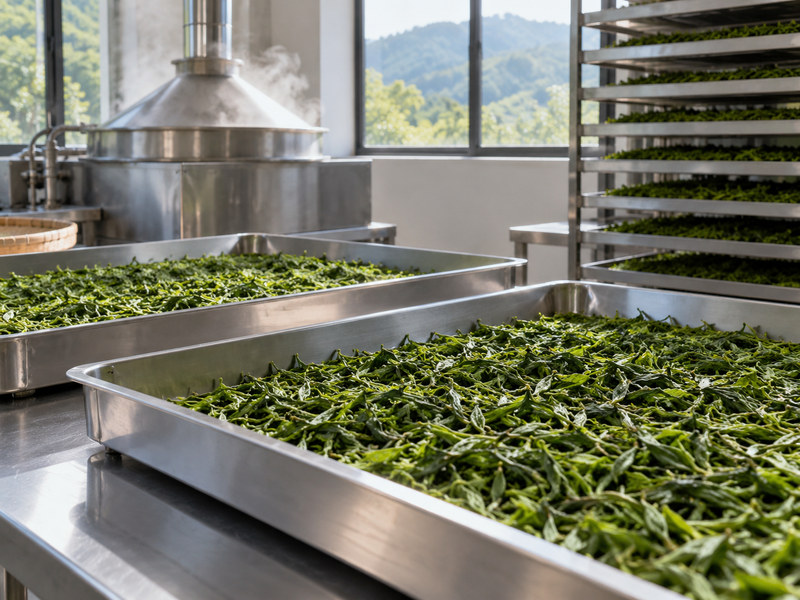
The processing split is more useful than a vague claim that one tea is “more premium.” A typical Japanese sencha route steams fresh leaves, rolls them and dries them into a shape suitable for infusion. Tencha is also steamed, but its leaves are dried without the same rolling stage; stems and veins are removed before milling into matcha. The MAFF process diagram lays out these paths, while the World Green Tea Association describes sencha processing in more detail.
For a manufacturer, each step creates a possible source of variation. A sencha sample can contain different leaf sizes, broken fragments or uneven roasting and drying notes. Matcha can vary in particle feel, aroma after opening and how readily it disperses during a standard preparation. Milling does not erase problems in the raw leaf; a bright photograph cannot demonstrate low grit or clean flavor. Ask for a specification and a current representative sample. If a supplier changes the leaf blend, processing site or milling setup, repeat your sensory test before approving the replacement lot. A purchasing team should document the process it bought, not a process it merely assumed.
| Process stage | Sencha route | Matcha route | Buyer check |
|---|---|---|---|
| Fresh leaf | Harvested for leaf tea | Harvested for tencha | Confirm lot and source |
| Heat treatment | Commonly steamed | Commonly steamed | Ask for processing description |
| Drying and shaping | Rolled and dried | Dried without rolling | Examine supplied form |
| Final preparation | Steeped as leaf | Tencha milled to powder | Test finished application |
4. How do preparation methods differ?
Standardize the cup before judging the tea
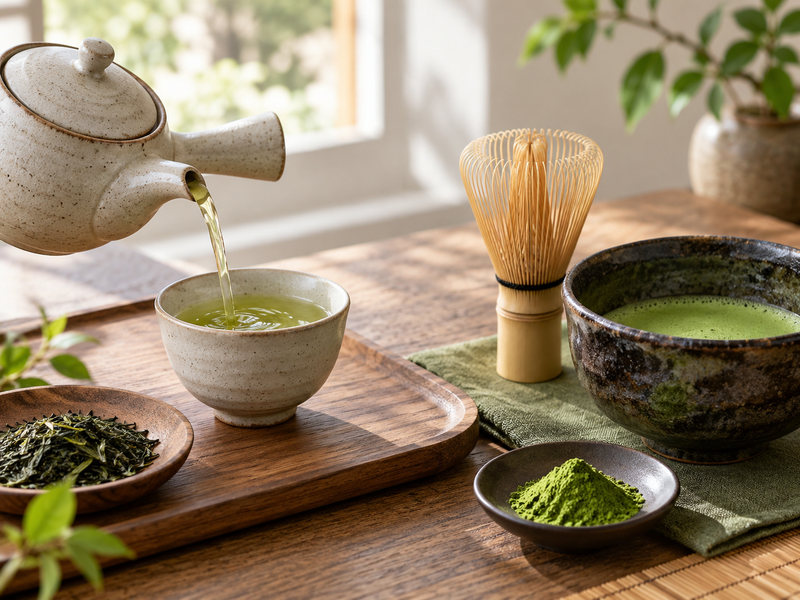
Sencha is extracted. A measured leaf dose meets a measured volume of water for a set time; the brewer then separates the liquor from the leaves. Matcha is dispersed. A measured powder dose is wetted and whisked, and the suspended particles stay in the bowl or recipe. This explains why a matcha latte can carry green color and a fuller mouthfeel that a clear sencha infusion will not automatically provide. It also explains why matcha settles in a bottle or batch container if the formula lacks a suitable handling plan.
Run preparation trials with one set of tools before comparing lots. Record water temperature, dose, time and vessel for sencha. For matcha, record dose, initial wetting liquid, whisk method, final volume and serving temperature. A café should test its actual water and milk, because a powder that tastes balanced in plain water may disappear under dairy or a sweetened plant drink. If staff prepare samples with different spoons and cups, a “supplier difference” may only be a dosing difference. The trial does not need laboratory equipment; it needs a scale, a timer, the intended serving glass and a written recipe that another person can repeat.
| Variable | Sencha service | Matcha service |
|---|---|---|
| Measured input | Dry leaf mass | Powder mass |
| Main action | Steep and strain | Wet, whisk and disperse |
| Liquid in cup | Infusion | Powder suspension |
| Likely service fault | Over-extraction or weak pour | Clumps, sediment or uneven dose |
5. What should a buyer taste in each sample?
Taste for the job you are buying it to do
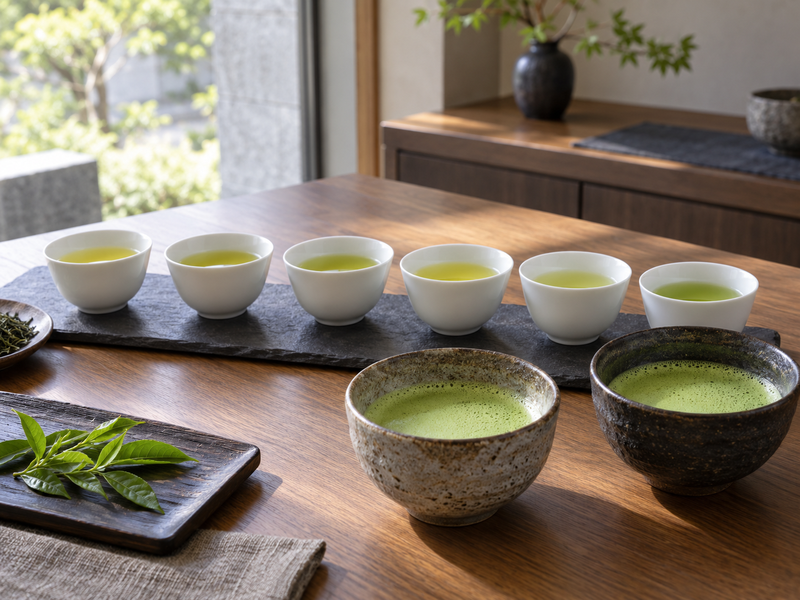
A sencha sample deserves a clear infusion tasting before it meets lemon, syrup or ice. Note aroma, sweetness, astringency, the finish and how the second infusion behaves if that matters to your service. A matcha sample needs two tastings: one in water and one in the intended recipe. Record tea presence, bitterness, graininess and aftertaste. If a latte is the final product, judge it in the milk and sweetness level you actually plan to sell. A powder that wins a plain-water tasting may not win the latte trial, and the opposite can happen too. Our matcha grades guide lists the labels to examine when comparing powder samples.
Use a simple score sheet rather than a string of adjectives nobody can compare next week. Put samples in unbranded containers with random codes, prepare them at the same time and serve at the same temperature. Ask tasters to write their own notes before discussion. Include at least one person who will make the product and one who will cost it. This is not a scientific sensory panel, but it prevents a confident salesperson or a vivid green sample from deciding the purchase alone. Keep the notes with the lot number, not just the supplier name.
6. How should caffeine comparisons be handled?
Compare the prepared serving, not a slogan
“Matcha has more caffeine than sencha” is too blunt for a menu or a buyer brief. The amount in a serving depends on the dose, source material and how the drink is prepared. With sencha, only the extracted compounds enter the served liquor; the leaves are removed. With matcha, the measured powder remains in the drink, though a guest may leave sediment in a cup. A small whisked bowl and a large sweet latte may use different amounts of powder, so a single comparison cannot cover both. Published figures also use different serving sizes and preparation methods.
If caffeine information matters to customers or a product label, ask the supplier for lot-relevant data or commission an appropriate test of the finished product. Record the serving size and the method behind any number you publish. Without that evidence, describe the tea and the portion rather than promising a precise stimulant effect. Staff can still answer ordinary questions honestly: both are tea products that may contain caffeine; the exact amount in your drink has not been verified unless you have measured it. Keep health or performance claims out of tasting copy, especially when the menu decision is really about flavor and service.
7. Which tea suits a drink or food application?
Choose by required texture and flavor visibility
A clear sencha infusion suits pot service, a lightly flavored iced drink or a liquid recipe component. Matcha brings color, tea flavor and measured powder into a batter, cream or drink. In a delicate dessert, matcha may dominate; in a sweet drink, too little may disappear. Sencha can add tea aroma without green opacity.
Test the finished product after its normal holding period. Ice dilutes a drink; baking changes a cake; a cream may lose color. One powder grade may not suit every application. A café might buy one tea for water service and another for blended drinks. Compare candidates against each finished use.
| Application | Better first trial | Reason to test an alternative |
|---|---|---|
| Clear hot tea | Sencha leaf | Matcha if guests expect a whisked bowl |
| Opaque latte | Matcha powder | Sencha infusion for a lighter tea latte concept |
| Baked product | Matcha powder | Sencha infusion if added liquid fits the formula |
| Bottled clear tea | Sencha infusion | Matcha only with a controlled suspension system |
8. What does cost per serving reveal?
Include waste and preparation time
Packet price is a poor substitute for cost per accepted serving. Sencha can sometimes be steeped more than once, but a café should count only infusions it actually serves at the quality it promises. Matcha has a measurable powder dose per drink, plus losses from scooping, clumps, spills and open-pack freshness. The cost calculation should use the chosen recipe, not the supplier’s lowest suggested dose. If the matcha needs an expensive syrup to cover a rough finish, include that syrup. If a sencha pot occupies staff time or produces unsold second infusions, include that operational cost too.
Record purchase price, pack size, usable yield and recipe dose in a worksheet. Add other ingredients separately. Repeat the calculation after service trials, when rejected servings and waste become visible. A lower cost per kilogram can be a poor buy if the tea fails the taste target or needs a higher dose. A smaller sealed pack may reduce waste in a slow-selling program.
| Cost item | Sencha example to measure | Matcha example to measure |
|---|---|---|
| Tea input | Leaf grams per served pot | Powder grams per drink |
| Usable yield | Accepted infusions | Accepted prepared drinks |
| Waste | Unsold brewed tea | Clumps, spill and expired open packs |
| Labor | Steeping and straining | Weighing, wetting and whisking |
9. How should a business run a sample trial?
Keep the comparison small and repeatable
Choose two or three candidate lots for each application. Request enough material for a dry inspection, a standard water preparation and several finished-product trials. Record the supplier, lot code, receipt date, pack condition and storage instructions when the sample arrives. Photograph the sealed pack before opening, but judge the contents with the same scales, tools and recipe for every candidate. If a sample is missing a lot number or its description shifts between email and invoice, ask the supplier to resolve that gap before the tasting begins.
Run a first round in water to identify obvious faults, then a second round in the actual menu format. For sencha, compare cups at the intended pour time and after a short service wait. For matcha, inspect the first and last sips for settling, as well as flavor. Repeat the leading sample on another day and ask a second staff member to make it from the written method. A result that depends on one expert’s hand movement may be difficult to serve consistently. Keep a retained sample if your purchasing policy permits it, and tie approval to the lot and specification you actually tested.
10. What belongs in the purchase specification?
Write down what a replacement lot must match
A useful specification names the product form, intended application, pack size, labeling needs, sensory target and documents the buyer expects. For sencha, leaf appearance and infusion method belong in the brief. For matcha, describe the powder, source material, intended preparation and acceptable texture in the finished recipe. Request lot identification, ingredient information, storage guidance and relevant test documents. If your market requires particular food safety or import records, have the responsible team confirm the exact documents before purchase; requirements depend on destination and product.
Keep approved samples and acceptance notes with the specification. Review a new harvest, blend, processing route or pack format before it replaces the approved material. For Matcha Village inquiries, send the target drink or food, expected order size, destination market and required documents with your sample request.
Sencha vs matcha is a useful comparison only when it ends in a product decision. Decide whether the menu needs an infusion or a powder suspension, test the tea in that format and approve a documented lot. Japan’s MAFF green tea materials explain the traditional processing distinction; your trial determines which sample works. If you are sourcing for a café or product line, send the intended recipe and acceptance criteria with your sample request.
FAQ
Q1: Is sencha the same plant as matcha?
Both are made from Camellia sinensis. Cultivation, processing and the form sold to the buyer distinguish them.
Q2: Can ground sencha be sold as matcha?
Grinding sencha does not give it the same growing and tencha-processing history. Ask the supplier to identify the source material and label the product accurately.
Q3: Which one is better for a café latte?
Matcha is usually the more direct first trial because its powder stays in the drink. Test it in the café’s actual milk, sweetness level and service method.
Q4: Does matcha always have more caffeine?
Do not assume a fixed difference. Dose, material and preparation vary. Use lot or finished-product data if a numerical claim is needed.
Q5: What should a wholesale buyer request first?
Request representative, lot-linked samples and a specification covering source material, processing, pack format, storage and the documents required for your market.