
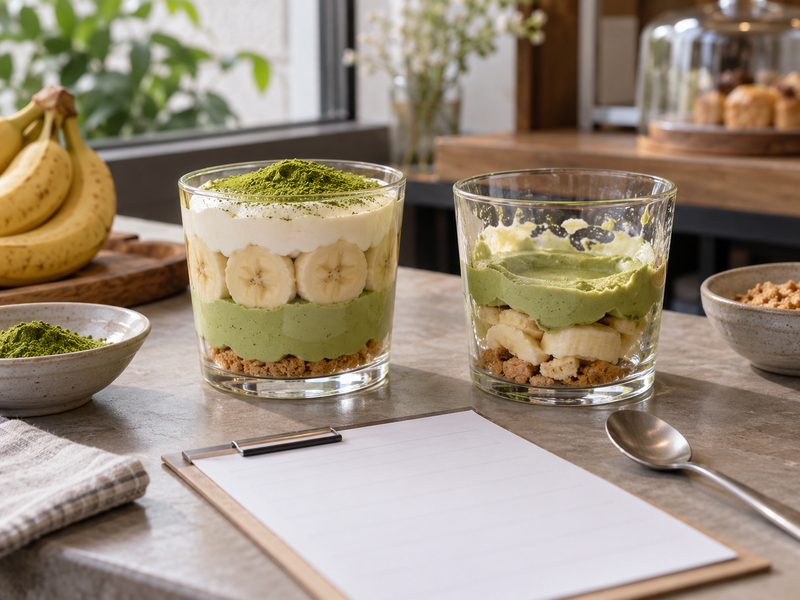
Matcha banana pudding is an easy dessert to sell and a surprisingly difficult one to hold. Bananas darken, wafers soften, and a matcha cream that tastes clear at the bench can disappear under condensed milk. The solution is a small, repeatable recipe trial: weigh the tea, control the base, assemble to an agreed portion and taste the product at the time it will actually be served. Jade Leaf’s banana pudding shows the familiar layers of cream, banana and vanilla wafers. This guide turns that idea into a purchasing and production brief for a café or dessert counter.
Contents
- 1. What should the finished dessert taste like?
- 2. Which matcha belongs in the pudding?
- 3. How should the banana and wafer be selected?
- 4. What is a sensible first test formula?
- 5. How do you make a smooth matcha cream?
- 6. How should portions be layered and weighed?
- 7. What changes during chilled holding?
- 8. How do you scale a batch without losing consistency?
- 9. What should a café calculate before pricing it?
- 10. What must the final service check cover?
1. What should the finished dessert taste like?
Define a target before choosing ingredients
A useful matcha banana pudding has three flavors that remain distinct: ripe banana, vanilla cream and tea. The tea should be recognizable in more than the color, yet it should not leave a harsh finish after two spoonfuls. Vanilla wafers add contrast at assembly and become softer as the dessert sits. Neither texture is inherently wrong; the business has to decide which one it promises. Write the desired serving condition into the recipe: a soft trifle in a bowl, or a cup with some wafer bite at pickup.
Serve the trial in the intended cup. Note the first and last spoonfuls. If the top tastes mostly matcha while the bottom tastes only banana, layering needs work. If tea fades, check whether sugar or cream is masking it before increasing the powder. Describe the target in plain language: “visible green cream, banana in each portion, no dry matcha pockets, and a tea finish after the banana.” Keep that beside the portion card.
2. Which matcha belongs in the pudding?
Buy for this sweet, cold application
A high price or a “ceremonial” label does not prove that a powder is best in a chilled, sweet pudding. Ask for a sample of the exact powder you could reorder, then make two small batches at the same dose. Taste the powder in plain water to spot strong off notes, but judge the purchase in the completed dessert. Bananas and dairy change what the guest perceives. A powder with a pleasant, noticeable tea flavor at the target sweetness may be more useful than one chosen for its bright green product photo.
Request the country of origin, ingredient statement, lot identification, pack size and relevant specification from the supplier. Check the opened powder for aroma, texture and any clumps. Store and handle it according to the supplier’s directions; close the pack promptly during production. Our matcha grades guide can help a buyer frame the sample questions, but the recipe trial decides the final choice. Do not promise a particular caffeine content or color stability without evidence for the chosen lot and finished product.
| Powder check | Record during the trial | Why it matters here |
|---|---|---|
| Ingredient statement | Pure matcha or a blend | A sweetened mix changes the formula |
| Dose | Grams per finished cup | Makes the recipe repeatable |
| Taste in pudding | Tea presence and finish | Tests the actual application |
| Texture | Grit or undissolved pockets | Affects every spoonful |
| Pack details | Lot, size and storage advice | Supports reordering and handling |
3. How should the banana and wafer be selected?
Choose ingredients for the planned service window
Bananas provide sweetness and aroma, but their ripeness varies by delivery. A firm yellow banana with a little spotting is a reasonable starting point for a portion trial. Very green fruit can taste starchy; very soft fruit may collapse when sliced and mixed. This is a practical selection target, not a fixed rule for every cultivar. Slice a measured banana just before assembly and note the slice thickness. If the slices are inconsistent, one cup may contain twice as much fruit as another even when the cup looks full.
Choose a wafer that keeps the intended texture during holding. Test whole, broken and crushed pieces; a fine crumb hydrates faster than a larger piece. Check the actual wafer label for ingredients and allergens. For a gluten-free or dairy-free version, validate a separate formula rather than removing one component at service.
| Variable | First trial choice | What to compare |
|---|---|---|
| Banana ripeness | Firm, ripe fruit | Flavor and clean slicing |
| Slice size | One recorded thickness | Even fruit in each cup |
| Wafer form | Broken pieces | Bite at assembly and at service |
| Wafer quantity | Weighed portion | Cost and cream-to-cookie balance |
4. What is a sensible first test formula?
Make a small control batch, then change one thing
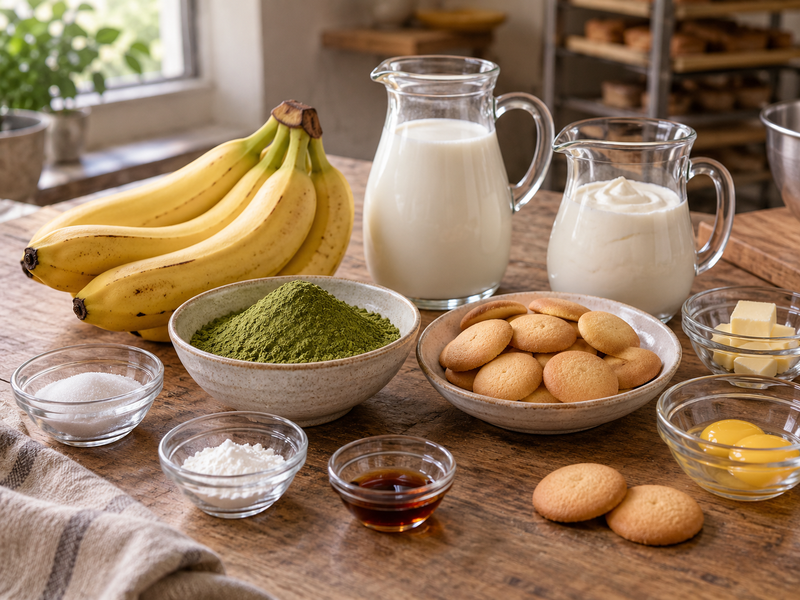
Start with a written control recipe rather than a large catering bowl. The Jade Leaf example uses sweetened condensed milk, an instant pudding base, sifted matcha, whipped cream, bananas and vanilla wafers. A café can test that general structure while developing its own amounts and service method. Use a scale for powder, banana and wafers. Measuring matcha by an unlevelled spoon makes later comparisons unreliable; the same spoonful can vary when powder is packed or clumped.
For the first run, choose one cup size and make enough portions to taste at assembly and after chilling. Record batch mass, cup count and component mass per cup. Change only one variable at a time: matcha dose, sweetness, banana load or wafer size. Otherwise, a better spoonful will not reveal what improved. Record ingredient brand changes because a different pudding or wafer can alter sweetness and set.
| Trial field | Entry to record | Decision it supports |
|---|---|---|
| Finished yield | Total grams and cup count | Portion plan |
| Matcha input | Grams per batch and per cup | Flavor and tea cost |
| Banana input | Grams per cup | Fruit consistency |
| Wafer input | Grams per cup | Texture and cost |
| Evaluation times | At assembly and at service | Holding decision |
5. How do you make a smooth matcha cream?
Wet the tea before the main mix
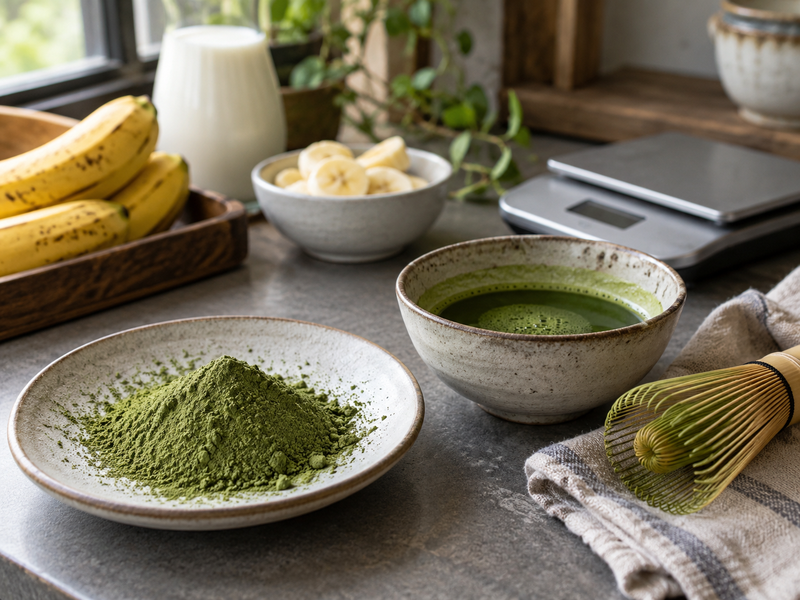
Dry matcha can form green pockets when it meets a thick pudding base. Sift the measured powder, then whisk it with a small amount of the recipe’s liquid until no dry islands remain. Add that slurry to the base and mix evenly before folding in whipped cream. If you use an instant pudding product, follow its own preparation directions and record the rest time needed for the base to set. A hot cooked custard needs a different food safety and cooling process; do not substitute it into an instant recipe without testing.
Whip the cream to a repeatable texture, then fold it in batches. Overmixing can collapse the light texture; undermixing leaves white streaks and unequal tea doses. The target is a cream that pipes or spoons cleanly, supports the banana layer and tastes consistent from the edge to the center of the bowl. Photograph a spoonful for the kitchen standard if words such as “thick” produce different results between shifts. If the cream seems too loose, first check the base method and ingredient weights. Adding extra powder to repair texture can make bitterness worse without solving the cause.
6. How should portions be layered and weighed?
Build every cup from the same sequence
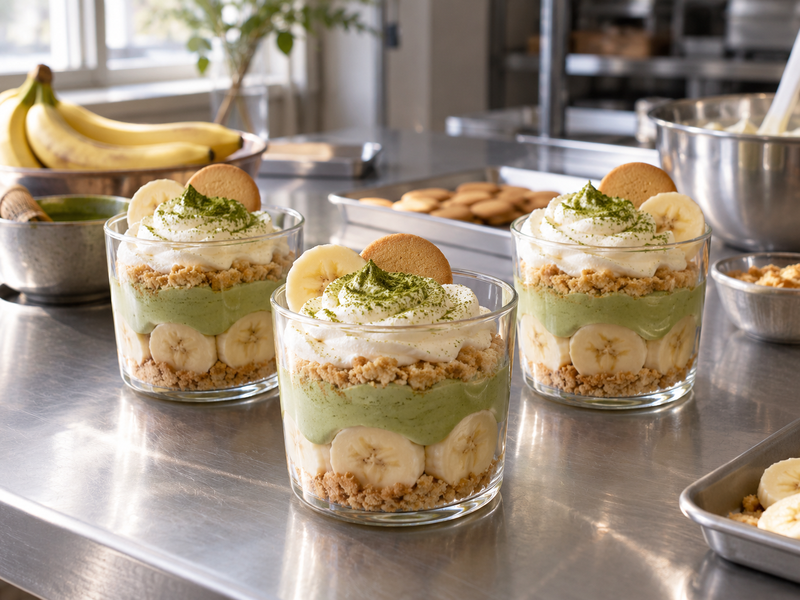
Use a transparent test cup if the final product will be sold in clear packaging. Weigh the empty cup, then add a measured cream layer, wafer portion and banana portion. Repeat if the cup size allows, finishing with a tidy cream layer. Keep banana away from the rim and lid where it can smear. A garnish added at service may look fresher than one left against a damp lid for hours, but that adds a service step; include it in the labor trial.
The order affects both appearance and texture. Cream beneath the first wafers keeps the bottom from looking dry. A wafer layer enclosed in cream will soften more quickly than pieces added on top just before pickup. Make two cups with different placements and taste them at the planned sale time. Do not judge them only when newly assembled. A portion card should state component weights and acceptable finished weight, with a photograph of the intended layers. That prevents one staff member from using extra banana to fill a cup while another fills it with cream.
| Layer | Control method | Visible fault to reject |
|---|---|---|
| First cream | Weighed spoon or depositor | Bare, uneven bottom |
| Wafer | Preweighed portion | Dry mound against the lid |
| Banana | Consistent slices and weight | Exposed darkening fruit |
| Final cream | Level finish | Large air gaps or smears |
7. What changes during chilled holding?
Separate quality limits from safety limits
The dessert changes after assembly. Moisture moves into wafers, banana surfaces discolor and the cream may settle. Set a quality window by tasting retained samples at realistic intervals in the same packaging and refrigerator you will use for sale. A cup that looks good after one hour may be poor after a full display shift. Record the time when the banana appearance or wafer texture falls below the standard, and use that as a quality limit. Do not present a guessed shelf life as a verified safety period.
Because this is a ready-to-eat dessert with dairy and cut fruit, keep preparation and display under the applicable local food code and your own approved food safety plan. For a general household benchmark, FoodSafety.gov advises a refrigerator at 40°F/4°C or below and prompt refrigeration of perishables. The FDA Food Code sets rules for regulated food establishments, including cold holding and date marking where applicable. Check local requirements before setting display temperatures or discard times. Label trial cups with assembly time and lot so that a tasting at the wrong age does not drive the decision.
8. How do you scale a batch without losing consistency?
Scale the written recipe and the process together
Multiplying ingredient weights is the easy part. A larger bowl takes longer to mix and chill, and fruit slicing may become the production bottleneck. Run a pilot batch at the volume expected on a normal day. Record the start and finish times for base preparation, cooling, slicing, filling, lidding and cleanup. Check the first, middle and last cups for finished weight and tea flavor. If the final cups are thinner or greener, the base may have separated or been mixed unevenly during filling.
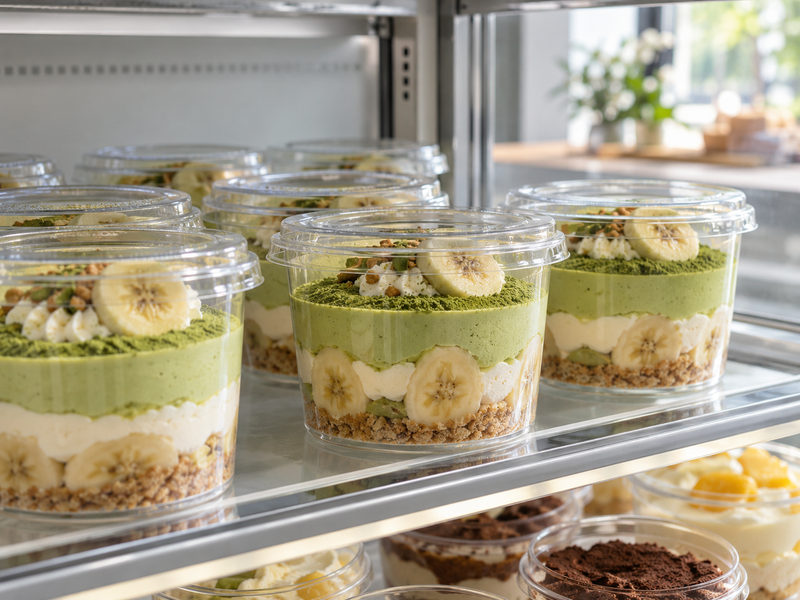
Plan packaging before the big batch. A shallow cup can show its layers well but expose more banana near the surface; a tall cup may be difficult to fill neatly. Choose lids that close without touching the cream. Train staff to use one portion tool and one assembly order, with a scale available for spot checks. Keep any opened matcha pack resealed between weighing sessions and identify the powder lot on the production sheet. When a new lot arrives, make a small side-by-side dessert trial before changing the production recipe. The purpose is continuity, not a claim that every crop will behave identically.
| Scale-up check | Small trial | Pilot production |
|---|---|---|
| Mix uniformity | One bowl sample | First, middle and last cups |
| Portion mass | Each cup weighed | Start and periodic spot checks |
| Work time | Total minutes | Minutes by production stage |
| Chilling | Test cup temperature | Actual display process |
| Waste | Leftover components | Unsold or rejected cups |
9. What should a café calculate before pricing it?
Count the dessert you can sell
The cost of a cup includes more than matcha. Calculate the weighed cost of pudding base, cream, banana, wafers, garnish and packaging. Add labor for preparation and service. Then count rejected or unsold portions from the holding trial; a seemingly cheap formula can be expensive if half the cups no longer meet the quality standard by closing time. The same calculation helps decide whether to assemble twice daily in smaller batches or once in a larger batch.
Compare two menu versions at the same selling price target. One may use more matcha and less sweetener; another may use a smaller cup with a stronger tea layer. Cost both from the actual recipe, then ask tasters which one they would order again. Avoid pricing from a supplier’s powder price per kilogram alone. It hides differences in dose, waste and pack size. If the dessert will be offered at multiple locations, include a simple transfer check: will the layers survive the actual journey, and can every location maintain the required chilled handling? A good recipe that fails transit is not yet a viable menu item.
10. What must the final service check cover?
Give the team a release standard
Before launch, run a service simulation. A person who did not develop the recipe should make the batch from the written card. Another should receive, chill, display and serve it. Record whether the method produces the target number of cups, whether the cup looks right at pickup, and whether the final spoonful still tastes of tea. Review the ingredient and allergen information from every supplied component. Matcha powder, wafer and pudding mix may come from different suppliers; the combined dessert declaration needs the real labels and local rules, not assumptions from a draft recipe.
The release standard can fit on one page: approved ingredient versions and lots, weighed recipe, cup build, image, cold handling instructions, quality window, rejection signs and price. Train the team to discard a cup with a broken seal, an unidentified age, a visibly poor banana layer or texture outside the agreed standard. A follow-up tasting after the first week of sales should compare actual production against the pilot, including customer feedback and waste. That feedback can justify a controlled recipe revision; it should not become an undocumented change on a busy shift.
FAQ
Q1. Can matcha banana pudding be assembled the day before service? It may be possible, but test the exact recipe and packaging at that age. Banana appearance and wafer texture can limit quality sooner than a generic recipe suggests; follow the approved cold holding and date marking rules.
Q2. Which matcha grade should a café buy? Ask for an application sample and compare it in the finished sweet dessert. A grade label alone does not establish flavor, texture or value at your chosen dose.
Q3. How do you stop green clumps in the cream? Weigh and sift the powder, make a smooth slurry with some recipe liquid, then mix it into the base before folding in whipped cream.
Q4. How many portions should a first trial make? Make enough for an immediate tasting and at least one tasting at the intended service time. Record finished cup weight so the next batch can be reproduced.
Q5. What belongs on the production card? Include ingredient versions, powder lot, component weights, assembly order, packaging, cold handling, quality window and rejection signs.