
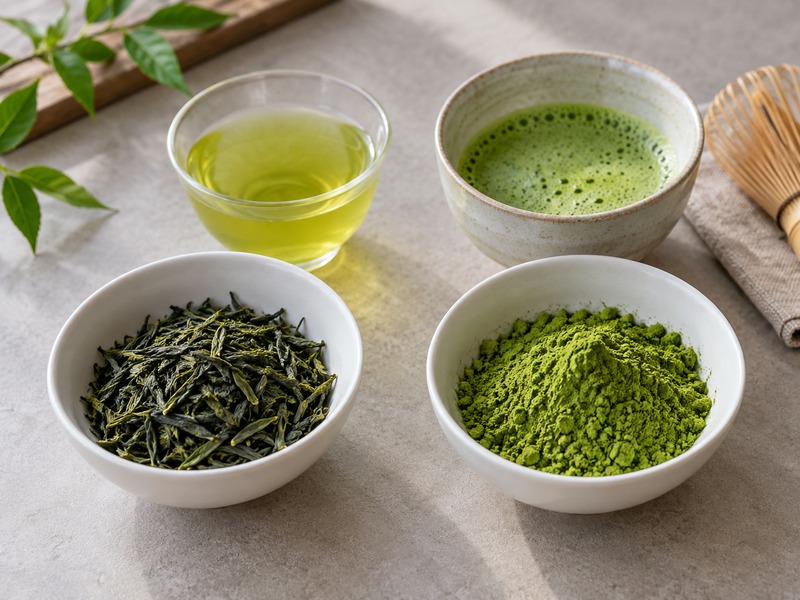
The search phrase “sencha matcha” usually calls for a comparison. Both are green teas, but they are bought, prepared and served differently. Sencha is usually sold as processed leaves for infusion; matcha is a fine powder whisked or mixed into a drink or food. ArtfulTea’s comparison explains the consumer distinction. A tea buyer needs to go further: the two products require different equipment, menu language, inventory controls and cost calculations. Treating them as interchangeable because both are green can produce a weak cup and confusing customer expectations.
This guide is for cafés, tea retailers, importers and product developers building a two-tea program. Statements about caffeine or health require product-specific evidence and market review.
1. What is the physical difference between the teas?
Leaves are infused; powder is consumed in suspension
Sencha generally arrives as leaf pieces with a recognizable shape. Water extracts flavor during steeping, and the leaves are removed before drinking. Matcha arrives as finely ground tea and remains in the prepared cup unless it settles. That difference changes equipment and mouthfeel. A sencha strainer solves leaf removal but cannot make a smooth matcha. A matcha whisk disperses powder but cannot turn a bag of sencha leaves into genuine matcha without a separate manufacturing process.
Start with the service route. Write down whether the customer receives a clear infusion, a cloudy whisked tea or a latte. Choose the tea that fits that promise. Some blended products combine leaf tea and matcha powder, which can be useful, but the formula must state both inputs and the method of preparation. Ask suppliers to specify form, particle behavior and whether the product is a pure tea or a blend. A green color in a cup does not tell a buyer what process produced it.
| Decision | Sencha | Matcha |
|---|---|---|
| Sold form | Processed leaves | Fine tea powder |
| Preparation | Infuse and remove leaves | Disperse powder in liquid |
| Cup texture | Usually clear to lightly hazy | Suspended tea particles |
| Common tool | Pot, filter or infuser | Whisk, mixer or shaker |
2. How do growing and processing affect the brief?
Ask for the actual product description
Matcha is commonly made from leaves grown with a period of shade before harvest and processed for grinding. Sencha is generally produced for leaf infusion and handled to preserve that leaf character. Production varies among origins and suppliers, so a buyer should request the specific cultivation and processing description rather than copy a broad category slogan. “Japanese green tea” alone is too loose for a purchase specification when shade, leaf form and finishing all affect price and taste.
Keep origin claims traceable. If a pack or menu names a region, cultivar or special shading method, ask for records that support it. A supplier may blend lots to maintain consistency; that may be practical, but the buyer should know how blend changes are controlled. For matcha, grinding and powder handling matter. For sencha, leaf shape and infusion behavior matter. Both need lot-linked safety, quality and traceability records under the buyer’s program. The category name does not substitute for those documents.
3. How should each tea be prepared for evaluation?
Use separate, repeatable protocols
A fair comparison does not require making sencha and matcha in exactly the same way. Sencha needs a measured leaf-to-water ratio, water temperature and infusion time. Matcha needs a measured powder-to-water ratio and a dispersion method. Use consistent water and vessels, then record the resulting sensory profile. A sencha leaf can become harsh when over-steeped; matcha can become lumpy when mixed poorly. Those preparation errors should not be mistaken for flaws in the tea itself.
Taste at the intended use. If a café plans a plain tea service, evaluate both without milk first. If matcha will be used in lattes, test it again in the complete formula. If sencha will be bottled or served iced, assess that process separately. Keeping preparation records lets the buyer compare lots later. A supplier sample brewed by an expert in a showroom may not reflect what a busy store can deliver with its equipment.
| Evaluation input | Sencha record | Matcha record |
|---|---|---|
| Tea measure | Leaf mass | Powder mass |
| Water | Volume and temperature | Volume and temperature |
| Time | Infusion period | Mixing and hold period |
| Defect | Over-extraction | Clumps or sediment |
4. What flavor differences should a buyer expect?
Describe the accepted cup, not a fixed stereotype
Sencha often gives a fresh vegetal infusion with a clear tea structure. Matcha can bring a fuller, more concentrated tea sensation because the powder remains in the cup. Both categories span a range of sweetness, bitterness and savory notes. A buyer should not assume all sencha tastes grassy or all matcha tastes creamy. Blind-taste several supplier lots under the intended method and write the useful distinctions in the brand’s own language.
Include the last sip. Sencha may change as a second or third infusion is prepared. Matcha can settle during a long conversation or show powder at the bottom. Test the customer journey, not only the first taste at the tasting table. If the brand offers both, make their menu descriptions meaningfully different. A customer who prefers a light clear infusion should not be directed to a dense latte just because both products are green tea.
5. Can either tea replace the other in a recipe?
Match the input to the formula’s job
Matcha contributes color, suspended tea solids and flavor in a latte, frosting or dough. Sencha infusion contributes liquid tea flavor without the same powder load. Substituting an infusion for matcha in a cake can change water balance and produce less green color. Adding ground sencha leaves instead may leave coarse particles. Conversely, a spoon of matcha in a recipe designed for clear sencha can make it cloudy and stronger. Reformulate rather than replacing by equal mass or volume.
Test the intended application. For a bottled green tea, evaluate whether a leaf infusion gives the desired clarity and stability. For a creamy drink, evaluate whether matcha retains tea impact after milk and sweetener. A blend of both can be developed, but it needs its own ingredient statement, process and sediment test. The correct choice is the one that meets the product brief and cost target, not the tea with the more fashionable name.
| Application | More natural starting point | Re-test if changing |
|---|---|---|
| Clear brewed tea | Sencha | Infusion strength and clarity |
| Whisked tea or latte | Matcha | Dispersion and full-cup taste |
| Green baked color | Matcha | Heat color and dry load |
| Leaf-led cold brew | Sencha | Extraction and handling |
6. What should be said about caffeine?
Avoid category-wide numbers without a serving basis
Both teas contain caffeine. The amount a customer receives depends on tea mass, product composition and preparation. A matcha serving consumes suspended powder, while a sencha infusion extracts part of what is in the leaves. That difference can affect exposure, but it does not justify a fixed claim that every cup of one tea has more caffeine than every cup of the other. Serving sizes vary widely across cafés and packaged products.
Build a product-specific basis. If the brand wants caffeine information on a menu or pack, have the relevant team determine the method and claim allowed in each market. Record actual tea mass and serving volume. Do not lift a number from a consumer article written for a different tea or portion. The same caution applies to health claims. A buyer can describe flavor, form and preparation accurately without promising medical or performance effects that the finished product has not been assessed to support.
7. How should equipment and staff training differ?
Make the correct method easy at the station
Sencha service needs measured leaves, suitable water, a timer and a reliable filter or pot. Matcha service needs a measured powder dose, a tool that disperses it and a way to prevent dry clumps. Both need clean equipment and clear portion cards. If the café handles both at one station, label containers and tools to avoid accidental substitution. A staff member should recognize from the order whether the guest expects a clear brew or a suspended tea drink.
Time the full routine. A sencha infusion may tie up a pot for several minutes but require little active work. Matcha can be made quickly but involve more active whisking and cleaning. Compare order-to-handoff time under real volume. Train staff to reject over-steeped leaf tea and gritty matcha as separate defects. One broad “green tea” training sheet will not provide enough instruction for consistent service.
| Station task | Sencha control | Matcha control |
|---|---|---|
| Portion | Leaf mass | Powder mass |
| Water | Temperature and steep | Temperature and mixing |
| Service | Remove leaves on time | Avoid clumps and settling |
| Cleanup | Rinse infuser | Clean whisk or mixer |
8. What should procurement request?
Write separate specifications
For sencha, request leaf appearance, infusion profile, lot records, storage and change-notice details. For matcha, request powder sensory and color references, dispersion behavior, lot records and packaging suited to powder. Both need the safety and traceability documentation required by the buyer’s market and program. If origin or organic claims will be used, obtain the appropriate supporting records for the exact lots and sites. Do not assume a certificate for one tea covers another.
Approve incoming lots in use. Brew new sencha by the approved protocol and compare it with the reference infusion. Prepare new matcha as the approved cup or latte and inspect flavor and sediment. Keep results tied to lot numbers. A shared supplier may still change one product while the other remains consistent. Substitution rules should state which item can be replaced and the tasting required before stores receive it.
9. How should the two teas be costed?
Compare accepted servings, not bag prices
Sencha cost per cup depends on leaf dose, number of infusions if the service offers them, labor and waste from brewed tea not sold. Matcha cost depends on powder grams per drink, mixing loss, clumping and the packaging needed to protect open stock. A kilogram price comparison between leaf and powder is meaningless without the service formula. Calculate the cost per accepted cup at the desired flavor, plus equipment and packaging.
Account for menu positioning. A plain sencha service may appeal to guests seeking a lighter tea experience; a matcha latte can support a different price and labor model. Test demand in the brand’s own stores. Buying the cheaper tea for the wrong application can lead to disappointed guests and higher remake costs. Keep one or two well-specified offerings before expanding into a long green-tea list that staff cannot describe or prepare consistently.
| Cost line | Sencha calculation | Matcha calculation |
|---|---|---|
| Tea used | Leaf grams per brew | Powder grams per cup |
| Preparation loss | Unsold brewed tea | Powder left in tools |
| Equipment | Filter or pot | Whisk or mixer |
| Service time | Steep and pour | Disperse and clean |
10. What should a two-tea pilot prove?
Test each product on its own terms
Select candidate sencha leaves and matcha powders. Use separate approved brewing and mixing protocols, then taste them with the intended customer group. Ask staff to prepare repeated orders without coaching. Measure cup consistency, service time, waste and storage behavior. Test any latte or iced application separately. If the menu makes caffeine, origin or organic claims, have the qualified reviewer sign off the exact wording and evidence.
Release two clear cards. Each should name the product specification, dose, water, time or mixing method, accepted flavor, supplier records and reject examples. Then train staff to explain the difference in one ordinary sentence: sencha is brewed from leaves; matcha is a powder mixed into the drink. A limited launch can show whether customers understand and return for both offerings before the buyer expands stock.
For a practical visual buying test, use the powder and finished-product comparisons in our matcha color guide.
Reference
ArtfulTea, “Sencha vs. Matcha: What’s the Difference?” is a consumer comparison of the two green teas. The buying, claim and service checks above are separate proposed controls.
FAQ
Q1: Is sencha matcha a single tea?
Usually the phrase reflects a comparison. Sencha is generally leaf tea for infusion; matcha is powder for mixing.
Q2: Can sencha leaves be whisked like matcha?
No. Ordinary sencha leaves are prepared as an infusion and removed before drinking.
Q3: Does matcha always contain more caffeine?
The finished serving depends on tea mass and preparation; use a product-specific basis for any claim.
Q4: Can one supplier provide both?
Yes, but approve each product with its own specification and tasting method.
Q5: Which tea is better for a latte?
Matcha is the usual starting point because its powder disperses into milk; validate the final formula.