
Matcha color is often judged from a photograph or a scoop of dry powder. A product team needs a more useful question: what color should the customer see after the tea is mixed, processed, packed and served? A vivid powder can look dull in a hot cake, while a modest dry shade can look appealing in milk. Food Republic’s “What Is Matcha?” describes matcha as a bright green tea powder and notes its use in foods. It does not establish an acceptance range for a commercial product. That range belongs to the buyer’s own application and process.
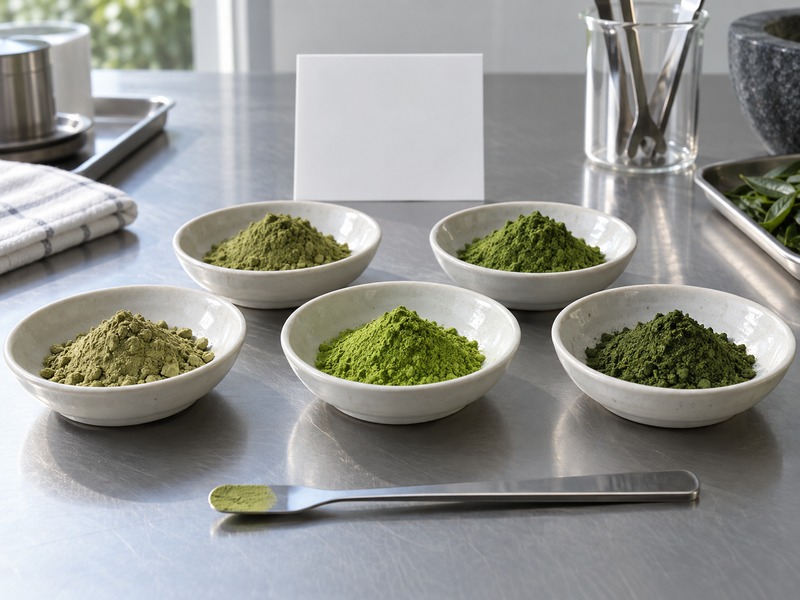
This guide is for beverage developers, bakeries, importers and quality teams. It separates appearance checks from flavor, safety and authenticity decisions; all need their own evidence.
1. Which color is the customer actually buying?
Define the point of observation
The powder in a bag, whisked tea in a bowl, iced latte in a cup and baked cookie will not have identical shades. Start by naming the product and the moment color matters: before mixing, at handoff, after takeaway or at the end of shelf life. A buyer who approves only a dry-powder sample may be surprised by the finished product. Establish one normal-light reference for the actual customer-facing form and another for incoming ingredient inspection.
Use a range, not a hero image. Studio lighting, phone filters and white backgrounds can make a tea look greener than it will in a store. Photograph approved products in repeatable conditions and note acceptable variation. A normal pale-green latte can be honest and appetizing without matching a highly saturated marketing image. The quality standard should describe what is too yellow, too brown or visibly uneven in the final application. Taste must still pass; adding extra powder solely for color can make a drink harsh.
| Observation point | What it tells you | What it cannot prove |
|---|---|---|
| Dry powder | Incoming shade and uniformity | Finished flavor or color |
| Whisked tea | Dispersion and fresh appearance | Heat or storage performance |
| Final drink or food | Customer-facing shade | Long-term stability |
| End of intended life | Color retention | Safety on its own |
2. What influences the powder’s initial shade?
Ask about the actual tea and processing
Leaf material, cultivation, processing, blend and storage can all affect the powder a buyer receives. Request a product description and lot-linked records rather than assuming a grade name fixes one green. A supplier may blend lots to maintain a consistent profile; the buyer should know the range and how changes are communicated. Color is one part of the specification alongside taste, particle behavior and required safety tests. A vivid shade alone does not establish origin or quality.
Compare like with like. Put powder samples in the same neutral dish at the same depth under the same light. Avoid judging one through a glossy pouch and another in an open bowl. Then mix both at the same dose and water conditions. A powder that looks dull only because of lighting or sample depth should not be rejected prematurely. Keep a retained sample from the approved lot and a written description so incoming decisions are less dependent on memory.
3. How should color be measured or photographed?
Make visual checks repeatable
A basic controlled photo station can improve decisions: consistent illumination, neutral background, fixed vessel, sample mass and camera position. More formal programs may use calibrated color measurement, but the method and acceptable range must be defined for the product. Do not invent a universal “good matcha” numeric value. A standard for dry tea cannot simply be copied to a milk latte or baked filling. The equipment is useful only if sampling and interpretation stay consistent.
Record context. Note ingredient lot, sample age, mixing method and time since preparation. Compare images side by side, preferably with a retained reference in the same frame. Train reviewers to look for uneven streaks, sediment and color change, not only average greenness. If two reviewers disagree, taste the samples and inspect the process before escalating to a supplier complaint. The cause may be different milk, water or lighting rather than tea itself.
| Photo control | Standardize | Error avoided |
|---|---|---|
| Light | Source and intensity | False color shift |
| Container | Material and size | Background distortion |
| Sample | Mass and depth | Darker-looking thick layer |
| Time | Minutes after mixing | Comparing fresh with held |
4. Why does matcha look different in milk?
The surrounding formula changes perception
Milk lightens matcha and changes how its green is seen through a clear cup. Sweeteners, fruit purées and flavored milks can shift the whole impression even if the tea powder is unchanged. Compare powders in the exact formula and cup the customer will receive. A strong green layer on top may blend into a soft pastel after stirring; decide which appearance the menu promises. Neither is inherently a defect if the drink tastes good and looks deliberate.
Set a dose for flavor first. Raising matcha to chase a darker latte can increase bitterness, sediment and cost. If the visual contrast is weak, adjust layer order, cup geometry or milk choice through a controlled trial before increasing powder. Take photos at handoff and after the expected wait. A drink that looks appealing for thirty seconds but arrives muddy in delivery should not be sold using only the handoff photo as evidence.
5. What changes color during heating or baking?
Test the full thermal process
Cookies, cakes, sauces and fillings expose tea to different temperatures and times. A powder that looks vivid in a mixing bowl may darken or dull after processing. Recipe ingredients and the way the item is stored can also change appearance. Prepare candidate powders in the actual formula with fixed equipment and heat conditions. Cut baked samples to inspect interior color as well as surface color; browning at the surface does not necessarily describe the crumb.
Do not solve every color change with more tea. Extra powder may make the product bitter or dry. Review bake temperature, duration, matcha addition step and packaging before changing dose. If the product is intended for retail, check color after its expected shelf and transport conditions. A bakery should define a realistic cooked-green reference, not ask staff to produce a raw-powder shade from a hot oven.
| Product | Color risk | Trial sample |
|---|---|---|
| Hot-baked cookie | Brown surface | Surface and cut center |
| Chilled cream | Uneven streaks | Top, middle and bottom |
| Iced latte | Layer fading | Handoff and later sip |
| Shelf product | Display change | End-of-life sample |
6. How do packaging and storage affect appearance?
Check both ingredient and finished-product packs
Matcha powder needs appropriate handling after opening. Moisture, light and odors can affect usability and may coincide with a visible shift. Choose pack size based on turnover, not only price per kilogram. For a finished item, clear packaging may sell the green color while exposing it to display conditions. The quality team should validate the chosen pack and shelf life for the exact formula. Color stability is one test among several; a stable shade does not prove the product is safe.
Simulate normal use. Open and reseal a tea bag as staff will, then compare it with unopened stock at intervals relevant to the business. For a retail drink or dessert, test actual store display light and temperature rather than a dark laboratory drawer only. Record lot, pack type, exposure and resulting flavor. If a color complaint appears, these records help separate a supplier-lot issue from poor storage or a changed display plan.
7. How should lot-to-lot differences be handled?
Tie acceptance to a retained reference
New tea lots can vary without being unusable. The buyer needs a documented acceptable range for the intended products. Compare incoming powder in a standard dish, then make the approved drink or food. If the dry shade is different but the finished product meets flavor and appearance targets, the lot may still work. If the final product fails, isolate the lot while quality and product teams review the evidence. Do not ask stores to improvise a dose change without testing its effect on taste and cost.
Require change notice. A supplier blend or processing change may affect color even if the product code stays the same. Request advance communication and samples where possible. Keep lot-linked analysis, traceability and purchasing records. A transparent supplier response is valuable because color differences are highly visible to customers. The team’s decision should be based on controlled comparisons rather than a single phone photograph sent from a store under colored lighting.
8. What else must pass besides color?
Keep sensory and safety gates separate
A bright powder can still taste poor, clump in milk or lack required documentation. Request specifications, lot-linked analysis and traceability records relevant to the destination market. Evaluate aroma, bitterness, mouthfeel and dispersion in the intended application. If the product will make organic, origin or other claims, have the qualified team verify evidence. A color chart cannot establish those facts. Treat appearance as a useful signal, not a substitute for the full ingredient review.
Avoid false shortcuts. A dull powder may prompt a freshness question, but the cause needs investigation. It could reflect lighting, storage, processing or the original tea. Conversely, an unusually vivid shade should not automatically be praised without checking the ingredient statement and supplier records. The acceptance process should let a team ask and answer those questions before production, rather than rely on a quick green-or-brown judgement at receiving.
| Gate | Evidence | Owner |
|---|---|---|
| Appearance | Controlled reference comparison | Quality and product |
| Flavor | Finished-product tasting | Product team |
| Safety | Lot-linked testing | Quality team |
| Claims | Market-specific records | Regulatory team |
9. What is the cost of chasing a greener product?
Include dose, waste and rejected units
A powder with a stronger green shade may cost more, need a higher dose or require tighter packaging. Calculate cost per accepted finished item at a pleasant flavor, not cost per green photograph. If extra matcha makes a cookie bitter, the color gain has little value. If a stable powder reduces visual rejects across a large line, its premium may be justified. Use pilot yield and customer-facing samples to make that decision.
Keep marketing honest. A brand can adjust photography to match its real product rather than reformulate solely for an unrealistic image. If stores use different lighting, provide a normal-range visual guide. A restrained, consistent green may build more trust than a neon promise that every shipment fails to meet. The buyer and marketer should review the same approved sample before ordering powder or printing packs.
| Cost question | Evidence | Better decision |
|---|---|---|
| Does greener powder need more dose? | Fixed-formula tasting | Compare per accepted serving |
| Does a pack protect shade? | Timed display trial | Buy the suitable barrier |
| Are units rejected for color? | Pilot defect log | Fix process or supplier |
10. What should a color-control pilot prove?
Follow one powder through the complete route
Select candidate lots and inspect dry shade under controlled conditions. Make the intended product at a fixed dose and process. Photograph and taste at preparation, customer handoff and any relevant shelf-life checkpoint. Repeat with a second lot or define how future lots will be approved. Record equipment, light, pack and storage conditions. This separates a tea problem from formula, process or display changes.
Release a practical standard. Include reference photos, flavor description, powder and finished-product checks, supplier records and a route for handling questionable lots. Do not publish a claim that every good matcha must be one exact shade. The next useful step is a side-by-side application trial with the product the customer will actually drink or eat.
Reference
Food Republic, “What Is Matcha?” describes matcha as green tea powder and notes food uses. It is background context; the quality-control methods above are proposed buyer practices, not findings from that article.
FAQ
Q1: Is bright green matcha always better?
No. Judge flavor, safety, handling and final-product color alongside dry shade.
Q2: Why does matcha turn dull in a latte?
Milk, dose, time and lighting can change appearance; test the exact formula and cup.
Q3: Can more powder fix baked color?
It may also raise bitterness and cost. Check the heat process before increasing dose.
Q4: How should a new lot be compared?
Use controlled light, the retained sample and the approved finished-product method.
Q5: Does color prove an organic or origin claim?
No. Those claims require separate traceable documents and market review.