
Earl Grey matcha combines two different tea experiences: black tea scented with bergamot and finely powdered green tea. The pairing can be fragrant and complex, but a heavy syrup can hide matcha while an over-strong tea infusion can make the drink dry. Cuzen Matcha’s iced Earl Grey matcha latte uses Earl Grey simple syrup, milk and a matcha shot. A café version needs measured tea strengths, a controlled syrup process and a cup that stays balanced through the final sip.
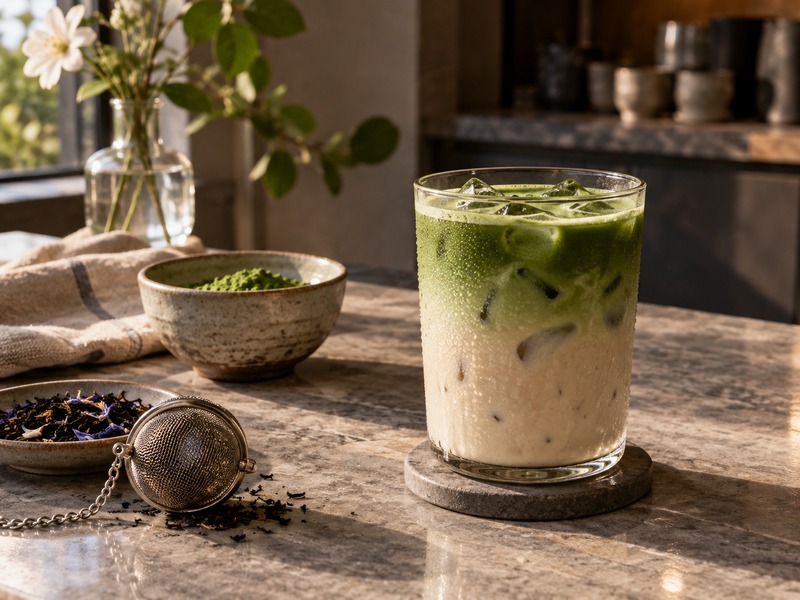
This guide is for beverage developers, café chains and ingredient buyers. The reference illustrates the concept; its home storage suggestion should not be treated as a commercial shelf-life instruction.
1. What should each tea contribute?
Give bergamot aroma and matcha flavor distinct jobs
Earl Grey brings black-tea structure and bergamot aroma. Matcha brings green-tea flavor, color and body. If the Earl Grey component is mainly sugar, the drink may smell floral but lose the dry tea backbone. If matcha dominates, the bergamot becomes a faint perfume note. Write a sensory target for aroma, first sip and finish. Decide whether the product is a matcha latte with an Earl Grey accent or an equal two-tea blend. Both are possible, but a menu name should set the right expectation.
Taste the phases separately. Prepare the Earl Grey component, matcha base and finished latte at fixed measures. Ask tasters what they recognize in each. Then taste after stirring and after an ordinary takeaway wait. A layered cup can deliver syrup first through a straw and matcha first through a sip lid. The accepted drink should make sense both ways or come with a clear serving method. Avoid approving it on the aroma alone; bergamot can be attractive while the full cup tastes over-sweet.
| Component | Intended contribution | Failure |
|---|---|---|
| Earl Grey | Bergamot and black-tea note | Sweet scent with no tea |
| Matcha | Green-tea flavor and color | Disappears in milk |
| Milk | Body and balance | Flattens both teas |
2. Which Earl Grey input works at scale?
Compare brewed tea, syrup and concentrate
A brewed Earl Grey tea gives flexibility but adds steeping, cooling and portioning steps. A tea syrup couples black-tea intensity with sugar, which can make a layered drink easier to assemble. A concentrate can save station time but requires accurate dilution. Compare at an equivalent finished-cup aroma and sweetness, not equal input volumes. A syrup made with too little tea may force a high sugar dose just to deliver bergamot.
Control the leaf. Earl Grey products differ in black-tea base and bergamot flavor strength. Ask suppliers for ingredient statements, tea specifications, allergen information where applicable and change notice. If the café brews its own syrup, specify tea mass, water, steep conditions, filtration and finished yield. Trial the method with ordinary staff and the actual pot. A steeping instruction copied from a home recipe may produce a different result in a larger batch and should not establish a commercial safe-use period.
| Earl Grey format | Advantage | Main check |
|---|---|---|
| Brewed tea | Flexible sweetness | Steep and cooling control |
| House syrup | Fast measured pour | Tea-to-sugar consistency |
| Concentrate | Compact storage | Dilution and aroma stability |
3. How should matcha be selected?
Test it beside bergamot and black tea
The second tea creates a different taste environment from a plain matcha latte. A powder with a gentle savory note may add depth; one with strong bitterness can clash with black tea tannins. Compare candidates at measured doses in the complete drink. Record green color after milk and syrup are added, not only the shade of the dry powder. Ask for supplier lot records and samples representative of repeat supply. A grade label does not show whether matcha stays recognizable beside Earl Grey.
Check the finish. Bergamot reaches the nose first, while matcha may emerge later. Taste the last third after the syrup and ice have mixed. A lower-priced powder that needs a high dose can create sediment and cost more per accepted cup. Keep a reference formula and sample. If a new matcha lot changes bitterness, do not fix it by casually increasing Earl Grey syrup; that may alter sugar and mask the underlying supplier change.
4. How can the teas be prepared without clumps or harshness?
Make each component correctly before combining
Matcha is a suspension and should be dispersed in a controlled small water portion or by another validated method before joining the iced drink. Earl Grey is an infusion and should be steeped and filtered to the selected profile. If the syrup holds tea leaves too long, it may develop a rough taste; if it is too weak, it becomes flavored sugar. Keep the two preparation methods separate on the station card. Combining dry matcha with a cold, dense syrup can trap powder and create green lumps.
Measure the water. Water in the matcha shot and Earl Grey component counts toward total cup dilution. In a large iced glass, extra water can make both teas faint. Trial the same cup and ice fill every time. Inspect any prepared tea batch for settling and aroma change during the proposed service interval. If a store has no reliable way to cool and identify a brewed component, a supplier-prepared input may be operationally safer, subject to its own finished-cup trial.
| Process defect | First check | Response |
|---|---|---|
| Green specks | Matcha premix | Change dispersion order |
| Dry tea finish | Earl Grey steep | Fix extraction and dose |
| Faint aroma | Tea input or hold | Test fresh vs held syrup |
| Thin cup | Total water and ice | Rebalance fixed formula |
5. How should sweetness and milk be balanced?
Uncouple sugar from tea intensity where possible
Cuzen’s home drink uses a tea syrup, which brings sweetness and Earl Grey together. That is convenient until a customer asks for less sugar. Simply halving syrup can remove most bergamot. A café can choose a less-sweet brewed component plus separate sweetener, or develop more than one syrup concentration. Test the options against service time and ingredient control. Milk also changes perceived sweetness: oat drinks and some flavored milks may add more than the formula sheet suggests.
Taste the intended alternatives. Dairy, soy and oat versions can differ in body, aroma and how they layer with tea syrup. If alternatives are on the menu, validate separate cups and review allergen handling. Do not assume a plant-milk substitution keeps the two-tea balance. A drink that tastes elegant with dairy may taste cereal-heavy with oat milk. Set an accepted sweetness description and exact component volumes for each sold version rather than leaving baristas to adjust by eye.
6. What does the service build look like?
Keep the sequence short and reproducible
A practical iced build may place syrup or concentrate first, then ice, milk and prepared matcha. That sequence can show contrasting layers, but density and temperature determine how long they last. Trial the actual ingredients in the final cup. Define syrup dose, milk volume, matcha shot, ice fill and pour point. If the presentation is mixed rather than layered, say so on the training card. The drink should not depend on a slow decorative pour at peak service.
Run consecutive orders. Time several baristas making the drink while also handling normal café tasks. Observe whether the house syrup needs stirring, whether matcha settles in a batch and whether pumps dispense consistently. Count cups remade for broken layers or clumps. A slightly irregular visual band may be acceptable; missing bergamot or harsh tea is not. Give staff an approved photo and a sensory reject example, not only a social-media video.
7. What changes during takeaway?
Follow aroma and layering after handoff
The drink may be carried long enough for ice to melt and the two tea components to blend. Bergamot aroma can be less obvious through a sealed lid than in an open glass. Test both service formats if both will be sold. Check whether the final mixed drink still has a matcha finish and whether syrup remains at the bottom. A straw may deliver concentrated Earl Grey first, which can make the drink seem sweeter than a spoon-stirred tasting sample.
Validate prepared-component handling. The quality team should set safe storage and use limits for brewed tea, syrup, milk and the finished cup under the actual formula and market rules. A consumer recipe’s fridge advice is not a commercial validation. Record taste and appearance at handoff and after the expected wait. If delivery strips away the aroma that makes the drink distinct, it may be best kept as an in-store item or reformulated for travel.
| Checkpoint | Observe | Decision |
|---|---|---|
| At handoff | Aroma, clumps, fill | Release or remake |
| After wait | Tea balance and dilution | Service window |
| After route | Lid, leakage, final sip | Delivery suitability |
8. What should the buyer request from suppliers?
Specify both teas, not just “Earl Grey matcha”
For matcha, request lot-linked specifications, analysis and traceability records required by the program. For Earl Grey, collect tea or syrup ingredients, aroma profile, concentration, storage and change-notice details. Milk suppliers need ingredient and allergen records. If the café makes syrup centrally, the internal kitchen is also a supplier to stores and needs a documented recipe, batch identification and distribution controls.
Test every meaningful change. A new Earl Grey brand can have a different bergamot intensity even if the tea-bag count is unchanged. A new matcha lot can shift shade or bitterness. Keep a retained reference and run a finished-cup comparison before approving substitutions. A buying brief should state what the customer must taste and what the store must do. “Same category” on a purchase order does not mean same result in a two-tea latte.
| Input | Buyer evidence | Cup result checked |
|---|---|---|
| Matcha | Lot and sensory record | Green tea flavor and color |
| Earl Grey | Tea or syrup specification | Bergamot and black-tea strength |
| Milk | Ingredients and allergens | Body and label |
| Cup | Handling trial | Aroma access and transport |
9. What does a saleable serving cost?
Include the brewed component’s yield
Calculate matcha grams, Earl Grey tea or syrup volume, milk, sweetener, ice and packaging per approved cup. For house syrup, include tea, sugar, filtering loss, labor and product discarded after its validated use period. A prepared syrup may cost more per unit but save station work. Compare costs at an equal acceptable flavor result. A weak syrup that needs a large pour can increase sugar and cost without improving the guest experience.
Consider station capacity. A two-tea drink uses more equipment and prep than a standard latte. Time actual orders and record remakes, especially when a matcha shot is prepared separately. The brand can decide whether the distinctive aroma and appearance support a price premium only after real menu testing. Keep one size for the initial launch; scaling components loosely for a larger glass can unbalance both teas.
10. What should a launch pilot prove?
Test aroma, tea balance and execution
Shortlist one Earl Grey input and one or two matcha powders. Fix milk, cup and ice, then run blind full-cup tasting at several syrup or tea levels. Have ordinary baristas prepare a timed series from a draft card. Measure component yield, build time, visual appearance and tea balance after the customer wait. Test at least one repeat ingredient lot where possible. If a delivery route matters, send the finished drink through it.
Release a precise standard. State tea specifications, syrup recipe or supplied concentration, matcha shot, milk volume, build order, safe-handling plan and reject examples. If the trial fails, change one component and repeat. Buy for a limited menu run first; expand after customers and staff can recognize the two-tea flavor in an ordinary cup, not only in the developer’s freshest sample.
Reference
Cuzen Matcha, “Iced Earl Grey matcha latte” gives a home example with Earl Grey simple syrup, milk and a matcha shot. Commercial handling and shelf-life decisions above require separate validation.
FAQ
Q1: Is Earl Grey matcha one tea or two?
It combines Earl Grey black tea or its flavor component with matcha green tea.
Q2: Why does the drink taste too sweet?
Check whether Earl Grey is delivered only through a high-sugar syrup and test a separate tea component.
Q3: Can a store batch the tea syrup?
Only with a documented formula and validated handling for the exact operation.
Q4: Can plant milk be used?
Yes, after full-cup taste, texture and allergen review for each version sold.
Q5: What should be rechecked after a tea change?
Bergamot aroma, matcha presence, sweetness, color and service performance.