
Saffron matcha can become an expensive café special that tastes mostly of milk and syrup. Both ingredients have distinct aromas, and too much of either can flatten the other. A menu team needs a measured saffron preparation, a matcha base and a portion cost before it prints a sign. Start with small coded trials in the actual milk and serving size. Matcha Union’s saffron matcha latte is a useful consumer example; the method below focuses on repeatable commercial service and buyer checks.
Contents
- 1. What should saffron matcha taste like?
- 2. Which saffron format should a café buy?
- 3. How should a saffron component be prepared?
- 4. Which matcha powder works in this drink?
- 5. How can sweetness and milk be balanced?
- 6. Should the drink be served hot or iced?
- 7. How can staff build it consistently?
- 8. What should a service trial measure?
- 9. How should the café calculate portion cost?
- 10. What belongs in the buying brief?
1. What should saffron matcha taste like?
Decide which ingredient leads
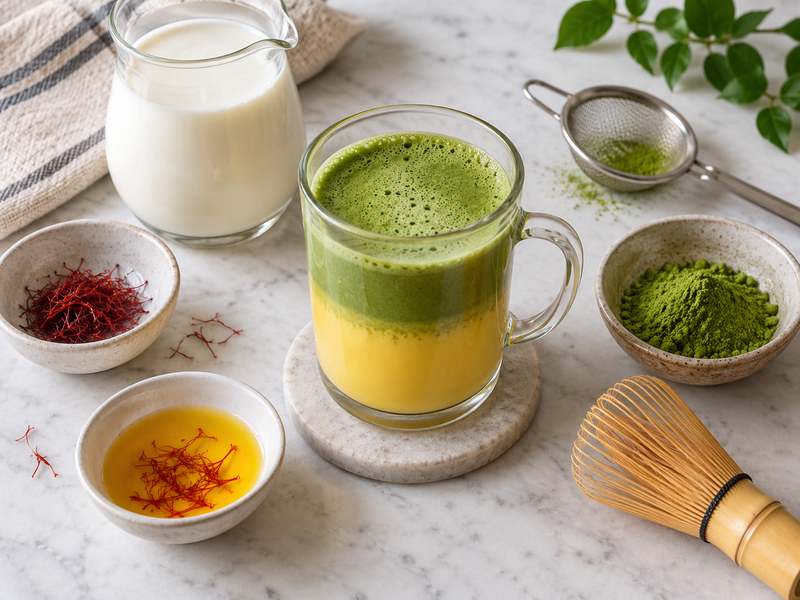
Saffron contributes a floral, earthy aroma and yellow color; matcha brings a green tea note and powder body. In a mixed drink, color can become muddy even when the flavor works. Decide whether your menu promises a matcha latte accented with saffron or a saffron milk with a matcha layer. Those are different targets. The Matcha Union recipe offers one way to pair the ingredients. Your café should describe its own serving only after a taste test, not from the colors in a promotional photograph.
Taste components before mixing. Prepare the matcha in a standard water dose, the saffron component alone and then the complete drink. Ask tasters to identify which aroma arrives first and which remains after swallowing. A drink that smells strongly of saffron but tastes only sweet milk may need less syrup, not more tea powder. A bitter tea finish may come from matcha selection or dose. Compare an unsweetened control with two measured sweetness levels. Record the serving temperature, because a warm cup and an iced cup release aroma differently. The best menu description should match what an unprompted taster actually notices.
2. Which saffron format should a café buy?
Make traceability and portioning practical
Whole dried threads make the ingredient visible to a buyer, but they still need a reliable supplier and storage plan. Ground saffron can be easier to dose into a mix and harder to assess visually. A saffron syrup may speed service while adding sugar, water and other ingredients that change the formula. Request ingredient statements, lot identification and origin documentation relevant to your purchase. Penn State Extension describes saffron as dried stigmas from Crocus sativus and recommends cool, dark, airtight storage for dried saffron. That agricultural fact does not verify a particular commercial lot.
Run a supplier comparison in the finished drink. Weigh a small amount of threads with a scale suitable for your trial, prepare equal-volume infusions and compare aroma and color. If the café lacks equipment to portion tiny thread amounts on every shift, make a controlled concentrate or buy a documented pre-portioned format. Record the opened-pack handling rule. Do not use a dramatic pinch as a production unit; one staff member’s pinch may cost far more and taste different from another’s. The purchasing decision should include ease of accurate dosing, not only price per gram.
| Saffron format | Possible advantage | Check before use |
|---|---|---|
| Whole threads | Visible material | Lot, aroma and portion method |
| Ground spice | Easy mixing | Identity and dose control |
| Syrup | Fast service | Sugar, flavor and ingredient list |
| Prepared concentrate | Consistent station portion | Validated preparation and hold |
3. How should a saffron component be prepared?
Control extraction without hiding variation
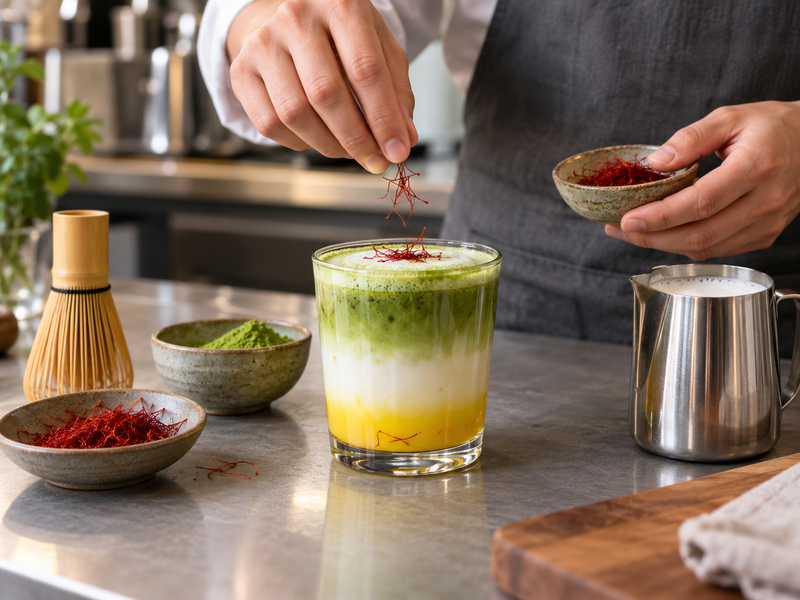
For a thread-based drink, use a measured amount of saffron with a measured amount of suitable liquid and a written steep process. Compare two preparation methods in small batches rather than declaring one temperature universally best. Note color, aroma and taste in the infusion before milk and matcha are added. The University of Vermont saffron center identifies compounds associated with saffron color, taste and aroma. A café can use that knowledge to ask why two thread lots differ, while its own preparation trial determines the cup result.
Avoid a concentrate so strong that one extra pour dominates the drink. Mark a service bottle and use a measured dispenser. If the saffron component includes sugar, write that sugar into the whole drink formula; otherwise baristas may add a full standard syrup portion on top. For a chilled concentrate, follow the café’s food safety plan for preparation, labeling and holding. Do not assign an untested shelf life to a liquid simply because dried saffron stores well. Taste the first and last servings from a prepared batch and look for settled material or drift in color.
| Prep variable | Record | Watch for |
|---|---|---|
| Threads | Grams and lot | Aroma drift |
| Liquid | Type and volume | Dilution changes |
| Extraction | Time and method | Weak or harsh cup |
| Concentrate hold | Container and interval | Settling or flavor loss |
4. Which matcha powder works in this drink?
Test the tea beside saffron, not in isolation
A powder that tastes balanced whisked in water may fade in a saffron milk drink. Ask suppliers for representative lots and a specification, then prepare each in the same recipe. Keep the tea dose, milk, saffron component and sweetness identical. Code cups so tasters do not favor a brand name or the greener sample. Score tea clarity, graininess, bitterness and how much of the saffron aroma remains. If two powders perform similarly, compare their cost at the actual portion size and their document fit for your market.
Do not use “ceremonial” as the complete buying brief. Matcha Village offers several grades for different applications; a café needs the powder that meets this specific flavor and operational target. A pure matcha powder can also vary by lot, so keep the approved sample tied to its batch code. If a replacement powder changes the balance, first retest the drink before adding more saffron or syrup. Japan’s MAFF tea description explains the tea’s tencha origin, but does not predict its performance in milk with spice.
5. How can sweetness and milk be balanced?
Keep the two aromas in view
Milk choice affects the drink’s sweetness, body and color. Whole dairy milk, oat drink and almond drink can each change how saffron and tea appear, even at the same powder dose. Start with the milk you intend to sell, not a lab-friendly substitute. Compare one unsweetened version and two measured sweetened versions. Record all sweetness already present in a purchased saffron syrup or matcha latte mix. A café that forgets syrup sugar may misjudge the matcha as too weak and increase a costly ingredient unnecessarily.
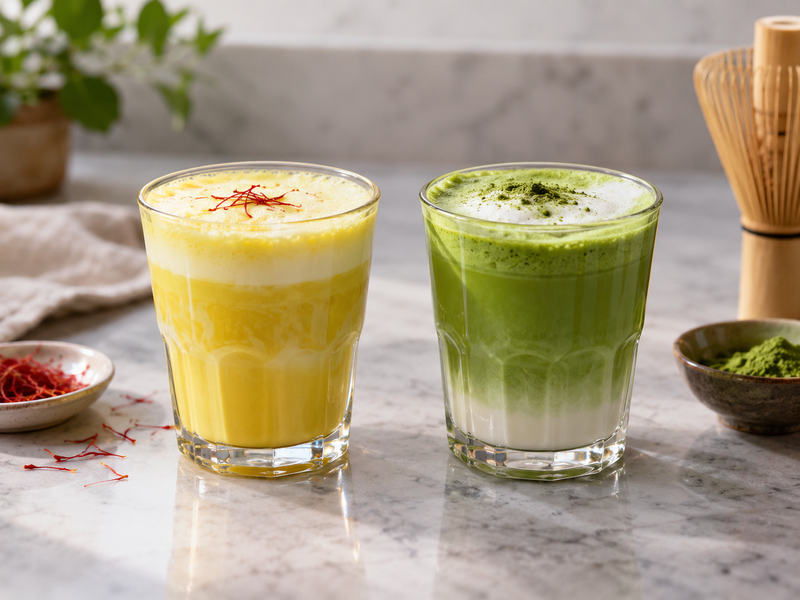
Use a whole-cup test. Sip the drink immediately, then again after the time a customer might spend carrying it. If the flavors separate, write a stir instruction or change the build. Matcha powder may settle; a saffron concentrate may pool at the bottom. A clean layered look can still require mixing before drinking. For a dairy-free option, run a separate trial rather than promising identical taste and foam from a plant drink. The menu can offer a substitution, but staff should know whether it changes sweetness or color noticeably.
| Milk trial | Sensory question | Operational question |
|---|---|---|
| Dairy | Is tea and saffron balanced? | Allergen handling |
| Oat | Does natural sweetness dominate? | Foam and separation |
| Almond | Does nut flavor compete? | Allergen labeling |
| No-milk control | Are both ingredients clear? | Can it be a separate menu item? |
6. Should the drink be served hot or iced?
Treat them as separate recipes
Heat makes aromas more apparent, while ice changes dilution and reduces perceived intensity as it melts. A hot recipe poured over ice will not necessarily produce the same balance. Create a standard hot cup and a standard iced cup with measured liquid volumes, ice mass and final serving size. Taste at service and after a realistic wait. The iced version may need a different matcha base concentration or saffron portion, but change each deliberately. Record whether a warm saffron component melts ice before the customer receives the drink.
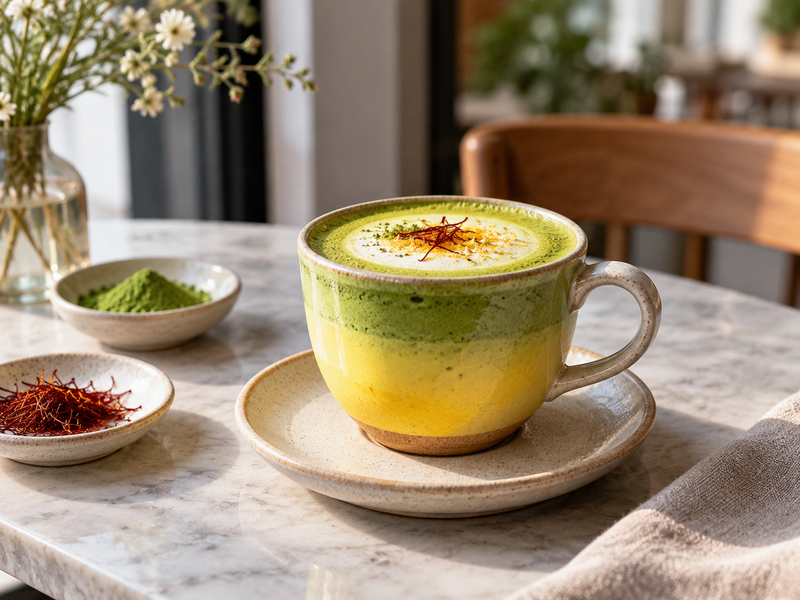
Check presentation against flavor. A translucent golden saffron layer beneath green matcha may look striking, yet a dense syrup layer at the bottom gives uneven sweetness. If the drink is meant to be stirred, say so on the menu or train counter staff to explain it. A hot cup may hide a beautiful color gradient but deliver a stronger aroma; that may be the better product for a winter special. Pilot both formats, then launch only the one the café can make repeatedly at a profitable service pace.
7. How can staff build it consistently?
Turn the recipe into a station card
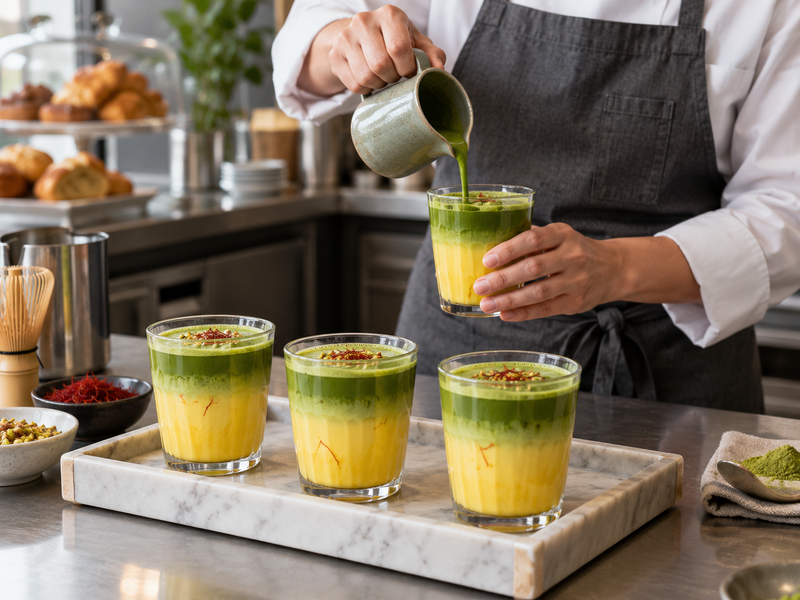
Record matcha grams, wetting liquid, whisk method, saffron concentrate milliliters, milk amount, sweetener and cup size. Put the order of assembly on one card with a photograph of an accepted drink. A staff member can then make the same cup on a busy shift. Test the card with two baristas. Weigh or measure their finished cups and taste them without knowing who made which. If the difference is large, identify the step that allows too much judgment: perhaps a free-poured saffron component, a variable ice scoop or a matcha spoon instead of a scale.
Keep tools clean between drinks so saffron does not tint a plain latte and matcha residue does not contaminate a milk pitcher. For milk and other perishable ingredients, use the café’s approved food safety controls; the FDA Food Code is a US retail reference, with local rules governing the site. A batch-made saffron component needs a label and discard rule validated for its formula. The station card should include what staff do when a layer fails or the matcha forms clumps, not merely the ideal assembly photograph.
| Station step | Standard measure | Reject sign |
|---|---|---|
| Matcha | Grams and liquid | Dry clumps |
| Saffron | Measured dose | Strong uneven layer |
| Milk | Volume and type | Wrong sweetness or foam |
| Ice | Mass or scoop standard | Rapid dilution |
8. What should a service trial measure?
Include the queue and the customer wait
Prepare a series of drinks during a normal service period, not only at a quiet bench. Record time from order to handoff, ingredient waste, dosing variation and staff corrections. Let a tasting group evaluate drinks at handoff and after a typical carry delay. Score saffron aroma, matcha clarity, sweetness, texture and appearance. A drink that wins immediately but turns dull or separates after ten minutes may need a different build. Treat that interval as a test condition chosen for your business, not a general shelf-life claim.
Ask staff to identify the most awkward step. If counting saffron threads per cup slows the line, a measured concentrate may be useful. If a concentrate loses flavor during a shift, smaller preparation batches may work better. Photograph the first and last drinks from one component batch under the same lighting. Keep notes by powder and saffron lot. A seasonal special often uses limited ingredient stock; supply continuity matters if the promotion succeeds. Before launch, confirm that the team can repeat the accepted cup without the developer standing nearby.
9. How should the café calculate portion cost?
Count usable saffron and powder
Saffron is a high-value spice because harvesting its stigmas is labor intensive; Penn State Extension explains the crop and hand harvest. For a café, the relevant calculation is cost per accepted drink. Weigh saffron used in a concentrate, count the number of cups made at the accepted dose and include any concentrate discarded under the approved hold rule. Add matcha grams, milk, syrup, cup, lid and labor. A dramatic garnish of loose threads should be costed too; it may contribute more to appearance than aroma.
Compare the special with a standard matcha latte on incremental cost and price. If the saffron version takes extra staff time and requires a small-batch component, the menu price must cover that work. Do not assume customers will pay more because a spice has a luxurious reputation. Offer coded samples or a short menu test and record actual orders and comments. Include rejected drinks from overpouring or clumps in the pilot yield. Your invoice price per gram is only one part of what the drink costs to sell.
| Cost item | Unit to capture | Common loss |
|---|---|---|
| Saffron | Grams per accepted cup | Concentrate discard |
| Matcha | Grams per cup | Clumps and spills |
| Milk and syrup | Milliliters | Free-pour variation |
| Packaging | Cost per cup | Trial breakage |
10. What belongs in the buying brief?
Specify ingredients against the approved drink
Send the matcha supplier your serving format, milk choice, target tea strength, expected monthly volume, preferred pack size and destination market. Ask for a representative lot, ingredient statement, storage guidance and documents required by your quality team. Matcha Village can discuss application-specific powder grades and bulk supply; select the lot by the finished saffron matcha cup. Separately, obtain lot and origin information for the saffron format you choose. Do not imply that the matcha supplier has verified the spice unless it actually supplies and documents it.
Keep the recipe card, sample scores, approved ingredient lots and cost sheet together. Run a short training session where staff make cups without the developer’s intervention. Compare hot and iced versions only if both passed their own trials. For menus in markets with allergen requirements, check the actual milk, syrup and toppings; FDA allergy guidance is one reference for US teams. A useful next step is sending your matcha brief with the tested cup target, then asking for samples that can reproduce it at service speed.
Set the tea base with our matcha latte ratio guide.
FAQ
Q1: Is saffron matcha a standard tea preparation?
It is a café recipe combining saffron and matcha. Define the exact drink you sell rather than suggesting a traditional standard.
Q2: Should a café use saffron threads or syrup?
Trial both against flavor, ingredient disclosure, portion accuracy and service time. A syrup changes the sweetness formula.
Q3: Why does matcha taste weak beside saffron?
The saffron component, milk or sugar may dominate. Compare coded cups before increasing the matcha dose.
Q4: Can the same recipe be served hot and iced?
Test separate builds because ice dilution and serving temperature change the result.
Q5: What should a buyer request for bulk matcha?
Request a representative lot sample, product specification, ingredient and storage information, and documents needed for the sales market.