
Matcha pralines ask a confectioner to solve three problems at once. Chocolate must release cleanly from its mold, the filling must taste of tea after the shell is added, and the finished piece needs a validated selling period. A bright green center does not prove any of those outcomes. Build one shell and one ganache first, then add a contrasting component only if it improves the bite. Callebaut’s matcha sesame ganache and calamansi jelly praline shows a professional layered approach. This guide turns the concept into a buyer’s trial, production checks and a sensible quality brief.
Contents
- 1. What makes matcha pralines distinct?
- 2. Which shell chocolate should a maker trial?
- 3. How should matcha enter the filling?
- 4. How can ganache flavor be balanced?
- 5. What does reliable tempering require?
- 6. How should fillings be deposited and capped?
- 7. How should shelf life be established?
- 8. What should a sensory panel score?
- 9. How can a maker cost accepted pieces?
- 10. What belongs in the supplier brief?
1. What makes matcha pralines distinct?
Define the center and the finished bite
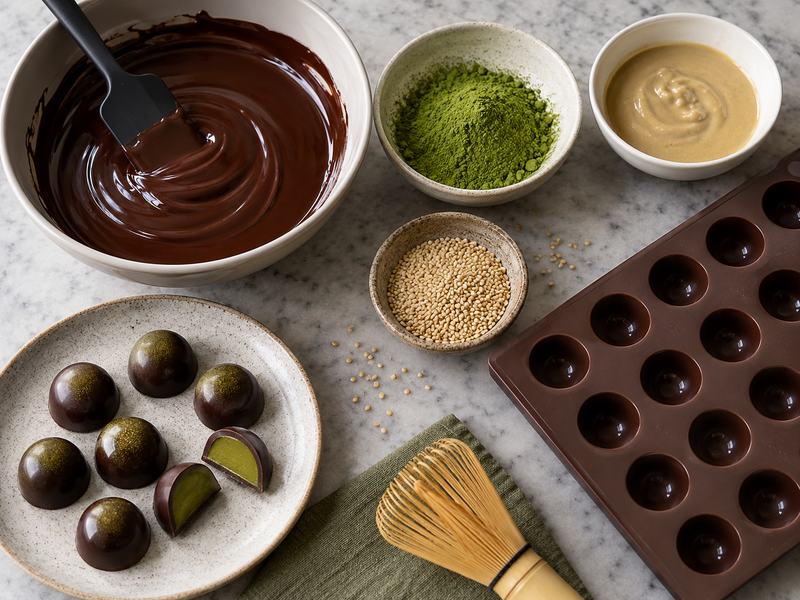
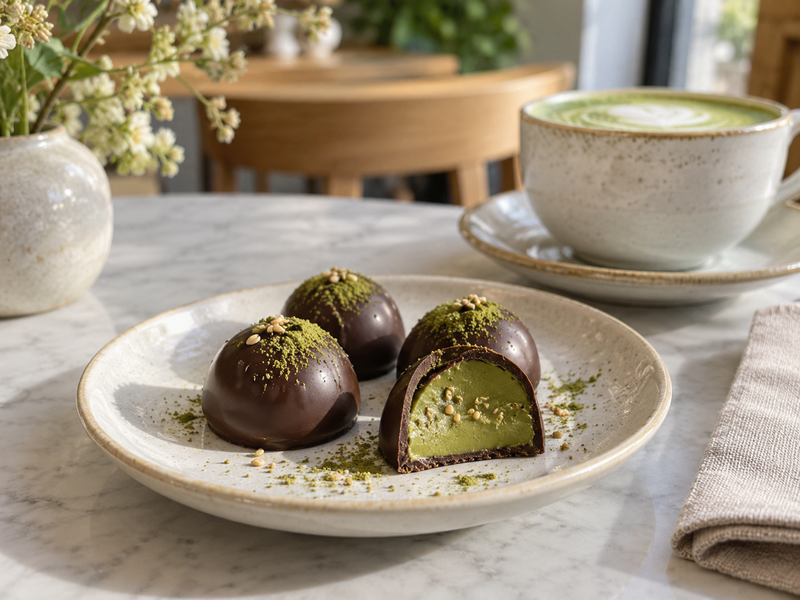
Praline can mean different sweets in different markets. Here it means a molded chocolate piece with a matcha-flavored center. State that clearly on the product brief so a supplier does not assume a nut-based paste or a sugar-coated confection. Matcha can sit in a ganache, a fat-based filling or a separate layer. A thin shell gives the tea more room; a thick dark shell can dominate it. Callebaut’s reference piece pairs tea with sesame and calamansi, creating a complex bite. A new maker should first prove that matcha tastes clear in a simpler piece.
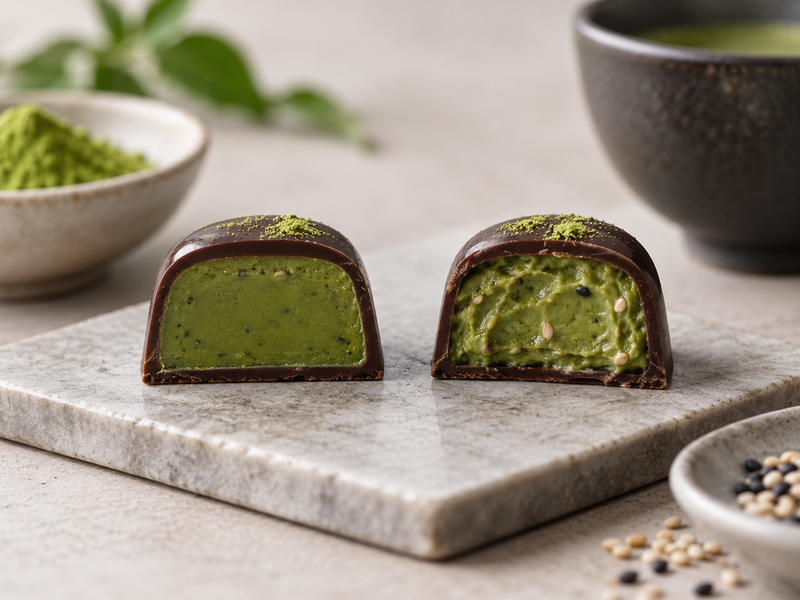
Cut a piece before naming it a success. Inspect shell thickness, fill level and any gap at the cap. Taste half a piece, then a whole one, because the shell-to-center ratio changes perception. Ask tasters to identify the tea note without seeing the color. If they taste only white chocolate or sugar, adding more green powder may make texture worse without fixing balance. The launch target should include flavor, appearance, release from mold and stability during packing. These checks are more useful than a photograph of one perfect sample.
2. Which shell chocolate should a maker trial?
Choose for contrast and production behavior
White chocolate can let the tea color and softer notes show, but its sweetness may crowd the center. Milk chocolate offers familiar balance, while a dark shell can provide sharper contrast at the cost of tea clarity. Use the couverture your team knows how to temper, then make identical centers in at least two shell types. Control mold size and shell thickness. A comparison fails if the white piece contains twice as much filling as the dark one. Record chocolate product code, lot, working method and finished mass per piece.
Judge the shell after unmolding and after a simulated pack-out. It should release cleanly, show the intended finish and resist ordinary handling. A chocolate chosen solely for flavor may prove difficult in a detailed mold or hot production room. Callebaut’s tempering guide explains that tempering pre-crystallizes cocoa butter; its recommended curve depends on the chocolate. Follow the specific couverture manufacturer’s instructions and verify a set sample in your own room. Keep shell choice separate from matcha choice until each candidate has passed a complete piece tasting.
| Shell trial | Expected flavor effect | Production check |
|---|---|---|
| White | Makes tea easier to notice | Sweetness and scuffing |
| Milk | Soft chocolate balance | Tea still identifiable |
| Dark | Bitter contrast | Center not overwhelmed |
| Colored cocoa butter | Strong visual cue | Added labor and consistency |
3. How should matcha enter the filling?
Disperse fine powder without grit
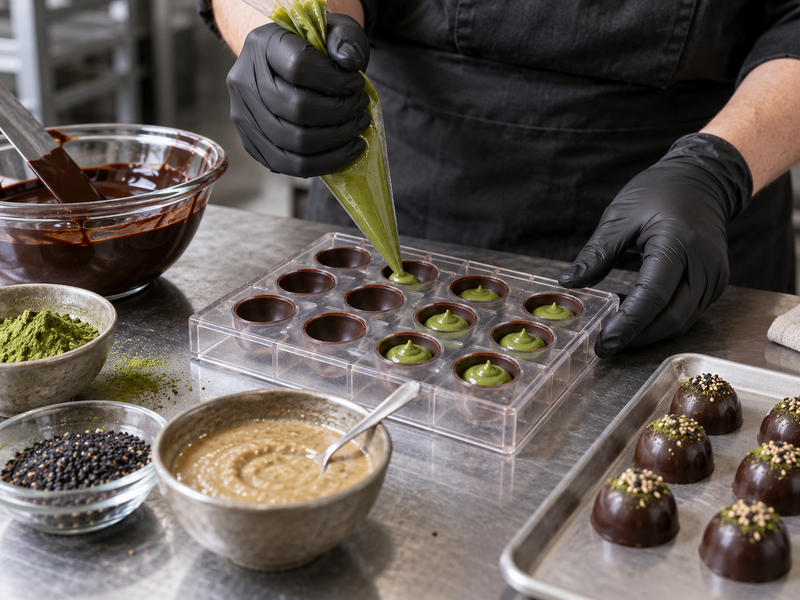
Adding dry matcha straight into a finished ganache can leave tiny clumps that become obvious in a smooth praline center. Weigh the powder and pre-disperse it in a measured portion of compatible recipe liquid or fat, according to the filling type. Sifting can help, but it does not correct a broken emulsion. Keep the total liquid in the formula constant between test batches. If a trial uses more cream to wet the matcha, record that change; it affects texture and may affect stability. Compare the center before shelling and again in the finished piece.
Use two or three powder dose levels, each expressed as grams per batch and grams per accepted piece. Tea intensity after the shell is added matters more than color in the mixing bowl. A supplier’s sensory sample whisked in water can help reject an obvious off-note, but confectionery testing must use the real fat and sugar system. Request a representative lot and repeat the accepted formula when the supplier proposes a new lot. Keep an ingredient statement and batch code with your production sheet. A clear input record prevents a color change from being blamed on chocolate when the powder itself changed.
| Matcha step | Record | Fault it can reveal |
|---|---|---|
| Weighing | Grams and lot | Dose drift |
| Pre-dispersion | Method and liquid | Dry specks |
| Emulsification | Temperature and tool | Split filling |
| Final tasting | Shell type and score | Hidden tea flavor |
4. How can ganache flavor be balanced?
Build a simple center before adding layers
Ganache is a formulated emulsion, not a container into which any amount of flavor can be poured. Its chocolate, liquid, sugar and fat determine texture and handling. Callebaut’s ganache formulation guidance recommends examining water, sugar, cocoa butter and dairy fat as parts of the formula. For an initial matcha praline, choose one approved ganache base and compare powder levels while keeping those components constant. If the tea is buried, consider shell choice and sweetness before increasing dose again.
Sesame and citrus can work as contrast, as shown in the reference praline, but each added layer makes filling and stability harder to control. Test a plain matcha center first, then a sesame version, then a citrus layer if the first two pass. Taste at the product’s planned serving temperature. A cold ganache can feel firmer and mute aroma compared with a piece held at a temperate retail display. Do not claim that a specific combination will sell better without a small customer or wholesale buyer test. A tasting sheet with coded pieces will give more useful evidence than a debate about which flavor sounds premium.
5. What does reliable tempering require?
Keep the shell process separate from filling development
Tempering aims to form stable cocoa butter crystals so molded chocolate releases with the expected shine and snap. Follow the manufacturer’s curve for the selected couverture; dark, milk and white chocolates differ. Record melting, cooling and working conditions using the equipment your production team actually has. Test a small smear or molded sample before filling an entire tray. A thermometer alone does not prove stable temper if the mass was poorly mixed or the room caused rapid change. Callebaut’s tempering methods provide process options; choose one and train it consistently.
Reject the shell before filling if it fails. Dull patches, poor release or fragile thin walls can turn an otherwise good matcha center into scrap. Check mold cleanliness and dryness, deposit amount, tapping and draining method. Photograph the accepted shell before capping so the team can tell whether a later defect began during molding. If a white chocolate shell browns or picks up green smears, revisit working practice rather than obscuring the fault with decoration. A good process protects the expensive matcha filling by putting it only into shells that have already passed an early check.
| Shell check | Inspect before filling | Likely action |
|---|---|---|
| Surface | Shine and even color | Recheck temper and mold |
| Wall | Uniform thickness | Adjust deposit and drain |
| Release test | Clean unmolding | Review crystal and cooling control |
| Shape | Intact corners | Handle molds differently |
6. How should fillings be deposited and capped?
Leave a consistent cap margin
A filled mold needs enough headspace for the closing layer of chocolate. Overfilled centers smear across the rim and weaken the cap; underfilled pieces disappoint customers and distort cost calculations. Weigh the filling deposited into sample cavities and mark a visual fill line for training. If the center contains two layers, use a written order and allow the first layer to reach the required process state before the second. Note which layer contacts the shell and how a cut piece should look. The reference recipe’s multi-layer approach is useful inspiration, but its procedure must be tested with your mold and filling formula.
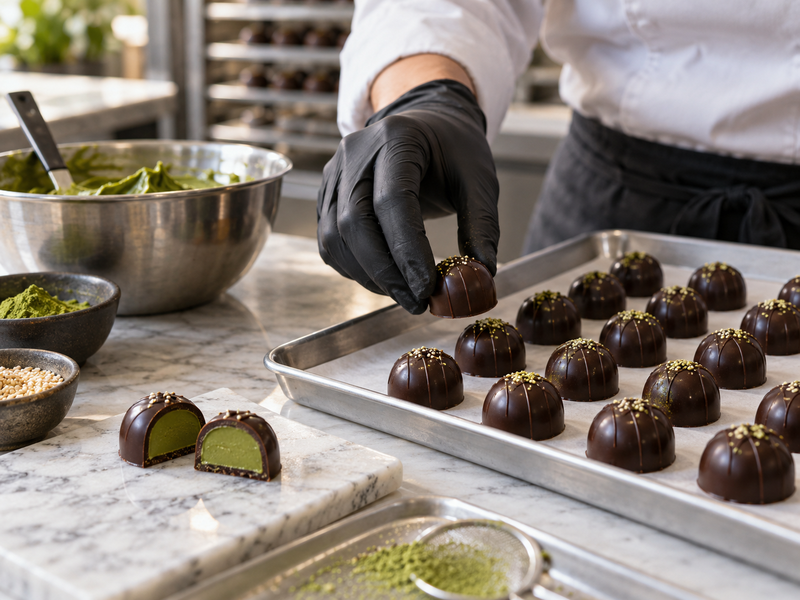
Cap with the selected chocolate under the maker’s validated method. Inspect the underside for gaps, streaks and trapped filling. Unmold several pieces from different parts of the tray and cut them. A perfectly shiny top says little about the cap seal or internal distribution. Set a reject rule for leakage, thin walls and smeared seams. When packing, use a tray or insert that prevents pieces from striking each other. A portion-controlled depositor may improve speed, but its benefit should be measured against setup, cleaning and filling left inside the machine.
7. How should shelf life be established?
Treat stability as a test, not a guess
Fresh cream, fruit components and other water-containing ingredients can change microbial and physical stability. A glossy shell is no safety barrier if the filling and cap process are unsuitable. Do not copy a shelf-life number from another ganache or retailer. Work with your food safety and quality team to assess the actual recipe, manufacturing controls, packaging and storage route. Callebaut’s ganache formulation article shows why water, sugars and fats matter to product design, but it does not validate a new matcha filling. Appropriate laboratory testing may be needed before a commercial date is assigned.
Quality also changes before a product becomes unsafe. Test retained pieces during the planned selling period for bloom, texture, tea color, aroma and cap integrity. Move samples through realistic transport and retail conditions. If a fruit jelly bleeds into ganache or the shell develops spots, the product may fail the customer’s expectation even when the center originally tasted good. Record the test method and lot with each finding. A short validated selling period is a sound business decision when the alternative is an unsupported claim of long stability.
| Stability check | Observation | Required decision |
|---|---|---|
| Filling condition | Texture and any separation | Reformulate or reject |
| Shell surface | Bloom or dullness | Review chocolate and storage |
| Seal | Gaps or leakage | Review cap process |
| Tea quality | Color and aroma | Set quality window |
8. What should a sensory panel score?
Taste a whole piece without brand cues
Code samples and compare them at the same temperature. Ask each taster to note shell snap, shell flavor, matcha clarity, sweetness, center texture and finish. A piece with an exciting first bite may leave a bitter tea aftertaste; another may have a pleasant center but a shell so thick that the center disappears. Cut pieces for visual evaluation only after whole-piece tasting, because seeing a vivid green center can influence perception. Keep comments specific enough to guide a change: “tea absent after shell” points somewhere different from “center gritty.”
Repeat the leading formula with a second powder lot or production day. If scores change sharply, check ingredient and process records before calling tasters inconsistent. Include at least one wholesale or retail representative if the product will be sold through those channels. A confectioner’s favorite can differ from the item a store can pack and explain quickly. Record whether sesame, citrus or another flavor makes the ingredient story too complicated for the price point. The goal is a praline customers recognize as matcha, not a list of ingredients that looks clever on a menu card.
9. How can a maker cost accepted pieces?
Include mold loss and packaging
Calculate ingredient cost from actual batch weights, then divide by pieces accepted after unmolding and final inspection. Include chocolate left in the melter or depositor, filling remaining in piping bags, broken shells, leakers and any pieces rejected after holding. Add the carton, insert and label costs. Matcha price per kilogram becomes meaningful only after the gram dose and accepted yield are known. If one powder requires a much heavier dose to remain noticeable inside the shell, a lower invoice price may not produce a lower cost per sellable piece.
Run a small pilot with realistic staff and equipment. Time molding, filling, capping, unmolding and packing separately. A second flavor layer can increase ingredient cost and labor while decreasing speed. It may still be worth selling if buyers pay for it, but confirm that with a buyer trial instead of assuming complexity equals value. Record the number of pieces per mold and per work hour. Use those figures to forecast powder needs and quote wholesale packs. A pricing worksheet should use the product as actually made, including the rejects needed to reach a full carton.
| Cost line | Unit to capture | Often missed |
|---|---|---|
| Chocolate | Used grams per accepted piece | Residue and broken shells |
| Matcha filling | Deposited grams | Piping loss |
| Packaging | Cost per packed piece | Damaged inserts |
| Labor | Minutes by stage | Cleaning and setup |
10. What belongs in the supplier brief?
Specify the actual ganache application
Give the matcha supplier your center type, intended chocolate shell, target tea note, approximate powder dose, expected monthly volume, pack size and destination market. Ask for a representative lot sample, specification, ingredient statement, storage instructions and relevant quality documents. Matcha Village can offer different matcha grades and bulk formats, but its application support should lead to a tested center, not a grade chosen only by color. Keep the approved powder lot tied to the finished praline’s sensory and stability records. Review a new lot before it enters production.
The confectionery team needs a companion card with shell chocolate code, tempering method, mold, filling recipe, deposit weight, cap margin, cooling, pack method and reject photos. Add the food safety team’s approved selling period once validated. FDA food allergy information is relevant to US labeling because milk, nuts and sesame may appear in a praline; check the actual recipe and market. Run the card with another operator. If the piece unmolds, tastes and packs like the accepted sample, you have a credible scale-up route. Request matcha samples for that defined center and approve the complete piece.
For a solid bar format, compare our matcha chocolate guide.
FAQ
Q1: Are matcha pralines always nut-based?
No. This guide uses praline for a molded chocolate with a matcha center. State the format clearly in buyer and label documents.
Q2: Why does matcha taste weak in a finished praline?
Shell thickness, chocolate flavor and center sweetness can hide it. Compare a whole piece before increasing powder dose.
Q3: Does a shiny shell prove a stable product?
No. Shell finish, filling stability, cap integrity and safety need separate checks.
Q4: Can a confectioner copy a ganache shelf life from another recipe?
No. Validate the actual formula, manufacturing process, package and storage conditions with the quality team.
Q5: What should a buyer request from a matcha supplier?
Ask for a representative lot, product specification, ingredient and storage information, and documents required for the sales market.