
A resin whisk imitates the chasen’s multi-tine head in a washable synthetic material; a bamboo chasen uses split bamboo. Both can disperse matcha, yet cafés need evidence from their own menu before choosing one. A plain bowl exposes foam differences that milk may hide, while cleanup and wear affect a busy station. This resin whisk vs bamboo whisk for matcha guide sets out a fair comparison and purchasing checklist. A Japanese Tea SG café trial offers a useful example, but its observations belong to the models and recipe tested there.
Contents
- 1. What exactly differs between the materials?
- 2. How should a café compare finished drinks?
- 3. Does pure matcha reveal a texture difference?
- 4. What changes in an iced or milk drink?
- 5. Which whisk fits a rush-hour station?
- 6. How do cleaning instructions differ?
- 7. How should a buyer compare wear and cost?
- 8. What should a supplier sample pack include?
- 9. How can staff run a controlled side-by-side trial?
- 10. When does it make sense to stock both?
1. What exactly differs between the materials?
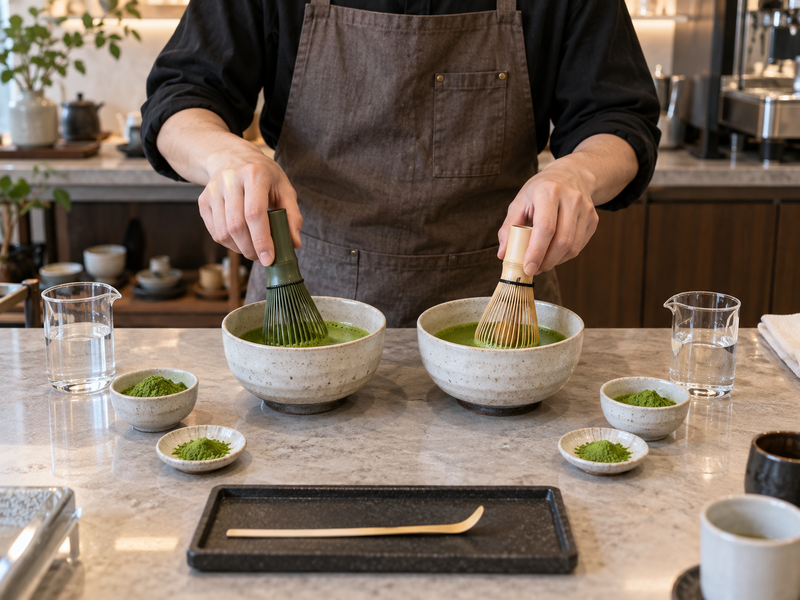
Look at the actual head, not the material name
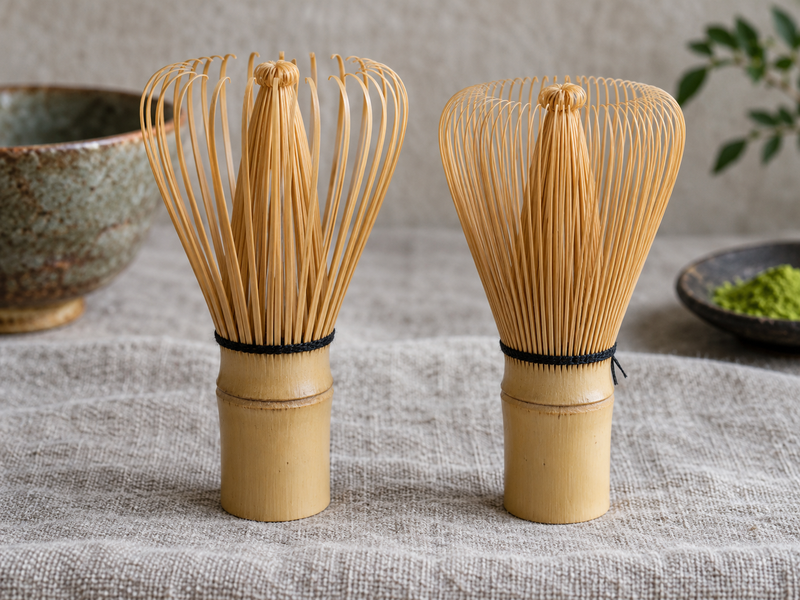
A bamboo chasen is carved from a piece of bamboo into fine inner and outer tines. Resin versions take different forms; one model may imitate those rings while another has thicker or removable parts. The material label alone does not tell a café how much the head flexes, how it fits a bowl, or which cleaning process its maker permits. Request the manufacturer’s specification and handle both samples before comparing price. An accessory buyer also needs to know whether the synthetic tool has replaceable pieces that could be lost during service.
The Japanese Tea SG comparison tested a particular resin whisk against a Takayama bamboo chasen. Its observations do not cover every model. Bamboo heads also vary in shape and workmanship. Record each sample’s brand, model, width, and care instructions. Reorders should match the tested tool.
| Check before trial | Bamboo sample | Resin sample |
|---|---|---|
| Head form | Count, curl, diameter | Tine layout, flexibility, diameter |
| Construction | Binding and split bamboo | Joints, removable components |
| Maker care | Wetting, rinsing, drying | Approved cleaning and heat limits |
2. How should a café compare finished drinks?
Fix the recipe and vary the tool
Choose one plain matcha recipe and one latte recipe that the café actually sells. Weigh powder from the same lot, measure water and milk, use the same bowl, and set an agreed finished state. Two trained baristas should use both tools so a single operator’s preference does not decide the result. Record preparation time, visible clumps, spill, and the drink’s appearance at normal handoff. Then taste the finished drinks without showing tasters which whisk was used if the station can manage it.
The plain bowl and latte answer different questions. Foam affects plain tea’s mouthfeel, while milk drinks may be judged by even color and lack of settled powder. Do not use one score for an all-purpose winner. Repeat the comparison if the first session includes a recipe change or inexperienced operator. Keep a written scorecard.
| Trial observation | Plain matcha | Milk drink |
|---|---|---|
| Surface | Bubble size and coverage | Often hidden after assembly |
| Dispersion | Dry flecks and mouthfeel | Settling and color uniformity |
| Time | Bowl ready for service | Concentrate through final pour |
| Splash | Worktop and rim | Worktop and finished cup |
3. Does pure matcha reveal a texture difference?
Taste the foam instead of judging height alone
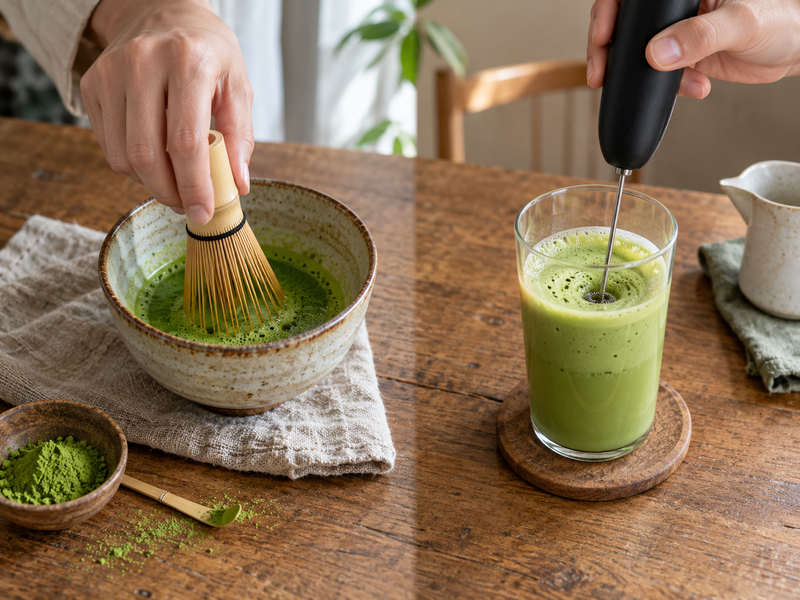
In the Japanese Tea SG head-to-head test, its bamboo whisk made denser foam and reached the authors’ target somewhat faster than their resin model. Those reported seconds belong to that specific matcha, bowl, water, operator, and pair of whisks. Treat them as a reason to test, not a forecast for another café. A different resin head, bamboo model, or service target might narrow or reverse the gap.
For pure matcha, pour at handoff temperature and taste promptly. Ask about body, flecks, and whether foam feels fine or coarse. Photograph cups under the same light. If the venue does not seek thick foam, score its intended surface. Inspect powder at the bowl’s edge too. Tie tasting notes to a model and recipe, not only material.
4. What changes in an iced or milk drink?
Check the drink guests receive
A café often makes a small matcha concentrate before adding milk, syrup, or ice. In that setting, even dispersion and a clean pour may matter more than foam that disappears during assembly. The Japanese Tea SG test found similar behavior in its layered milk drinks, but that result does not cover every powder, sweetener, or equipment setup. Run the café’s full recipe with each tool, then inspect the drink at handoff and after the usual waiting time. Note powder settling at the bottom, streaking, and any change in flavor balance.
Ippodo’s bamboo care guidance says to use its chasen with water and matcha and add milk afterward. Some resin makers may allow broader use; confirm model instructions. With sticky syrup, mixing matcha separately may ease cleanup. Test the station sequence, not only the whisking moment.
5. Which whisk fits a rush-hour station?
Count complete service time
An apparent whisking speed advantage may vanish if a tool takes longer to clean, dry, or reassemble between orders. Time from picking up the whisk through returning a clean, usable unit to its station position. Include splash cleanup and staff movement. A tool that saves a few seconds during one plain matcha might still create a bottleneck when several drinks arrive together. Conversely, a model that takes longer to reach a particular foam texture may be acceptable if it gives easier turnover on a latte line.
Test against a real busy-period order load. Keep clean spares so staff do not reuse a soiled whisk. Note space needed for holders and drying. If resin disassembles, account for every piece in the wash routine. Crowded bamboo drying positions can lead to knocked tines. Judge the station layout and work pace together.
| Time segment | Measure how | Why |
|---|---|---|
| Prepare | Recipe start to mixed matcha | Operator workload |
| Assemble | Mixed matcha to finished cup | Menu fit |
| Clean | Used tool to ready spare | Station capacity |
| Recover | Spill or missing-part handling | Rush resilience |
6. How do cleaning instructions differ?
Confirm model-specific care and local rules
Traditional bamboo chasen need gentle care. Ippodo advises wetting tips before use, rinsing promptly without soap, and air-drying openly. It warns against leaving a damp whisk in its case and says to replace a chasen with broken tips. A resin whisk may permit detergent, disassembly, or a machine cycle, as the specific model in the Japanese Tea SG article does. Never print “dishwasher safe” on a product listing merely because it is resin; ask for the maker’s care instructions and temperature limits.
Have the site manager check local food-safety rules and approved cleaning methods before issuing a station SOP. Record who cleans each tool, where it dries, and how staff identify a ready unit. Check resin joints and bamboo binding for trapped residue. Replace damaged items; aggressive washing is not a repair.
7. How should a buyer compare wear and cost?
Calculate cost per usable preparation
Unit price can mislead a buyer. Track how many drinks each sample makes before it is withdrawn for wear, damage, or failed performance. Note arrival defects, cleaning time, spare stock, and replacement lead time. The simplest local metric is purchase cost divided by usable preparations, with cleaning labor considered separately. Do not publish a universal lifespan for either material: bamboo condition varies with use and care, and resin durability varies with design, temperature exposure, and handling. A short pilot supplies better estimates than catalog promises.
Inspect weekly. For bamboo, look for broken tines or a head that fails the approved result. For resin, check warping, cracks, joints, and alignment. Record removal reasons. If failures follow washing, revisit that process; if they follow a bowl change, retest fit. Set spare stock from observed replacements.
| Cost item | Record during pilot | Avoid assuming |
|---|---|---|
| Purchase | Unit and shipping cost | Lower price means lower drink cost |
| Use | Usable preparations before removal | One fixed lifespan for a material |
| Labor | Cleaning and assembly time | Whisking time is total service time |
| Spares | Units needed in rotation | One whisk covers every rush |
8. What should a supplier sample pack include?
Request evidence with the physical tool
Ask each vendor for production samples, model identifiers, dimensions, material description, and written cleaning instructions. For resin, request any temperature and dishwasher limits from the maker. For bamboo, ask for its intended preparation, care guidance, and head measurements. Packaging should protect tines and joints during transport without trapping a wet tool after use. If the item will be sold with a bowl or whisk holder, have the supplier send the actual components together so the buyer can test fit.
Support origin or food-contact claims with documents for the product and destination market. Do not transfer a powder supplier’s documents to an accessory. For a Matcha Village powder-and-tool promotion, identify the whisk maker and powder supplier. Test the set using the intended lot. Photograph the approved pack for receiving and retail teams.
9. How can staff run a controlled side-by-side trial?
Use one card across both materials
Write the recipe and acceptance criteria before unboxing the samples. Give each tool a code, then use the same matcha lot, weighed dose, water, bowl, and trained operator. Randomize which whisk goes first when practical. Repeat each preparation rather than relying on one bowl. After the plain tea, run the café’s milk drink as a separate test. Record clumps, texture, total service time, splash, cleaning effort, and any visible damage. If a model fails because it is too wide for the bowl, mark the fit issue rather than declaring its material inferior.
Ask a second operator to repeat the recipes. Taste finished drinks without naming the tool, then compare notes. Use photographs taken at the same time after mixing so foam has not faded in one cup while the other is still being made. The trial card should have room for “no clear difference.” That outcome may make cost, availability, or cleaning decide the purchase. Keep the approved sample in a labeled bag after it is dry; a later order can be checked against something more reliable than memory.
| Trial field | Hold constant? | Write down |
|---|---|---|
| Powder and dose | Yes | Lot and grams |
| Bowl and water | Yes | Model, volume, temperature |
| Whisk | No | Coded model and material |
| Outcome | Observe | Texture, time, cleaning, wear |
10. When does it make sense to stock both?
Assign a clear task to each model
Stock both if each wins a distinct job and the benefit survives a real shift. A plain matcha counter might favor one bamboo model for its accepted mouthfeel, while a latte station might select a maker-approved resin tool for its handling and wash routine. Those are possible outcomes, not a rule. If both produce the same approved drink with similar turnover, one model may simplify training, spares, and reorder paperwork. The only defensible choice comes from the venue’s recipes and care process.
Write the assignment on station cards and in the purchase list. Keep the matching bowl, storage position, cleaning instructions, and removal criteria with each tool. Reassess after a menu change, new matcha lot, or supplier substitution. For retailers, describe model-specific care accurately and avoid presenting one material as inherently hygienic or superior. The resin whisk vs bamboo whisk for matcha decision should end in a repeatable recipe and reorderable SKU. Trial the finished cup, then make the accessory choice that staff can carry through an ordinary rush.
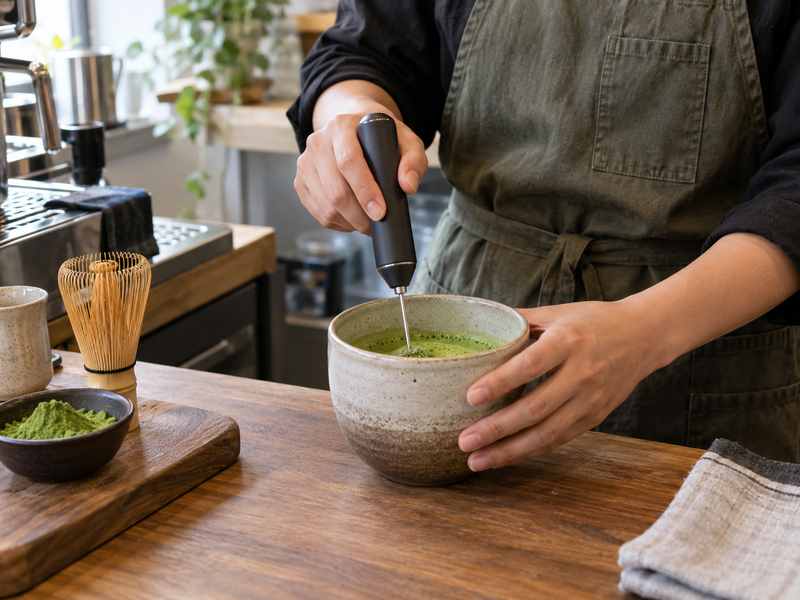
The matcha whisk versus electric frother comparison adds a third mixing method to the same cafe trial.
FAQ
Q1. Is every resin whisk dishwasher safe? No. Follow the cleaning and heat instructions for the exact model supplied.
Q2. Does bamboo always make better foam? One published café trial found denser foam from its bamboo sample. Test your own whisk pair and recipe.
Q3. Can a bamboo chasen mix syrup into matcha? Follow its maker’s care guidance; Ippodo advises using its bamboo chasen with water and matcha, then adding milk afterward.
Q4. Which tool lasts longer in a café? Track withdrawal and defects in your station. Material alone does not prove a universal lifespan.
Q5. Should a retailer sell both materials? Sell both when the differences, care instructions, and target uses can be shown clearly with tested products.
Let the café trial decide
Compare a named resin model and a named bamboo model using the same recipes and staff. Judge plain tea, milk drinks, cleanup, wear, and total service time separately. Keep the approved sample and care sheet with the reorder specification. That makes the next purchase a repeatable operational choice.