
A red bean matcha latte can look layered at the counter and turn into a clogged straw or dense paste at the bottom. Bean particle size, sweetness, cup geometry, and tea dilution decide whether guests can drink it comfortably. Set those controls before adding this dessert-style latte to a store menu.
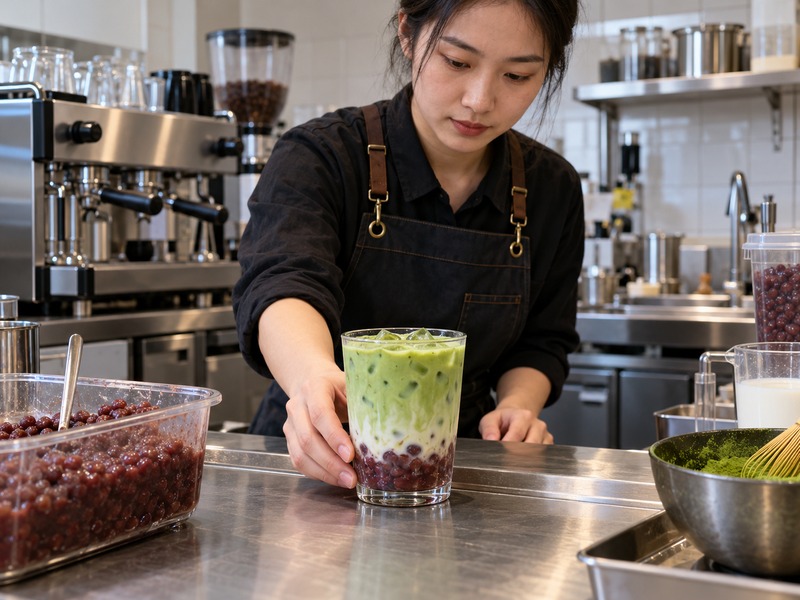
SERP intent reference: Matcha Red Bean Latte.
1. What is a red bean matcha latte in a café range?
The product combines a milk-matcha drink with a measured sweet azuki bean component. Bean paste may sit at the bottom, line a cup wall, or blend partly into milk. Choose one service architecture and define how a guest is meant to drink it. A thick paste that needs a spoon should be named and served accordingly; a straw drink needs a particle size and viscosity that can pass through its straw.
Cup architecture
Drinkable bean layer: Specify cup volume, bean grams, matcha grams, milk mass, ice, and expected layer appearance at handoff. The bean layer should contribute flavor rather than act as a decorative block. A clear visual target helps staff spot underdosed anko or tea. If the menu photograph shows a sharp boundary, test how long that boundary lasts under routine service. Do not promise a permanent split if the intended guest action is to stir the cup before drinking.
2. Which anko and matcha grades fit a latte?
Anko can be smooth, coarse, highly sweetened, or loosely cooked. Obtain an ingredient list and specifications for sugar, moisture or relevant quality measures, particle profile, and microbiology. A high bean content may look appealing yet block a straw. Matcha should deliver tea flavor in milk after the sweet bean component mixes in. Compare powder samples in the full cup rather than choosing by dry green color.
Supplier sample screen
Bean particle size: Sample anko at the serving temperature. Chilled bean paste may firm enough that a warm kitchen test misleads the buyer. Screen a candidate through the actual straw or spoon, not a separate tasting cup. Matcha bitterness can balance sweetness, but a harsh powder leaves a dry aftertaste once the bean flavor fades. Keep one anko lot fixed while comparing tea grades; then test supply substitutions as separate trials. Ask both suppliers for traceable commercial grades, not only hand-selected samples.
| Cup format | Bean form | Service check |
|---|---|---|
| Layered iced | Smooth or fine anko | Boundary at handoff |
| Stirred iced | Smooth anko | Full-sip balance |
| Warm | Validated paste | Heat loosening |
3. How should red bean and matcha proportions be set?
Start with a bean dose and a matcha-milk base measured in grams. A medium iced cup might screen roughly 25–45 g anko and 1–2 g matcha, with milk and ice set by the intended fill. These ranges are trial points rather than a final recipe. Bean paste contains sugar, so taste the mixed cup before adding any separate syrup. Record the pack’s actual sugar content when comparing suppliers.
Weighed cup build
Anko against tea: More anko changes not only sweetness but cup density, sediment, and labor. A stronger tea base may be needed to remain visible after stirring, but increasing matcha blindly can make the top layer bitter. Build three cups at a constant bean dose while changing tea; then hold tea constant while changing bean grams. Note the difference between a layered sip and a fully stirred sip. Both experiences matter if the drink is sold with a straw and no instruction to stir.
Cup geometry deserves its own trial. A narrow base can trap a thick anko deposit beneath a wide straw, while a broad base may let the bean layer disperse too quickly. Use the actual retail cup and fill line for all ratio tests. Photograph the drink after one sip and after stirring; those views show whether the intended bean dose is accessible rather than decorative.
4. What assembly sequence keeps layers useful?
Prepare anko under controlled conditions and deposit it at a measured temperature. Spread it at the cup base or wall using the defined tool. Mix matcha separately until smooth, then combine with milk. For an iced build, add ice in a way that does not splash the bean layer into a muddy cup. A hot build needs a separate test because warm milk can loosen anko quickly.
Cup build order
Temperature and density: If the café wants a visual boundary, record the order of bean paste, ice, milk, and tea. Use a cup with enough base width for the bean deposit and enough space for a straw. A spoonful of bean paste left on the rim can make a clean drink look messy. Train staff to remove smears before lidding without wiping away a planned wall pattern. Measure the time between depositing anko and handing off the cup.
| Bench input | Trial range | Watch |
|---|---|---|
| Anko | 25–45 g per medium cup | Sweetness and straw |
| Matcha | 1–2 g | Tea after stirring |
| Milk and ice | To fill target | Layer density |
5. How can multiple stores control bean texture?
A pump may not handle bean particles; a scoop may vary widely by operator. Test the chosen depositor with the approved anko and serving temperature. Weigh several routine portions from each tool. If the bean component is made in a central kitchen, define pack size, mixing before use, and opened-container rules. Matcha powder needs its own dose control so the top phase does not vary when the bean layer is consistent.
Deposit consistency
Cold paste behavior: A store should know what to do when paste becomes too stiff for its dispenser. Diluting by eye changes sweetness and safety. Set a controlled adjustment or a reject rule. Check cups made from the start and end of a container because liquid may separate from beans. A coarse paste might require a wider straw; that affects cost, packaging, and guest instructions. The full service kit should be tested together rather than purchasing a straw after the recipe is locked.
6. Which tests show a latte is drinkable?
Inspect the layered cup at handoff and after a realistic pickup delay. Then drink it with the chosen straw or spoon. Check whether anko moves smoothly, whether bean pieces block the straw, and whether tea flavor survives when the bottom layer enters a sip. A cup can pass a photograph and fail the guest experience. Record remaining paste after normal drinking.
Straw and spoon trial
Bottom-of-cup residue: Taste the upper matcha-milk phase and the mixed cup. The former may seem pleasant while the latter is excessively sweet. Look for chalky matcha specks, separated bean liquid, or a heavy paste plug. If the layer disappears too quickly, inspect temperatures and build order before adding thickener. If a guest cannot finish the bean deposit, reduce its viscosity or change serving method. Release criteria should reflect actual drinking, not only presentation.
| Check | Method | Failure |
|---|---|---|
| Straw | Drink through chosen size | Clogging |
| Last sip | Inspect remaining paste | Waste |
| Cup hold | Normal pickup time | Bleeding |
7. How should cafés cost the bean layer and cup?
Calculate anko spend from actual deposited grams plus container residue. Add matcha, milk, ice, cup, lid, wide straw or spoon, labor, and remakes. A coarse bean paste may command an attractive menu price but increase dispensing time and waste. Compare a smooth and a coarse version on accepted cups per container, not merely supplier price per kilogram.
Accepted-cup cost
Paste left in container: Some stores may sell the drink as a seasonal premium item with lower volume. Include opened-paste write-offs when forecasting margin. A premade bean component can save cooking labor but require higher cold-chain spend. If stores prepare anko, calculate cooking yield and quality records. Keep the upper matcha phase cost separate so purchasing can see whether powder grade or bean paste drives a change. Set a target margin only after measuring routine portions.
Ask the anko supplier for pack dimensions and unit price. A large tub may lower the invoice price but leave more paste at its opened-use limit in low-volume stores. Measure extraction with the planned scoop or depositor. A smooth paste can reduce labor and waste, but its bean texture may not satisfy the menu promise. Cost only versions that pass the drinking test.
8. How should anko and the finished latte be held?
Purchased or house-made anko needs storage and use instructions based on its formulation and local safety requirements. Do not assume a sweet paste is shelf stable after opening. Record cooling if the café cooks beans, plus storage, opening, and discard points. Matcha stays dry and sealed separately. The assembled drink should follow normal milk and cold beverage controls, with a tested pickup and delivery window.
Bean paste cold route
Opened pack clock: Run a holding study in the real cup with lid and ice. Look for bean liquid bleeding into milk, tea settling, and condensation that changes the wall pattern. A delivered cup may shake enough to lose its visual separation, so test that route before promising layers. If a warm version is offered, establish a different service instruction and note how anko changes with heat. A date on the bean supplier’s unopened pack does not set an opened-store limit.
| Cost item | Measure | Loss |
|---|---|---|
| Anko | Accepted deposits per pack | Container residue |
| Tea | Grams per cup | Overdose |
| Service | Wide straw and labor | Remakes |
9. Which allergens and records belong on the recipe card?
Anko ingredient lists may include more than beans and sugar. Review any additives, milk or soy in the drink, and cross-contact from the production line. The recipe card should name the actual bean paste, matcha grade, milk, cup size, and straw. Record supplier lots and store opening dates for anko. If the bean supplier changes sugar or particle size, both label wording and drinkability can shift.
Ingredient trace
Bean paste changes: Avoid claiming nutritional or traditional benefits based on the presence of beans and tea. Describe flavor and texture plainly. A complaint about a blocked straw should trace to the anko lot, depositor, and straw specification. A complaint about bitter tea should trace to powder lot and dose. Those two defect paths require separate records even though the ingredients meet in one cup. Quality should approve substitutions before stores run out of anko.
10. What should the pilot prove before launch?
Run an iced pilot during regular store traffic using the final cup, straw, depositor, and cold anko. Have several baristas build cups and measure bean dose variation, matcha dose, service time, and rim cleanliness. Inspect the cup at handoff and after pickup. Ask a reviewer to finish the drink through the intended utensil and note how much bean remains.
Normal-service cup test
Layer versus sip: If a warm version is planned, pilot it separately rather than copying cold assembly. Share specific feedback with the tea and bean suppliers: upper phase too bitter, paste too stiff, particles too large, or layer too short-lived. Sign off on ingredient specifications, tool, and hold window together. A visually neat cup should not trigger a bulk order until the drinking test and accepted-cup economics also pass.
| Record | Content | Use |
|---|---|---|
| Bean file | Lot and particle profile | Receiving |
| Cup card | Sequence and weights | Training |
| Cold log | Opened paste and milk | Safety |
When asking Matcha Village for tea powder, send the anko ingredient statement, bean particle size, milk base, cup size, and photographs after a normal pickup delay. Compare matcha grades in the upper liquid at the same dose, then test the full cup through its chosen straw. Purchase the powder that remains recognizable beside bean sweetness while the separate anko supplier meets deposit and safety specifications.
FAQ
Q1: What is the red bean component in this latte? It is sweetened azuki bean paste or a defined bean preparation; texture varies by supplier.
Q2: Can a normal straw handle the drink? Test the approved paste through the exact straw at serving temperature.
Q3: Should extra syrup be added? Taste the anko and full cup before adding syrup because purchased paste may already be sweet.
Q4: Can the latte be served hot? Yes, with a separate test for paste loosening, layer appearance, and service safety.
Q5: How should anko be stored after opening? Follow a validated opened-container rule for the actual product and local food safety plan.