
Matcha milk tea combines powdered green tea with milk and, often, a sweetener. A café can make one attractive cup and still struggle with the next twenty: powder clumps, color shifts, and ice dilutes the finish. A repeatable recipe solves those problems.
Contents: Ingredients · Powder selection · Hot service · Iced service · Milk · Sweetness · Consistency · Scale · Buying · Menu
1. What Goes Into a Good Matcha Milk Tea?
Start with a base you can measure
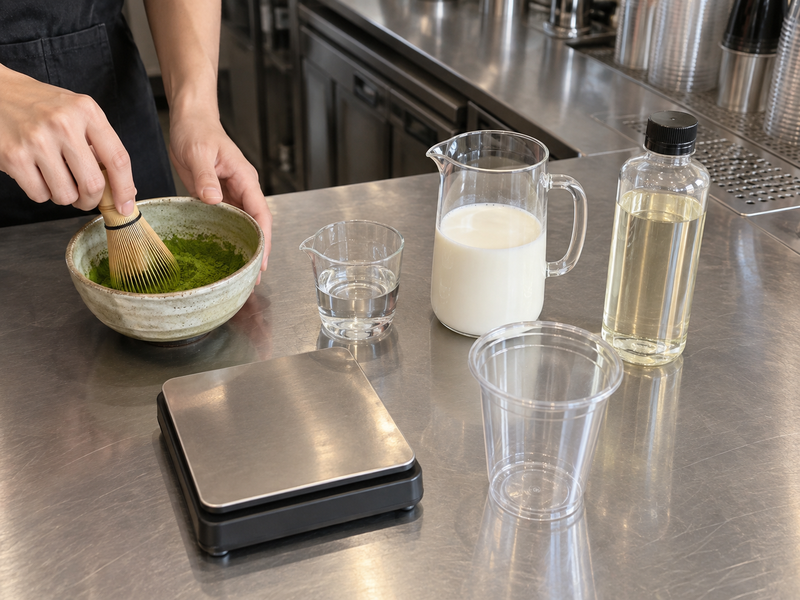
A workable cup has four parts: matcha, a small amount of water, milk, and optional sweetener. Water lets staff disperse powder before milk enters the cup. If matcha goes straight into cold milk, dry pockets can hide under the foam and show up in a customer’s last sip. The water portion should be small enough that the drink still tastes like milk tea. A starting trial for a 12 oz serving might use 2 g matcha, 30–40 mL water, and enough milk to reach serving volume. Treat that as a test recipe, since powder strength, cup fill, and local taste differ.
A useful starting point: record every ingredient by weight or measured volume before adjusting flavor. “One scoop” changes when a scoop is heaped or a new employee takes over. Include ice in the iced version’s specification; it displaces liquid and melts after handoff. Test with the cup, lid, and straw that customers will receive. A sample that tastes balanced in a tasting glass can seem thin once poured over a full cup of ice.
2. Which Matcha Powder Works Best With Milk?
Choose for the finished drink
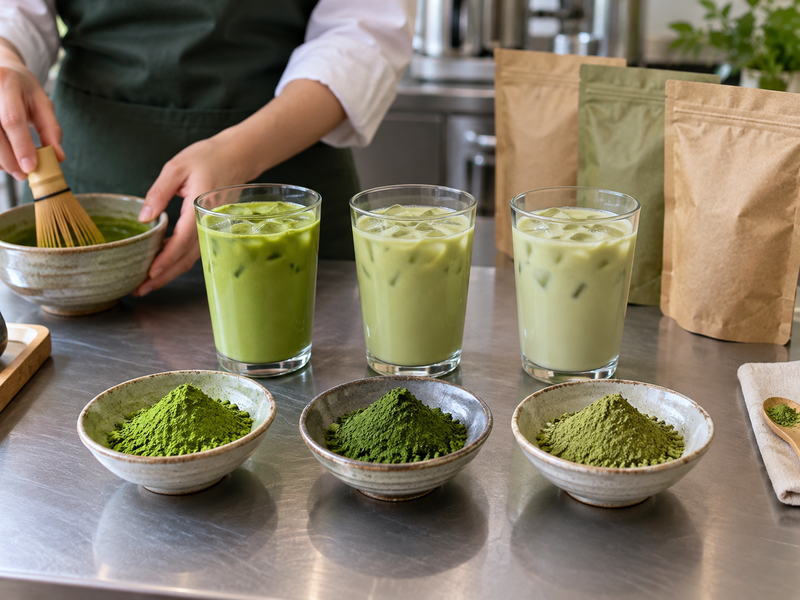
Milk softens bitterness and covers some delicate tea aroma. A powder that tastes striking in water may offer little advantage in a sweet milk drink, while a foodservice matcha with steady color and clean flavor can perform well. Judge candidates in the actual milk and sugar level you plan to sell. Look at dispersion, green color after mixing, tea presence after five minutes, and any harsh finish.
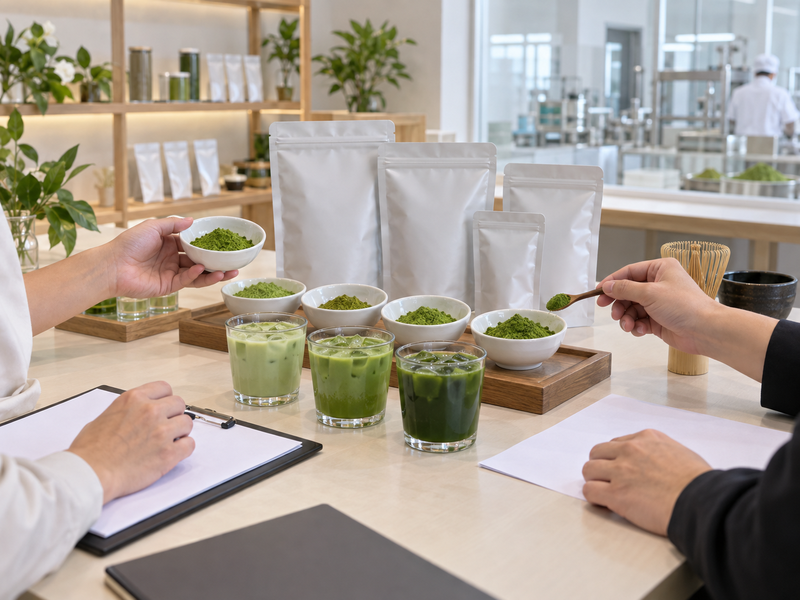
For purchasing, ask suppliers for an application sample and product specification. Matcha Village lists culinary, premium, ceremonial, and other matcha options, but those names alone cannot choose your recipe. Request samples matched to milk tea and compare them blind at one dose. Taste before choosing a grade: if two samples look similar after milk and ice, compare the cost per cup and how each behaves during service. Keep sample codes and preparation conditions in your notes so a second tasting can reproduce the result.
| Powder trait | What to check in milk tea | Practical consequence |
|---|---|---|
| Tea intensity | Taste after milk and sweetener | Prevents an expensive but faint cup |
| Color | View after mixing and after a short hold | Helps set an honest menu photo standard |
| Dispersion | Check for visible specks and sediment | Affects texture and staff time |
| Finish | Taste after swallowing | Catches harshness masked by sugar |
3. How Do You Make Matcha Milk Tea Hot?
Mix the tea before steaming milk
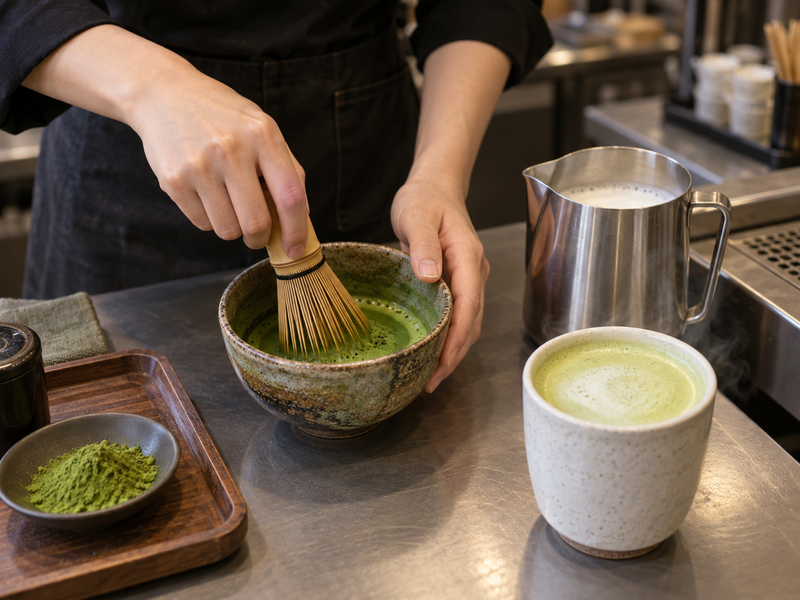
Sift the measured matcha if your powder tends to clump. Add warm water in a small cup and whisk or blend until no dry powder remains. Then add warmed milk and sweetener, stirring enough to combine without filling the cup with large bubbles. A practical trial range for the mixing water is warm rather than boiling; very hot water can produce a more astringent impression and makes preparation less forgiving. Keep your chosen water temperature in the recipe card so staff do not improvise kettle settings. Check the serving temperature against your cup and lid as well as customer preference.
If your bar uses a steam wand, heat milk separately and pour it into the prepared matcha base. This sequence makes clumps visible before they disappear under foam. Start with a modest foam cap because a thick head can make a 12 oz drink appear full while leaving less beverage underneath. Watch the last sip: powder settling at the bottom means mixing or hold time needs attention. Train staff to stir or swirl before handoff, and remake a cup with obvious dry granules.
4. How Do You Make Matcha Milk Tea Iced?
Account for ice as an ingredient
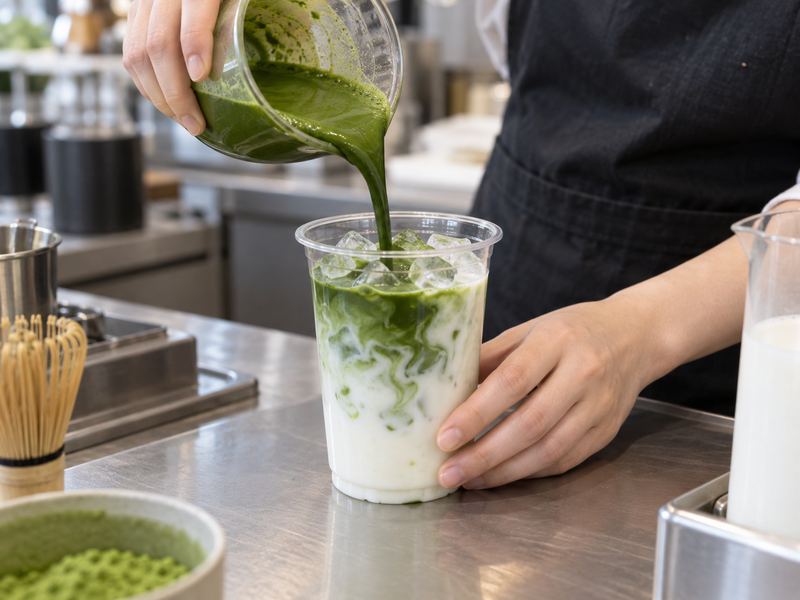
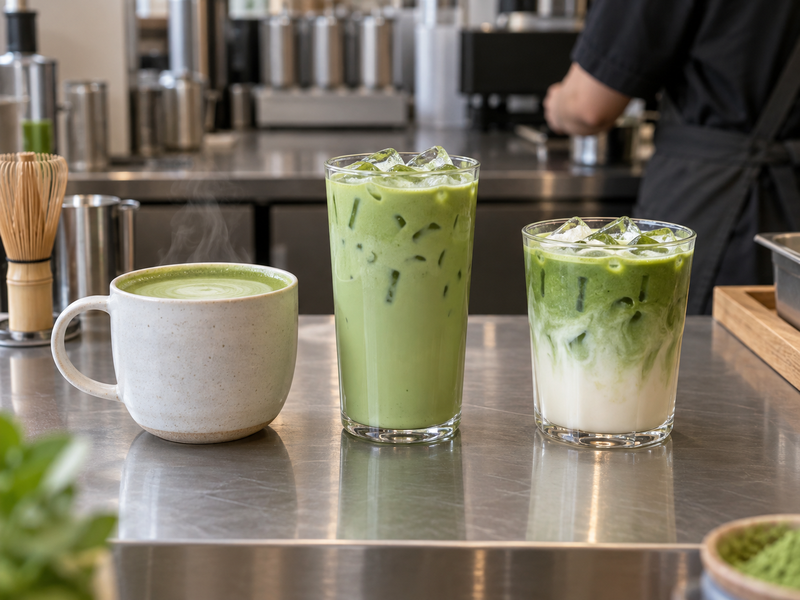
Prepare a smooth matcha concentrate with measured water. Dissolve liquid sweetener in that base, if used, then combine it with chilled milk. Fill the serving cup with a specified amount of ice and pour in the drink. Some cafés layer milk and matcha for a photo; if you do, tell customers to stir before drinking. Layering alone does not improve dispersion. For a first trial, use the hot formula’s matcha dose and reduce added water if a full ice cup makes the drink weak. Taste immediately and again after several minutes of typical customer handling.
Ice changes the math: a cup marked 16 oz does not hold 16 oz of liquid when filled with cubes. Decide whether the business sells a particular liquid quantity or a finished cup filled to a line. Weigh a representative ice scoop and test the same size in every branch. Crushed ice melts faster than large cubes, so a switch in ice machine can change taste even when the tea formula stays fixed. Avoid leaving prepared matcha concentrate at room temperature for an undefined period; set a documented hold time through your food safety procedure.
| Iced variable | Trial A | Trial B | What to decide |
|---|---|---|---|
| Ice | Standard cubes | Crushed ice | Which holds flavor longer? |
| Mixing | Base combined before pour | Layered presentation | Does the customer need stirring guidance? |
| Sweetener | Syrup in concentrate | Syrup in milk | Which blends faster? |
| Hold | Immediate service | Short simulated wait | Does color or texture change? |
5. Which Milk Works Best for This Drink?
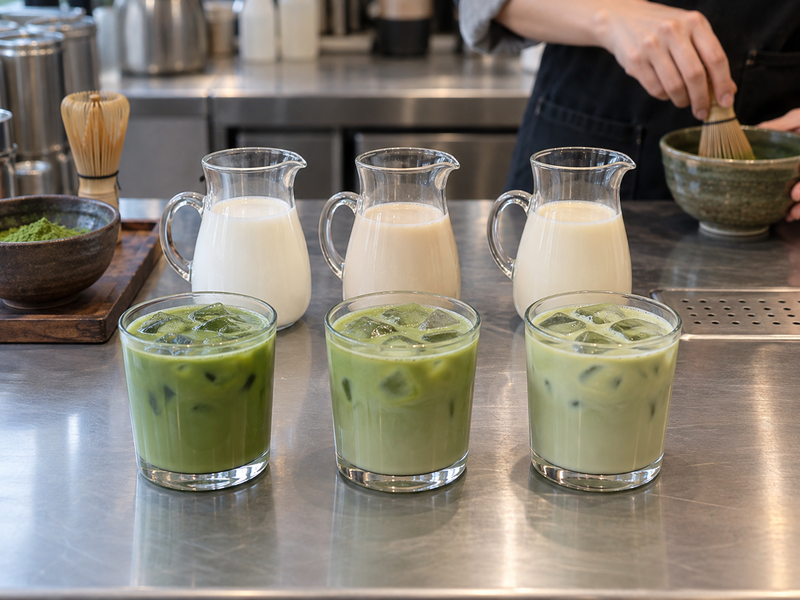
Test the version customers will buy
Dairy milk gives body and a familiar creamy finish. Oat milk can produce a fuller plant-based cup, while almond milk may bring a distinct nutty taste and thinner texture. Soy milk often carries enough body to keep tea flavor present, but a particular brand can behave differently when heated. None is a universal winner. Sample at least the house milk and the most requested alternative with identical tea and sugar doses. For hot service, examine steaming behavior and foam. For iced service, check whether the drink looks separated after a short hold.
Milk choice also changes ingredient declarations, allergen handling, and cost. Keep separate tools or a clear cleaning procedure where cross-contact matters. A menu claim such as “dairy free” depends on all ingredients and on service controls, not merely the milk carton. Price the complete cup: add milk, matcha, sweetener, cup, lid, ice, and reasonable preparation loss. A lower-cost milk may need more tea to reach the same flavor target. Once you settle on a house formula, write alternative-milk versions as separate recipes rather than instructing staff to substitute freely.
6. How Much Sweetener Should You Add?
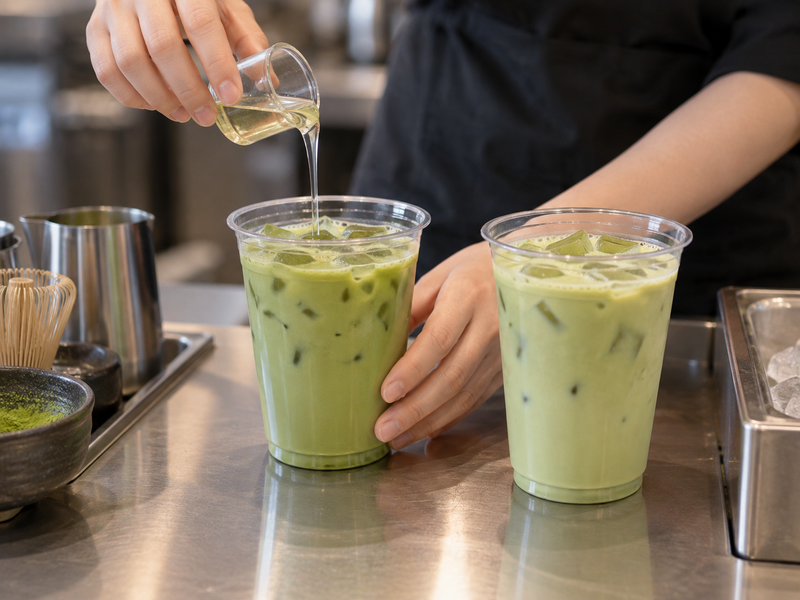
Find the lowest level that fits your menu
Sweetness can round off matcha’s edge, but heavy syrup can make every powder taste alike. Begin with an unsweetened reference cup, then test two or three measured sweetener levels. For iced drinks, liquid syrup mixes more reliably than granulated sugar added at the end. For hot drinks, sugar can dissolve in the warm matcha base. Choose one standard unit, such as milliliters of a defined syrup, and record its concentration. A pump count works only if pump output is checked and the same syrup is used throughout the operation.
Keep the tea visible in the flavor: a drink described as matcha milk tea should still taste of tea after sweetening. Consider menu levels such as unsweetened, regular, and reduced sweetness, each with a recipe rather than a vague request to “use less.” Sweetened matcha latte powders may contain sugar and milk ingredients already, so they cannot be dosed as if they were pure matcha. Review the ingredient list and trial them as separate products. Matcha Village offers both pure matcha and matcha latte powder, which lets a buyer compare a scratch-built drink with a premix workflow.
| Sweetening route | Good fit | Control point |
|---|---|---|
| No added sweetener | Tea-forward menu | Powder must taste balanced in milk |
| Measured syrup | Iced or high-volume service | Define syrup concentration and dose |
| Granulated sugar | Hot preparation | Dissolve before final milk addition |
| Sweetened premix | Fast service | Check ingredients and total sweetness |
7. How Can a Café Make Every Cup Consistent?
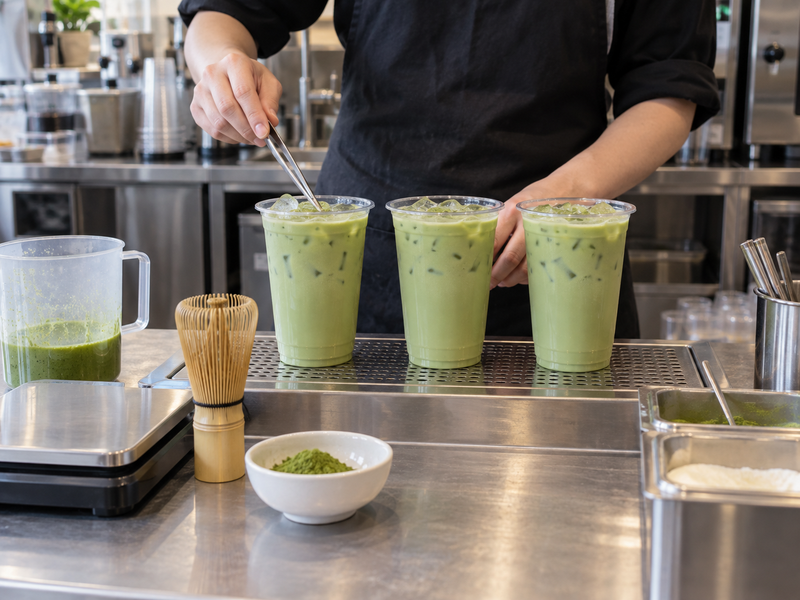
Put the method where staff work
A recipe card should show matcha weight, water volume and temperature, milk volume, syrup dose, ice amount, mixing order, and finished fill line. Add one photo of an acceptable cup under ordinary counter lighting. Then watch a new team member prepare the drink from the card without coaching. If they pause at “whisk until ready,” replace that phrase with an observable cue such as “mix until no dry powder remains.” If the store sells multiple cup sizes, give each size its own quantities. Doubling every ingredient may not work when ice space and sweetness perception change.
The handoff is part of the recipe: specify whether staff stir a layered cup, add a straw, or tell customers to stir it. Record powder lot codes during testing and when changing supply, since a new lot deserves at least a quick comparison. A small scale, measured jigger, and clean mixing tool often provide more consistency than a long training script. Check the first cups made during a shift for taste and appearance.
8. What Changes When You Scale the Recipe?
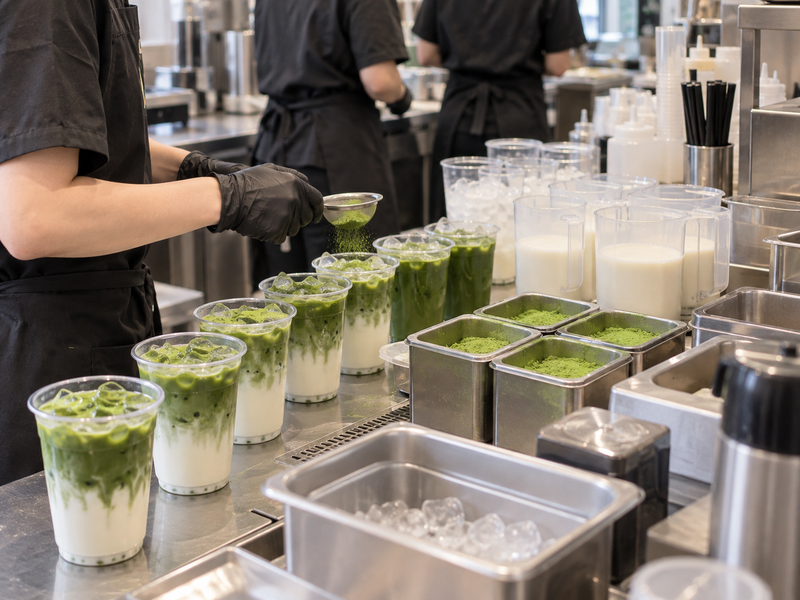
Plan for prep time and holding
At low volume, a barista can whisk each serving individually. At peak volume, that method may become the bottleneck. A café can pre-portion dry matcha into covered containers or prepare a controlled concentrate where its food safety plan allows. Either approach needs a defined yield, labeling, hold limit, and cleaning routine. The trade-off is straightforward: more advance preparation speeds service, while longer holding can change color and texture. Run a realistic rush-hour trial rather than assuming a tasting-room method will survive a queue.
For packaged beverages, recipe work expands into stability, separation, processing, packaging, and shelf-life studies. A café recipe is a starting flavor brief, not a ready-to-bottle formula. Ask where the work happens: a foodservice chain may need a bulk powder with branch-level mixing instructions; a retail brand may need a formulated blend or an OEM route. Matcha Village describes bulk, blend, and private-label supply options. Buyers can compare those routes through bulk wholesale matcha and request an application-specific sample before committing to a large order.
| Service model | Preparation approach | Main control |
|---|---|---|
| Single café | Mix each cup | Staff method and dose |
| Multi-site chain | Standardized powder and recipe card | Training and lot checks |
| High-volume counter | Pre-portioned powder or controlled base | Hold time and hygiene |
| Packaged drink | Developed beverage formula | Stability and shelf-life validation |
9. What Should a Buyer Ask a Matcha Supplier?
Request evidence tied to your application
Start with a sample suited to milk tea, a product specification, ingredient declaration, pack size, lead time, and a quotation based on expected volume. State whether the drink will be hot, iced, sweetened, dairy-based, or plant-based. That context helps a supplier offer a relevant powder rather than the most expensive one. Ask how lots are identified and what documentation accompanies shipments. If your market or customer requires particular testing or certification, define the exact scope and obtain current supporting documents for the offered SKU. Do not assume that a company-level claim automatically covers every item and destination.
Make the sample test fair: use the same recipe, water, milk, cup, and ice across suppliers. Note the powder lot, date, and sensory results. Calculate cost per prepared cup rather than price per kilogram alone; a stronger powder may need a lower dose. For importer or chain purchases, discuss forecast range, order cadence, and packaging that suits each site. Matcha Village describes traceability and application selection as part of its supply model, but a buyer should confirm the specific documents, sample match, and terms before placing an order.
10. How Can You Build a Practical Matcha Milk Tea Menu?
Start narrow, then expand with evidence
Launch a small set of drinks that staff can make accurately: hot matcha milk tea, iced matcha milk tea, and one plant-based option if demand supports it. Use the same matcha base where flavor remains acceptable, then give each drink its own milk, ice, and syrup amounts. Put sweetness choices on the menu only if staff can reproduce them. A clear name matters too. “Matcha milk tea” may lead some customers to expect brewed tea plus matcha; explain on the menu that the tea component is powdered matcha if that distinction affects expectations.
Track returns, remakes, prep time, and repeat orders during the trial. If customers ask for a stronger tea flavor, test dose before buying a different powder. If the iced drink fades quickly, review ice and liquid volume before adding syrup. Let service results guide expansion: a strawberry variation or boba topping earns space only when the base cup is stable. Matcha Village can discuss bulk matcha and application needs with commercial buyers.
| Menu item | Shared base | Separate specification |
|---|---|---|
| Hot matcha milk tea | Matcha concentrate | Hot milk and serving temperature |
| Iced matcha milk tea | Matcha concentrate | Ice weight and chilled milk |
| Oat matcha milk tea | Matcha concentrate | Oat brand, sweetness, allergen process |
| Lower-sugar option | Matcha concentrate | Measured reduced syrup dose |
Frequently Asked Questions
Q1: Can matcha milk tea be made without sugar? Yes. Test the unsweetened cup with the milk and powder you plan to serve, since sweetness can hide a harsh finish.
Q2: Should matcha be mixed with milk directly? A little water usually disperses powder more reliably. Test direct-milk mixing only if your equipment produces a smooth cup consistently.
Q3: Can one powder work for hot and iced drinks? Often, but sample both formats. Ice dilution and serving temperature change how the same powder tastes.
Q4: Is matcha latte powder the same as pure matcha? No. A latte premix can contain sweetener and other ingredients. Check its specification before setting a dose or making menu claims.
Q5: What should a chain send a supplier for sampling? Share cup size, milk choices, target sweetness, expected volume, packaging needs, and the market where the product will be sold.