
A soy milk matcha latte can taste smooth when iced and form coarse foam or visible flakes under a steam wand. Soy protein, sweetener, temperature, and tea preparation all affect the cup. A café needs a soy-specific service card rather than substituting soy into an oat or dairy recipe by volume.
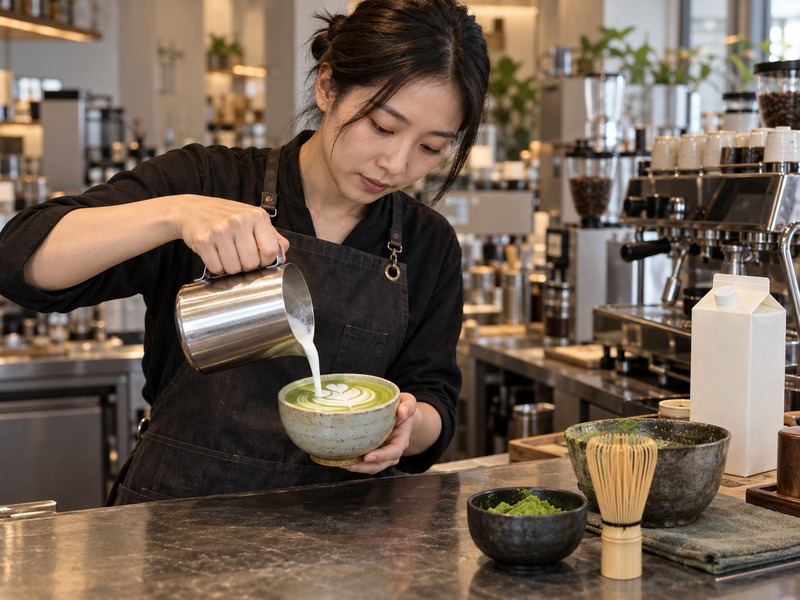
SERP intent reference: Matcha Latte with Soy Milk.
1. Why does soy milk change a matcha latte?
Soy milk brings plant protein, fat, added stabilizers, and sometimes sugar. Those features affect steaming, foam stability, mouthfeel, and how matcha particles remain suspended. A product marketed as “soy milk” can differ materially from another brand. Define the purchased soy drink, cup volume, tea dose, hot and iced channels, and sweetness target before running a sample tasting.
Protein and tea system
Soy-specific cup: The café should judge a complete cup. Soy can contribute a beany note that balances or conflicts with tea, depending on processing and sweetener. A powder that tastes delicate in dairy may disappear in soy; another may become harsh. Temperature and any acidic flavoring can change protein behavior. Lock the base beverage during matcha screening. This article does not transfer an oat milk recipe into soy because the operational risks differ.
2. Which soy milk and matcha should a buyer screen?
Ask the soy milk supplier for its ingredient statement, protein and fat information, sugar level, storage guidance, and barista-use recommendations. Soy drinks intended for steaming may behave differently from plain retail cartons. Ask the tea supplier for a production-grade sample and lot specification. Test both materials together. Cost per carton alone cannot show whether a soy drink will foam or split in a latte.
Supplier data and bench cup
Protein specification: Compare at least two soy options at a fixed matcha dose if the business has not selected a house base. Steam each using the same pitcher, fill, and target endpoint. A product with attractive foam but strong bean flavor may need a different tea grade or menu sweetness. Watch for flakes after pouring into matcha and after a short wait. If the brand changes emulsifier or protein source, repeat the hot test even if the carton front looks unchanged.
| Input | Supplier document | Cup risk |
|---|---|---|
| Soy milk | Protein, sugar, ingredients | Foam and flavor |
| Matcha | Lot and grade | Tea note |
| Syrup | Sweetness and acid | Separation |
3. How should a soy matcha latte formula be balanced?
A medium cup may screen roughly 1–2 g matcha with soy milk set by the cup, plus sweetener only if the menu brief calls for it. This range is a trial, not a universal recipe. Some soy drinks already contain sugar or vanilla. Write their contribution into the formula before adding syrup. A stronger matcha dose can overcome beany flavor but may also produce grit or bitter finish.
Measured hot and iced builds
Dose against soy flavor: Make comparison cups with the same soy carton and controlled matcha grams. Change sweetness separately from tea grade. For iced service, account for ice melt and a colder cup that can mute aroma. For hot service, measure milk entering the cup after foam, not just the pitcher fill. Track the finished cup mass and foam depth. If the unsweetened soy version tastes thin, a different soy base may solve it more cleanly than extra powder.
If a soy carton is sweetened, its sugar belongs in the recipe even when no syrup pump is used. Compare plain and vanilla soy variants as different products. Record the protein and fat levels on the approved carton and ask purchasing to flag specification changes. A new carton may retain the same retail name while producing a different foam under the steam wand.
4. What steaming sequence keeps soy milk smooth?
Prepare matcha as a smooth concentrate in a small liquid portion. Steam soy milk according to the selected product’s guidance and the café’s equipment, avoiding overheated milk and prolonged holding. Pour promptly and inspect texture under normal light. A timer can support training, but the operator should also recognize the sound and surface of properly textured milk. Keep any acidic syrup out of the trial until the base cup passes.
Pitcher and temperature control
Flake inspection: Use a clean pitcher with a known fill level. Oversized or nearly empty pitchers can create inconsistent foam. If flakes appear, record soy brand, carton age, steam endpoint, matcha preparation temperature, and any added acid. Rework is not a fix for a split cup; discard under the store rule and investigate the cause. A stable hot cup should remain smooth after lid placement and a realistic guest carry interval, not only during the pour.
| Build | Trial value | Check |
|---|---|---|
| Matcha | 1–2 g medium cup | Flavor |
| Hot soy | Cup fill after foam | Texture |
| Iced soy | Cup fill with ice | Dilution |
5. How should iced soy lattes be built separately?
An iced soy cup removes steam risk but still tests matcha dispersion and carton uniformity. Shake the soy carton as directed before dosing, because settled components can change mouthfeel. Preblend or whisk matcha until no dry islands remain, then add measured soy and ice in a fixed order. Use the final cup mass and fill mark as checks. A layered presentation is optional; the mixed drink must still taste balanced.
Cold dispersion
Ice and carton settling: Compare the iced cup immediately and after pickup delay. Tea particles may settle at the bottom even when soy looks smooth. A syrup that disperses in hot soy may pool in cold milk. If the café serves flavored soy and plain soy, maintain separate recipe cards because sweetness differs. Test the widest ice size variation stores use. Avoid solving a weak cold cup by raising matcha without checking ice dilution and carton sugar content.
6. Which foam and flavor defects should staff record?
Approve a hot cup on fine foam, smooth pour, visible tea color, and no curdled particles. Taste for bean flavor, bitterness, and sweetness after a short hold. Foam that looks dense in a pitcher can break once matcha concentrate enters. Use a transparent sample cup during training to make separation visible. Record whether defects appear at pour, after lid, or after cooling.
Hot-cup release
Foam after lid: For iced cups, check powder flecks, sediment, and a watery top after ice melt. A matcha powder with coarse particles can be blamed for soy flakes incorrectly; cut the variables by testing soy alone under steam and tea alone in water. If a defect follows one soy carton lot, isolate that lot. If it follows one barista, revisit steaming and dilution technique. Written defect categories let purchasing and operations respond to the right material.
| Defect | Likely check | Action |
|---|---|---|
| Flakes | Soy lot and heat | Hold failed cup |
| Weak foam | Carton and steam | Retest |
| Grit | Powder dispersion | Adjust prep |
7. How should cafés compare soy latte cost?
Cost the cup from matcha grams, soy milliliters actually poured, syrup, ice, cup, lid, and service labor. Count soy left in cartons at close and cups remade because of foam or separation. A barista soy product may have a higher purchase price but less waste and stronger texture. Compare cost per accepted cup from routine service, not shelf price per liter.
Unit economics
Carton usable volume: Hot and iced cups may use different soy volumes due to foam and ice. Keep separate margins and sales mix. If the chain offers soy as an option, decide whether the price difference reflects ingredient cost, separate handling, and demand. A powder grade should be valued by the dose that meets taste; a lower-priced powder that requires more grams may not save money. Track changes when a carton supplier revises its formula.
Soy cartons have practical pack economics. A small carton may reduce opened-product waste in a quiet store, while a larger foodservice pack may suit a busy chain. Calculate accepted cups per opened pack under the permitted use window. Include remakes from split foam; those can erase a nominal milk-price saving. Keep the tea dose fixed during this comparison.
8. How should soy milk and powder be held?
Follow the soy supplier’s storage instructions for unopened and opened cartons, plus local café food safety rules. Mark opened time and use window. Matcha powder stays dry, sealed, and away from light or odor. A premixed tea-soy base becomes a different perishable product and needs its own validated hold; do not borrow the carton’s date. Steam or shake only the portion required for service where the method allows.
Opened-carton rules
Cold-chain practice: Test a cup made from a newly opened carton and one near the approved opened-use limit. Protein and stabilizer behavior may change with handling. If stores preportion soy into pitchers, check temperature and traceability through the shift. Avoid repeatedly warming a large soy batch for convenience. For delivery, assess whether foam collapses, temperature drifts, or sediment accumulates inside the lidded cup during the normal trip.
| Cost item | Basis | Waste |
|---|---|---|
| Soy milk | Usable mL per carton | Open-carton loss |
| Matcha | g per accepted cup | Overdose |
| Service | Cup and labor | Remakes |
9. Which allergen and menu claims need review?
Soy is a declared allergen in many target markets. Review local rules, the chosen carton ingredient statement, and cross-contact from shared steam wands or pitchers. A plant-based menu label needs checks on syrups and toppings, not soy alone. Soy milk products may contain added sugar or flavoring, so “unsweetened” must describe the exact purchased carton. Matcha contributes caffeine; do not present the cup as caffeine free.
Soybean declaration
Plant milk wording: Keep carton brand, lot, tea lot, recipe version, and cleaning procedure in the store file. A milk substitute offered in a dairy café may require staff to explain that shared equipment exists even when the ingredient list has no dairy. Do not make unsupported nutrition or hormonal claims about soy. A complaint about flakes should be traced to carton lot and steam conditions; a bitter cup points toward tea dose or grade.
10. What should a chain prove in a soy-milk pilot?
Run hot and iced cups across the chosen stores with routine baristas. Use cartons from more than one delivery lot, the normal steam wand, and the actual takeaway lid. Measure foam persistence, flakes, color, serving temperature, cup mass, and remake rate. Let a tasting panel compare soy flavor with tea at guest pickup time. A barista demonstration alone cannot set a procurement standard for all stores.
Two-temperature trial
Soy-specific approval: If a soy carton fails hot service but passes iced, decide whether the menu can support a limited format or needs another supplier. If the tea disappears in soy, test a different matcha grade at equal dose before raising sweetener. Lock the soy brand and matcha grade as a paired specification. Put a substitution review on both materials so purchasing cannot replace one silently after launch.
| Record | Links | Purpose |
|---|---|---|
| Carton lot | Soy supplier and open time | Trace |
| Recipe card | Hot and iced method | Training |
| Allergen file | Soy and cross-contact | Menu |
Send Matcha Village the exact soy milk brand, hot steam target, iced build, and photos of flakes or foam collapse when requesting matcha samples. Compare powders at equal grams in both cups. Approve the tea grade with a named soy product and method, then set a requalification rule if the soy supplier changes its protein or stabilizer formulation.
FAQ
Q1: Can any soy milk be steamed for matcha? Test the purchased product; protein, fat, and stabilizers change foam and separation.
Q2: Why does a hot soy latte show flakes? Check milk brand and lot, steam temperature, matcha preparation, and acidic additions.
Q3: Should iced soy use the hot recipe? Use a separate ice and liquid balance because cold service changes dilution and flavor.
Q4: Is soy milk matcha latte dairy free? The ingredients may be, but shared equipment and toppings need a cross-contact review.
Q5: How should suppliers be approved? Trial the named soy product and matcha grade together under normal hot and iced service.