
A honey lavender matcha latte can smell fragrant at the syrup station yet taste like perfume once milk and tea meet. Honey sweetness, lavender extraction, and service temperature change that balance. Cafés need measured syrup and powder doses plus a hold check in the cup guests receive.
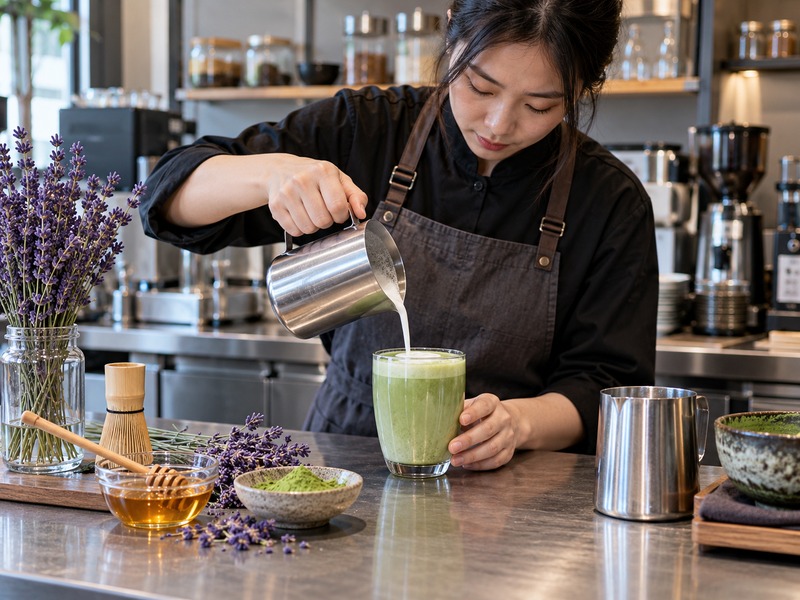
SERP intent reference: Honey lavender matcha latte.
1. What defines a honey lavender matcha latte for café sale?
A commercial cup needs a clear order of flavors: matcha should read as tea, honey should sweeten without flattening it, and lavender should remain a light aroma. Define cup volume, milk choice, syrup grams, and whether the drink is hot or iced. A large café can make the same recipe taste different if one store uses a floral syrup and another pours honey and lavender separately. Treat the syrup as an ingredient with its own specification.
The selling cup
Honey-lavender balance: Set a reference cup at service temperature and taste it with the lid or straw used for sale. A fragrant open cup can lose floral notes under a lid, while a closed cup may concentrate them. Write a target appearance that staff can see under normal counter light. Keep the menu wording tied to actual honey content; honey is not interchangeable with a honey-flavored syrup. The buyer should sign off on a finished cup, not an attractive jar of syrup.
2. Which honey, lavender, and matcha should buyers approve?
Honey varies in floral character, color, viscosity, and crystallization. Lavender may come as culinary flowers, extract, or syrup, each requiring a different dose and ingredient declaration. Matcha varies in color and bitterness in milk. Ask suppliers for current lots, composition, and food safety documents. Compare proposed tea powders in the exact honey syrup and milk, not in plain water.
Ingredient specifications
Food-grade lavender: A lavender extract with strong aroma can make a drink taste soapy at a small overdose. A flower infusion may be softer but introduces filtration and batch variability. Honey from a new supplier can shift the same syrup recipe toward a different floral note. Hold these inputs constant while screening matcha grades, then test alternate honey sources as a separate project. If the drink uses honey, avoid calling it vegan. Keep the origin and claim language inside the documents actually supplied.
| Decision | Target | Operational test |
|---|---|---|
| Flavor lead | Tea with light floral aroma | Lidded cup |
| Syrup identity | Honey share recorded | Batch sheet |
| Service | Hot and iced | Separate cards |
3. How should a honey lavender matcha latte formula be set?
Start with a measured matcha base and a separately weighed honey-lavender syrup. An illustrative medium cup may use 1–2 g matcha and 10–20 g syrup with milk set by cup volume. These are tasting ranges, not a validated house recipe. The syrup itself needs a defined honey share, lavender input, water content, and finished mass. Record the actual dose after ice displacement in the cold cup.
Cup-level trial ranges
Syrup before powder: More honey can mask lavender and tea while adding cost and viscosity. More lavender can raise aroma faster than perceived sweetness, so adjust the two ingredients independently. Make several small syrups with one changing variable, then taste each in full cups. If a warm version seems balanced but an iced version tastes muted, test the cold formula separately rather than increasing syrup in all channels. List gram weights on the recipe card even if staff use pumps.
For syrup procurement, compare two honey sources at the same solids target and lavender dose. Weigh the syrup before and after a standard pump cycle at its working temperature. If grams per stroke change after refrigeration, the recipe card needs a mass check or a different dispenser. This test connects flavor, labor, and purchasing yield in one measurable decision.
4. What preparation sequence protects the floral aroma?
Prepare a controlled syrup or infusion under the kitchen food safety plan, filter if flowers are used, and log yield. Disperse matcha in a small liquid portion before combining with milk. Add the measured syrup at a point that gives even sweetness without prolonged heating of lavender aroma. A syrup left open near steam wands may change before the cup is built. Use clean, dry equipment for powder dosing.
Syrup and tea workflow
Temperature at mixing: Test whether honey crystallizes in chilled syrup storage or clings to a pump. Warm a crystallized syrup only through a validated procedure; staff should not dilute it by eye during service. A pump delivers volume, while purchasing costs by mass, so calibrate grams per stroke at the working temperature. For an iced cup, confirm syrup disperses through cold milk instead of collecting at the bottom. The sequence should survive a busy line without a hidden manual correction.
| Bench input | Trial basis | Watch |
|---|---|---|
| Matcha | 1–2 g per medium cup | Tea recognition |
| Syrup | 10–20 g per cup | Sweetness |
| Lavender | Specified within syrup | Soapiness |
5. How can hot and iced versions stay consistent across stores?
Hot milk carries floral aroma readily, while ice and a lid change how a guest smells the drink. Write separate card values for milk volume, syrup dose, ice mass, matcha preparation, and cup size. A shared name does not require identical liquid ratios. Train stores with a sensory description and a reference color photograph. Measure the syrup from its working bottle, not from a freshly made warm batch.
Two service cards
Cold-cup dilution: At a busy store, a large syrup batch may sit in a pump all day. Test cup flavor from the beginning and end of that period under the approved holding rule. For iced drinks, taste after the usual handoff delay when ice has melted. For hot drinks, check after lid placement and a short carry. If one format loses tea flavor, adjust that format only. Keep the lavender aroma below the level that lingers harshly after swallowing.
6. Which cup checks reveal an unbalanced drink?
Evaluate matcha clarity, honey sweetness, lavender aroma, milk body, and sediment in one complete sip. A green cup can still taste mostly of honey. Taste a next sip after stirring and inspect the final liquid for unmixed syrup or powder. Use specific defect words in training: soapy, grassy, too sweet, dull tea, or gritty. A staff member can act on those descriptions more reliably than a vague instruction to improve balance.
Sensory release
Soapiness threshold: Compare cups at planned service temperatures. Aroma may be present when hot and nearly absent when cold; bitterness may rise as sweetness perception falls in an iced cup. Record whether an extra syrup pump changes the guest experience or merely hides an unsuitable powder. When the blend is too floral, reduce lavender concentration before cutting matcha. Photograph approved drinks under the same counter light so visual checks do not depend on marketing images.
| Cup check | Evidence | Failure |
|---|---|---|
| Aroma | At handoff under lid | Too strong or absent |
| Last sip | Stir and taste | Sediment |
| Iced hold | Normal pickup interval | Dilution |
7. How should cafés calculate syrup and powder cost?
Cost honey by its actual mass in the syrup batch, then divide by finished usable syrup after filtering and transfer losses. Add lavender, water treatment where relevant, matcha, milk, ice, cup, lid, and labor. Crystallized syrup that cannot pass through a pump creates waste even if the ingredient price looks attractive. Use measured pump output and accepted cups, not nominal bottle volume.
Per-cup economics
Pump calibration: A honey-heavy recipe can move margin more than switching between two matcha grades. Compare the complete cup cost at the dose that meets flavor. Hot and iced formats may consume different syrup and milk amounts, so use separate cost rows. If the supplier offers a preblended honey-lavender syrup, compare it with house preparation using labor, shelf handling, and ingredient declarations. A lower invoice price is useful only if the syrup delivers repeatable cups.
A café using culinary flowers may lose syrup during filtration, while an extract-based syrup may need less preparation time and a tighter dose control. Price each route on usable syrup and accepted cups. Record the number of drinks sold before the working bottle reaches its discard point. Low volume can make a cheap house syrup expensive once write-offs are counted.
8. How should honey-lavender syrup be stored and used?
The syrup needs its own food safety and shelf life program based on water activity, handling, packaging, and local rules. Honey on its own has different behavior from a diluted café syrup. Track batch time, cooling, storage, opening, pump use, and discard point. Protect matcha powder from humidity and light in a separate sealed container. Do not assign a syrup date from the honey jar or the tea pouch.
Syrup hold study
Crystallization and aroma: During a hold study, inspect cloudiness, crystallization, aroma change, pump flow, and microbial criteria set by the kitchen. Compare a newly opened bottle with one near the proposed end of use in full lattes. If lavender aroma drops early, alter pack or production frequency rather than adding excess extract at the start. A chilled syrup may be thick, so test dispensing at its real service temperature. Keep lot labels readable on every working bottle.
| Cost item | Calculation | Loss |
|---|---|---|
| Honey syrup | Input ÷ usable syrup | Filter and bottle |
| Matcha | Dose × purchase price | Overdose |
| Service pack | Cup and labor | Remake |
9. Which labels and records matter for this drink?
An ingredient file should connect honey, lavender, matcha, and milk lots to the recipe version. Check milk and plant-milk allergens, any syrup preservatives, and equipment cross contact. Honey is an animal-derived ingredient, so vegan wording would conflict with the standard recipe. A menu can state honey and lavender flavor without suggesting that either ingredient treats a health condition. Review caffeine wording because the tea contributes caffeine.
Claims and traceability
Honey disclosure: If a syrup vendor changes the honey blend or floral extract, taste and label review are needed before the next order. A pump bottle code should trace back to the syrup batch and incoming ingredients. Record service complaints with cup format and store so a floral overdosing issue can be separated from a powder issue. Claims about botanical origin or organic status require documentation for the relevant ingredient and market.
10. What should a chain pilot before a bulk matcha order?
Trial the approved syrup in both hot and iced cups with ordinary baristas and normal equipment. Measure pump grams, powder dose, cup time, syrup loss, and flavor at handoff. Include a syrup bottle near its approved use limit, not just fresh syrup. Ask quality to compare several operators and stores. A pilot should identify whether the tea grade remains clear when honey and lavender vary inside the accepted specification.
Service-line trial
Late-bottle cup: Before a purchase order, give the matcha supplier the actual milk and syrup formula plus a defect report from cups that failed. If the powder tastes bitter in a sweet cup, screen a different grade; if the drink tastes soapy, change lavender before blaming matcha. Sign off on an approved powder lot range, syrup specification, and two service cards. That creates a practical route from sample to repeatable café supply.
| Record | Links | Decision |
|---|---|---|
| Syrup batch | Honey and lavender lots | Use window |
| Drink card | Hot and iced grams | Training |
| Menu proof | Allergens and claims | Release |
Send Matcha Village the honey-lavender syrup specification, milk base, tea dose, and hot and iced cup photos when requesting powder samples. Compare grades at equal dose after the intended handoff interval. Purchasing should approve the powder that keeps a recognizable tea note without forcing more lavender or sweetener into the formula, then record the syrup and powder lots together.
FAQ
Q1: Can cafés use plain honey and lavender extract separately? Yes, after dosing and dispersion trials; a combined syrup may improve service consistency.
Q2: Why does an iced cup taste less floral? Temperature, ice dilution, and lid design change aroma perception. Test the finished cold cup.
Q3: Is honey lavender matcha latte vegan? A standard recipe containing honey is not vegan; a different sweetener needs a separate menu description.
Q4: Which matcha grade works with floral syrup? Compare grades in the complete milk and syrup formula at equal dose and service temperature.
Q5: How long does house syrup last? Set a use window from the diluted syrup, packaging, handling, and local food safety review.