
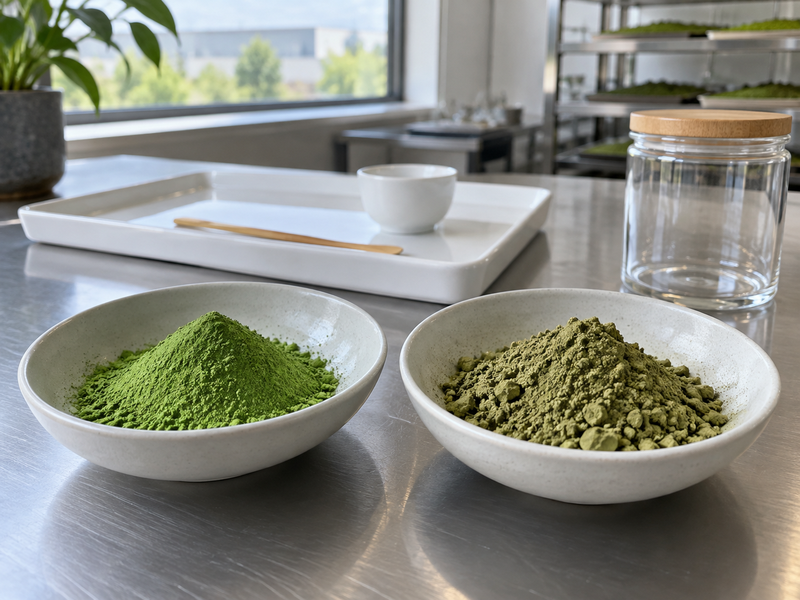
Real matcha vs fake is a useful search phrase, but it can hide several different purchasing problems. A powder may contain no tea, may be a green tea blend sold with unclear wording, may have an unsupported origin story, or may be genuine matcha that has simply aged badly. Color alone cannot settle those cases. For an importer, brand, or café chain, the practical answer is a documented identity check followed by performance testing. This guide explains what to ask for, what a sample can reveal, when a laboratory may help, and how to write claims that match the evidence. A supplier’s view helps here: the most reliable decision comes from matching the product description, traceable lot, and delivered material.
1. What does real matcha vs fake actually mean?
Start by naming the disputed claim. Matcha is powdered green tea made from tea leaves processed for that purpose. A product can be a legitimate matcha latte mix while containing sugar and milk powder; it is simply not pure matcha. Another product may be powdered green tea with different production characteristics, and a third may be a non-tea green powder. Calling all three “fake” clouds the buyer’s decision. Write down whether the issue is botanical identity, ingredient composition, production method, geographic origin, certification, or sensory quality.
Use the exact product specification and destination-market labeling rules for any formal determination. There is no single home test that proves every aspect of authenticity. A product that looks bright and whisks well can still have an inaccurate origin statement. A dull sample can be real tea stored poorly. The buyer’s first job is to separate misdescription from a quality disappointment. That distinction shapes the documents, lab work, and remedy requested from the seller. It also prevents a public accusation based on a photograph or one bad-tasting cup.
| Question | Possible issue | Best first evidence |
|---|---|---|
| Is it tea? | Wrong botanical material | Supplier identity records and suitable testing |
| Is it pure? | Unstated other ingredients | Ingredient declaration and formulation records |
| Is origin accurate? | Unsupported place claim | Traceable supply records |
| Does it meet quality target? | Stale or unsuitable tea | Reference-sample comparison |
2. What can an ingredient list tell a buyer?
Read the product name and ingredient declaration together. “Matcha powder” sold as a single ingredient should have a different disclosure from a sweetened matcha beverage mix. A blend is not automatically deceptive; many foodservice operators want one. Trouble starts when a blend is priced or described as pure matcha without clear disclosure. Request a full ingredient statement for bulk product and finished packs, including carriers, sweeteners, colors, flavors, and allergens if present. The FDA ingredient overview explains the basic US labeling principle for packaged foods. Confirm that the declaration matches what is supplied in the actual lot.
Ask who formulated the blend and who owns changes. An OEM supplier might replace a carrier or adjust a flavor to improve flow, but the customer’s label and sensory standard may then need revision. Establish change notification in the purchase specification. For single-ingredient matcha, ask for the product’s botanical and processing description. If a supplier refuses to identify ingredients or provides inconsistent versions of the statement, pause before comparing color swatches. The documentation problem matters more than how green the sample appears.
3. Can color and smell identify fake matcha?
They are screening clues, not proof. Fresh matcha commonly presents a green appearance and a recognizable tea aroma, but shade, harvest material, milling, storage, packaging, and lighting affect both. A sample that looks brownish or smells flat may be old or mishandled. It might also be a different tea powder. Conversely, an unusually bright powder deserves a closer look at ingredient disclosure rather than an automatic authenticity verdict. Use a neutral light source and compare samples in the same container depth.
Smell the dry powder, then prepare a standardized cup. Record grassy, marine, nutty, stale, or unusual notes in plain language. Have more than one trained evaluator taste blind if a supplier decision depends on it. A photo on a screen is a poor basis for rejecting a lot: cameras, white balance, and compression change green. Retain the actual reference sample in suitable storage. If a new lot differs materially, use the agreed specification and lot records to investigate before alleging that the product is fake.
| Sensory check | What it may signal | What it cannot prove |
|---|---|---|
| Dry color | Possible freshness or grade difference | Botanical identity or origin |
| Dry aroma | Possible staleness or off-odor | Processing history by itself |
| Prepared cup | Application suitability | Certification status |
4. Does texture or foam reveal whether matcha is real?
Powder fineness affects mouthfeel and how readily it disperses. Rub a tiny amount between clean fingers for a rough screen, then use a consistent whisking method in a known water volume. Notice clumps, sediment, grit, and foam. These observations help a café decide whether the powder suits a hand-whisked drink. They do not establish geographic origin or whether a product has an undisclosed minor ingredient. Foam also changes with water temperature, whisk, bowl shape, dose, and operator technique.
For a commercial comparison, standardize the preparation before judging. Weigh powder and water, use the same water source and temperature, and time the whisking. Photograph the cup immediately and after a short hold. Repeat if an outcome looks unusual. A coarse powder may be genuine tea intended for baking, while a finely milled powder might still fail an ingredient or origin claim. Treat physical tests as application checks and warning signals. Move to records or qualified analysis when the disputed claim requires stronger evidence.
5. Which documents should a supplier provide?
Request a current product specification, ingredient statement, lot coding system, manufacturing and packing site information, and relevant food-safety documents. For each shipment, ask for the lot-linked certificate of analysis or other agreed release records. The exact testing panel depends on destination market, product use, and the buyer’s risk assessment. Common categories include microbiological criteria and relevant contaminants, but a document list should reflect the product and regulations that apply. A generic certificate with no lot number may be useful background, yet it does not identify the delivered batch.
Traceability should connect the finished powder to input tea and processing records. Ask for a sample of a lot record with commercial details redacted if necessary. Check that dates, weights, site names, and lot codes are consistent across invoice, pack, and test report. A well-organized supplier should be able to explain how it manages a complaint or recall. Matcha Village describes integrated sourcing and batch traceability in its company information; a buyer should still request the current records relevant to the exact item under consideration.
| Document | Decision it supports | Check carefully |
|---|---|---|
| Specification | What was ordered | Version and product code |
| Ingredient statement | Pure powder or blend | Consistency with pack label |
| Lot-linked analysis | Agreed release criteria | Lot number and date |
| Trace record | Input-to-output link | Matching codes and quantities |
6. How can a buyer verify origin claims?
“Made in,” “grown in,” “milled in,” and “packed in” describe different steps. A tea grown in one country can be processed or packed elsewhere. Ask the supplier to state each relevant location separately, then compare its claim with purchase records, manufacturing records, shipping documents, and applicable customs documentation. If the finished package makes a geographic claim, have local counsel or a qualified labeling specialist review the wording for the target market. Never infer origin from a Japanese-style design, a green field photograph, or a brand name.
Sample labels and web listings deserve the same review. A café may repeat a supplier’s origin description on menus without seeing the underlying evidence. Build a simple approval rule: marketing can use only claims that procurement has documented for the current product and that legal review has cleared. If supply changes, revisit the copy. A supplier who openly states a Chinese origin can be a suitable source for many applications; the issue is accuracy, not a presumption that one country automatically guarantees a better cup.
7. When does laboratory testing help?
Use a qualified laboratory when the disputed question cannot be answered from records and controlled sensory work. The method must fit the question. Microscopy, botanical identity approaches, compositional analysis, or other methods may be relevant depending on what adulteration is suspected and what a laboratory can validate for powdered tea. Ask the lab what the method detects, its limits, required sample size, and whether a control sample is needed. A broad test request for “fake matcha” is too vague to produce a useful conclusion.
Keep chain of custody if a dispute may lead to a claim against a supplier. Seal and identify the sample, record where and when it was drawn, and retain a second portion when possible. Testing one consumer pack may answer a narrow question about that pack but not every unit in a large shipment. Agree a sampling plan before results are known. Interpret findings with the laboratory and food-safety team. A marker outside a typical range can justify investigation without automatically proving intentional fraud.
8. How should samples and production lots be compared?
Begin with a sealed approved sample, a clear specification, and a preparation protocol. At receiving, record lot numbers and inspect packaging condition. Draw representative samples according to the purchase agreement. Compare dry appearance and prepared cups under consistent conditions. If a lot differs, collect objective notes and retain photographs in the same lighting. Do not mix suspect material with approved stock before the review is complete. Segregation keeps the decision reversible while the team checks records.
For repeat orders, trend observations rather than judging every lot from memory. A simple scorecard can track color, aroma, bitterness, sediment, and performance in the brand’s recipe. Sudden changes deserve a conversation with the supplier even when a numerical specification passes. The scorecard also helps a buyer see normal variation. If several employees report that tea tastes different, compare their cups with a common recipe before opening a formal authenticity investigation. Preparation drift is a real source of false alarms.
| Comparison stage | Keep constant | Record |
|---|---|---|
| Dry sample | Container and lighting | Color, aroma, pack condition |
| Whisked cup | Dose, water, whisk time | Taste, foam, settling |
| Application | Brand’s standard formula | Final sensory result |
9. Which sales claims create avoidable risk?
Words such as “pure,” “organic,” “single origin,” and a named country of origin should be supported by the relevant product records. In the US, USDA organic rules govern organic claims on food labels alongside FDA labeling requirements. “Ceremonial grade” is widely used in marketing but is not a universal proof of identity or quality. If a buyer wants to use it, define what the company means internally and avoid presenting it as a regulated certification. Keep health and treatment claims out of an authenticity discussion. A real tea powder does not authorize claims about disease prevention or medical effects.
Write product copy around verifiable attributes: ingredient composition, documented sourcing, stated processing, and the sensory experience of the tested lot. Distinguish a blend from pure powder in the title and ingredient list. If a test shows a problem, use precise language in a supplier complaint: “lot differs from approved reference in color and aroma” or “ingredient statement does not match specification.” Save “counterfeit” or “fraud” for cases where evidence and legal review support it. Precision makes a resolution more likely and protects the brand from its own overstatement.
| Claim | Evidence to request | Marketing action |
|---|---|---|
| Pure matcha | Ingredient and formulation records | Use only for single-ingredient product |
| Organic | Applicable current certification | Review destination-market label |
| Named origin | Traceable growing and processing records | State location precisely |
10. What is a sensible supplier approval process?
Approve the product description before negotiating only on price. Request a specification and sample from each candidate. Screen documentation for internal consistency, run a standard cup and an application test, then agree the acceptance criteria and change-control process. Ask about production capacity, lead time, packaging options, and complaint handling. These checks are especially useful for a brand moving from a small online launch to repeated wholesale orders. A low initial quote is of little value if the material changes without notice.
Matcha Village offers matcha grades and bulk or private-label formats through its website. Buyers can request a lot-linked sample and the records needed for their own approval process. The right question in a real matcha vs fake discussion is specific: what claim is being made, what evidence supports it, and does the delivered lot match that claim? A supplier who can answer each part gives procurement a clearer basis than a dramatic color comparison.
Frequently asked questions
Q1: Is yellow-green powder always fake matcha? No. It may reflect age, storage, processing, or a different grade. Investigate against the specification.
Q2: Can foam prove authenticity? No. Foam depends on powder, water, whisking, and equipment; it is an application observation.
Q3: Is a sweetened matcha mix fake? It can be a legitimate blend when its name and ingredient statement disclose what it contains.
Q4: Does “ceremonial grade” certify origin? No. Ask for traceable records supporting any origin claim.
Q5: When should a buyer order lab work? When a defined identity or adulteration question remains after document review and controlled sampling.
Real matcha vs fake deserves a careful evidence trail. State the exact claim, retain the sample, test the cup, and verify the records behind the lot. That sequence gives procurement a defensible decision and gives a responsible supplier a fair chance to answer a specific concern.