
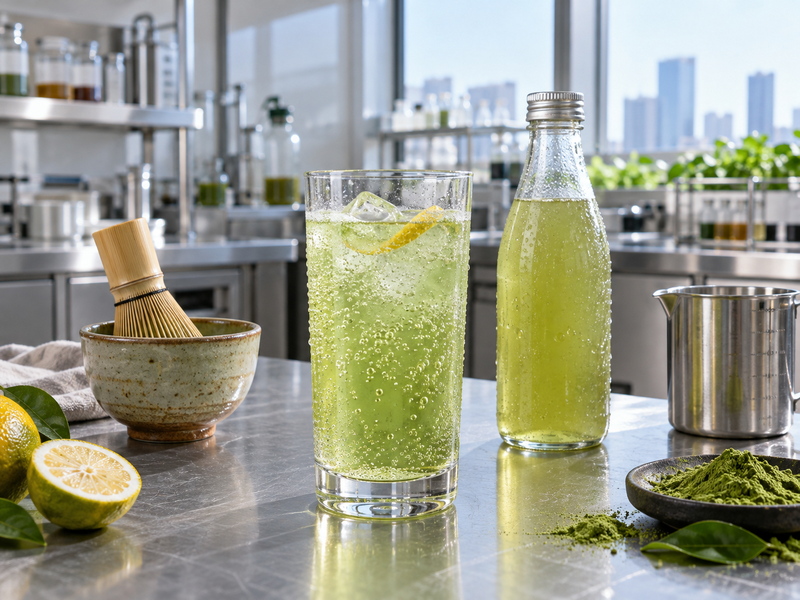
Matcha seltzer is a carbonated water drink made with matcha, usually served plain or with a modest flavor addition. It is an attractive menu idea, but a commercial version has an immediate physical problem: matcha is a fine powder, not a soluble extract. Bubbles can carry particles to the surface, sediment can collect below, and acid flavors can shift the green appearance. This guide is for beverage developers, café operators, and ingredient buyers who need a product that survives more than a launch photograph. It covers powder selection, mixing order, flavor, carbonation, packaging, and a realistic pilot plan. A matcha supplier can help with samples, but the finished beverage must be tested in its own format.
1. What does matcha seltzer contain?
The basic concept is matcha, carbonated water, and possibly sweetener or flavor. A menu can offer a freshly mixed drink, while a brand may sell a packaged sparkling tea beverage. Those products have different technical demands. A café can tell a customer to stir before drinking; a sealed can must remain acceptable through the planned distribution period. Define whether visible natural settling is acceptable, whether the drink should be cloudy or clear, and how much tea flavor the consumer should notice. Matcha itself makes a clear, fully dissolved seltzer an unlikely target without changing the tea ingredient or processing concept.
Write the product description carefully. If a formula relies mainly on tea extract with only a small amount of matcha, the pack and marketing team should check how it describes the drink. A citrus note may make the beverage taste fresh but can alter its color and perceived bitterness. Start by testing a plain version as a control. It reveals what the matcha contributes before flavor and sweetness cover it. The control also shows how fast particles rise or settle after carbonation.
| Format | Main advantage | Main technical question |
|---|---|---|
| Made-to-order glass | Fresh sensory impact | Can staff mix it gently and quickly? |
| Batch café base | Faster service | How does the base hold? |
| Packaged sparkling drink | Retail reach | Can quality hold through distribution? |
2. Which matcha works in sparkling water?
Water exposes tea bitterness and aroma more directly than milk. Request several matcha samples and compare them at the same dose in still water before adding bubbles. Reject candidates with obvious off-notes or an astringent finish that the intended sweetness level cannot support. Then repeat in carbonated water, because carbonation changes how acidity and bitterness register on the palate. Fine particle size can help the drink feel less gritty, although fineness alone will not make matcha dissolve.
Compare samples at the intended dilution and temperature. A premium powder chosen for a latte may be too subtle or too costly in sparkling water; a stronger culinary sample might hold up well with citrus. The reverse is also possible. Record appearance and sediment after a short hold rather than choosing on flavor alone. Ask suppliers for lot specifications, sample availability, and price at forecast volume. Keep the approved sample so later lots can be tested against the cup that justified the launch.
3. How can a developer manage matcha particles?
Pre-wet the powder in a small volume of still water and disperse it completely before carbonation enters the process. Dumping dry matcha into seltzer can create floating islands and aggressive foam. For a café prototype, sift powder if needed, make a smooth concentrate, and add measured carbonated water gently. Check the glass at zero, five, and fifteen minutes. Note floating particles, sediment depth, and whether a light stir restores a pleasant texture. The intended drinking time determines which observation matters most.
A packaged beverage needs a more demanding dispersion strategy. Mixing equipment, filtration choices, stabilizers, and the desired “contains matcha” claim all interact. Removing most particles may change what the consumer sees and how the tea is described. Adding a stabilizer affects the ingredient list and mouthfeel. Work with a beverage technologist and a co-packer before committing to a shelf-life claim. Ask the pilot plant to record mixing energy, order of addition, fill temperature, and sample position within the tank. A good first can and a gritty last can indicate a batch-uniformity problem.
| Observation | Likely development question | Next test |
|---|---|---|
| Dry clumps | Was powder pre-wetted? | Compare concentrate methods. |
| Fast sediment | Is particle behavior acceptable? | Timed hold in final pack. |
| Uneven cans | Did tank suspension change? | Sample start, middle, end of fill. |
4. Why does carbonation complicate the recipe?
Carbon dioxide adds bite, foam, and pressure. Fine tea particles can provide sites where bubbles form, so a formula that is calm in still water may foam when poured or filled. Measure the intended carbonation level with appropriate beverage equipment rather than judging only by a home soda maker. In a café, add seltzer after the matcha concentrate and pour down the side of the glass. Do not shake a sealed carbonated drink to mix settled tea; pressure and foaming make that an unsafe or messy service instruction.
Packaged products need validated filling conditions, container compatibility, and pressure controls. A co-packer should lead those decisions. The product developer still needs to supply an acceptance target: lively but pourable, no unacceptable gushing, and a texture that customers tolerate after any natural settling. Test warm and cold handling within the planned distribution limits. The same formula may taste flatter after a few minutes in an open glass, so evaluate both initial flavor and the likely pace of consumption.
5. Which flavors complement matcha seltzer?
Citrus, mild fruit, and restrained botanical notes are common directions, but each should be tested separately. Yuzu or lemon may brighten the cup; their acid can also change the shade of matcha and sharpen bitterness. A little sweetness can make tea more approachable, yet too much turns a light seltzer into a soda with a tea label. Build a matrix that holds matcha dose constant while varying one flavor and one sweetness level. Taste blind. Include a plain control so the team can tell whether the added flavor improves the drink.
Write down whether the brand promises “unsweetened,” “low sugar,” or a particular ingredient claim before optimizing taste. Those words affect formulation and label review. Natural flavor terminology, juice percentage, and nutrition declarations differ by market and formula, so route finished copy through qualified regulatory review. For a café, a fresh peel garnish may work well; for a packaged drink, the same flavor has to survive processing and storage. Do not assume the prototype’s aroma will remain after months in a can.
| Flavor route | Potential benefit | Specific check |
|---|---|---|
| Plain | Clear tea identity | Bitterness and sediment |
| Citrus | Bright finish | Color shift and acid balance |
| Light fruit | Broader menu appeal | Tea still recognizable |
6. How should a café serve matcha seltzer?
Use a weighed matcha dose and a defined concentrate, then add chilled seltzer as the final liquid. The operator should know cup size, ice weight, concentrate volume, and pour order. A gentle stir can distribute the tea without knocking out too much carbonation. Test the method during a short rush with staff who did not design it. If one person makes a smooth glass and another makes green clumps, the method needs a tool or instruction change. A premixed concentrate can help speed, subject to a documented safe and quality hold plan.
Serve in a clear glass during development so defects remain visible. Then test the actual takeaway cup and lid: customers may see sediment only at the last sip, and a straw can pull heavily from the bottom. Give staff a concise explanation that natural tea particles may settle and that the cup can be stirred gently. Keep it honest. If the drink looks unappealing after the average pickup wait, reformulate or shorten the service window instead of relying on a verbal disclaimer.
7. What changes for a canned or bottled version?
Moving from a glass to a sealed pack turns a menu recipe into a manufacturing project. The formulation needs a validated safety process, stability program, carbonation specification, packaging trial, and compliant label. The team must evaluate tea sediment, color, aroma, flavor, container interaction, and fill consistency throughout the proposed life. Pilot at the intended co-packer rather than extrapolating from a blender jar. Different mixing and filling equipment can change the finished product dramatically.
Ask the co-packer what ingredient formats its line can handle and whether suspended solids create operational limits. Agree who owns pre-mix preparation and how long a prepared tea base can wait before filling. Sample the beginning, middle, and end of the run. Store retained packs in the planned distribution conditions and include a realistic abuse condition chosen by the quality team. Do not set a shelf-life number from appearance on day one. It should follow a documented program for the exact recipe and pack.
8. Which quality checks should a brand track?
Set measurable acceptance criteria for flavor, color, carbonation, sediment, and packaging integrity. Use a simple scorecard for sensory checks and suitable instruments for technical measurements. Record pH and any other process controls required by the validated beverage process. The quality team should define microbiological and contaminant testing for the destination market, plus the handling of any failed lot. Matcha supplier documentation covers the ingredient; it does not replace finished-beverage release decisions.
For a café product, daily checks can be lighter but still useful: verify powder lot, concentrate appearance, equipment cleanliness, and the first finished cup. For packaged drinks, retain coded samples and compare them over time. Photograph color under the same light because green looks different on a sunny counter and inside a warehouse. If a consumer reports a ring of powder in the can, the retained sample and fill records should tell the team whether it is normal settling or a batch problem.
| Checkpoint | Café version | Packaged version |
|---|---|---|
| Tea lot | Receiving record | Traceability and release record |
| Appearance | Timed glass check | Timed shelf-life samples |
| Carbonation | Consistent seltzer source | Measured fill specification |
9. How can a team price the concept?
Calculate cost from the accepted recipe. Include matcha dose, carbonated water, flavor, sweetener, pack or cup, labor, wastage, freight, and channel margin. A costly matcha may be affordable at a light dose, while a cheap tea that needs heavy sweetening can change the brand proposition. For cafés, time the preparation and include the cost of a rejected foamy glass during training. For packaged beverages, pilot losses and minimum run size can dominate the early economics.
Compare a made-to-order menu item, a café concentrate system, and a co-packed retail product as separate cases. Each has a different break-even question. A menu item may justify a small trial with limited equipment; a canned drink needs funds for development, validation, packaging, and inventory. Keep the matcha specification stable while comparing other costs. If the team changes tea grade and flavor together, it cannot tell which change improved the margin or harmed the cup.
| Scenario | Major cost driver | Financial test |
|---|---|---|
| Café glass | Powder dose and bar time | Cost per accepted serving |
| Café concentrate | Prep labor and hold losses | Yield after daily service |
| Retail can | Pilot, packaging, distribution | Margin at minimum run |
10. What belongs in a matcha seltzer supplier brief?
State the final format, target market, proposed matcha dose, intended sweetness, flavor direction, desired color, sediment tolerance, and forecast volume. Tell the supplier whether you need single-ingredient matcha, a customized blend, or a sample for a co-packer trial. Request product specifications, lot-linked records, relevant safety documents, pack options, lead times, and pricing by volume. Ask for enough sample to test in carbonated water, not only a traditional whisked bowl.
Matcha Village can discuss grades and blends through its website. Share photographs and measured results from the trial: a gritty finish, foaming during fill, or an acid-driven color change gives the supplier a problem it can help solve. The final approval should rest on the finished matcha seltzer, its process, and its coded production samples. A promise that a powder “works in beverages” is a starting conversation, not a completed stability study.
Frequently asked questions
Q1: Does matcha dissolve in seltzer? No. It disperses as fine tea particles, so texture and settling need testing.
Q2: Can I shake a canned matcha seltzer before opening? Do not make that the service method; pressure and foaming can cause gushing. Develop an acceptable drink without it.
Q3: Why does citrus change the green color? Acid and tea pigments interact. Test the exact acid level and storage conditions.
Q4: Is a café recipe ready for canning? No. A sealed drink requires a validated process, pack trial, and shelf-life program.
Q5: Which matcha grade is best? Compare candidate teas in the finished sparkling formula against flavor, sediment, and cost targets.
A convincing matcha seltzer should taste good after the bubbles settle enough for an ordinary customer to finish the cup. Define that window, test the real pack, and give the supplier measurable feedback before scaling.