
Private label matcha whisk sourcing becomes difficult when a catalog photo, a prong count and a logo are treated as a complete product specification. An importer may discover after delivery that a whisk does not fit the bundled bowl, arrives with damaged tines, or carries care instructions that do not match the material. A better plan begins with an approved physical sample, a use test and written production terms. This guide gives matcha brands, retailers and distributors a practical brief for buying a whisk as part of a branded kit or standalone accessory. It keeps powder supply, accessory manufacturing and final kit assembly as separate responsibilities until each supplier confirms its role.
Contents
- 1. What product is the buyer actually sourcing?
- 2. Which whisk details belong in the supplier brief?
- 3. How do you assess a physical sample?
- 4. What should a practical use test include?
- 5. How do you verify the maker and production role?
- 6. What packaging protects the whisk in transit?
- 7. How should MOQ, price and lead time be compared?
- 8. What quality terms belong in the purchase order?
- 9. How do you build a reliable private label set?
- 10. What should be approved before production?
1. What product is the buyer actually sourcing?
Separate the whisk from the kit
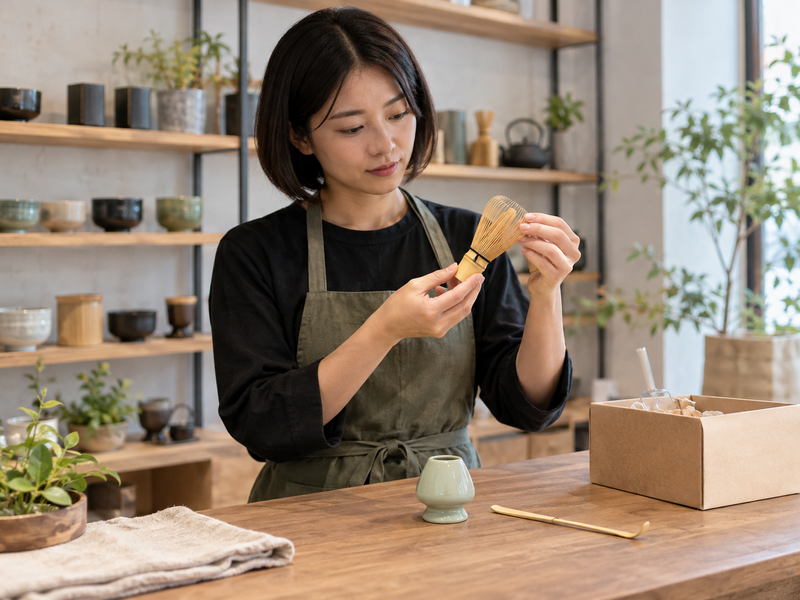
State whether the purchase is a standalone bamboo chasen, a whisk with a holder, or a complete matcha set containing powder, bowl, scoop and printed materials. Those are different supply projects. A whisk can pass inspection alone and still fail as part of a set if the bowl is too narrow or the retail box crushes its head. Write down the sales channel, intended customer, target preparation style, expected order quantity and markets before asking for prices.
Avoid treating “private label” as a technical specification. It may mean only a branded sleeve, a printed retail box, an engraved handle or a fully coordinated set. Ask which elements the supplier can actually customize and who performs each operation. In a multi-supplier program, the brand owner needs one accountable party for final kit inspection. A producer of matcha powder may support a bundled offer without making the whisk.
2. Which whisk details belong in the supplier brief?
Record the design that must be repeated
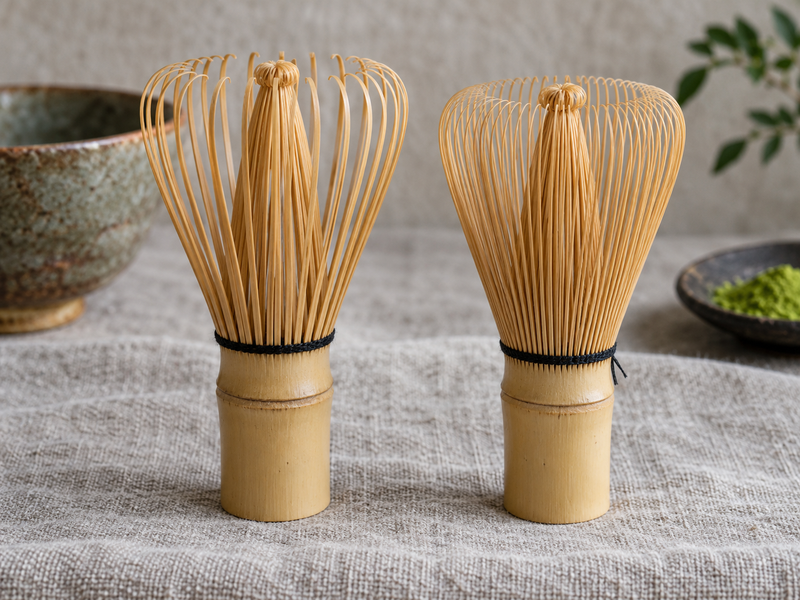
Ask for material, whisk model, nominal tine count, head width, handle length, acceptable color variation, finish and packaging method. A prong count alone will not reproduce the tool: tine thickness, shape and head diameter also matter. Tezumi’s guide to chasen describes differences in counts and head shapes. Use those features as inspection questions, then record the exact approved model rather than copying another seller’s quality claim. If the supplier offers a maker name or place of production, verify that claim separately.
The brief should also name intended use. A whisk sold for thin tea may be assessed for its foam and handling; a set aimed at latte beginners may be assessed for dispersion and easy care. Specify the bowl used during approval and whether a ceramic holder is included. Request clear photographs of the top, side, handle and retail pack, but let physical samples decide approval.
| Brief field | Record | Why it matters |
|---|---|---|
| Whisk model | Maker/SKU and sample ID | Reorders match the approved tool |
| Head geometry | Width, shape, nominal count | Bowl and recipe fit |
| Handle | Length and finish | Grip and presentation |
| Intended use | Tea, latte, or kit | Sets test conditions |
| Pack | Head protection and branding | Transit and shelf condition |
3. How do you assess a physical sample?
Inspect several units, not one showpiece
Request multiple samples from the proposed production process. Place each on a clean surface and inspect inner and outer tines under good light. Look for broken ends, splinters, uneven cuts, rough binding, dirt, moisture staining and obvious distortion. A handmade bamboo tool may show natural variation; define which variation is acceptable and which makes the tool unsafe or unusable. Photograph any defect beside a ruler. Do not force a dry tine to bend merely to “test” strength; that can damage a sound sample.
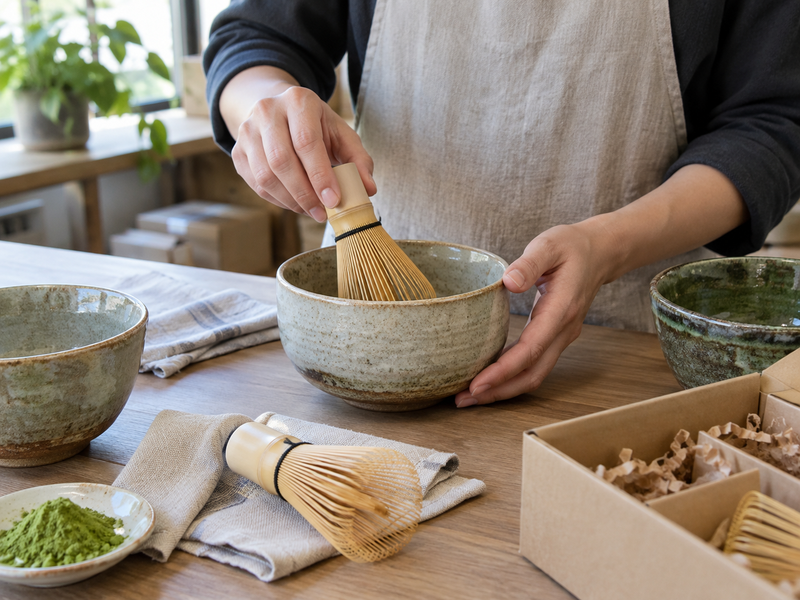
Measure fit with the exact bowl and holder planned for the retail set. The head must move without repeatedly striking the bowl wall, and the holder should support the rinsed whisk without snagging it. Check whether the package lets staff remove the tool without pulling on the tines. If all units pass, retain one untouched reference sample and use the others for preparation and transit tests.
4. What should a practical use test include?
Test the recipe customers will make
Prepare matcha with the proposed whisk, actual bowl and written recipe. Use the powder type likely to ship with the set, then record dose, water, temperature and operator. Observe whether the whisk reaches the bowl’s working floor, disperses powder, feels comfortable and survives ordinary cleaning. Repeat with another operator. A sample that works only for a skilled demonstrator may produce complaints from first-time buyers.
After use, rinse and dry the whisk as the care card will instruct customers. Check whether the head retains its shape and whether residue remains in tight areas. If the set includes a holder, test it during drying. For a café program, use the whisk across repeated normal preparations and record wear; do not invent a universal lifespan from a short trial. A drink may taste weak because the recipe is wrong even when the whisk meets specification.
| Test | Observable result | Approval question |
|---|---|---|
| Bowl fit | Free movement without wall strikes | Does the set work together? |
| Dispersion | Residue and clumps in drink | Can a customer repeat it? |
| Handling | Two operators’ notes | Is training realistic? |
| Cleaning | Residue after stated care | Is the care card accurate? |
| Wear | Condition after trial | Any early defect pattern? |
5. How do you verify the maker and production role?
Ask who performs each step
The company that sends a quotation may manufacture the bamboo whisk, buy it from a specialist, assemble a kit, or perform only export coordination. Each role can be legitimate, but it should be described accurately. Request the legal company name, production or sourcing role, sample origin, packaging site and the person responsible for corrective action. If a listing describes a named craft tradition or country of origin, ask for traceable evidence before repeating it on consumer packaging. Do not infer origin from a traditional design or a supplier’s sales address.
Ask who controls changes to the approved sample. Could the maker substitute a different head shape under the same SKU? Would the buyer be notified before production? A clear answer is more useful than a broad “factory direct” slogan. Matcha Village supplies matcha and offers tea utensil and gift-set combinations in its B2B program, but a buyer should confirm which partner makes any whisk and who assembles the final package.
6. What packaging protects the whisk in transit?
Protect the head without trapping moisture
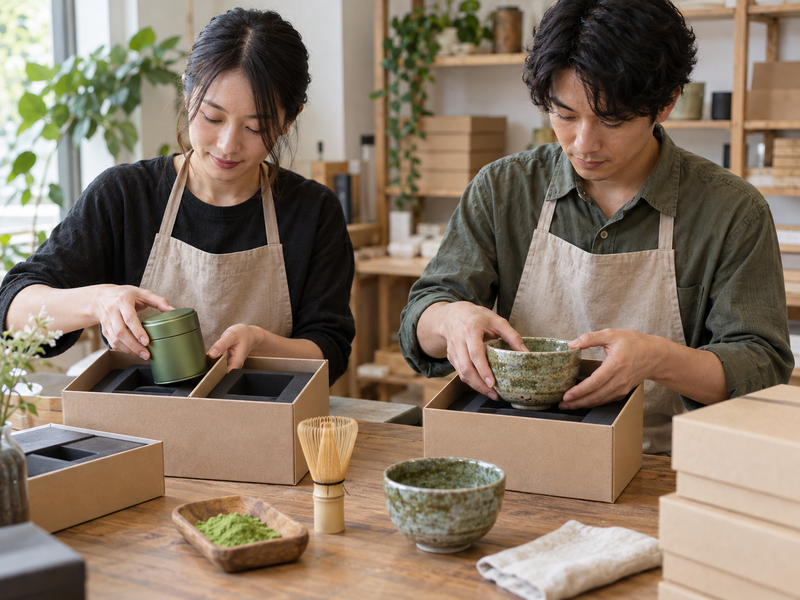
A fine bamboo head can be damaged by pressure from a tight sleeve, loose bowl or hard scoop inside a gift box. Build a pack sample using production materials, then shake and handle it as a parcel may be handled. Open it and inspect each whisk for crushed or broken tines. The holder, if included, should not become a moving weight against the head. Ask the supplier how the whisk is kept stable inside the inner pack and carton. A pleasing unboxing design is useful only if the tool reaches the customer intact.
Confirm that whisks are packed dry and that care instructions tell customers how to rinse and dry them after use. Printed materials should not make unsupported material or origin claims. Include clear identification so a buyer can trace a complaint to an order, carton or lot where practical. Evaluate shelf labels and barcode placement with the real retail pack. If the packaging changes after sample approval, repeat the transit and fit checks.
| Pack component | Test | Reject when |
|---|---|---|
| Whisk support | Remove and replace tool | Tines snag or compress |
| Bowl restraint | Shake filled pack | Bowl contacts whisk head |
| Inner carton | Open after handling test | Head arrives distorted |
| Care card | Follow instructions | Steps damage or confuse use |
7. How should MOQ, price and lead time be compared?
Price the complete approved unit
Ask suppliers to quote the exact sample, packaging, logo method, inspection arrangement and shipping terms. Record setup charges, sample fees, minimum order quantity, carton quantity, replacement policy and payment milestones. Treat quoted lead time as a plan requiring confirmation, especially before a seasonal promotion. Request the dates for sample approval, materials purchase, production, inspection and dispatch separately.
Calculate a landed estimate for each market using current freight and import costs supplied by your logistics team; rules and rates can change. Do not guess duties from a blog post. For a new product, a smaller pilot may expose construction or packaging problems before a large order.
8. What quality terms belong in the purchase order?
Turn sample approval into acceptance rules
Attach the approved sample ID, photos and product specification to the purchase order. Define obvious critical defects, such as broken tines, contamination or a loose component that prevents use, and cosmetic limits for branding or finish. Agree on how units will be sampled and inspected, who pays for rework or replacements, and what happens if a lot fails. Specify that changes in material, maker, head geometry or packaging need written buyer approval.
For a kit, check powder and accessory documentation separately. Food labeling and import obligations depend on the destination market; use qualified local advice for those requirements. The whisk supplier’s statement cannot substitute for the matcha supplier’s batch documents, and vice versa. Retain inspection photographs and carton identifiers. When a customer complaint arrives, the buyer should be able to identify the affected order and compare it with the approved sample.
| Purchase-order term | Written evidence | Purpose |
|---|---|---|
| Approved sample | ID and dated photos | Reference construction |
| Defect rules | Examples and limits | Shared acceptance criteria |
| Inspection | Timing and sample plan | Finds issues before dispatch |
| Change control | Written approval step | Prevents silent substitution |
| Remedy | Rework, credit or replacement | Resolves failed lots |
9. How do you build a reliable private label set?
Make components work together
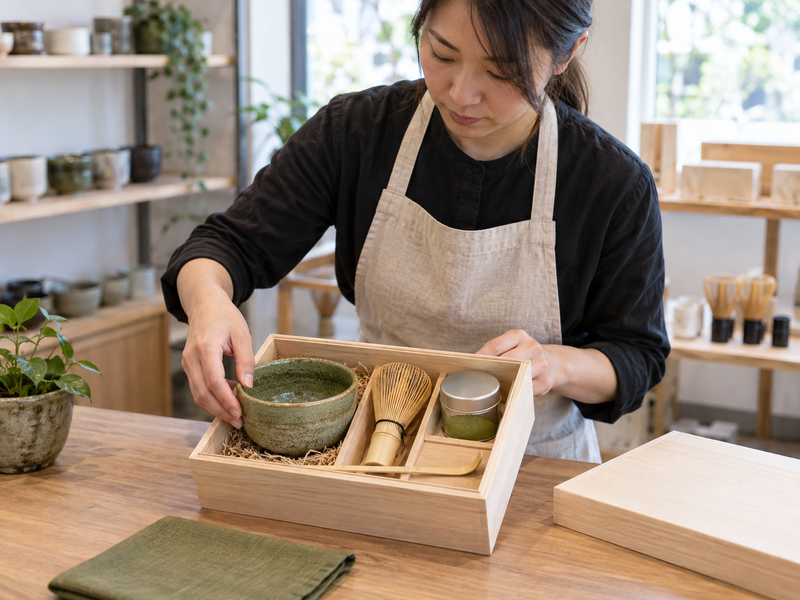
Lay out the full customer sequence: open the box, measure matcha, add water, whisk, rinse and dry. Every included component should support that sequence. A tiny decorative bowl may photograph well but block the whisk stroke. A scoop may not match the recipe card’s dose. A holder may deform the tines. Test the set with a person who has not seen the design brief and record where instructions or parts fail.
Keep commercial roles clear. A matcha supplier can provide powder options and packaging coordination, while a specialist makes the whisk and another partner may form the bowl. Matcha Village’s powder and OEM services can support a branded matcha program, including proposed utensil bundles, but manufacturer identity for each accessory requires confirmation. Ask for one final kit bill of materials and a named party who checks the finished box. When a component changes, repeat the full preparation and transit checks before shipping.
10. What should be approved before production?
Freeze a reviewable purchase record
Approval should cover a physical whisk, the intended bowl and holder, logo placement, printed claims, care card, internal protection, outer carton, purchase terms and inspection plan. Keep dated photographs of the sample inside its final pack. Name the person who accepts each element; silence should not count as approval. If several suppliers contribute to a set, confirm who assembles it, who checks missing parts, and who handles defects found after arrival.
Order a pilot lot where the budget permits and compare arrival units against the retained sample. Record damage, missing components, use-test results and customer feedback without overstating a small trial. Approve scale-up only when the actual lot meets the agreed rules.
| Approval item | Evidence to retain | Owner |
|---|---|---|
| Whisk and bowl | Signed samples and photos | Product buyer |
| Packaging | Packed sample and transit result | Packaging lead |
| Claims and care | Final print proof | Brand owner |
| Commercial terms | Purchase order | Procurement |
| Final kit | Bill of materials and checklist | Assembly lead |
Use the matcha whisk set guide to define bundle components before requesting supplier quotes.
FAQ
Q1. Does private label mean the supplier makes the whisk? No. Ask whether it manufactures, sources, packs or exports the accessory and record each role.
Q2. Is prong count enough for a specification? No. Include head shape and width, handle, approved sample, intended use and packaging.
Q3. Should a buyer order a sample before discussing MOQ? Request a physical sample and a quotation for the same construction. Otherwise, price comparisons can describe different products.
Q4. Can a matcha powder supplier coordinate a whisk set? It may offer a bundled program. Confirm the whisk maker, assembly location and inspection responsibility.
Q5. What if a production lot differs from the sample? Apply the written change-control and defect terms, document the difference and agree on correction before accepting the lot.
Buy the sample you approved
Send a supplier brief with the exact whisk, use case, pack and acceptance rules. Then test the final set as a customer would. That gives a matcha brand a product it can explain, inspect and reorder with confidence.