
A matcha whisk set should let its user make and care for a good bowl, not simply fill a gift box with pieces. Wholesale buyers need to check component fit, bamboo condition, drying and replacement supply. Start with the intended customer and test a production sample in a real preparation. Strabella’s kit comparison shows how contents vary by listing; its current prices and rankings are not purchase specifications for your program.
Contents
- 1. Who will use the whisk set?
- 2. What exactly belongs in the box?
- 3. How should the bamboo whisk be inspected?
- 4. Does the holder fit the whisk?
- 5. Which scoop and sifter are useful?
- 6. Should a bowl be bundled with the whisk?
- 7. What care instructions should accompany the set?
- 8. How should gift packaging protect the parts?
- 9. What replacement plan controls running cost?
- 10. When is the set ready for a wholesale order?
1. Who will use the whisk set?
Match the kit to the task
A beginner buying a retail kit needs clear instructions and enough equipment to prepare matcha at home. A café buying replacement tools may already own bowls and scales, making another complete set wasteful. A corporate gift buyer may care about protection and presentation, but the contents should still be usable. Describe the buyer, drink and setting before choosing a component count.
Test the customer’s starting point. Give a sample set to someone in that group without extra tools. Watch what they borrow and what remains unused. If a new user needs a wide bowl but the kit has only a whisk and scoop, the pack should say so. If a café already has bowls, offer a replenishment path for whisks alone. This exercise prevents “complete” from becoming an ambiguous promise and keeps the kit aligned with practical use.
Ask the supplier to pack a reference kit exactly as a customer will receive it, including every insert and printed card. Give it to a new user and record the full sequence from opening to drying the whisk. If the user cannot identify the holder or assumes the scoop measures an exact dose, the issue may be wording rather than hardware. Revise the insert before buying cartons. A clearer card can prevent returns that a more expensive ceramic piece would not solve.
2. What exactly belongs in the box?
Use a bill of materials
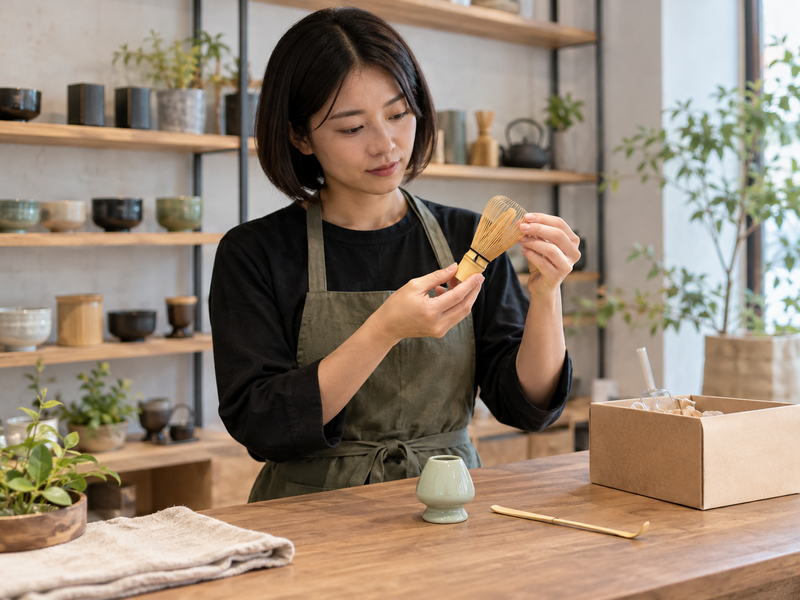
List every item by name, quantity, material and intended function. A whisk, scoop, holder, sifter and bowl are often shown together, yet listings may include only some of them. Product images can also show matcha powder or a cup that is not sold with the set. The retail box should make the difference unambiguous before a customer opens it.
Inspect a packed production sample. Count contents, confirm their placement and follow the preparation card from start to finish. If the set includes matcha powder, review ingredient and lot documents independently of the utensils. If it includes a care cloth, state whether the cloth is for wiping a utensil, serving or decoration. Do not add components solely to advertise a higher piece count. Each item should solve a real preparation or care problem, and the bill of materials should control what future shipments contain.
| Component | Useful purpose | Check |
|---|---|---|
| Whisk | Mix matcha and water | Tine condition |
| Holder | Dry and store whisk | Shape fit |
| Scoop | Transfer powder | Clear dosing note |
| Sifter | Break soft clumps | Passage and cleaning |
3. How should the bamboo whisk be inspected?
Examine function before tine count
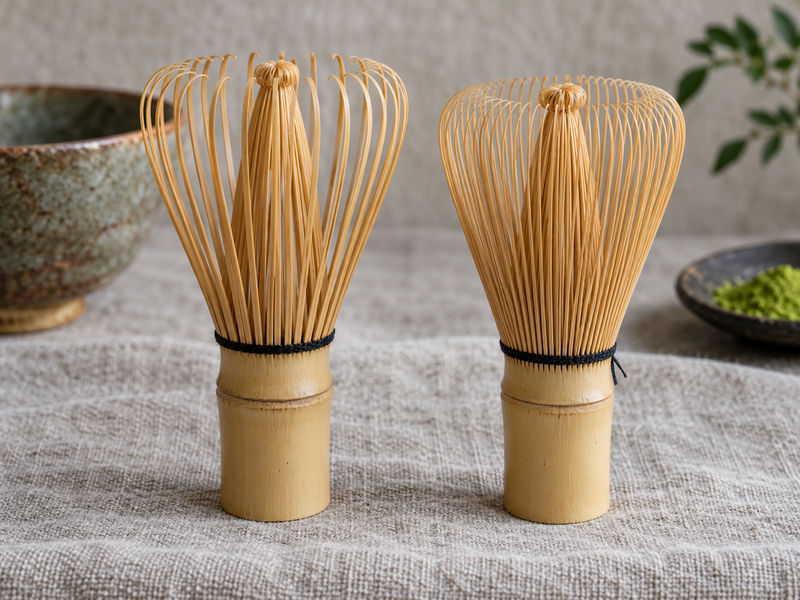
Check the whisk’s handle, binding and tine tips under good light. Look for splits, loose fragments, uneven cuts or damage from packing. Advertised tine count is one description of a whisk, not a guarantee of superior results. Trial the production sample in the bowl and drink method your customer will use. Note grip, clumps, foam and whether the tines strike the bowl wall.
Test after normal handling. Have more than one operator prepare several bowls, then inspect the whisk again. If a tine breaks, document whether the cause appears to be a defect, unsuitable bowl geometry or handling. Ask the supplier for its quality criteria and defect policy. Ippodo’s chasen-care page recommends wetting its bamboo whisk before use and replacing it when tips are broken. Include care instructions appropriate to the actual whisk supplied rather than copying another maker’s label.
4. Does the holder fit the whisk?
Pair parts by shape
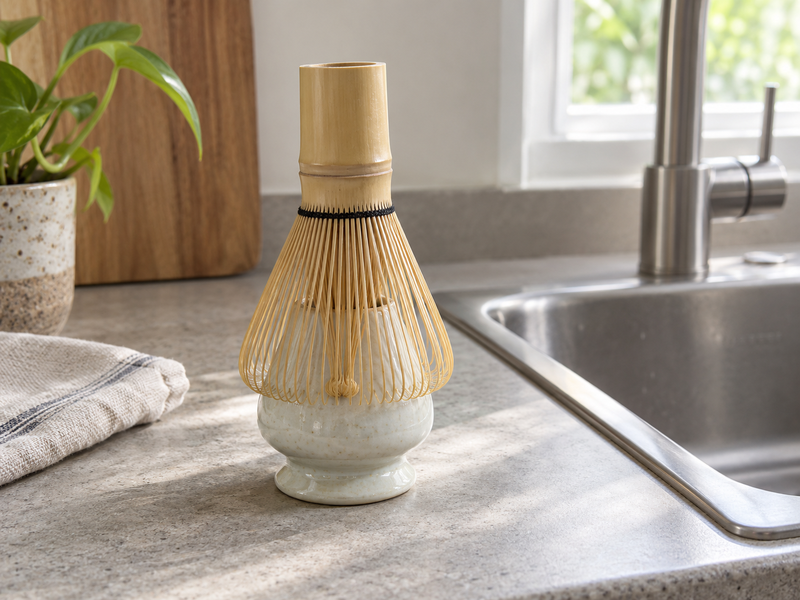
A whisk holder should support the supplied whisk in the way its maker recommends for drying and storage. Check that the ceramic or other holder does not force the tines into an awkward spread or leave the whisk unstable. Set the wet whisk on it after a preparation trial and observe whether water can drain and the tool can dry in the intended location.
Do not treat a holder as decoration. Ippodo notes that a whisk stand holds its chasen in shape while it air dries. Your set needs a holder compatible with its own whisk. Test several units because handmade pieces can vary. Inspect the holder’s base for wobble and sharp ceramic points that might catch bamboo. If the kit is aimed at travelers, consider whether a bulky or fragile holder fits the travel claim. The set should tell users what to do after rinsing, not simply include an unexplained ceramic shape.
| Holder check | Trial | Reject condition |
|---|---|---|
| Fit | Place supplied whisk | Forced tines |
| Stability | Wet whisk on counter | Tipping |
| Finish | Inspect contact points | Sharp edges |
5. Which scoop and sifter are useful?
Separate presentation from dosing
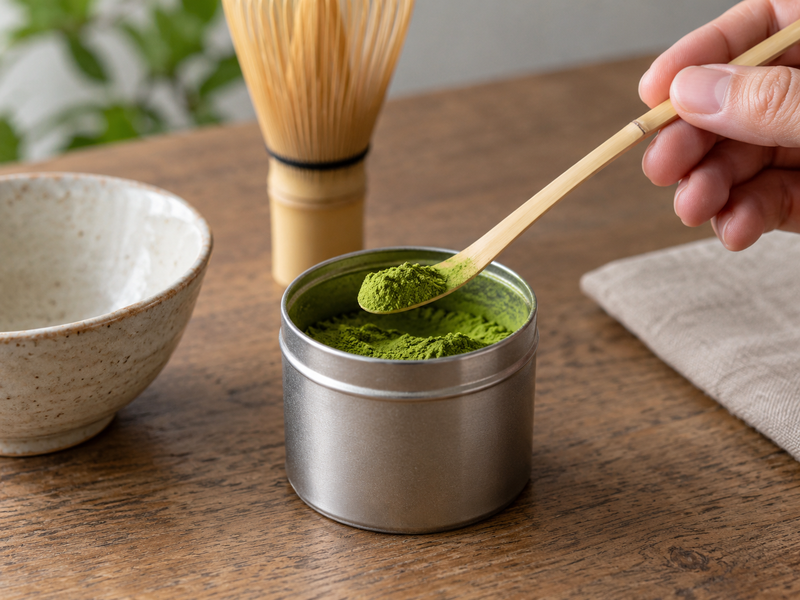
A chashaku can transfer powder elegantly, but a scoopful is not a precise mass across users. If the set promises a specific recipe, instruct customers how to measure or weigh the dose. A sieve may loosen compacted powder before whisking; Ippodo’s dedicated sieve illustrates this stage. Test whether the included sieve fits over the bundled bowl and can be cleaned after use.
Run a two-bowl comparison. Prepare equal weighed doses with and without sifting. Record visible lumps, time and powder retained by the mesh. Ask a beginner to repeat the method from the printed instructions. A sieve that improves a trained demonstration but spills in ordinary hands may need a different shape. Check the scoop’s finish and whether it fits inside the powder vessel the customer is likely to use. The kit should help prepare matcha, not create extra objects without a clear sequence.
6. Should a bowl be bundled with the whisk?
Compare complete and replacement offers
For a new customer, a bowl with sufficient opening and flat working area may be valuable. For an existing matcha user, another bowl may increase price and shipping weight without adding function. Offer contents according to the buyer segment. If a bowl is included, test it with the exact whisk in the set rather than approving each component separately.
Check fit and freight together. Measure whisk clearance, bowl stability and pouring behavior if users may transfer tea to a cup. Inspect the ceramic for flaws and request relevant food-contact information for the destination. Then pack the set and test representative transit; a bowl can be the most fragile component. Compare landed cost and likely breakage between a whisk-only refill pack and a bowl bundle. A clear product name should say whether the bowl is supplied. The customer should not have to interpret a photograph to find out.
| Offer | Buyer fit | Cost consideration |
|---|---|---|
| Whisk and holder | Existing users | Lower pack weight |
| Full bowl set | New users | Ceramic protection |
| Gift bundle | Recipient experience | Presentation and transit |
7. What care instructions should accompany the set?
Write for first use and next use
The care card should explain how to prepare the whisk, how to rinse it after matcha and where to dry it. Use the actual maker’s method. Ippodo advises rinsing its bamboo chasen without soap, drying it in open air and keeping it out of a closed case while wet. If the bowl or holder has separate cleaning limits, list them separately. Avoid telling users that every item in the set is dishwasher safe.
Pilot the card. Ask a new user to make one bowl, clean the tools and put them away using only the draft instructions. Note where they hesitate or set a wet whisk back in the gift box. Add a simple diagram if words alone are unclear. If the set includes powder, the tea pack’s storage directions and lot information should remain available after opening. Care instructions are part of the purchased product; poor wording can turn a good whisk into a damaged one before a repeat sale.
8. How should gift packaging protect the parts?
Test the box after transport
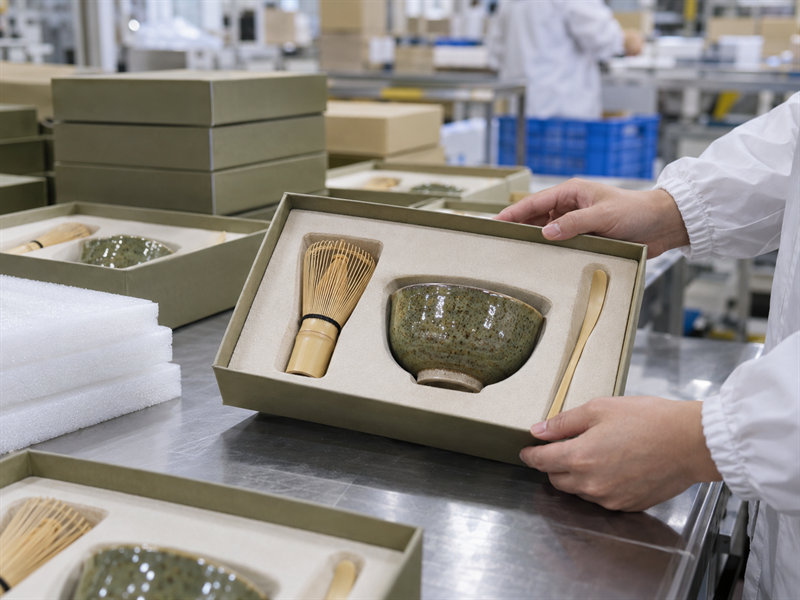
A presentation box should hold the whisk without crushing tines and separate ceramic pieces from hard contact. Check whether the customer can remove each part without pulling against a fragile tip. Inspect the set after a representative shipping trial, including outer cartons and retail boxes. The pack must remain readable and attractive while protecting its contents.
Use a defect checklist. Look for chipped bowls, bent whisks, loose holders, missing cards and shifted powder tins. Record which insert or carton position was involved. A decorative window may expose components to pressure in a crowded shipper. Ask whether packaging materials or glue contact a food-contact surface. For wholesale orders, specify pack revision and units per carton. The gift should open well in a customer’s hands, not only photograph well before a delivery truck carries it.
| Pack area | Check | Failure |
|---|---|---|
| Whisk cavity | Tine clearance | Crushing |
| Ceramic divider | No hard contact | Chips |
| Contents list | Matches actual pieces | Customer confusion |
9. What replacement plan controls running cost?
Sell or stock the wearing part
A whisk can wear or break while a bowl and holder remain usable. Ask whether the supplier sells compatible replacement whisks separately and whether future batches will fit the same holder and bowl. Retailers may want a refill SKU; cafés need spare units near the station. Do not quote a universal whisk lifespan, since handling and use frequency vary.
Use pilot data for stock. Record whisk damage and replacement during a small operating period, then set initial spare quantity. Inspect incoming replacements against the original sample. If a maker changes tine shape or handle diameter, test compatibility rather than assuming the product code means identical performance. For a consumer kit, print a route to obtain a replacement without buying another full gift box. This helps customers continue using the durable pieces and gives purchasing a clearer total cost.
10. When is the set ready for a wholesale order?
Approve contents, use and continuity
The order file should include a signed complete sample, component list, dimensions, care card, box artwork and defect criteria. A user trial should show that the set can prepare its intended drink. A shipping trial should show that ceramic and bamboo arrive intact. If the set includes matcha, quality must approve its product and lot separately. Matcha Village’s company materials mention gift-set cooperation and matcha supply; a specific whisk set and accessory sourcing should be confirmed in a current quote.
Require change notice. A different whisk maker, holder profile, sieve or packing insert can change the customer experience. Identify substitutions that need a new trial. Receiving staff should open samples across cartons and verify both contents and condition. A wholesale kit is ready when its name, box, instructions and replacement plan all describe the same usable product. The sale should leave the customer able to make another bowl after the first whisk wears out.
| Approval gate | Evidence | Owner |
|---|---|---|
| Use | Prepared-bowl trial | Product |
| Contents | Signed bill and sample | Buying |
| Continuity | Refill and change plan | Procurement |
Retailers should agree how customer returns will be classified. A broken whisk tip on arrival, a missing holder and normal wear after months of use are different issues. Ask stores to record a photo, purchase lot and component rather than replacing every claim with an entire kit. The pattern can reveal weak packaging or unclear care instructions. It also gives the supplier a specific defect to investigate before the next wholesale shipment.
FAQ
Q1. Must a matcha whisk set include a bowl? No. State the intended buyer and list contents clearly.
Q2. Does a higher tine count guarantee better matcha? No. Test the whisk in the supplied bowl and recipe.
Q3. Why include a holder? It can support drying and shape when matched to the whisk maker’s guidance.
Q4. Can a chashaku provide an exact dose? Weigh powder when precise recipe control matters.
Q5. What should wholesalers inspect? Count components and check tine, ceramic, card and packaging condition.
Ask suppliers for a packed production sample, a preparation trial and separate replacement-whisk terms. Buy the configuration your customer can use and maintain. A complete set is defined by what it lets someone do after opening the box, not by its advertised piece count.