
A matcha whisk for high volume cafe service has to fit a real order queue, not just make one beautiful bowl. During a rush, measuring, whisking, rinsing, and drying compete for the same counter space and staff time. This guide gives café operators a way to measure that work, set up a station, and decide where hand whisking belongs. The recommendations are based on observable service steps rather than a promised drinks-per-hour figure. Test them against your recipes, staff, and local food-handling requirements.
Contents
- 1. Where does hand whisking slow a busy café?
- 2. Which drinks truly need a bamboo whisk?
- 3. How many whisks should a station hold?
- 4. What belongs within reach of the whisk?
- 5. How should staff sequence several matcha orders?
- 6. Can portioning cut queue time?
- 7. When does a mixer make more sense?
- 8. What should a rush-hour trial measure?
- 9. How should a café handle cleaning and spares?
- 10. How can managers turn a trial into a standard?
1. Where does hand whisking slow a busy café?
Follow the order, not the tool demonstration
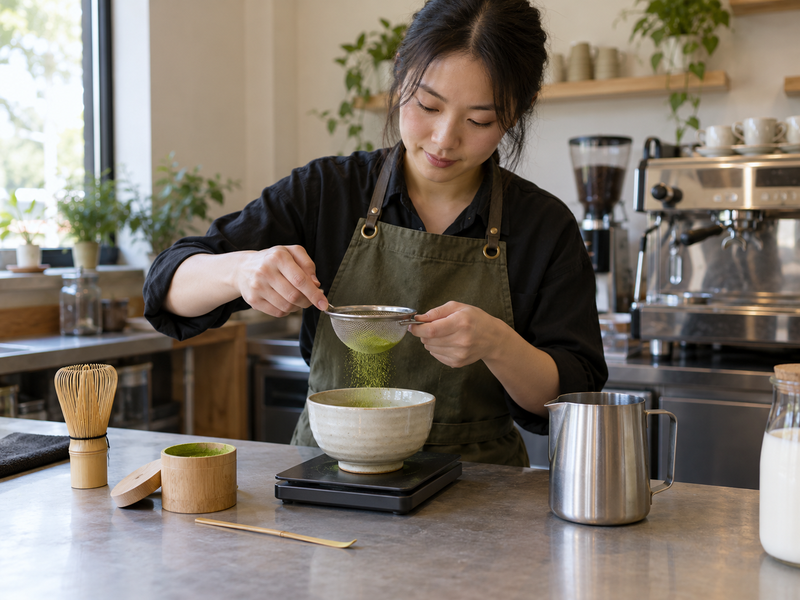
One prepared matcha looks quick on video. At a counter, the task starts when an order arrives and ends when the workstation is ready for another drink. Someone must find powder, measure it, add water, whisk, transfer liquid, rinse the bowl, and park the whisk safely. If the same person also handles milk and payments, a small delay in every step stacks into a queue. The Matcha Otaku equipment guide describes measuring and manual mixing as repeated sources of variance in busy service.
Observe a normal peak before buying equipment. Note each time the barista waits for a scale, kettle, clean bowl, or open sink. A second whisk will not fix a water source across the room. Conversely, a well-placed spare might prevent one broken tine from stopping a bowl-service line. Mark where hands travel and where a drink waits. The longest repeated wait tells you what to change first. Keep the menu promise in view: a guest who orders a prepared bowl may accept a slower service than one collecting an iced latte with a commuter crowd.
2. Which drinks truly need a bamboo whisk?
Separate presentation from dispersion
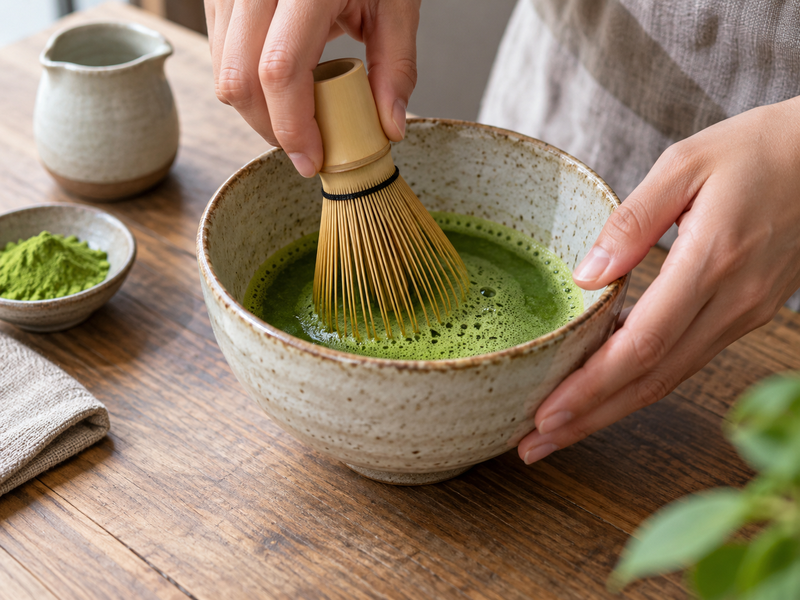
A bowl of thin matcha puts preparation in front of the customer. The movement, surface, and immediate texture are part of that service. A bamboo chasen can suit this drink, provided staff have training and time to use it consistently. An iced latte has another test: does its matcha disperse evenly in the finished milk drink without visible powder pockets? A whisk may meet that standard, but a shaker or purpose-built mixer may also do so. Choose with a tasting trial, not with an assumption that every matcha drink needs identical equipment.
Write a method beside each menu item. Include powder dose, water amount and temperature, vessel, mixing step, finished volume, and target handoff time. Compare drinks at handoff rather than admiring concentrate in a bowl. A customer sees the served drink. For events, decide whether an on-stage whisking demonstration and behind-counter production require different methods. If the demonstration defines your brand, budget the extra labor openly. If the drink is covered with milk and ice, prioritize repeatable dispersion and service flow.
| Menu item | Guest sees preparation? | Decide by testing |
|---|---|---|
| Bowl-served thin matcha | Usually | Texture, presentation and staff technique |
| Hot matcha latte | Sometimes | Dispersion after milk is added |
| Iced matcha latte | Rarely | Clumps, separation and handoff speed |
| Event demonstration | Yes | Visual method and queue design |
3. How many whisks should a station hold?
Size the pool from actual concurrency
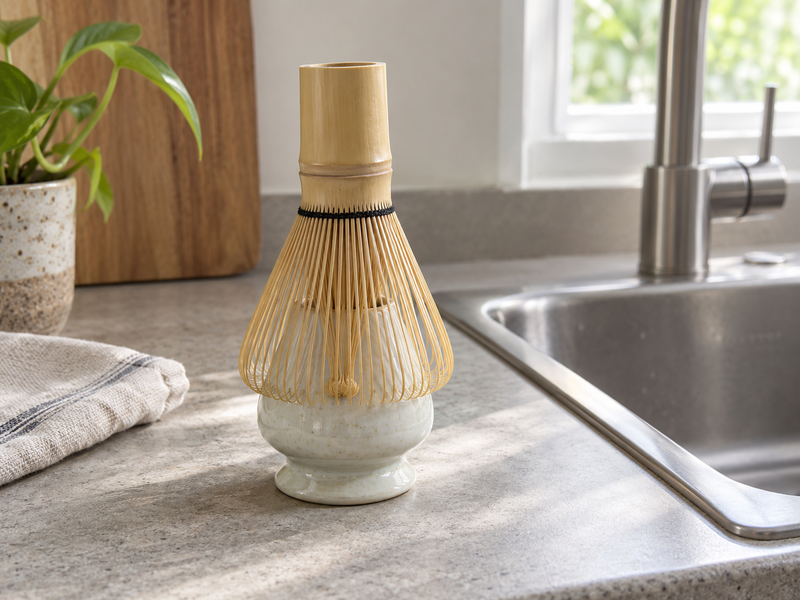
There is no universal number of whisks per café. Count how many workers may prepare matcha simultaneously, then consider cleaning and drying between uses. A single station with one barista might need one approved service whisk plus a protected spare; a second preparation point may need its own set. This is a planning example, not an equipment rule. A spare should match the tested model so a swap does not quietly change the recipe result. Keep the spare clean, dry, and protected from accidental contact.
Watch the station at peak demand. If a rinsed whisk is immediately needed again, check whether its cleaning procedure and drying arrangement fit the pace. Do not park it in a cup of old matcha while orders stack up. The Matcha Program station guide points out the operational value of separate prep, storage, and service zones. Apply that separation to whisk storage as well: active tool, clean reserve, and any tool removed for inspection should have distinct locations. Inventory follows the station design, not the other way around.
4. What belongs within reach of the whisk?
Arrange the station in preparation order
Place the approved powder container, scale or portion, bowl, controlled water source, whisk, pouring vessel, and rinse point along the path a barista actually follows. A neat display can still be slow if the scale sits behind the milk refrigerator. Keep dry powder away from sink splash and steam. Give the whisk a stable landing position that does not bend its tines. The work area must also leave enough room for a second drink without mixing up doses or dirty and clean tools.
Run a short reach test with two staff members. Ask each to make the usual latte while another order is assembled nearby. Record unnecessary crossings, repeated trips, and moments when two workers need the same space. Adjust the layout one item at a time. If the prep footprint is very small, a portable tray or marked zone may help preserve order. Do not make the station so crowded that staff set a wet whisk on a powder tin. A sound layout has an obvious position for every object before and after use.
| Zone | Keep here | Check during rush |
|---|---|---|
| Dry preparation | Powder and measured-dose tools | No splash or steam exposure |
| Mixing | Bowl, water and active whisk | Clear hand movement |
| Assembly | Milk, ice and serving cup | No collision with whisking |
| Cleaning and drying | Approved rinse point and holder | No pooling water or crowding |
5. How should staff sequence several matcha orders?
Batch the steps only where the recipe permits
When tickets arrive together, staff can group safe, repeatable preparation steps: verify orders, prepare clean vessels, portion dry powder, and organize cups. They should keep each drink identifiable and retain a clear path for allergy and custom-order handling. Mixing several drinks into one unlabeled vessel may save motion but can make individual doses and modifications hard to verify. If your café does batch matcha concentrate, set a documented recipe and holding procedure before using it during a rush. Follow local food safety rules and the product supplier’s handling guidance.
A useful sequence has one barista call each drink, measure its powder, add water, mix, and move the prepared portion straight to the assembly worker. Another station might assign one person to all matcha prep during the peak. Try both patterns over comparable rushes. Record the number of touches and handoffs, not just a stopwatch time for the whisking stroke. Good & Proper Tea’s wholesale discussion of batching presents batching as a tradeoff among speed, freshness, and drink quality. Your own menu and holding controls decide whether it helps.
6. Can portioning cut queue time?
Remove measurement guesswork before mixing
Powder measurement can take longer than expected when a barista opens a large bag, searches for a dry scoop, then levels an uncertain amount. Standardize a recipe in grams and test how staff access it. A calibrated dispenser, clearly marked scoop checked against a scale, or preportioned containers may each work. The choice depends on volume, storage, waste, and cost. Whatever method you use, verify actual doses across workers and shifts; a tool that looks fast but drifts in weight can alter every drink.
Portioning should not create a pile of exposed matcha on the counter. Plan how portions are covered, dated if your procedure requires it, and returned to storage. Avoid building more portions than the team can use under its quality and safety controls. During a trial, time preparation from order receipt to finished drink and record dose variance separately. This shows whether the saved motion affects the customer queue or merely moves work into an earlier shift. Keep traceability to the powder lot for any complaints or recipe comparisons.
| Portion method | Potential benefit | Check before rollout |
|---|---|---|
| Weighed per order | Direct dose verification | Scale access during peak |
| Verified scoop | Simple workflow | Drift between staff and powder levels |
| Preportioned container | Fast handoff | Storage, labeling and waste |
| Calibrated dispenser | Repeatable pull | Cleaning and measured output |
7. When does a mixer make more sense?
Compare the drink and the complete task time
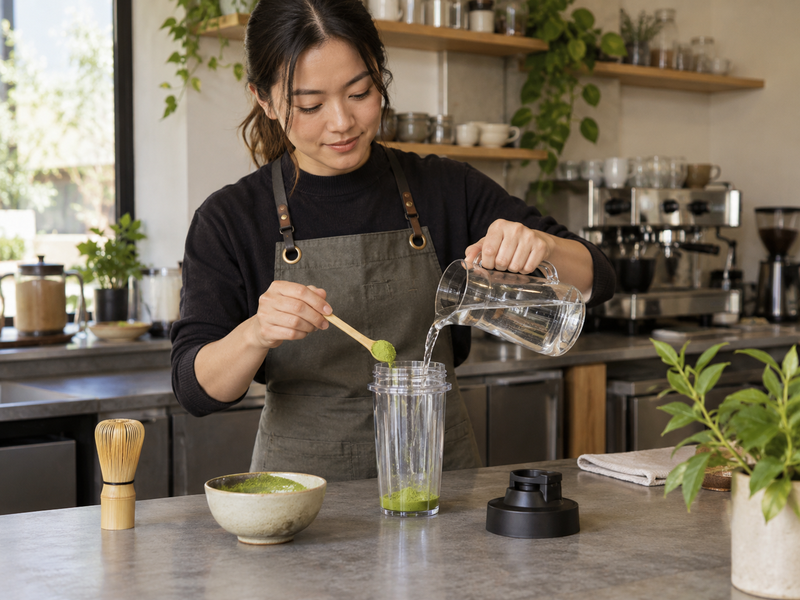
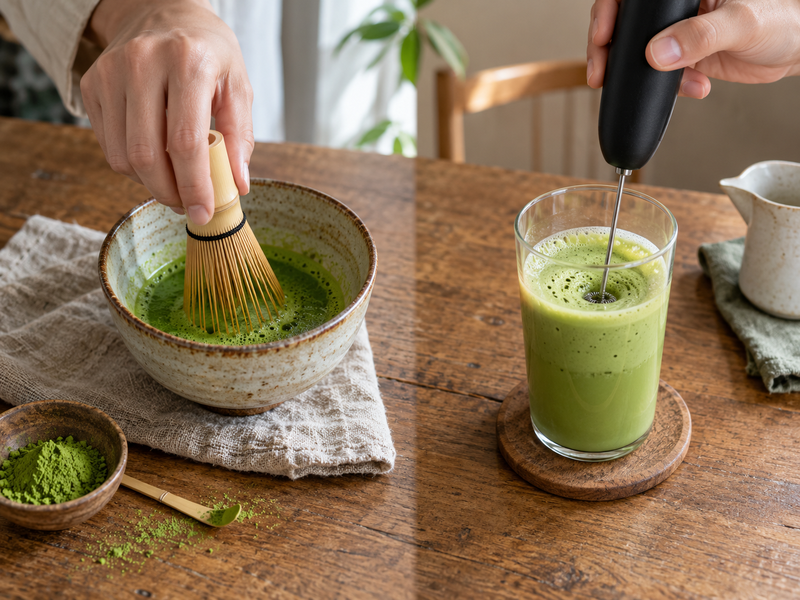
Manual whisking can be the right choice for visible bowl service and still be a poor fit for a heavy latte queue. A handheld frother, shaker, or dedicated mixer may shorten preparation for some recipes. Yet each brings cleaning, charging or power, noise, vessel compatibility, and maintenance. A fast motor does not compensate for clumps left in the finished drink. Trial alternatives with the same matcha lot, dose, water, milk, and handoff target. Taste each drink at service temperature and check the bottom of the cup.
Keep an approved bamboo whisk for the drinks where it performs the job you sell. Test a separate method for other menu items rather than changing all drinks at once. The Matcha Otaku equipment discussion suggests matching mixing equipment to volume and drink type; treat its examples as options, not universal endorsements. Ask staff whether the method survives repeated orders without unexpected cleanup or tool failures. A more expensive mixer may have value, but only your service record can show whether it solves the queue.
8. What should a rush-hour trial measure?
Observe both speed and the served drink
Choose two comparable peak periods and record order mix, staffing, preparation method, and the time from ticket to handoff. Note where the queue forms: powder measurement, water, mixing, milk, or cleanup. Track remakes, visible clumps, drink temperature, and staff comments. Averages alone hide the ten-minute surge that frustrates customers; inspect the busiest interval separately. Do not claim a fixed capacity from one quiet test or compare days with different staffing without noting that difference.
Ask a colleague to taste selected drinks blind where practical. A faster method is useful only if the finished drink meets the menu standard. Photograph a consistent sample at handoff and again after a brief wait if separation matters for takeaway drinks. Record any whisk damage or cleaning backlog. Repeat an improved layout before buying more tools. This small trial gives managers a defensible answer: which change improved service, for which drink, under which conditions. Keep the observations with the approved recipe so future menu changes can be tested on the same basis.
| Field | Record | Decision it informs |
|---|---|---|
| Ticket-to-handoff time | Median and peak interval | Queue impact |
| Order mix and staffing | Drinks and people per interval | Fair comparison |
| Finished texture | Clumps, separation, tasting notes | Menu quality |
| Cleanup and remakes | Repeated delays or waste | Full workload |
| Tool condition | Tines, batteries, parts | Reliability |
9. How should a café handle cleaning and spares?
Build the reset into each drink cycle
A matcha whisk for high volume cafe service must have a workable reset step. Tell staff when and where to rinse, how to inspect visible residue, and where the whisk dries between uses under the tool maker’s guidance and local food-handling rules. Do not leave bamboo soaking indefinitely in a preparation cup. Keep a clean spare ready so a damaged whisk can leave service immediately. If a tine breaks, stop using that tool and inspect the drink and surrounding workspace under your incident procedure.
Separate routine cleaning from end-of-shift inspection. During service, the goal is a clean, usable station for the next order. At close, inspect the head for split or bent tines, trapped residue, and shape changes; let tools dry in a suitable open position. Record removals and spare use so inventory reflects actual wear. A manager should know whether repeated failures trace to a supplier lot, a bowl with a rough interior, or rushed handling. Buying more whisks without fixing the cause can multiply waste.
10. How can managers turn a trial into a standard?
Publish a short station card staff can follow
An operating standard should fit on one page near the station. Name the drinks that use a bamboo whisk, the exact approved model, dose and water recipe, service vessel, preparation motion, transfer step, cleaning routine, and defect response. Attach a photo of the ready station and a sample finished drink. If another method handles iced lattes, say so explicitly. Train with real orders and ask each worker to produce the same acceptable result, rather than assuming a written card alone changes behavior.
Review the standard after a menu change, powder change, sustained increase in order volume, or repeated tool damage. Save a copy of the tested sample and the trial notes for purchasing. If you source matcha powder and accessory sets together, ask suppliers for clear specifications and samples; keep each vendor’s actual role in the supply chain accurate. Matcha Village supplies matcha and tea powder lines and can discuss relevant utensil or gift-set bundles, but whisk manufacturing claims require separate verification. Ask for samples, then run your own station trial before committing to volume.
| Standard field | What the card should state | Owner |
|---|---|---|
| Menu method | Whisk or alternative by drink | Menu manager |
| Recipe | Dose, water, vessel and target result | Training lead |
| Tool model | Approved sample and spare location | Purchaser |
| Cleaning | Between-order and closing steps | Shift lead |
| Review trigger | Menu, supplier or volume change | Manager |
The matcha whisk versus electric frother guide can frame a separate mixing trial for the latte line.
FAQ
Q1. Is a bamboo whisk always too slow for a busy café? No. It may fit bowl service or a dedicated matcha station. Measure complete order time before changing methods.
Q2. How many spare whisks should we buy? Base the number on simultaneous stations, observed damage, cleaning workflow, and replacement lead time. Keep at least a workable contingency in your local plan.
Q3. Can we batch matcha concentrate during a rush? Only with a tested recipe and a holding procedure that follows local requirements. Compare quality at handoff and after normal waiting time.
Q4. Should a latte and bowl of usucha use the same method? They can, but their finished-drink criteria differ. Test each separately and document the chosen method.
Q5. What should we measure before buying a mixer? Record queue time, drink texture, cleanup time, remakes, tool reliability, and staffing during comparable peaks.
Put the station trial on the next shift plan
Use one busy period to map delays and one controlled trial to test a change. Keep the bamboo whisk where its preparation adds value, then size tools and spares around actual service demand. A clear method card and a clean station will make the chosen recipe repeatable when tickets arrive faster than staff can talk through them.